
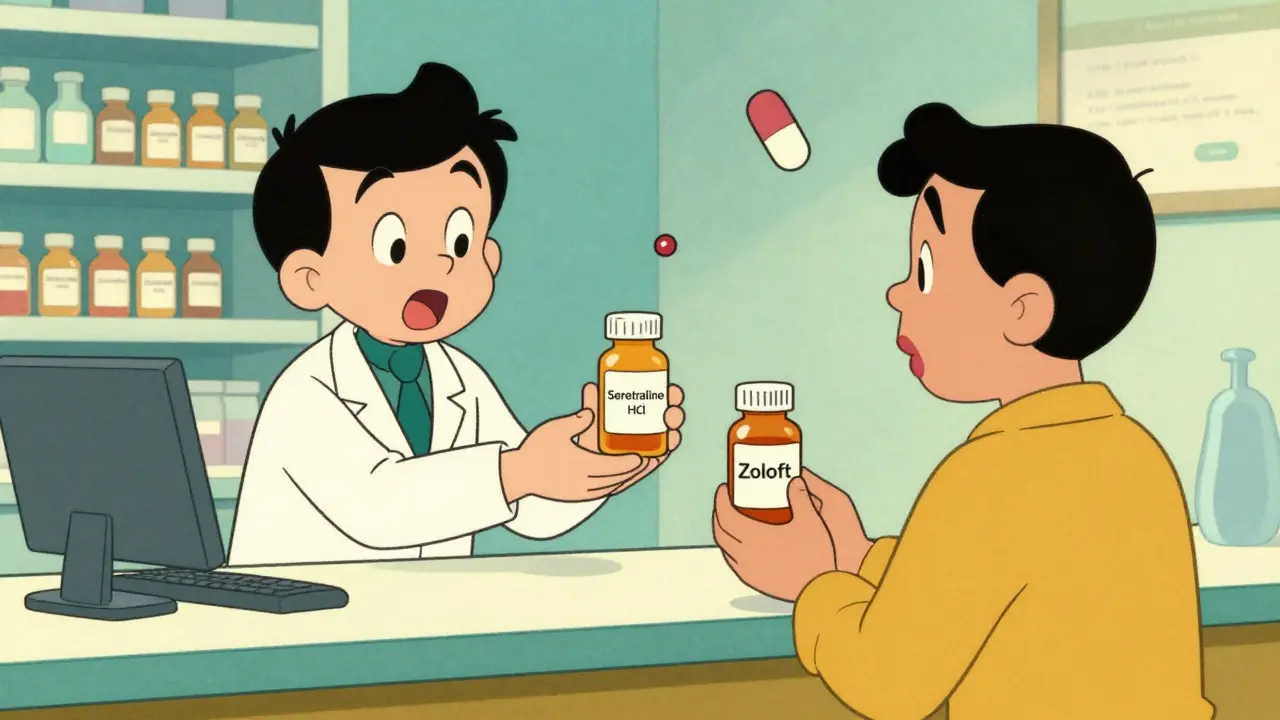
When you pick up a prescription, you might see a different name on the bottle than what your doctor wrote. That’s not a mistake. It could be an authorized generic - a drug that’s exactly the same as the brand-name version, just without the fancy label. Many people assume all generics are the same, but that’s not true. Authorized generics aren’t just similar to brand drugs. They’re the exact same pill, capsule, or liquid - down to the last inactive ingredient.
What Exactly Is an Authorized Generic?
An authorized generic is not a copy. It’s the original brand drug made by the same company, sold under a different label. The U.S. Food and Drug Administration (FDA) defines it clearly: it’s a brand-name drug that’s marketed without the brand name on the packaging. That’s it. No changes to the formula. No substitutions. No compromises.
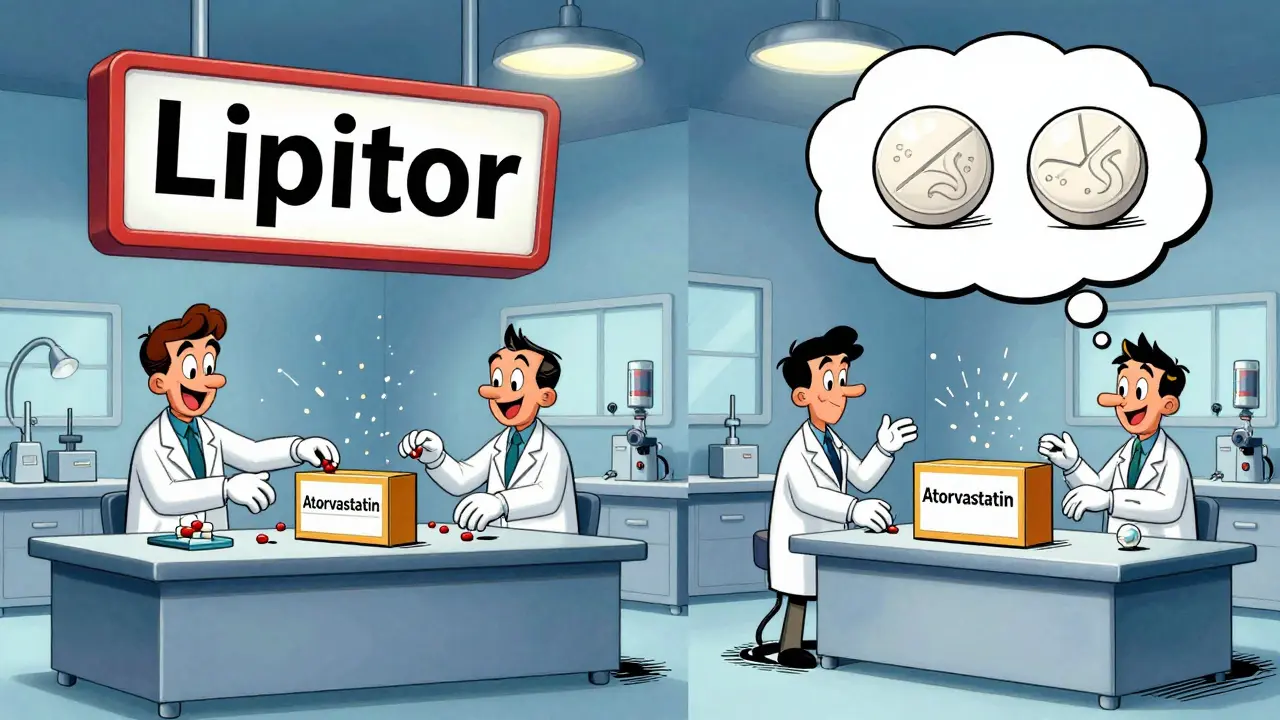
Here’s how it works: When a drug patent expires, other companies can make generic versions. But the original manufacturer can also choose to make their own generic version - identical in every way - and sell it under a different name. This version is called an authorized generic. It’s made in the same factory, with the same equipment, using the same batch of active and inactive ingredients. The only difference? The label doesn’t say "Lipitor" or "Zoloft." It says something like "Sertraline HCl" or "Atorvastatin."
Unlike traditional generics, which go through their own approval process (ANDA), authorized generics use the original brand’s New Drug Application (NDA). That means they don’t need separate FDA approval. They’re already approved - they’re just sold under a different name.
How Are Authorized Generics Different From Traditional Generics?
Traditional generics must match the brand drug in active ingredient, strength, dosage form, and how it’s taken. But they’re allowed to have different inactive ingredients - things like dyes, fillers, preservatives, and coatings. These don’t affect how the drug works, but they can matter to some people.
For example, if you’re allergic to red dye, or sensitive to lactose, or get stomach upset from certain fillers, a traditional generic might cause problems even if the active ingredient is correct. That’s where authorized generics shine. They have the exact same inactive ingredients as the brand drug. So if your brand-name medication never gave you a reaction, the authorized generic won’t either.
Here’s a quick breakdown:
| Feature | Brand Drug | Authorized Generic | Traditional Generic |
|---|---|---|---|
| Active Ingredient | Identical | Identical | Identical |
| Inactive Ingredients | Original formula | Identical to brand | May differ |
| Manufacturer | Original brand company | Original brand or licensee | Third-party company |
| Regulatory Pathway | New Drug Application (NDA) | Uses brand’s NDA | Abbreviated New Drug Application (ANDA) |
| Appears in FDA Orange Book? | Yes | No | Yes |
| Typical Price Discount vs Brand | Full price | 20-40% lower | 80-85% lower |
The FDA confirms that authorized generics are therapeutically equivalent to the brand drug. In fact, they’re more than equivalent - they’re identical. A 2018 study tracking over 5,000 patients found no meaningful difference in hospital visits, emergency room trips, or medication discontinuation between those taking brand drugs and those taking authorized generics. Traditional generics showed nearly the same results - except in rare cases where inactive ingredients caused reactions.
Why Do Authorized Generics Exist?
They weren’t created to help patients - at least not at first. They were created to compete.
When a drug patent expires, multiple generic manufacturers rush in, and prices drop fast. To protect profits, brand companies sometimes launch their own authorized generic - often at a lower price than the original brand, but higher than other generics. This strategy can slow down the price collapse by keeping some of the market share under their control.
It’s a business move. But for patients, it means an option that’s safer than traditional generics if you’ve had bad reactions before. It’s also often covered by insurance at the same tier as traditional generics, even though it’s made by the brand company.
Do Authorized Generics Cost Less?
They usually do - but not as much as traditional generics.
Brand-name drugs can cost 80-85% more than traditional generics. Authorized generics? They’re typically 20-40% cheaper than the brand. That’s still a savings, but not the deep discount you’d expect from a generic.
Why? Because the brand company is still making the same product. They’re not cutting corners on production. They’re not outsourcing to a low-cost manufacturer. They’re just removing the brand name.
Insurance companies often put authorized generics on the same tier as traditional generics - meaning you pay the same copay. But some plans treat them like brand drugs, especially if they’re sold by the same company. Always check with your pharmacy or insurer.
What Do Pharmacists Say?
Most pharmacists know the difference. But patients? Not so much.
A 2023 survey in Pharmacy Times found that about 30% of patients ask questions when they get an authorized generic. They think it’s a different drug. They worry it’s weaker. They panic because the label doesn’t look familiar.
Pharmacists often have to explain: "This is the exact same pill your doctor prescribed. The only difference is the label."
Some patients even request authorized generics specifically. One user on an allergy forum said, "I’ve been on the authorized generic of Xyzal for two years. No side effects. Same as the brand. I won’t go back to the other generics."
That’s not rare. For people with sensitivities - to dyes, gluten, or certain fillers - authorized generics are a lifeline.
How to Spot an Authorized Generic
You won’t find "authorized generic" printed on the bottle. But here’s how to tell:
- Check the manufacturer name. If it’s the same company that makes the brand drug (e.g., Pfizer, AbbVie, AstraZeneca), it’s likely an authorized generic.
- Compare the pill imprint. If it looks exactly like the brand pill, it probably is.
- Ask your pharmacist. They can look up the NDC code and tell you if it’s an authorized version.
- Check the FDA’s website. While authorized generics aren’t listed in the Orange Book, the FDA does track them in public reports.
Is It Safe to Switch?
Yes. Absolutely.
The FDA, the American Academy of Allergy, Asthma & Immunology, and leading researchers all agree: authorized generics are safe, effective, and identical to the brand.
Unlike traditional generics, where minor formulation changes can sometimes lead to patient concerns (even if clinically insignificant), authorized generics eliminate that uncertainty. If your body responded well to the brand, it will respond the same way to the authorized version.
Some doctors still hesitate to prescribe them because they’re not always listed in prescribing software. But that’s changing. More electronic systems now recognize authorized generics as direct substitutes.
What’s Next for Authorized Generics?
Regulators are paying attention. The FDA has held meetings on whether to require authorized generics to be listed in the Orange Book. That would make them easier to identify and compare.
There’s also growing pressure to stop brand companies from using authorized generics to delay price drops. The Affordable Prescriptions for Patients Act of 2023 proposed rules to limit this practice. If passed, it could change how these drugs are marketed.
But for now, they’re here to stay. And for patients who need certainty - especially those with allergies, chronic conditions, or past reactions - they’re one of the best options available.
Final Thoughts
Authorized generics aren’t a trick. They’re not a loophole. They’re not "second-rate." They’re the real deal - the same drug, same factory, same formula, just cheaper and without the brand name.
If you’ve had issues with traditional generics - stomach upset, rashes, or just a feeling that "it’s not working the same" - ask your pharmacist if an authorized generic is available. It might be the missing piece.
And if you’re trying to save money, it’s worth asking. Even if it doesn’t cut the price in half, it’s still less than the brand. And you’re getting the exact same medication your doctor intended.
Suchi G.
March 18, 2026 AT 09:47After years of being switched to random generics that made me feel like a ghost of myself - nausea, brain fog, weird rashes - I finally asked my pharmacist about authorized generics. Turns out, my brand-name medication had one. I switched. No more panic attacks over pill color. No more wondering if "this isn’t the real thing." It’s the same exact capsule. Same filler. Same everything. I didn’t just save money. I got my life back.
People think generics are all the same. They’re not. And no, the FDA doesn’t make it easy to tell the difference. But if you’ve ever felt off after a refill, don’t just shrug it off. Ask. Demand to know the NDC code. You’re not being difficult. You’re being smart.
I’m not exaggerating. I cried the first time I saw the manufacturer name on the bottle - same as my brand. I didn’t think that was possible. Turns out, it is. And it’s quietly changing lives. Why isn’t this common knowledge?
becca roberts
March 19, 2026 AT 05:44Oh wow. So the pharma companies are like, "Hey, we made this drug. We’re gonna sell it again. But this time, we’re gonna slap a boring label on it and call it a generic. And we’ll charge you 30% less. Because capitalism."
Meanwhile, the rest of us are over here Googling "why does my anxiety feel worse now?" while the same damn pill sits in a different bottle with a different name. The real scandal? Insurance companies treat it like a regular generic. But only because the brand company is still in charge. It’s a monopoly with a disguise.
And yet… I’m glad it exists. For people like me who can’t handle cornstarch fillers? It’s a miracle. Just don’t call it a win for consumers. It’s a win for shareholders who learned how to game the system.
Andrew Muchmore
March 19, 2026 AT 07:06Paul Ratliff
March 19, 2026 AT 11:30SNEHA GUPTA
March 20, 2026 AT 04:49The philosophical tension here is not merely economic - it’s ontological. If a drug is chemically, physically, and functionally identical to its branded counterpart, yet carries no brand name, does it retain its identity? Or has the label - that arbitrary, socially constructed signifier - become the essence of the medication?
We treat the brand name as a proxy for trust. But trust is not a pharmacological property. The active ingredient does not care who printed the label. Yet we, as a society, have constructed a hierarchy of efficacy based on packaging. The authorized generic shatters this illusion. It is the drug stripped of its myth. And in doing so, it exposes the absurdity of our entire pharmaceutical value system.
Perhaps the real innovation is not the drug. It is the moment we stop believing that a name makes a medicine better.
Gaurav Kumar
March 21, 2026 AT 19:56lawanna major
March 23, 2026 AT 01:24I love how this post breaks down the science without fear. There’s so much fear-mongering around generics - "it’s not the same," "it won’t work," "I feel weird" - when for most people, it’s perfectly fine.
But for the minority who have real, documented sensitivities? Authorized generics aren’t a luxury. They’re a necessity. And it’s heartbreaking that we still don’t make this information easier to find.
I wish every pharmacy had a little sign: "This is the exact same pill as [Brand Name]. Just cheaper." Imagine how many people would stop worrying.
Also - thank you for mentioning the 2018 study. That data should be plastered on every prescription bottle.
Kal Lambert
March 23, 2026 AT 16:04Melissa Stansbury
March 25, 2026 AT 09:23Wait - so if I ask for the authorized generic, I’m basically asking for the brand drug but without the logo? And it’s cheaper? Why don’t doctors just prescribe it by the generic name then? Why is this even a secret?
I just got my refill and I swear the pill looks different. I panicked. My pharmacist had to pull up the NDC code and show me the manufacturer was Pfizer. Same as before. I felt dumb. But also… why is this so hard to figure out? Shouldn’t this be automatic? Shouldn’t the pharmacy just give it to you if it’s the same thing?
Also - can we talk about how weird it is that the FDA doesn’t list these in the Orange Book? That’s like hiding the truth on purpose.