
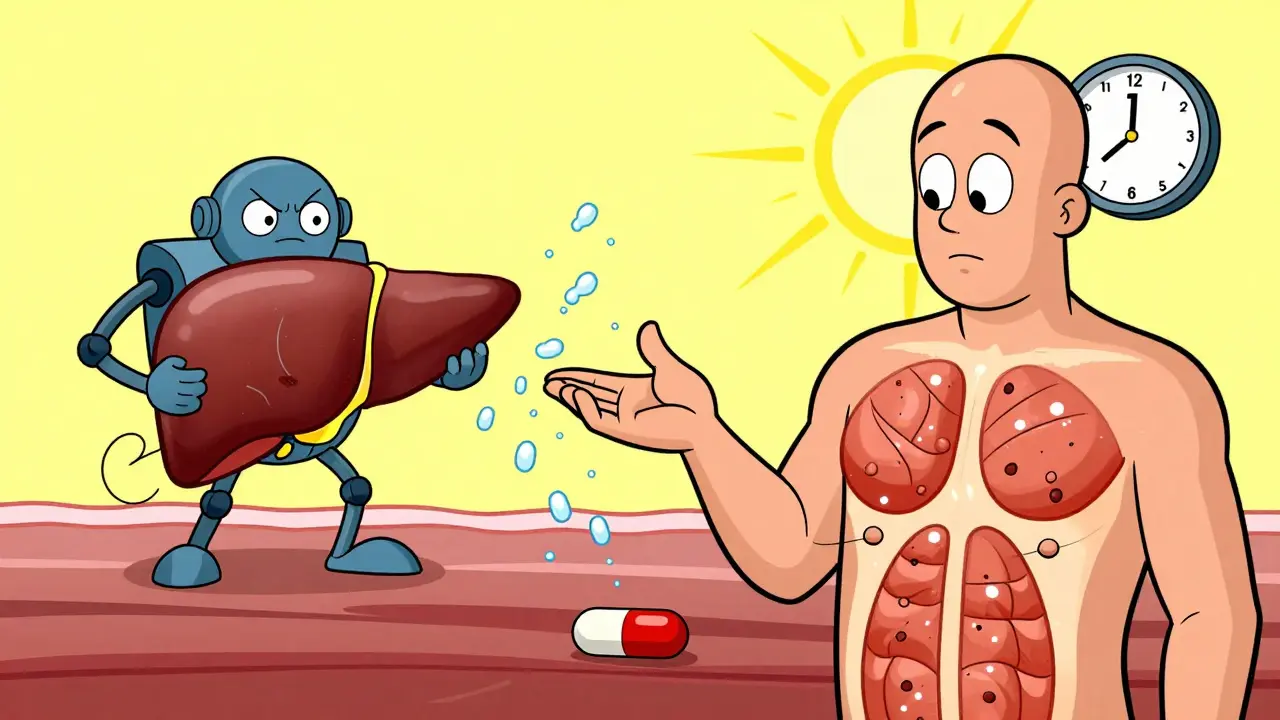
When you start taking corticosteroids for inflammation, asthma, or an autoimmune condition, your body doesn’t just react to the drug’s anti-inflammatory effects-it also starts fighting a hidden metabolic battle. Blood sugar levels can spike, sometimes dramatically, even in people who’ve never had diabetes before. This isn’t a coincidence. It’s a direct, well-documented side effect called corticosteroid-induced hyperglycemia, and if left unchecked, it can lead to serious complications like diabetic ketoacidosis or hyperglycemic hyperosmolar state.
Why Steroids Raise Blood Sugar
Corticosteroids like prednisone, dexamethasone, and hydrocortisone don’t just calm your immune system. They mess with how your body handles sugar at the molecular level. In your liver, they crank up glucose production by nearly 38%, forcing your body to make more sugar even when you don’t need it. At the same time, they block insulin from doing its job in your muscles and fat tissue. Muscle cells, which normally soak up 80% of the sugar after a meal, become resistant-glucose uptake drops by over 40%. Your pancreas, which should release more insulin to match the rising sugar, gets suppressed too. Beta cells produce less insulin because key receptors like GLUT2 and glucokinase are turned down. The result? Sugar piles up in your bloodstream.It’s Not Just Type 2 Diabetes
Many doctors treat steroid-induced high blood sugar like regular type 2 diabetes, but that’s a mistake. The pattern is different. With type 2, sugar stays high all day. With steroid-induced hyperglycemia, levels climb sharply in the morning-right after your steroid dose-and often dip back toward normal by evening. This happens because most steroids are taken once daily in the morning, and their effects last 16 to 24 hours. If you’re only checking blood sugar at bedtime or fasting, you might miss the dangerous morning spikes. A 2022 study showed that 44% of non-endocrinology doctors didn’t recognize this pattern, leading to delayed or incorrect treatment.Who’s at Risk?
Not everyone on steroids develops high blood sugar-but some people are far more likely to. If you have a BMI over 30, your risk jumps 3.2 times compared to someone with a normal weight. If you already have prediabetes or impaired glucose tolerance, your risk goes up nearly fivefold. People on high doses-more than 20 mg of prednisone daily-are at the highest risk. Even short courses, like a 5-day burst for a flare-up, can trigger spikes. Hospitalized patients on IV steroids are especially vulnerable: over half develop hyperglycemia requiring treatment. And it’s not just older adults-this can happen to anyone, even young, otherwise healthy people.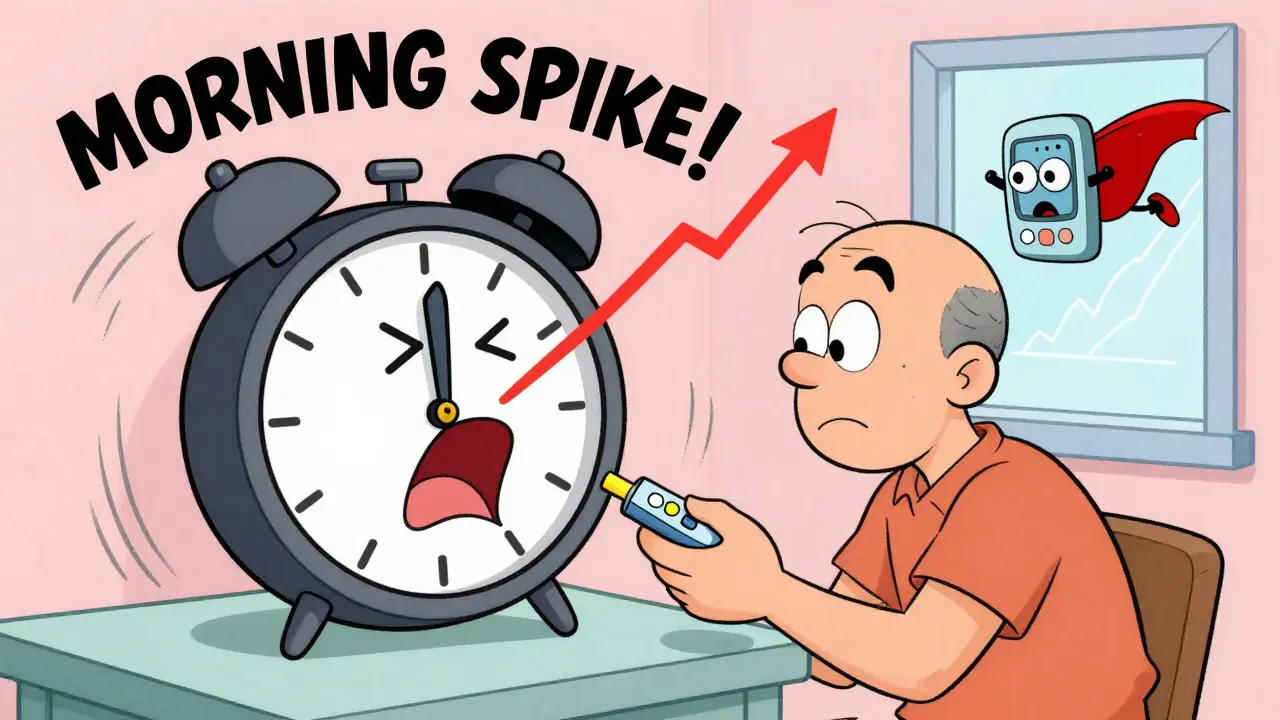
How to Monitor: It’s Not Just Fingersticks
Checking your blood sugar once a day isn’t enough. You need to track it around the times your steroid hits hardest. The standard advice: check fasting glucose and 2 hours after meals, at least twice a day. But here’s what most people don’t know: continuous glucose monitors (CGMs) catch 68% more hyperglycemic episodes than fingersticks alone. Why? Because they show hidden spikes, especially at night during steroid tapering. One study found that 23% of patients on tapering doses had dangerous nighttime lows they never knew about-because they weren’t testing after dinner or before bed. If you’re on steroids for more than 3 days, ask your doctor about a CGM. It’s not just for people with diabetes anymore.When to Start Insulin
If your blood sugar hits 180 mg/dL twice in a row, it’s time to act. Sliding scale insulin-giving a set amount based on a single reading-is outdated and dangerous for steroid-induced cases. It doesn’t match the timing of steroid peaks. Instead, use a basal-bolus plan: a long-acting insulin once a day (like glargine or detemir) to cover baseline resistance, plus a fast-acting insulin (like lispro or aspart) before meals to handle the spikes. A 2022 trial found this approach was 35% more effective at keeping glucose in range than sliding scale. For people with pre-existing diabetes, insulin doses often need to be increased by 20% to 50%. Don’t guess-work with your provider to adjust based on your steroid schedule and glucose logs.Tapering Is Risky Too
The biggest surprise for many patients? Blood sugar doesn’t just stay high until the steroid stops-it can crash when you start reducing the dose. As the steroid effect fades, insulin resistance drops, but your body might still be overproducing insulin or your pancreas might still be recovering. That’s when you get unexpected lows. In surveys, nearly 7 out of 10 patients reported sudden hypoglycemia during tapering. That’s why you can’t just stop monitoring when you feel better. Keep checking glucose for at least 72 hours after your last dose. If you’re on a CGM, watch for trends, not just numbers. A steady drop over 24 hours might mean you need to cut your insulin dose too.
What Hospitals Are Doing Right
Some hospitals have cut complications by more than half just by standardizing care. The Mayo Clinic’s Steroid Diabetes Protocol, launched in 2019, requires glucose testing within 4 hours of the first steroid dose. If two readings are above 180 mg/dL, insulin is started automatically. Nurses are trained to recognize the morning spike pattern. Glucose logs are reviewed daily by a pharmacist or endocrinologist. The result? Fewer ICU transfers, shorter stays, and $2,347 saved per patient on average. These protocols exist because they work. If you’re hospitalized and on steroids, ask if your unit has one. If they don’t, request a consultation with diabetes care services.What’s Coming Next
Researchers are already working on smarter tools. The NIH-funded GLUCO-STER trial is testing a machine learning model that predicts your risk based on your BMI, HbA1c, steroid dose, and even a gene variant called GR-1B. Early results show 84% accuracy. In the future, your doctor might get an alert before you even start steroids: “High risk for hyperglycemia-consider CGM and prophylactic insulin.” There are also new steroid-like drugs in development-tissue-selective glucocorticoid receptor modulators-that fight inflammation without wrecking your metabolism. Three are already in Phase II trials and are showing a 62% drop in blood sugar spikes compared to traditional steroids. These could change everything.Bottom Line
Corticosteroids save lives-but they can also put your metabolic health at risk. If you’re prescribed them, don’t assume your blood sugar is fine. Ask about monitoring. Ask about insulin if needed. Track your numbers, especially in the morning. And don’t stop checking when you taper. This isn’t just about avoiding high numbers-it’s about preventing hospitalizations, nerve damage, and long-term complications. You’re not just taking a pill. You’re managing a metabolic shift. Be proactive. Be informed. Your body will thank you.Can corticosteroids cause diabetes in people without prior diabetes?
Yes. Between 19% and 32% of people without prior diabetes develop high blood sugar when taking high-dose corticosteroids, especially if they’re overweight, older, or on doses above 20 mg of prednisone daily. This is called steroid-induced diabetes mellitus (SIDM), and it’s a direct metabolic effect-not a coincidence.
How long does steroid-induced hyperglycemia last?
The insulin resistance caused by steroids lasts 16 to 24 hours after each dose, even if you take them every other day. Blood sugar usually returns to normal within days to weeks after stopping the medication, but in some cases, especially with prolonged use or pre-existing risk factors, it can persist longer. A small percentage of people may develop permanent type 2 diabetes.
Is oral insulin an option for steroid-induced hyperglycemia?
No. Oral insulin isn’t available or effective for managing acute hyperglycemia. Insulin must be injected because it’s broken down in the stomach if taken by mouth. For steroid-induced high blood sugar, fast-acting injectable insulins like lispro or aspart are used before meals, and long-acting insulins like glargine are used for baseline control.
Can I manage steroid-induced hyperglycemia with diet and exercise alone?
For mild cases, diet and activity help-but they’re rarely enough on their own. Steroids directly interfere with insulin signaling and liver glucose production. Even a low-carb diet won’t overcome the 40% drop in muscle glucose uptake or the 38% rise in liver sugar output. Most patients need insulin, especially if glucose levels exceed 180 mg/dL on two readings.
Should I stop my steroid if my blood sugar goes high?
Never stop your steroid without talking to your doctor. The condition causing you to take it-like a flare of lupus, asthma, or a transplant rejection-could worsen dangerously. Instead, work with your care team to adjust your insulin or glucose monitoring. The goal is to manage the side effect, not stop the treatment.
Do all corticosteroids raise blood sugar the same way?
No. Dexamethasone has the strongest and longest-lasting effect on blood sugar, while hydrocortisone has a milder, shorter impact. Prednisone is in the middle. The potency and half-life matter. Dexamethasone can cause hyperglycemia for up to 36 hours after a single dose, while hydrocortisone’s effect fades faster. Your doctor should choose the steroid based on both your condition and your metabolic risk.
Can continuous glucose monitors (CGMs) help even if I don’t have diabetes?
Yes. CGMs are increasingly used for patients on high-dose steroids-even those without prior diabetes. They catch dangerous spikes and drops that fingersticks miss, especially at night or during tapering. Studies show CGMs detect 68% more hyperglycemic episodes than traditional testing. If you’re on steroids for more than 3 days, ask your provider about a short-term CGM.
What’s the difference between steroid-induced hyperglycemia and type 2 diabetes?
Type 2 diabetes is chronic, progressive, and driven by long-term insulin resistance and beta cell decline. Steroid-induced hyperglycemia is acute and reversible-it’s caused by a drug’s direct interference with insulin signaling and glucose production. It follows a predictable pattern: morning spikes tied to steroid dosing. Treatment is also different: basal-bolus insulin works better than oral meds, and once steroids stop, glucose often normalizes.
Lauren Wall
January 23, 2026 AT 00:08This is why people shouldn't take steroids unless they're dying. You think you're saving time, but you're just trading one health disaster for another.
Stop treating your body like a lab experiment.
Kenji Gaerlan
January 23, 2026 AT 09:20bro why do i gotta check my sugar like im a diabetic now?? i just wanted to chill with my asthma
this is so extra
Akriti Jain
January 24, 2026 AT 10:28LOL they didn’t tell you about the *real* agenda, did they? 😏
Big Pharma + the CDC = your new glucose monitor overlords.
Next thing you know, they’ll be charging you rent for your pancreas. 💸🩸
Mike P
January 26, 2026 AT 07:19Look, I’m a veteran and I’ve been on prednisone three times - this is 100% true.
My doc didn’t even mention blood sugar until I passed out at work.
They treat you like a number until your glucose hits 320 and then suddenly they’re all ‘ohhh we should’ve monitored you.’
And don’t even get me started on how hospitals in this country don’t have protocols until someone dies.
My cousin in Texas got a CGM on day 2 and saved his own life - no joke.
People think this is ‘just a side effect’ like a headache, but nah - it’s a metabolic bomb.
And yeah, I’m calling out lazy docs who think ‘type 2’ means ‘same treatment.’
It’s not. Steroid spikes are like a tidal wave - sliding scale insulin is a bucket.
Basal-bolus? That’s the only way. Period.
And if you’re on dexamethasone? You’re basically playing Russian roulette with your liver.
Stop waiting for symptoms. Start tracking. Or don’t - but don’t cry when you end up in the ER.
Jasmine Bryant
January 28, 2026 AT 05:31Wait - so if you're on a 5-day steroid burst, you still need to check glucose for 72 hours after? I didn't know that.
I'm on prednisone right now for a flare and I thought once I finished the pack, I was fine.
Should I ask my PCP for a CGM even though I've never had diabetes?
Also, is it true that even low doses can cause spikes in people with prediabetes? I have that, but I didn't think it mattered if I was only on it for a week.
Thanks for the heads up - this is super helpful.
Sarvesh CK
January 28, 2026 AT 17:41The biological mechanism described here is both elegant and terrifying in its precision.
Corticosteroids, as synthetic analogues of endogenous cortisol, exploit the very evolutionary pathways designed to mobilize energy during acute stress - but in doing so, they override the homeostatic equilibrium of glucose regulation.
It is not merely a pharmacological side effect, but a systemic hijacking of metabolic autonomy.
One cannot help but reflect on the irony: a drug intended to reduce inflammation, a defense mechanism, simultaneously induces a state of metabolic inflammation - insulin resistance - that mimics the chronic pathology of metabolic syndrome.
Moreover, the temporal pattern of hyperglycemia, tightly coupled to the pharmacokinetics of dosing, reveals a disturbingly predictable rhythm of physiological disruption.
It is not the fault of the patient, nor even entirely the fault of the physician - but rather a systemic failure in medical education to recognize and respond to drug-induced metabolic phenotypes as distinct entities.
The Mayo Clinic protocol is not merely a guideline - it is an ethical imperative.
And the emerging research into tissue-selective glucocorticoid modulators? That is not just innovation - it is redemption.
Perhaps, in the long arc of medical progress, we are learning that drugs are not neutral tools - they are ecological forces, and we must treat them as such.
Hilary Miller
January 28, 2026 AT 18:17Just got back from India - my cousin there got steroids for a severe asthma attack and they didn’t even test his sugar. He’s fine now, but he had a scary episode.
People need to know this stuff everywhere, not just in the US.
Global health starts with awareness.
Margaret Khaemba
January 28, 2026 AT 21:17Wait, so CGMs aren't just for diabetics anymore? That's actually kinda cool.
I didn't realize they could be used short-term like this.
My mom's on steroids right now - I'm gonna send her this post.
Also, I think I'm gonna get one for myself just to see how my sugar reacts to coffee and donuts 😅
Malik Ronquillo
January 29, 2026 AT 06:25My doctor didn't tell me any of this and now I'm on insulin and I hate it
why is this not standard info??
someone should sue