
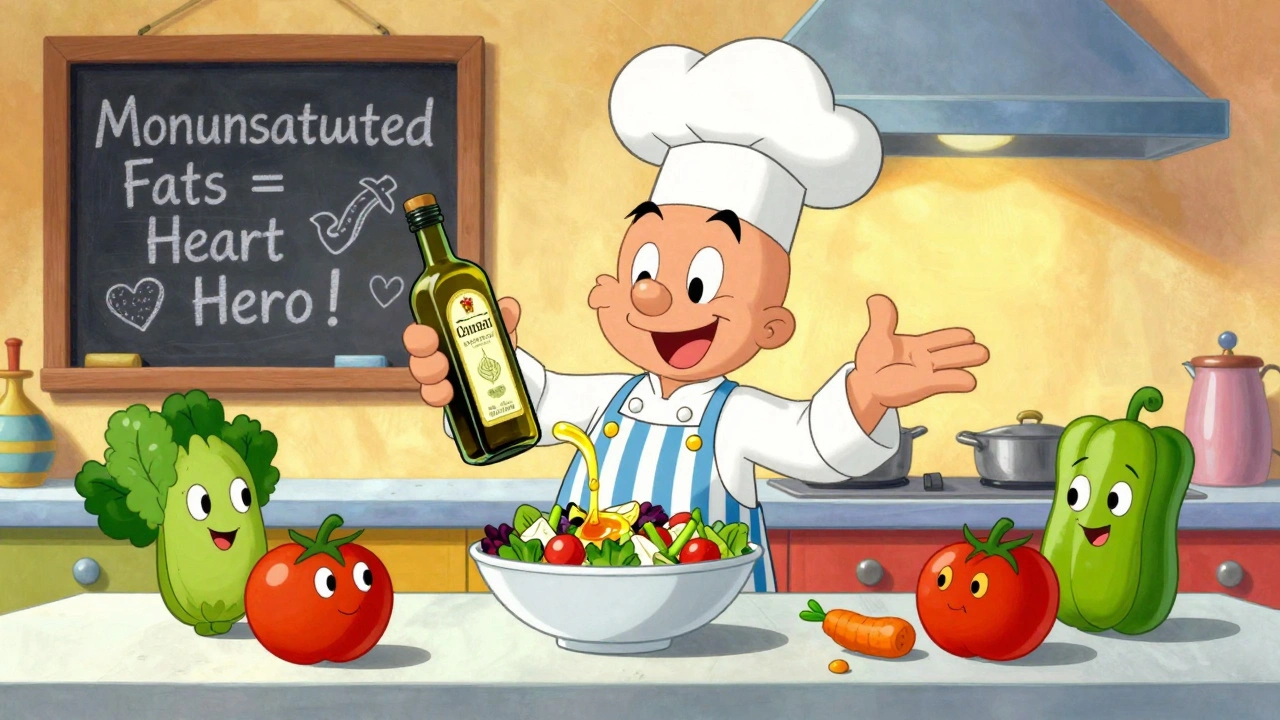
What Makes an Oil Heart-Healthy?
Not all fats are created equal. Some fats raise your bad cholesterol and increase your risk of heart disease. Others do the opposite-they lower bad cholesterol, raise good cholesterol, and reduce inflammation. The difference comes down to the type of fat in the oil.
Heart-healthy oils are high in monounsaturated fats and polyunsaturated fats, especially omega-3s. These fats help keep your arteries clear and your heart beating strong. On the flip side, saturated fats and trans fats are the ones to avoid. Saturated fats are mostly found in animal products and tropical oils like coconut and palm oil. Trans fats come from partially hydrogenated oils, which are often hidden in processed snacks, baked goods, and fried foods.
The science is clear: swapping saturated fats for unsaturated ones can cut your risk of heart attack by up to 30%, according to the Heart Foundation of Australia. That’s not a small change. It’s the kind of shift that can add years to your life. And you don’t need to give up flavor to get it. The right oils can make your food taste better while keeping your heart protected.
The Top 4 Heart-Healthy Oils (And When to Use Them)
Not every oil works for every cooking method. Heat changes how oils behave. Pick the wrong one, and you’re not just wasting money-you could be creating harmful compounds.
- Extra Virgin Olive Oil - This is the gold standard for heart health. It’s packed with 73% monounsaturated fat and loaded with antioxidants called polyphenols that fight inflammation. Use it for salad dressings, drizzling over roasted veggies, or low-heat sautéing. Its smoke point is around 375°F, so don’t use it for deep frying. Look for bottles labeled ‘cold-pressed’ or ‘unrefined’-those have more of the good stuff.
- Avocado Oil - If you need to sear, roast, or fry, this is your go-to. With a smoke point of 520°F, it handles high heat better than almost any other oil. It’s got 67% monounsaturated fat and a mild, buttery flavor. It’s pricier than olive oil, but a little goes a long way. You’ll find it in 16.9 fl oz bottles for $12.99-$19.99, depending on the brand.
- Algae Oil - The new kid on the block, but it’s got serious credentials. It’s 86% monounsaturated fat, the highest of any cooking oil. It’s neutral in taste, stable at 535°F, and made with way less land and water than olive oil. Right now, it’s harder to find and costs about $24.99 per bottle, but it’s popping up in more stores like Thrive Market and Whole Foods. If you cook a lot and care about sustainability, this is worth trying.
- Canola Oil - Don’t write it off. It’s affordable, has 62% monounsaturated fat, and gives you 2.2 grams of omega-3s per tablespoon-more than any other common cooking oil. It’s great for baking, stir-frying, and making mayo. Just make sure it’s non-GMO and expeller-pressed, not chemically extracted.
Stay away from corn, sunflower, and safflower oils. They’re high in omega-6 fats. Too much omega-6 without enough omega-3 can spark inflammation in your body. That’s the opposite of heart-healthy.
How to Read a Food Label for Heart Health
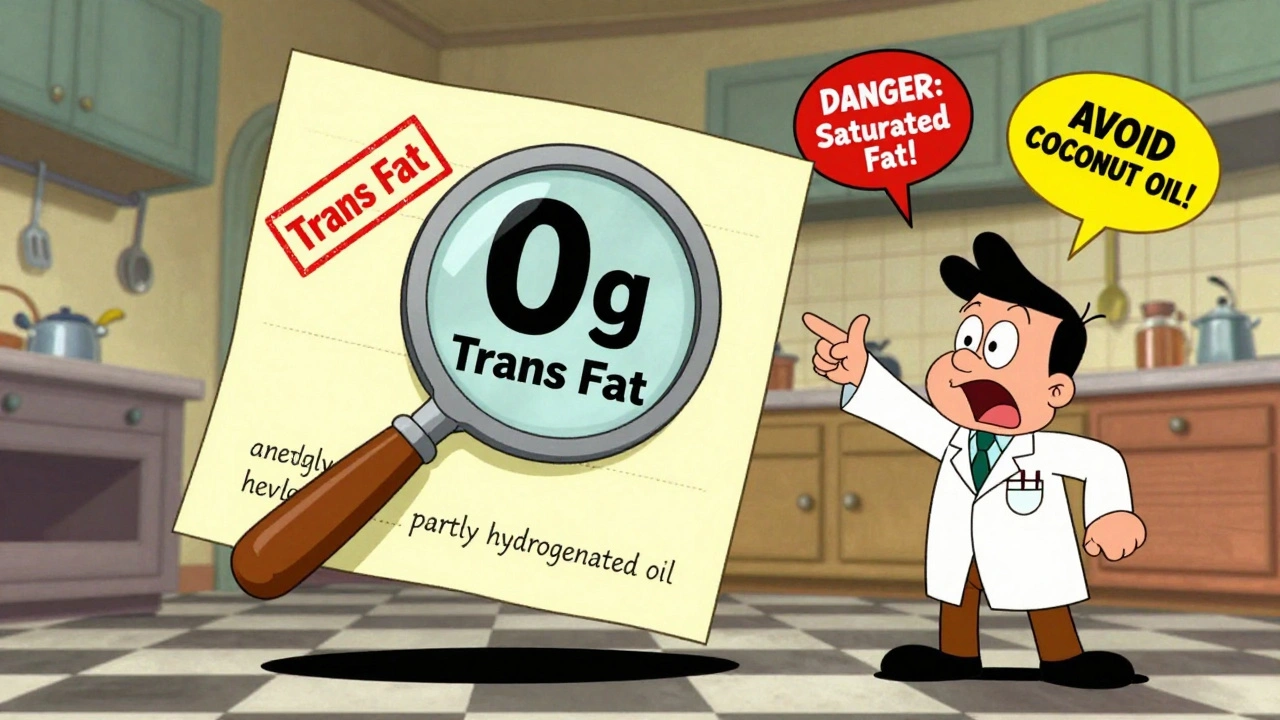
Food labels lie. Or at least, they hide things. That ‘0g trans fat’ on the package? It could still have up to 0.5 grams per serving. Eat two servings, and you’ve got a full gram. Eat three, and you’re hitting the daily limit.
Here’s how to cut through the noise:
- Check the saturated fat first. Aim for less than 2 grams per serving. If a product has more than that, ask yourself: is it worth it?
- Look for ‘partially hydrogenated oil’ in the ingredients list. Even if the label says ‘0g trans fat,’ if you see this phrase, put it back. It’s banned in processed foods, but loopholes still exist.
- Don’t trust ‘natural’ or ‘pure’ claims. Those words aren’t regulated. A bottle of coconut oil can say ‘100% natural’ and still be 82% saturated fat-something the American Heart Association warns against.
- Look for certifications. In Australia, the Heart Foundation’s Tick program means the product meets strict criteria for fat and sodium content. In Europe, look for the ‘EU Health Claim’ logo for olive oil. These seals save you time and guesswork.
Also, check the serving size. That ‘low-fat’ yogurt might look good, but if the serving is only 1/2 cup and you eat the whole container, you’re doubling the sugar and saturated fat.
What to Avoid Like the Plague
Some fats aren’t just unhealthy-they’re dangerous.
Trans fats are the worst. They raise your bad cholesterol and lower your good cholesterol. The FDA banned them from processed foods in 2020, but you can still find them in some margarines, pie crusts, and store-bought cookies. Always check the ingredients. If it says ‘partially hydrogenated,’ don’t buy it.
Coconut oil is a hot topic. Some influencers say it’s a superfood. The truth? It’s 82% saturated fat-worse than butter. The American Heart Association says it has no proven heart benefits and should be avoided. If you love the flavor, use it sparingly. Don’t make it your daily cooking oil.
Butter and lard are fine in tiny amounts for flavor, but they’re not heart-healthy. Use them like salt-just a sprinkle to enhance, not a ladle to drown.
Common Mistakes People Make
Even people who want to eat well mess this up.
- Using olive oil for high-heat cooking. When you heat extra virgin olive oil past its smoke point, it breaks down and loses its antioxidants. It doesn’t become toxic, but you lose the benefits. Use it for cold dishes or gentle cooking.
- Buying ‘blended oils’ without reading the label. A bottle labeled ‘vegetable oil’ could be mostly soybean or corn oil-both high in omega-6s. Look at the ingredients. If it doesn’t say what’s in it, walk away.
- Storing oils in a hot cupboard. Light and heat make oils go rancid fast. Oils rich in polyunsaturated fats-like flaxseed, walnut, and even canola-should go in the fridge. They’ll last longer and taste better.
- Thinking ‘light’ means healthy. ‘Light’ olive oil doesn’t mean fewer calories. It means it’s been refined, stripped of flavor and nutrients. It’s not heart-healthy.

Storage and Shelf Life: Don’t Waste Your Good Oil
Good oil doesn’t last forever. Once opened, most oils start to oxidize. Here’s how to keep yours fresh:
- Store oils in dark glass bottles, not plastic.
- Keep them in a cool, dark place-away from the stove.
- Refrigerate flaxseed, walnut, and algae oil after opening.
- Use olive and avocado oil within 6 months of opening.
- If it smells like crayons or old nuts, toss it. Rancid oil doesn’t just taste bad-it can harm your cells.
Buying smaller bottles is smarter than bulk. You’ll use it before it goes bad, and you’ll get the freshest batch.
Real-Life Swaps That Work
You don’t need to overhaul your whole kitchen. Just make a few smart swaps:
- Instead of butter on toast, use a thin spread of avocado oil or olive oil.
- When baking muffins, swap butter for canola oil. You’ll get the same texture with better fats.
- Make your own salad dressing with olive oil, lemon juice, and herbs. Skip the bottled ones-they’re loaded with sugar and hidden oils.
- Roast veggies in avocado oil instead of vegetable oil. You’ll get a crispier finish and more heart protection.
- Choose grilled or baked chicken over fried. If you must fry, use avocado or algae oil.
These small changes add up. You won’t notice a difference in taste-but your arteries will thank you in 5 years.
Final Thought: It’s Not About Perfection
You don’t need to buy the most expensive oil or read every label perfectly. Heart health is built over time, not in one meal. Pick one oil to use most of the time-olive or avocado-and stick with it. Learn to read labels when you’re buying packaged foods. Avoid trans fats like they’re poison. And don’t stress over coconut oil if you use it once a month.
What matters most is consistency. Swap out the bad fats. Keep the good ones. And cook with intention. That’s how real change happens.
Is avocado oil better than olive oil for heart health?
Both are excellent for heart health, but they serve different purposes. Avocado oil has a higher smoke point (520°F), making it better for frying and roasting. Olive oil, especially extra virgin, has more antioxidants and polyphenols that reduce inflammation. For daily use, olive oil is ideal for dressings and low-heat cooking. For high-heat methods, avocado oil is the smarter pick.
Can I use coconut oil if I have high cholesterol?
No. Coconut oil is 82% saturated fat-higher than butter. The American Heart Association advises against using it for heart health. It raises LDL (bad) cholesterol without reliably raising HDL (good) cholesterol. If you have high cholesterol, avoid coconut oil as a cooking fat. Use olive, avocado, or canola oil instead.
What does ‘cold-pressed’ mean on an oil label?
Cold-pressed means the oil was extracted without heat or chemicals. This preserves the natural antioxidants, flavor, and nutrients. Extra virgin olive oil and unrefined avocado oil are typically cold-pressed. Avoid oils labeled ‘refined’ or ‘expeller-pressed with solvents’-they lose much of their health value.
Are all olive oils heart-healthy?
No. Only extra virgin olive oil is reliably heart-healthy. Regular or ‘pure’ olive oil is refined and stripped of antioxidants. Even worse, up to 60% of olive oil sold in the U.S. doesn’t meet purity standards. Look for certifications like ‘Protected Designation of Origin’ (PDO) or ‘UC Davis Olive Center’ verified labels to ensure quality.
How do I know if my oil has gone bad?
Rancid oil smells stale, like crayons, old nuts, or play-doh. It might taste bitter or sour. If you’re unsure, pour a little into a spoon and smell it. Fresh oil should smell like the ingredient-olive oil smells grassy, avocado oil smells nutty. If it smells off, throw it out. Rancid oils create free radicals that damage cells.
Andrea Petrov
December 8, 2025 AT 11:51Suzanne Johnston
December 9, 2025 AT 20:42Graham Abbas
December 11, 2025 AT 17:56Sabrina Thurn
December 12, 2025 AT 17:33Courtney Black
December 14, 2025 AT 17:31Nikhil Pattni
December 15, 2025 AT 06:51iswarya bala
December 16, 2025 AT 11:59Haley P Law
December 18, 2025 AT 03:34om guru
December 19, 2025 AT 15:26