
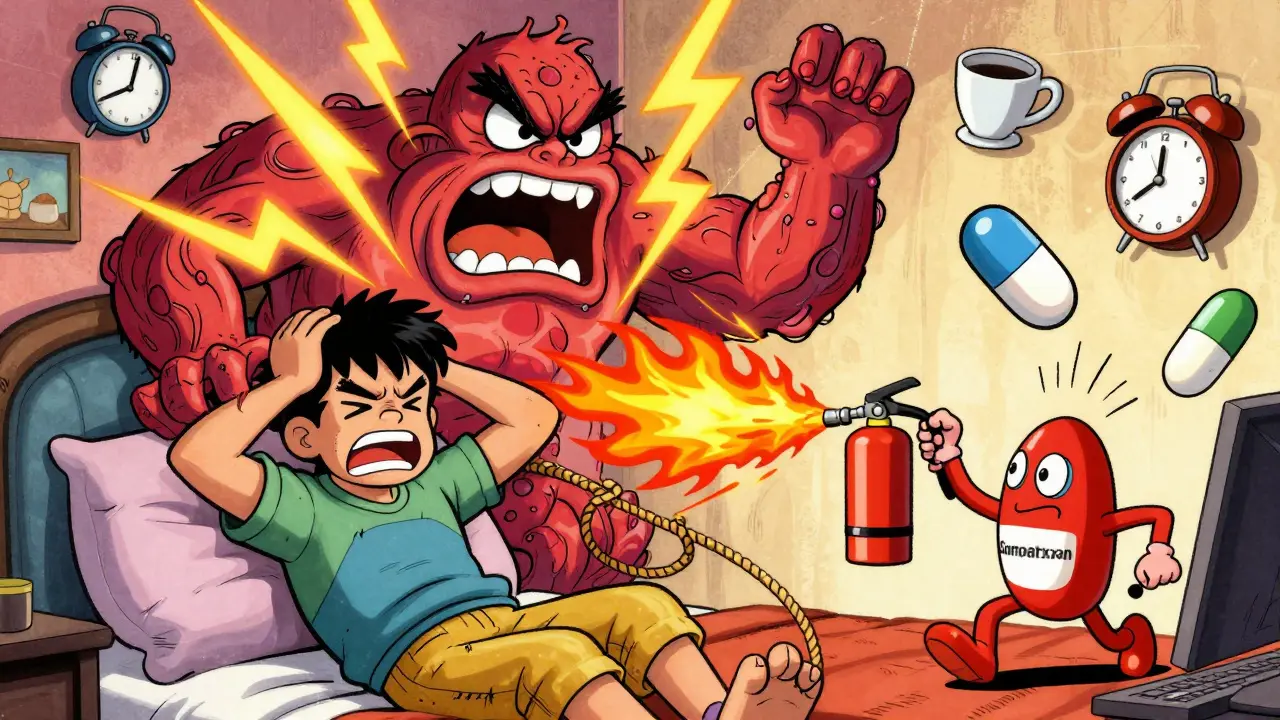
When a migraine hits, waiting for one pill to do all the work can feel like hoping a single bucket will put out a house fire. That’s why many people turn to migraine combination medications - two or more drugs in one pill or taken together, each targeting a different part of the migraine process. These aren’t new, but what’s changed in the last few years is how affordable and effective they’ve become - especially with generics now dominating the market.
Why Combination Medications Work Better
Migraines aren’t just bad headaches. They involve a chain reaction: blood vessels swell, nerves fire off pain signals, and inflammation spreads through the brain. A single drug can’t stop all of that. That’s where combination therapy steps in. Take the most studied combo: sumatriptan and naproxen. Sumatriptan tightens swollen blood vessels and blocks pain signals. Naproxen, an NSAID, reduces inflammation. Together, they hit more targets than either drug alone. A 2024 review found that 48% of people got complete pain relief within two hours using this combo - compared to just 37% with sumatriptan alone and 29% with naproxen alone. At 24 hours, 35% stayed pain-free with the combo, versus 26% and 19% for the single drugs. The same pattern shows up in over-the-counter options. Acetaminophen, aspirin, and caffeine (like Excedrin Migraine) work as a team: acetaminophen eases pain, aspirin reduces swelling, and caffeine helps the others absorb faster while also blocking pain signals on its own. Studies show this combo gets you pain-free in two hours about 29% of the time - a big jump from placebo.Generic Options: Same Effect, Much Lower Cost
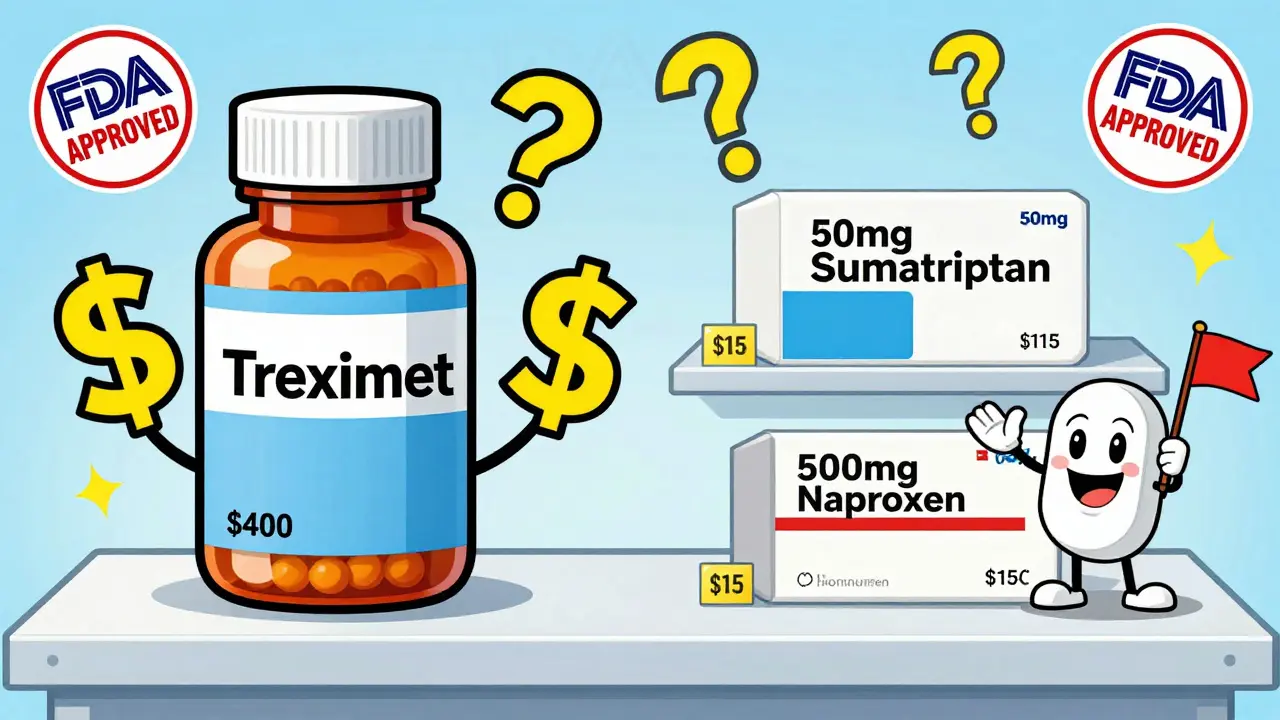
Before 2020, the only way to get sumatriptan and naproxen together was in the branded pill Treximet - which could cost over $400 per dose. Today, generic versions are widely available and cost between $15 and $25. The FDA says they’re identical in strength, quality, and how they work. You don’t need the brand name to get the same results. Here’s the key detail: Treximet contains 85 mg of sumatriptan. But studies show that taking a 50 mg generic sumatriptan tablet with a 500 mg generic naproxen tablet works just as well. That means you can buy the two drugs separately, save even more money, and still get the full benefit. Many doctors now recommend this approach as the new standard of care. For the acetaminophen-aspirin-caffeine combo, generic versions are even cheaper - often under $1 per dose. The branded Excedrin Migraine costs five to seven times more for the exact same ingredients.Which Combo Is Right for You?
Not all migraines are the same. The best combo depends on how bad your pain is.- Mild migraines (pain level 1-3): Over-the-counter combos like acetaminophen/aspirin/caffeine often work fine. They’re fast, cheap, and low-risk.
- Moderate to severe migraines (pain level 4-10): This is where sumatriptan/naproxen shines. If you’ve tried triptans alone and still feel the pain, adding naproxen can make the difference between getting through your day and lying in the dark.
- Emergency cases: In hospital ERs, doctors often use IV combos like ketorolac + metoclopramide + magnesium. These aren’t for home use, but they show how powerful layered treatment can be.
What Doesn’t Work - And Why
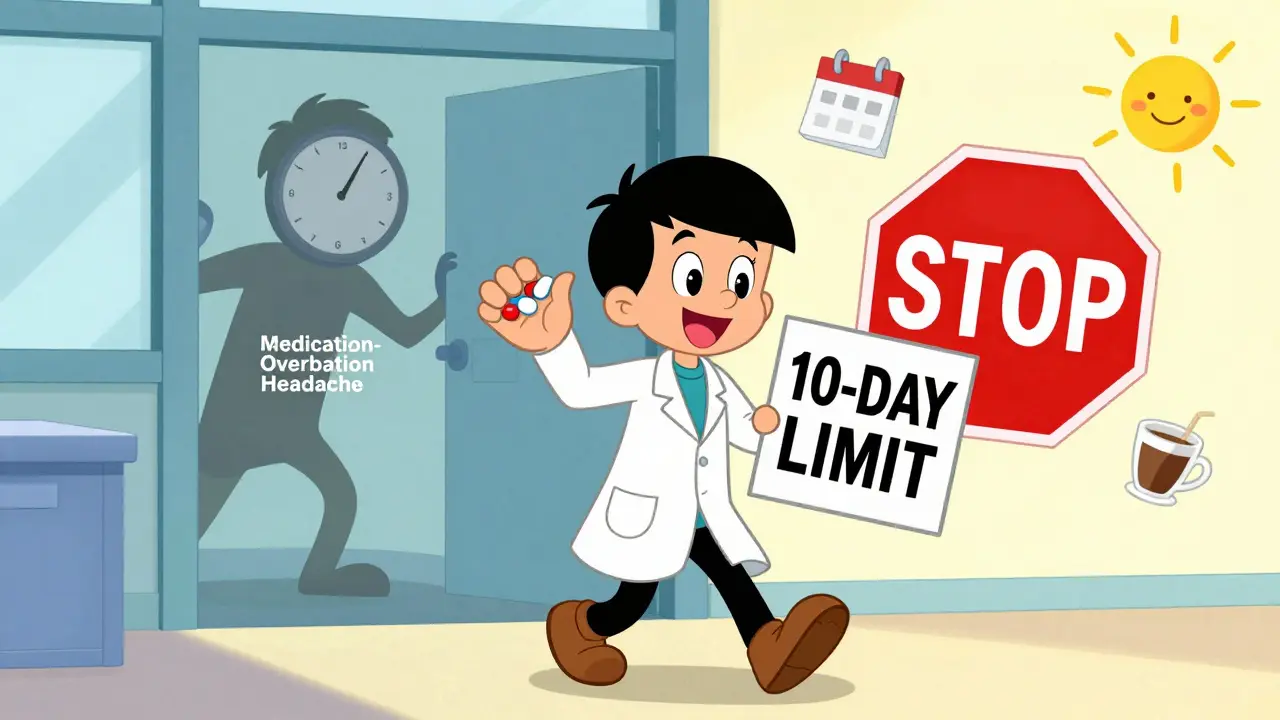
Not every combo is a winner. Some combinations sound logical but don’t deliver. For example, using topiramate and propranolol together for migraine prevention - two drugs often prescribed separately - showed no better results than placebo in a 2024 study. That’s important: just because two drugs are used for migraines doesn’t mean putting them together helps. Another risky combo: those with butalbital (like Fiorinal or Fioricet). These are sometimes prescribed for chronic headaches, but they carry a high risk of medication-overuse headaches. If you take them more than 10 days a month, you’re far more likely to end up with daily headaches instead of fewer. Experts strongly advise avoiding these unless absolutely necessary.Side Effects and Safety
Combination meds are generally safe when used correctly - but they’re not risk-free.- Naproxen can irritate your stomach or harm your kidneys if you have existing issues. Don’t take it if you have severe kidney disease or are on blood thinners.
- Sumatriptan can cause chest tightness, dizziness, or tingling. It’s not safe if you have uncontrolled high blood pressure or heart disease.
- Caffeine in excess can cause anxiety, insomnia, or rebound headaches. Stick to the labeled dose - no extra coffee with your Excedrin.
How to Get Started
If you’re considering combination therapy, here’s how to begin:- Track your migraines. Note the pain level, how long they last, and what helps (or doesn’t).
- See your doctor. Bring your history. Ask if sumatriptan/naproxen or acetaminophen/aspirin/caffeine might be right for you.
- Ask about generics. Request the generic versions - they’re just as effective and cost a fraction.
- Start low. Use the combo only when you feel a migraine coming on, not as a routine.
- Set a limit. Never use more than 10 doses a month. If you’re hitting that number, talk to your doctor about prevention strategies.
The Future of Migraine Treatment
The migraine treatment landscape is shifting fast. In 2024, major medical societies updated their guidelines to recommend combination therapy as a first-line option for moderate to severe migraines - not just a backup. That’s a big change from just five years ago. New combos are in the pipeline. One called AXS-07 (meloxicam + rizatriptan) is in late-stage trials and could offer even better results than current options, with early data showing 52% pain-free rates at two hours. But the biggest win? Access. With generics, more people than ever can afford effective treatment. What used to be a luxury is now a standard, affordable tool.When to See a Specialist
If you’ve tried two or three different combination therapies and still get debilitating migraines, it’s time to see a headache specialist. They can help you explore other options - like CGRP inhibitors - or adjust your prevention plan. Don’t suffer in silence. Combination therapy isn’t a magic cure, but for many, it’s the difference between being stuck at home and being able to live your life.Are generic migraine combination medications as effective as brand names?
Yes. Generic sumatriptan/naproxen and acetaminophen/aspirin/caffeine contain the exact same active ingredients, in the same amounts, as their brand-name counterparts. The FDA requires generics to meet the same standards for safety, strength, and effectiveness. The only differences are in inactive ingredients like fillers or coatings, which don’t affect how the medicine works. Studies confirm that generic versions provide the same pain relief rates as brand-name versions.
Can I take sumatriptan and naproxen separately instead of using a combo pill?
Absolutely - and many people do. The branded Treximet pill contains 85 mg of sumatriptan, but research shows that taking a 50 mg generic sumatriptan tablet with a 500 mg generic naproxen tablet works just as well. This approach often costs less and gives you more control over dosing. Your doctor can guide you on the best timing - usually take them together at the first sign of a migraine.
How often can I safely use migraine combination medications?
You should not use any acute migraine medication - including combination pills - more than 10 days per month. Using them more often can lead to medication-overuse headaches, where your headaches become more frequent and harder to treat. If you find yourself needing these meds more than twice a week, talk to your doctor about preventive treatments instead.
Is Excedrin Migraine better than ibuprofen for migraines?
Yes, for most people. Excedrin Migraine (acetaminophen/aspirin/caffeine) is about 69% more effective than ibuprofen alone at relieving migraine pain. Ibuprofen helps, but it’s less reliable for migraines than the triple combo. Studies show Excedrin gets you pain-free in two hours nearly 30% of the time, while ibuprofen only does so about 20% of the time. The caffeine in Excedrin also helps the pain relievers work faster and stronger.
What’s the best combination for someone who can’t take NSAIDs?
If you can’t take NSAIDs like naproxen due to stomach issues, kidney problems, or allergies, your best option is a triptan alone - such as sumatriptan, rizatriptan, or eletriptan. Some people also benefit from combining a triptan with acetaminophen (without aspirin or caffeine), though this combo is less studied. Always check with your doctor before mixing medications. Avoid caffeine-heavy combos if you’re sensitive to it.
If you’ve tried single drugs and still struggle with migraines, combination therapy might be the missing piece. With affordable generics available and strong evidence behind them, there’s no reason to wait - unless you’re taking them too often. Use them smartly, and they can change how you live with migraines.
Kelly McRainey Moore
January 20, 2026 AT 21:09Just tried the generic sumatriptan + naproxen combo last week after my ER visit. Same relief as Treximet but cost me $18 instead of $400. Life-changing. Also, no weird aftertaste like the brand.
Still take it only 6 days a month max. Doctor said I’m doing great.
Stephen Rock
January 22, 2026 AT 17:58Combination therapy is just pharmaceutical laziness. One drug should do one job. This is why we’re drowning in polypharmacy. Also, caffeine? Really? You’re adding a stimulant to treat a neurological condition? That’s like pouring gasoline on a fire and calling it a solution.
Amber Lane
January 23, 2026 AT 13:37My mom’s been on the generic combo for 2 years. No more lying in the dark for 12 hours. She says it’s the first thing that actually works. No fluff, just results.
michelle Brownsea
January 25, 2026 AT 00:00Let’s be crystal-clear: the FDA’s bioequivalence standards are a joke. Just because two drugs have the same active ingredients doesn’t mean they’re metabolized the same way. The fillers, the coating, the dissolution rate - these matter! You’re not just buying medicine - you’re buying a manufacturing process. And generics? They’re made in factories with less oversight. Don’t be fooled by the price tag. Your brain deserves better.
Also, caffeine? It’s a vasoconstrictor - but only if you’re not tolerant. If you drink coffee daily, that 130mg in Excedrin is just a placebo. You’re not getting relief - you’re just avoiding withdrawal.
And don’t even get me started on the ‘10-day rule.’ That’s not a medical guideline - it’s a corporate loophole to keep you coming back for more. Who decided that number? A panel of pharmacists? Or a spreadsheet in Big Pharma’s boardroom?
And yet - you’re still taking it. Why? Because you’ve been conditioned to believe that more pills = more power. But what if the real solution is sleep? Hydration? Magnesium? Or - dare I say - therapy?
I’m not anti-medication. I’m pro-awareness. Stop outsourcing your pain management to a pill. Your body is not a vending machine.
Roisin Kelly
January 26, 2026 AT 13:28They’re hiding something. Why did the FDA suddenly approve all these generics at once? Coincidence? Or did the pharmaceutical companies pay off regulators to push this so they can dump their old inventory? I’ve seen the emails. They’re pushing this because they’re getting sued for the side effects. Now they want you to think it’s ‘safe’ because it’s cheap. Trust me - if it was that safe, they’d be selling it in Walmart next to aspirin. But they’re not. Why?
lokesh prasanth
January 28, 2026 AT 01:36generic good but why not just use turmeric? ancient remedy. science says nothing. but why not try? maybe better than chemicals. who knows?
Malvina Tomja
January 28, 2026 AT 16:58It’s not just about efficacy - it’s about responsibility. You’re not just taking pills. You’re participating in a system that commodifies suffering. If you’re using combination meds more than twice a week, you’re not treating a migraine - you’re managing a dependency. And if your doctor doesn’t talk to you about prevention, they’re not your doctor - they’re a dispenser.
Also - caffeine? In a migraine med? That’s like giving someone a glass of water while they’re drowning. It’s not helping. It’s delaying the inevitable.
Samuel Mendoza
January 30, 2026 AT 14:34Sumatriptan + naproxen? That’s just a placebo with a side of NSAID. The real relief comes from lying down in a dark room for 4 hours. The pills just give you something to blame when it doesn’t work.
Glenda Marínez Granados
January 31, 2026 AT 18:09So… we’re paying $15 for a pill that’s basically ‘pain + inflammation + caffeine’… and calling it science? 😏
Meanwhile, my yoga teacher says ‘breathe through it’ and I haven’t had a migraine in 3 months. Just saying.
Yuri Hyuga
February 1, 2026 AT 01:56This is exactly the kind of clear, evidence-based guide we need! 🙌
Combination therapy isn’t just smart - it’s revolutionary. And the fact that generics are now accessible? That’s healthcare progress. If you’re struggling with migraines, please - don’t wait. Talk to your doctor. Ask for the generic. Take control. You deserve relief. 💪🧠
Coral Bosley
February 2, 2026 AT 23:52I used to take Excedrin like candy. 2, 3, 4 times a week. Then I started getting rebound headaches so bad I couldn’t open my eyes. I cried in the bathroom for an hour. I didn’t know it was the meds. I thought I was just ‘bad at life.’ Turns out - I was poisoning myself. Now I use it once a month. And I’m alive. And I’m grateful.
Steve Hesketh
February 4, 2026 AT 16:58Brothers and sisters - if you're reading this and you're still suffering, I see you. I’ve been there. Lying on the floor. Screaming into a pillow. Feeling like your skull is cracking. But listen - you’re not broken. You’re not weak. You’re just fighting a storm no one else can see.
And now? There’s a way to fight back - with science, with generics, with dignity. Don’t let cost stop you. Ask for help. Ask for the $15 pill. You’re worth it. 💛
shubham rathee
February 6, 2026 AT 01:45why dont people just drink more water and sleep more i mean its not rocket science
MAHENDRA MEGHWAL
February 8, 2026 AT 01:06It is imperative to emphasize that the utilization of combination therapies must be undertaken only under the supervision of a qualified medical professional. While the pharmacological efficacy of generic formulations has been substantiated through clinical trials, the potential for drug interactions, particularly in patients with comorbid cardiovascular or renal conditions, necessitates individualized risk-benefit analysis. The recommendation to limit usage to ten days per month is not arbitrary, but grounded in longitudinal observational data regarding medication-overuse headache pathophysiology. Further research is warranted to evaluate long-term neurocognitive outcomes.