
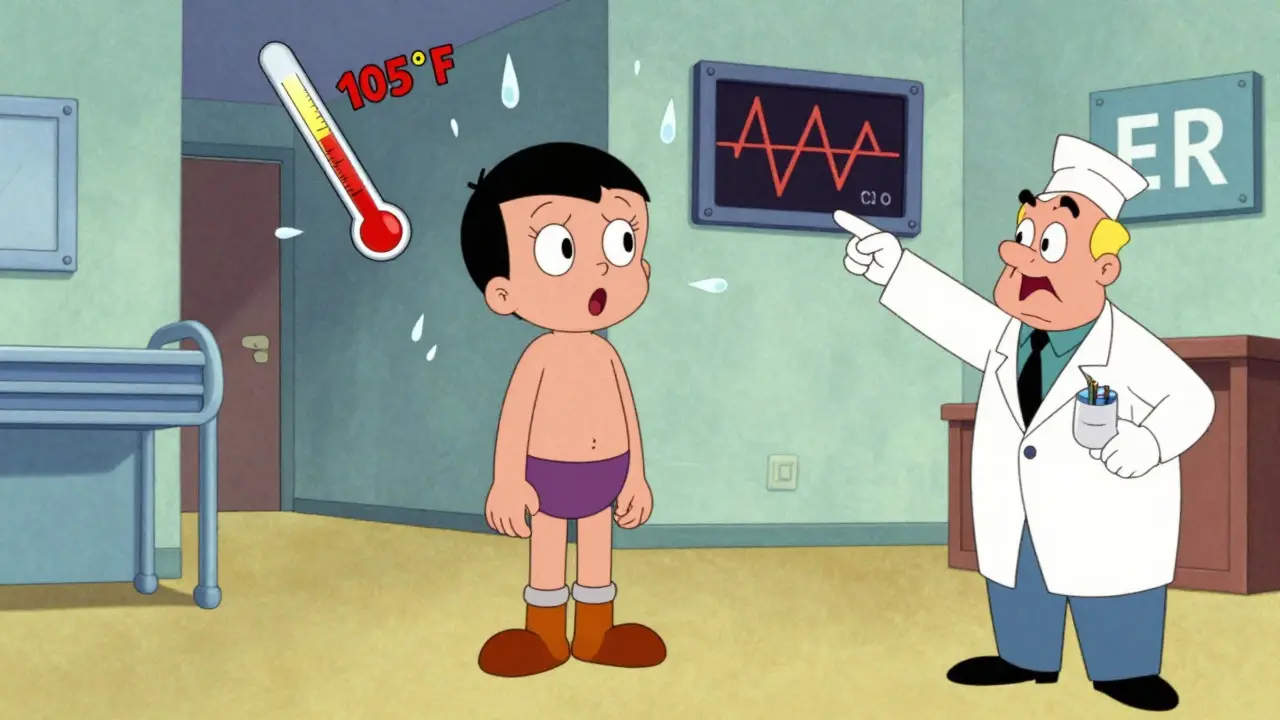
NMS Symptom Checker
Check for Neuroleptic Malignant Syndrome
This tool helps identify potential NMS symptoms. If you or someone you know is on dopamine-blocking medication and experiences these symptoms, seek immediate medical attention.
Neuroleptic Malignant Syndrome (NMS) isn’t something most people hear about until it’s too late. It doesn’t show up on TV dramas or pop-up ads. But for someone taking an antipsychotic - whether it’s haloperidol, risperidone, or even an anti-nausea drug like metoclopramide - this rare but deadly reaction can strike without warning. And if you don’t recognize it fast, the consequences can be fatal.
What Exactly Is Neuroleptic Malignant Syndrome?
NMS is a severe, life-threatening reaction to drugs that block dopamine in the brain. These include antipsychotics used for schizophrenia, bipolar disorder, and sometimes severe anxiety. But it’s not just those. Even drugs like metoclopramide (used for nausea) and promethazine (for allergies or motion sickness) can trigger it. The core problem? Your body’s dopamine system gets shut down too hard, too fast.
When dopamine receptors in the brain - especially in areas controlling movement and temperature - are blocked, your muscles lock up, your body can’t regulate heat, and your nervous system goes haywire. The result? A dangerous mix of four key symptoms: extreme muscle stiffness, high fever, confusion or altered mental state, and wild swings in heart rate and blood pressure.
It’s not a gradual decline. It’s a rapid collapse. Most cases show up within two weeks of starting or increasing a medication, but some hit within 48 hours. Others don’t appear until months later. That unpredictability makes it harder to catch.
The Four Signs You Can’t Ignore
If you or someone you know is on a dopamine-blocking drug and starts showing these signs, act immediately:
- Lead-pipe rigidity: Muscles feel like concrete. When someone tries to move your arm or leg, it doesn’t bend - it resists evenly, like pushing against a stiff pipe.
- Hyperthermia: Body temperature climbs above 38°C (100.4°F), often spiking to 40°C (104°F) or higher. This isn’t a fever from infection - it’s your muscles overheating from constant contraction.
- Altered mental status: You might see agitation, delirium, mutism (not speaking), or even coma. People often think it’s a psychotic episode worsening - but it’s not. It’s physical.
- Autonomic instability: Heart rate races past 90 bpm, blood pressure spikes or crashes, breathing gets fast and shallow, and sweat pours out even in a cool room.
These symptoms don’t always show up at once. Usually, mental changes come first - confusion or restlessness. Then comes the stiffness. Then the fever. Then the chaos in your heartbeat and blood pressure. That sequence is a red flag.
What Happens Inside Your Body?
Behind the symptoms is a cascade of physical damage. When muscles stay locked tight for hours, they start breaking down. This is called rhabdomyolysis. Muscle cells leak a protein called myoglobin into the bloodstream. Your kidneys try to filter it out - but they can’t handle the flood. That’s why nearly one in three severe NMS cases leads to acute kidney failure.
At the same time, your body burns through energy like crazy. Blood tests often show:
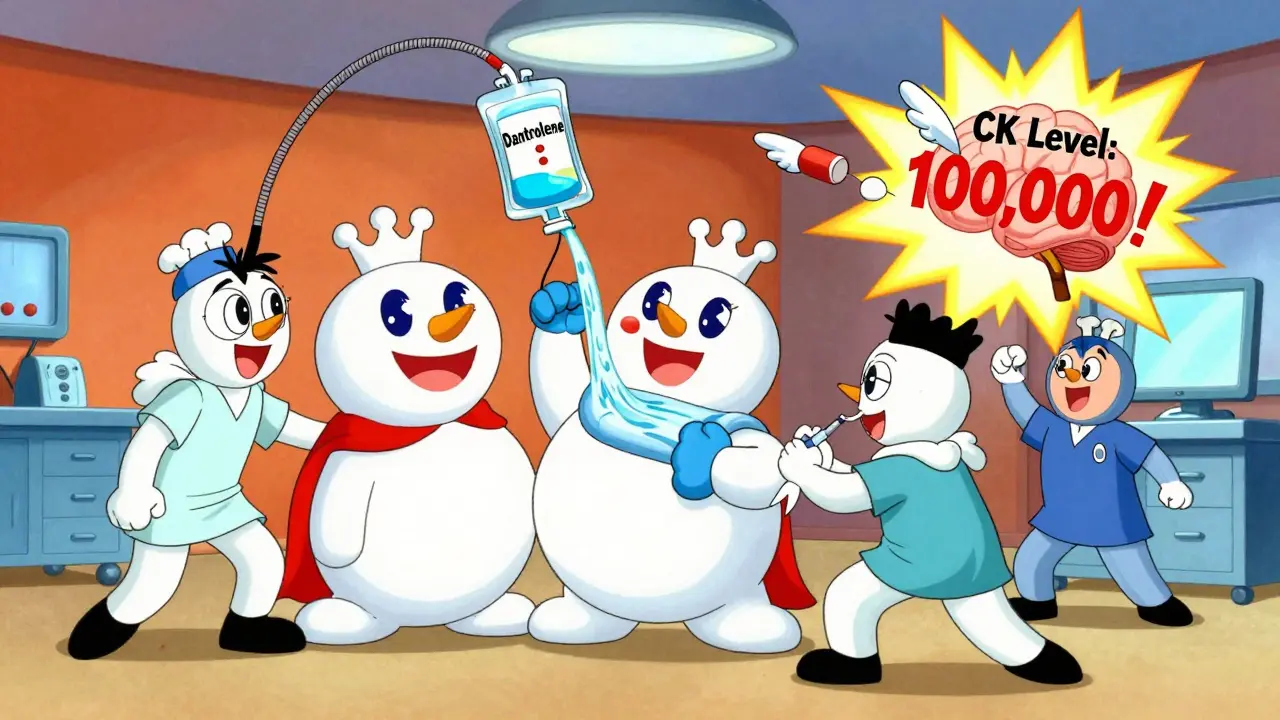
- Creatine kinase (CK) levels above 1,000 IU/L - sometimes over 100,000 IU/L
- White blood cell counts over 12,000/µL
- Low iron levels (below 60 µg/dL)
- Acidic blood (low bicarbonate)
- High potassium - which can stop your heart
These aren’t just lab numbers. They’re signs your body is shutting down from the inside out.
It’s Often Mistaken for Something Else
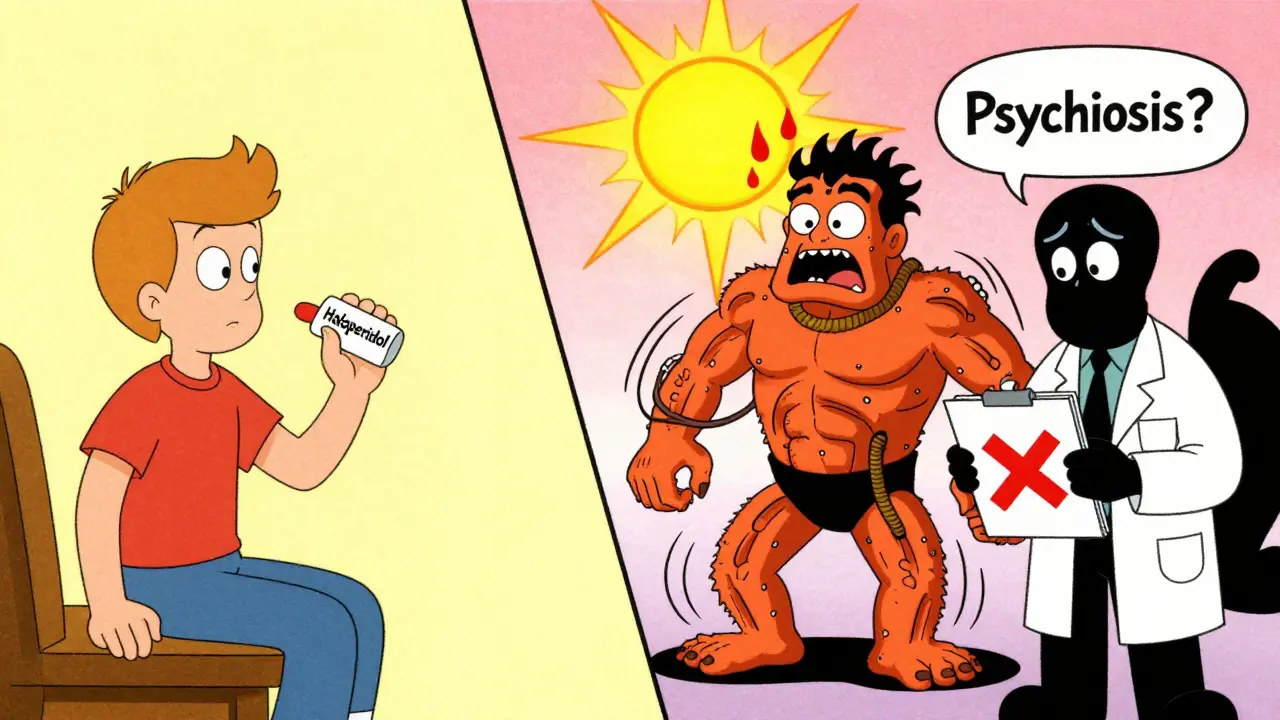
Here’s the scary part: up to 12% of NMS cases are misdiagnosed at first. Emergency room doctors, even experienced ones, often think it’s:
- A psychotic break getting worse
- A severe infection like sepsis
- Drug withdrawal
- Or even a stroke
One patient on a mental health forum described being told, “You’re just having a bad episode,” while his temperature hit 105.1°F and he couldn’t move or speak for three days. It took 48 hours for someone to realize it wasn’t his schizophrenia - it was NMS.
That delay is deadly. Every hour counts. The longer treatment is postponed, the higher the chance of kidney failure, heart rhythm problems, or death.
NMS vs. Serotonin Syndrome vs. Malignant Hyperthermia
People often confuse NMS with two other dangerous conditions. Here’s how to tell them apart:
| Feature | Neuroleptic Malignant Syndrome (NMS) | Serotonin Syndrome | Malignant Hyperthermia |
|---|---|---|---|
| Trigger | Antipsychotics, antiemetics (dopamine blockers) | SSRIs, SNRIs, tramadol, MDMA (serotonin boosters) | Volatile anesthetics, succinylcholine (during surgery) |
| Onset | Days to 2 weeks | Hours | Minutes |
| Muscle Rigidity | Lead-pipe (uniform stiffness) | Clonus (involuntary twitching) | Masseter spasm (jaw locking) |
| Neurological Signs | Mutism, bradykinesia, confusion | Hyperreflexia, myoclonus, agitation | Generalized muscle rigidity, tachycardia |
| Temperature | Often >40°C | Usually <40°C | Very rapid rise, >40°C |
| Key Lab Finding | CK >1,000 IU/L (rhabdomyolysis) | Normal or mildly elevated CK | Normal CK (unless prolonged) |
Clonus - that rapid, rhythmic muscle twitching - is the hallmark of serotonin syndrome. NMS has none of that. Instead, it’s the deep, unyielding stiffness that gives it away.
How Is It Treated?
There’s no magic pill. But there’s a proven protocol - and speed is everything.
- Stop the drug immediately. No exceptions. If it’s haloperidol, risperidone, metoclopramide - stop it now.
- Get to the ICU. This isn’t a hospital ward situation. You need constant monitoring of heart, lungs, kidneys, and temperature.
- Cool the body. Ice packs, cooling blankets, IV fluids - anything to bring the fever down before organs fail.
- Hydrate aggressively. At least 1-2 liters of IV fluids right away, then 100-150 mL/hour to flush out muscle breakdown products and protect the kidneys.
- Use specific medications. Dantrolene (given IV) helps relax muscles and is used in both NMS and malignant hyperthermia. Bromocriptine (oral) or apomorphine (injected or nasal) helps restart dopamine activity in the brain. Early use of apomorphine has shown temperature normalization in under 4 hours in recent trials.
CK levels are checked every 6-12 hours. If they peak and start falling, that’s a good sign. If they keep climbing, you’re still in danger. About 25% of severe cases need dialysis to save the kidneys.
Who’s at Risk?
While NMS can happen to anyone, certain factors raise the risk:
- Starting or increasing a high-potency antipsychotic like haloperidol by more than 5 mg/day
- Receiving antipsychotics by injection (not pills)
- Taking lithium with an antipsychotic
- Being a young male (men are twice as likely as women to develop it)
- Having bipolar disorder (higher risk than schizophrenia)
- Having Parkinson’s disease and suddenly stopping dopaminergic meds
And here’s something many don’t know: about 60% of cases happen when someone first starts the medication. Another 30% occur when the dose is increased. Only 10% happen during stable, long-term treatment.
What Happens After You Survive?
Surviving NMS doesn’t mean you’re back to normal. Recovery takes weeks - sometimes months. Muscle weakness, fatigue, and difficulty walking are common. One person on a support forum said it took eight weeks before they could walk without help.
And then there’s the psychological toll. About 65% of survivors are terrified to take antipsychotics again - even if they need them to stay stable. That creates a terrible dilemma: go back on the drug that almost killed you, or risk a psychotic relapse.
Doctors now use a careful rechallenge process: start with a low dose of a different antipsychotic (like clozapine or quetiapine, which have lower NMS risk), monitor closely, and move slowly. Some patients never take antipsychotics again - and manage their illness with therapy and other supports.
The Future: Better Detection, Safer Drugs
Things are improving. The introduction of second-generation antipsychotics like olanzapine and aripiprazole has cut NMS rates from 0.5-2% to just 0.01-0.02%. That’s a 95% drop.
Hospitals are testing AI tools that scan electronic records for early signs - like a sudden spike in CK or unexplained fever in someone on antipsychotics. Early results show they can flag potential cases 24 hours before doctors notice.
The FDA now requires black box warnings on all antipsychotics - the strongest safety alert possible. And research is underway for new dopamine modulators that won’t trigger NMS at all.
But the most powerful tool remains awareness. If you’re on an antipsychotic or anti-nausea drug, know the signs. If you see muscle stiffness, fever, and confusion - don’t wait. Don’t assume it’s just “worse psychosis.” Call for help. Get to the ER. Your life could depend on it.
Can NMS happen with non-antipsychotic drugs?
Yes. About 15% of NMS cases are triggered by non-antipsychotic medications that block dopamine, including the anti-nausea drugs metoclopramide and promethazine. Even some antihistamines and anti-Parkinson’s drug withdrawals can cause it. Any drug that interferes with dopamine signaling carries some risk.
Is NMS the same as a psychotic relapse?
No. A psychotic relapse involves hallucinations, delusions, or disorganized thinking - but not muscle rigidity, high fever, or unstable vital signs. NMS is a physical emergency, not a mental health crisis. Mistaking it for psychosis delays life-saving treatment.
How long does recovery take?
With prompt treatment, most people start improving in 7-10 days. But full recovery can take weeks to months. Muscle weakness, fatigue, and cognitive fog often linger. About 15% of survivors still have noticeable muscle problems 30 days after the episode.
Can you get NMS again if you take antipsychotics later?
Yes, recurrence is possible - but it’s rare if you switch to a lower-risk medication and restart very slowly. Some doctors avoid antipsychotics entirely after NMS. Others use clozapine or quetiapine with extreme caution. Close monitoring and slow titration are essential.
What’s the survival rate today?
With early recognition and ICU care, survival rates have jumped from 76% in the 1980s to 95% today. The biggest factor? Speed. If treatment starts within 24 hours, the risk of death drops dramatically. Delays beyond 48 hours greatly increase the chance of organ failure or death.
gerard najera
January 2, 2026 AT 02:49Simple. Brutal. Real.
Stephen Gikuma
January 4, 2026 AT 02:13Bobby Collins
January 5, 2026 AT 09:51jaspreet sandhu
January 6, 2026 AT 06:05Paul Ong
January 7, 2026 AT 12:23Andy Heinlein
January 8, 2026 AT 12:54glad someone finally laid it out like this
Ann Romine
January 10, 2026 AT 08:16Todd Nickel
January 11, 2026 AT 09:13Austin Mac-Anabraba
January 12, 2026 AT 06:57Phoebe McKenzie
January 13, 2026 AT 02:22Layla Anna
January 14, 2026 AT 00:35my cousin went through this and no one told us what was happening
we just thought she was having a bad day
:(
Heather Josey
January 15, 2026 AT 09:20Donna Peplinskie
January 16, 2026 AT 20:38Thank you for lighting this candle.
Olukayode Oguntulu
January 18, 2026 AT 00:32Alex Warden
January 19, 2026 AT 17:32