
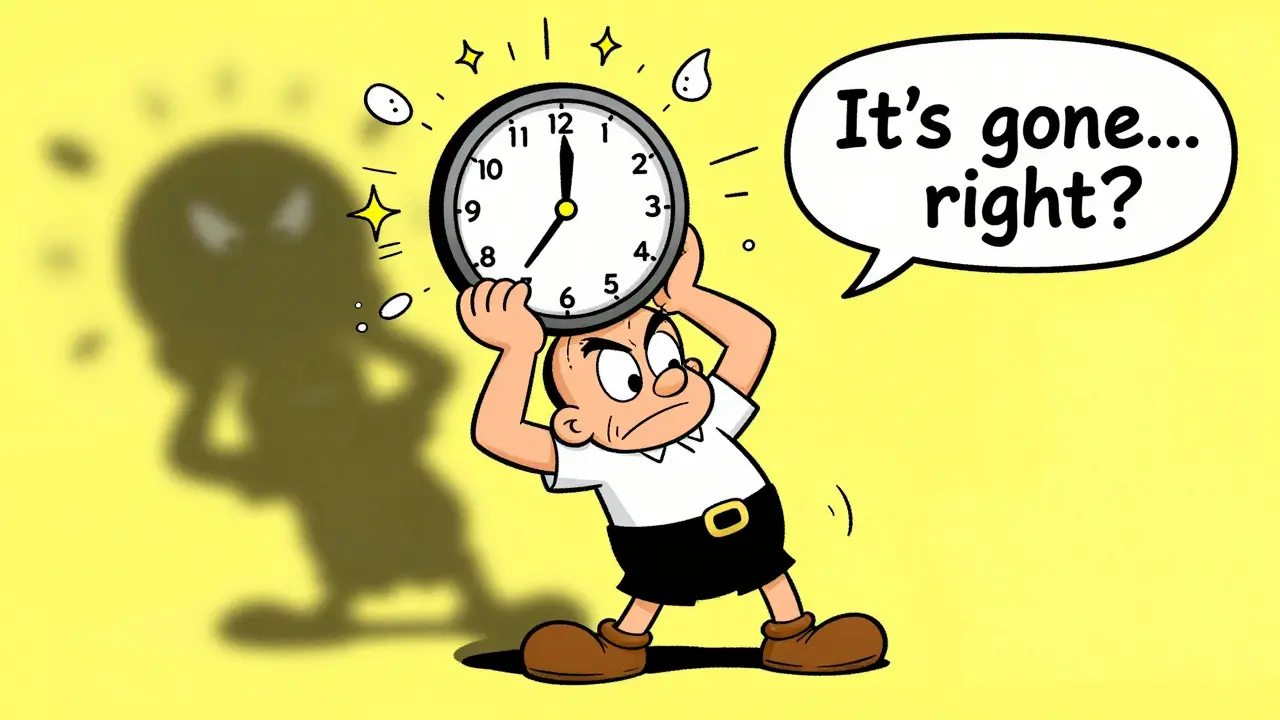
When someone suddenly loses balance, slurs their words, or can’t raise one arm, most people think stroke. But what if those symptoms vanish in 20 minutes? Many dismiss it as nothing serious - a passing dizzy spell, maybe stress. That’s dangerous. Up to 40% of people who experience what looks like a temporary stroke - called a TIA - are later found to have already suffered minor brain damage. And one in five will have a full stroke within 90 days. The clock starts ticking the moment symptoms disappear.
What Exactly Is a TIA?
A Transient Ischemic Attack, or TIA, isn’t a “mini-stroke.” That term is misleading and dangerous. It suggests something small and harmless. It’s not. A TIA is a temporary blockage of blood flow to part of the brain, spinal cord, or retina. The symptoms mimic a stroke: face drooping, arm weakness, slurred speech, sudden vision loss, dizziness, or a severe headache with no clear cause. But unlike a stroke, there’s no permanent brain damage - at least, not on standard scans. Here’s the twist: modern imaging shows that 35% of people who have TIA symptoms actually have small areas of dead brain tissue (infarction) on MRI. That means they didn’t have a TIA at all - they had a minor stroke. The old rule that TIA means symptoms lasting less than 24 hours? Outdated. The American Heart Association now defines TIA by tissue, not time. If there’s no infarction on MRI, it’s a TIA. If there is, it’s a stroke - even if the symptoms vanished in 10 minutes.Why a TIA Is a Medical Emergency
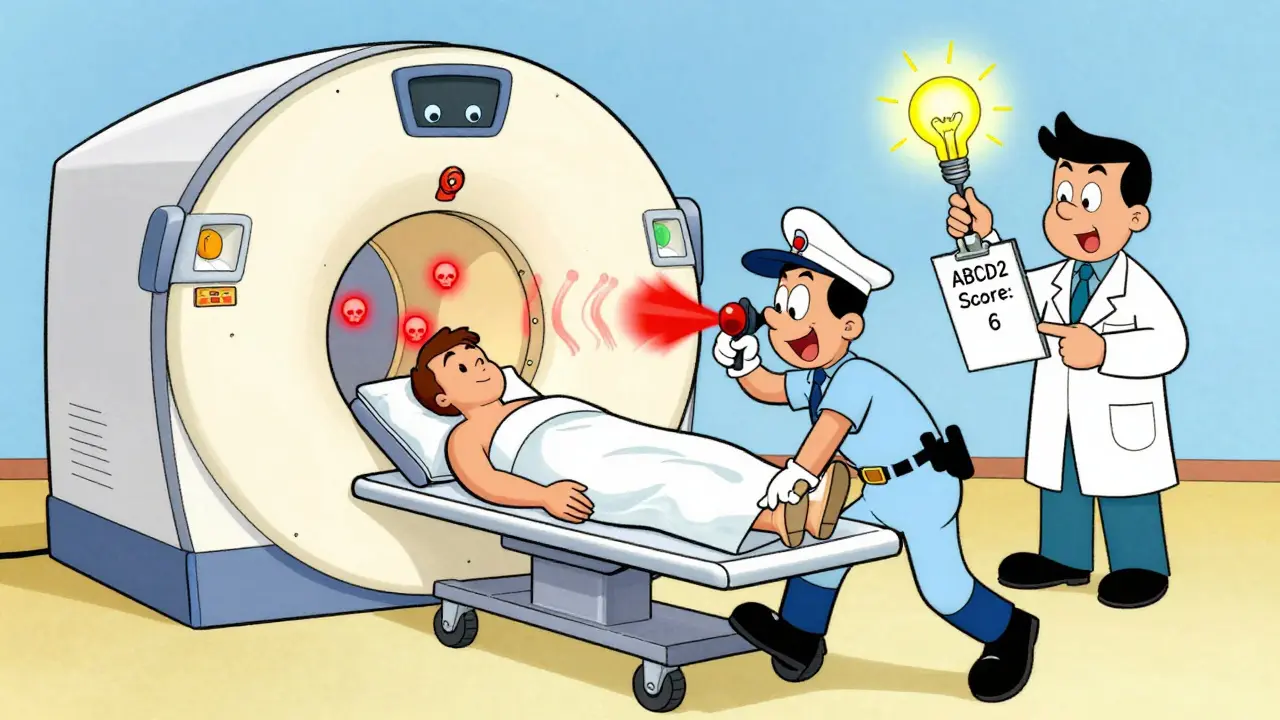
The biggest danger of a TIA isn’t the attack itself. It’s what comes next. About 5% of people have a stroke within 48 hours after a TIA. That’s higher than the risk for any other condition that starts with warning signs. The ABCD2 score helps doctors predict risk:- Age: 60 or older = 1 point
- Blood pressure: 140/90 or higher = 1 point
- Clinical features: Weakness on one side = 2 points, speech trouble without weakness = 1 point
- Duration: Symptoms over 60 minutes = 2 points, 10-59 minutes = 1 point
- Diabetes: Yes = 1 point
How TIA and Stroke Symptoms Are the Same - and Different
TIA and stroke share the same symptoms. That’s why you can’t tell them apart by how someone looks or feels. Use BE FAST to spot both:- Balance: Sudden loss of balance or coordination
- Eyes: Blurred, double, or lost vision
- Face: One side droops when smiling
- Arm: One arm drifts down when raised
- Speech: Slurred, strange, or hard to understand
- Time: Call 911 immediately - don’t wait
What Happens in the ER
If you or someone else has TIA symptoms - even if they’re gone - call 911. Emergency teams treat TIA like a stroke. First, they do a non-contrast CT scan to rule out bleeding in the brain. Then, within 24 hours, they order an MRI with diffusion-weighted imaging. This is the gold standard. It can spot tiny areas of brain damage that a regular CT misses. Doctors also check your blood pressure, cholesterol, and blood sugar. They’ll look for irregular heart rhythms like atrial fibrillation, which can cause clots. The goal isn’t to treat the TIA - it’s to prevent the next stroke. That’s why treatment starts fast:- Aspirin 325 mg within 24 hours cuts stroke risk by 60%
- For high-risk patients (ABCD2 ≥4), doctors add clopidogrel for 21-30 days
- High-intensity statin (atorvastatin 80 mg daily) to lower LDL cholesterol below 70 mg/dL
- Blood pressure controlled to under 140/90 mmHg
Why People Delay - And Why That’s Deadly
Many think, “If it’s gone, it’s not serious.” That’s the biggest myth. The CDC found that 31% of TIA patients wait more than a day to seek care. Some think it’s just a migraine. Others believe they’re “just tired.” A few even ignore it because they don’t have insurance or fear the cost. But here’s the truth: a TIA evaluation costs about $2,850. A stroke that needs long-term care? $21,000 or more. And that’s just the bill. The real cost is losing your independence - your ability to walk, talk, or care for yourself. The good news? Treatment works. The EXPRESS study proved that immediate care within 24 hours reduces 90-day stroke risk from 10.3% to 2.1%. That’s an 80% drop. Hospitals with dedicated TIA clinics - like those using telemedicine or AI risk tools - now catch 92% of high-risk cases.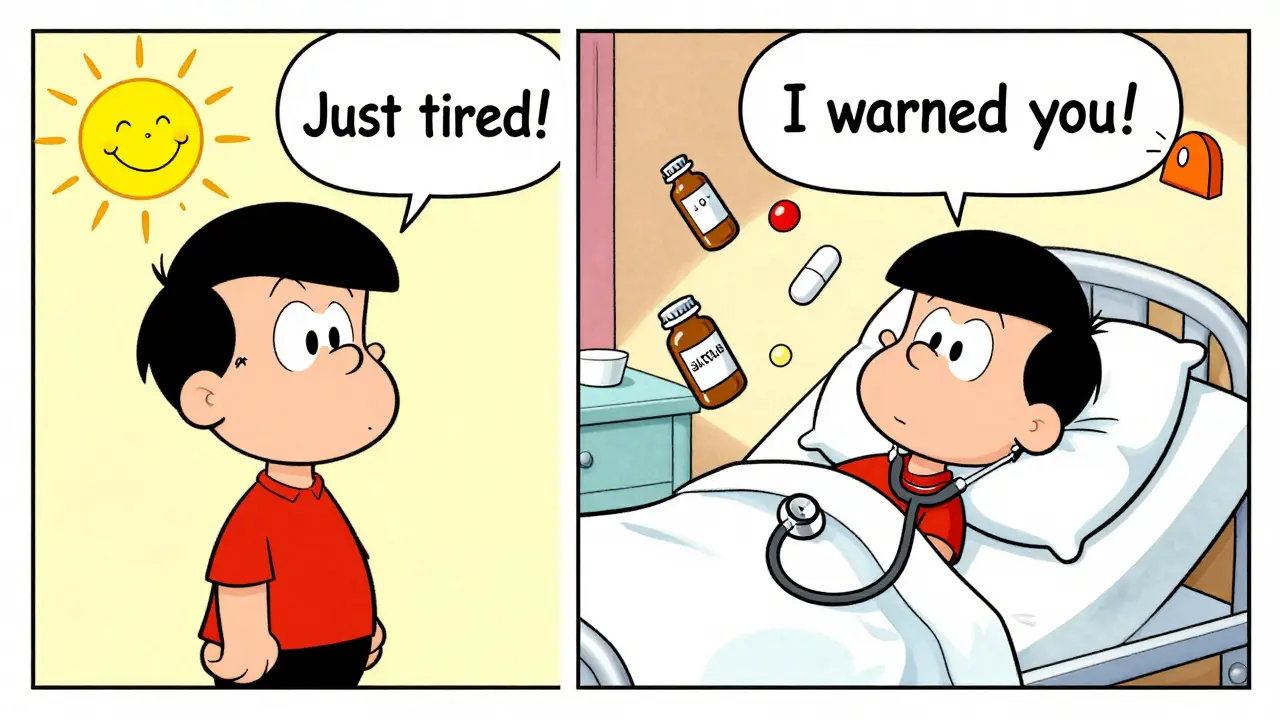
matthew runcie
March 21, 2026 AT 15:32Nicole James
March 22, 2026 AT 05:02Nishan Basnet
March 24, 2026 AT 04:51Allison Priole
March 24, 2026 AT 09:25Casey Tenney
March 25, 2026 AT 03:35Sandy Wells
March 27, 2026 AT 00:03Bryan Woody
March 27, 2026 AT 03:15Chris Dwyer
March 28, 2026 AT 15:54Timothy Olcott
March 28, 2026 AT 15:58Desiree LaPointe
March 30, 2026 AT 14:04Jackie Tucker
March 31, 2026 AT 02:27Thomas Jensen
March 31, 2026 AT 08:35