
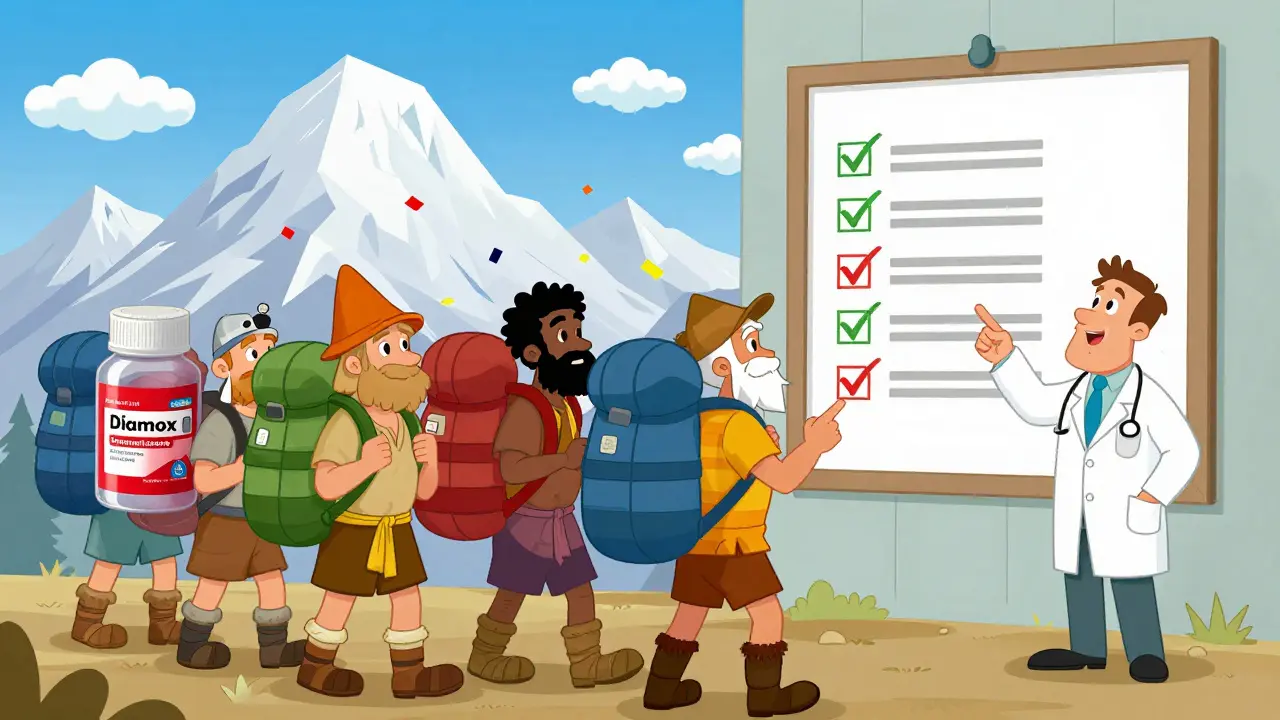
When you’re heading up a mountain for a pilgrimage or a trek, your body doesn’t just face physical exhaustion-it faces a silent, dangerous threat: altitude. At elevations above 8,000 feet, the air gets thinner, oxygen levels drop, and your body starts to struggle. For many, this leads to headaches, nausea, dizziness, and in severe cases, life-threatening conditions like High Altitude Pulmonary Edema (HAPE) or High Altitude Cerebral Edema (HACE). The good news? Most of these problems can be prevented-with the right medications, planning, and preparation.
Know Your Risk Before You Go
Not everyone reacts the same way to high altitude. Some people climb to 14,000 feet without a problem. Others feel sick at 8,000 feet. Your risk depends on how fast you ascend, your fitness level, and your medical history. If you have heart disease, lung issues, or diabetes, your chances of complications go up. Studies show that 25% to 85% of people who climb above 8,000 feet will experience some form of altitude sickness, depending on how quickly they gain elevation. That’s why skipping a pre-trip checkup is one of the biggest mistakes trekkers make.Experts recommend seeing your doctor at least 4 to 6 weeks before your trip. This isn’t just about getting a clean bill of health-it’s about adjusting your meds, checking your oxygen levels, and making sure your body can handle the stress. The CDC says this consultation is the single most effective way to avoid medical emergencies on the trail. And it’s not just for the elderly. Even fit 20-year-olds have been evacuated from Everest Base Camp because they ignored warning signs.
Essential Medications to Pack
You can’t rely on local pharmacies in remote areas. Many health camps along pilgrimage routes in Nepal, Tibet, or the Andes don’t stock basic altitude meds. In fact, a 2013 survey found that 89% of these clinics lacked acetazolamide, dexamethasone, or nifedipine-the three most critical drugs for treating severe altitude illness.Here’s what you need to carry:
- Acetazolamide (Diamox): This is the go-to drug for preventing altitude sickness. Take 125 mg twice a day, starting one day before you ascend and continuing for at least three days after reaching high altitude. It helps your body adjust by increasing breathing rate. Side effects? More frequent urination and tingling in fingers and toes-annoying, but not dangerous. About 67% of users report these symptoms.
- Dexamethasone: A steroid used to treat severe cases of HACE. If someone is confused, vomiting, or can’t walk straight, give them 8 mg right away, then 4 mg every 6 hours. This isn’t for prevention-it’s for emergencies when descent isn’t possible.
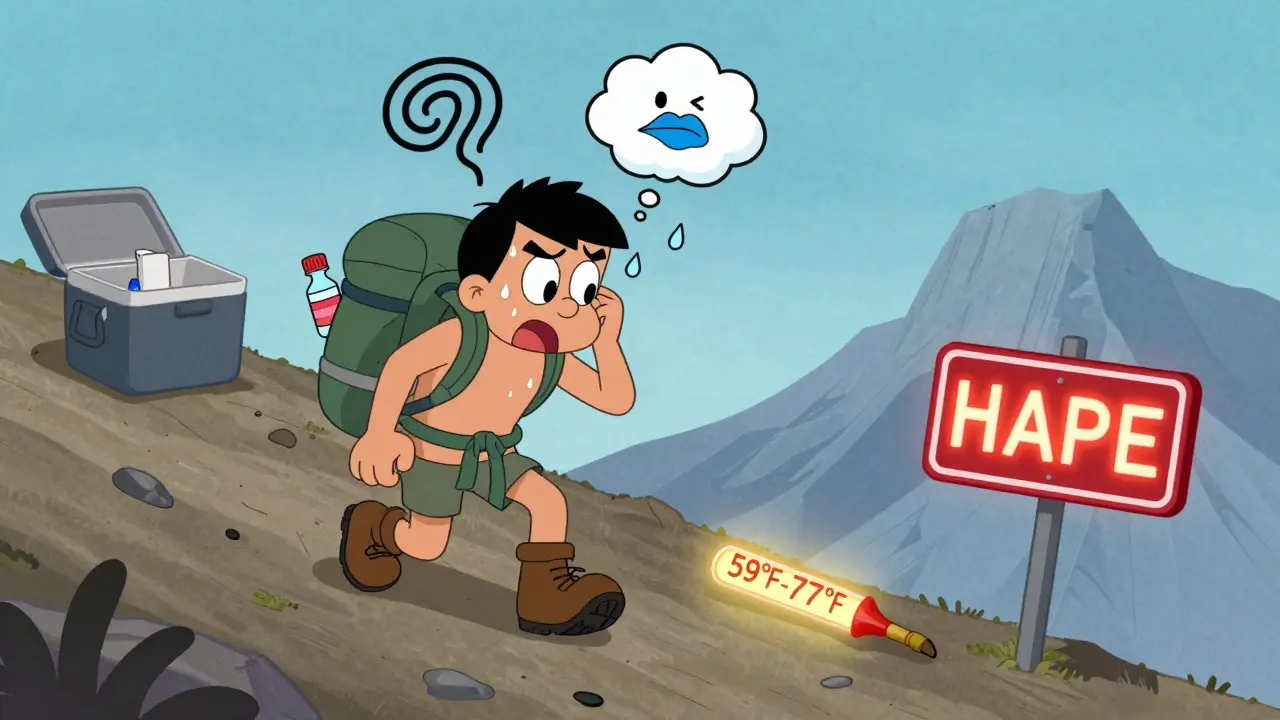
- Nifedipine (extended-release): Used for HAPE, which causes fluid buildup in the lungs. Take 20 mg every 12 hours if symptoms like shortness of breath at rest, coughing up frothy sputum, or blue lips appear.
- Antibiotics: Diarrhea affects up to 60% of trekkers, mostly from contaminated water. Pack azithromycin (500 mg once daily for 3 days) as your first-line treatment. Avoid loperamide unless absolutely necessary-it can trap toxins in your gut.
- Anti-inflammatories: Ibuprofen (400 mg) helps with headaches and reduces inflammation linked to early altitude sickness. It’s safer than aspirin at high altitudes.
- Antihistamines: Diphenhydramine (25-50 mg) can help with allergic reactions or sleep issues caused by altitude-related anxiety.
- Topicals: Antibiotic ointment, hydrocortisone cream, and blister pads are non-negotiable. Blisters can sideline you fast.
If you’re diabetic, insulin storage is critical. Temperatures below 32°F (0°C) can destroy insulin’s potency in under 24 hours. Use an insulated cooler with a cold pack-not a regular bag. Glucometers also become unreliable below freezing. At 14°F (-10°C), readings can be off by 18%. Test your device before you leave.
How to Store Medications Properly
Packing meds in your backpack isn’t enough. Heat, cold, moisture, and pressure can ruin them. The CDC and Wilderness Medical Society both stress the same rule: keep all medications between 59°F and 77°F (15°C-25°C). That’s room temperature. Not your coat pocket in the Himalayas.Use waterproof, insulated containers. Some travelers swear by small thermos-style bottles lined with foil. Others use specialized medical coolers designed for insulin. If you’re flying, never check your meds. Carry them in your personal bag. And always keep them in their original bottles with pharmacy labels. This avoids customs issues and proves they’re prescribed.
If you’re carrying controlled substances-like strong painkillers or ADHD meds-you may need special paperwork. In the U.S., you’ll need a letter from your doctor and possibly a DEA form. Around 17% of trekking groups run into this issue at border checkpoints. Don’t wait until you’re at the airport to find out.
Prevention Is Better Than Treatment
Medications help, but they’re not magic. The best way to avoid altitude sickness is to go slow. Climbing more than 1,000 feet (305 meters) per day above 10,000 feet is risky. That’s why a 14-day itinerary to Everest Base Camp is safer than a 5-day one. But pilgrims often can’t afford to take that long. Many fly directly into Lhasa at 12,000 feet.If you’re stuck with a fast ascent, here’s what you can do:
- Take acetazolamide before you even leave home.
- Drink 4 to 5 liters of water every day. Dehydration makes altitude sickness worse.
- Avoid alcohol and sleeping pills. They slow your breathing when you need it most.
- Don’t sleep at a higher altitude than where you spent the day. If you hike to 14,000 feet, sleep at 13,000 feet.
- Use supplemental oxygen only as a last resort. It masks symptoms and can trick you into thinking you’re fine when you’re not.
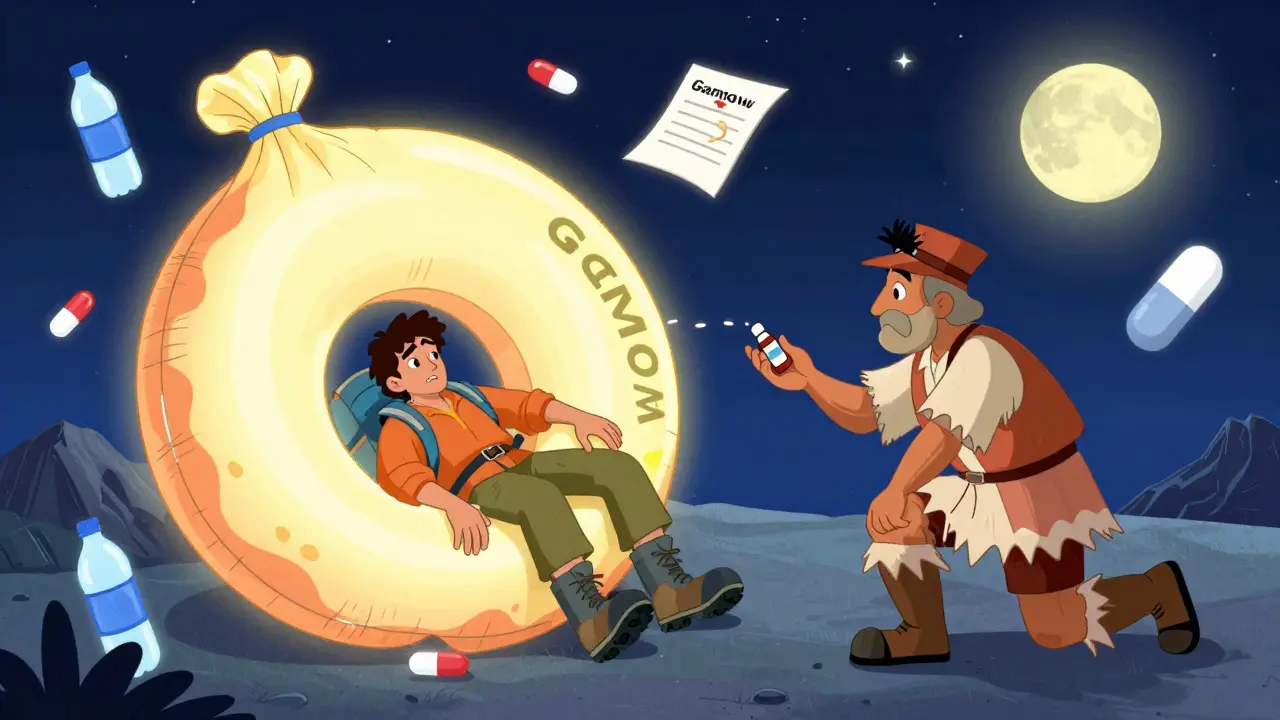
Some trekkers carry portable hyperbaric bags (like the Gamow Bag). These are life-saving tools that simulate lower altitude by increasing air pressure around the body. They’re used in emergencies when descent isn’t possible. But they’re rare-fewer than 5% of health camps have them. If you’re going with a group, consider renting one. A single bag can save multiple lives.
What Happens When You Skip Prep
Stories from the trail are sobering. One Reddit user, u/HimalayanTrekker, shared how their insulin degraded at 14,000 feet because they stored it in a ziplock bag. They ended up in a medical evacuation that cost $4,200. Another trekker ran out of their asthma inhaler on the way to Mount Kailash and had to rely on a Sherpa to find a replacement in a remote village.A 2022 survey of 1,250 trekkers found that 34% had medication-related problems. The biggest issue? Running out of prescriptions (47% of cases). Second? Medications ruined by heat or cold (29%). And 22% of all high-altitude evacuations are directly tied to poor medication planning.
These aren’t hypothetical risks. They’re real, documented, and preventable.
What’s Changing in 2026
The travel medicine world is catching up. Nepal’s 2021 Altitude Sickness Prevention Campaign distributed 15,000 free medication kits to trekking agencies. Hospitalizations dropped by 22% in just two years. The Wilderness Medical Society is now developing standardized kits for different altitude zones-below 10,000 feet, 10,000-15,000 feet, and above 15,000 feet. Pilot testing starts in early 2024.By 2027, 95% of trekking companies are expected to require a pre-trip medical consultation before booking. Insurance companies are pushing for it. Liability is too high to ignore. Even pilgrimage organizations are starting to offer guided medical briefings.
You don’t need to wait for these changes. Start now. Talk to your doctor. Pack your meds properly. Know your limits. The mountains aren’t going to move. But your health? That’s yours to protect.
Do I need a prescription for acetazolamide?
Yes. Acetazolamide (Diamox) is a prescription medication in most countries, including the U.S., UK, Canada, and Australia. You can’t buy it over the counter. Your doctor will assess your health, check for sulfa allergies, and decide if it’s right for you. Some clinics abroad may sell it without a prescription, but the quality and dosage can’t be trusted.
Can I take altitude meds if I’m pregnant?
Generally, no. Acetazolamide and dexamethasone are not recommended during pregnancy unless absolutely necessary. The risks to the fetus aren’t fully understood. Most doctors advise pregnant women to avoid altitudes above 8,000 feet entirely. If you’re planning a pilgrimage and are pregnant, talk to your OB-GYN before booking your trip.
What if I have a sulfa allergy?
About 3-6% of people are allergic to sulfa drugs, which includes acetazolamide. If you have a known allergy, don’t take it. Talk to your doctor about alternatives. Dexamethasone can be used for prevention in some cases, but it’s not ideal for long-term use. The best approach is to ascend even slower and rely on hydration, rest, and supplemental oxygen if needed.
Should I bring my own oxygen tank?
For most people, no. Portable oxygen tanks are heavy, expensive, and can give a false sense of security. They mask symptoms rather than fix the problem. They’re best reserved for emergency use in extreme cases or for people with chronic lung conditions. If you’re healthy and plan your ascent properly, you won’t need them.
How do I know if my altitude sickness is serious?
Mild symptoms include headache, nausea, dizziness, and fatigue. These often improve with rest and hydration. Serious signs include confusion, inability to walk straight, coughing up frothy sputum, blue lips or fingernails, and extreme shortness of breath even at rest. If you or someone in your group shows these signs, treat it as a medical emergency. Give dexamethasone if available, use a hyperbaric bag if possible, and descend immediately. Don’t wait.
Can I share my medications with others on the trek?
Never. Medications are prescribed for specific individuals based on weight, health history, and allergies. Sharing acetazolamide or dexamethasone can cause serious harm. Someone might be allergic. Someone else might have a different dosage need. Always carry your own supply. Group emergency kits should be managed by a trained leader, not shared casually.
Final Checklist Before You Leave
- ☐ See your doctor 4-6 weeks before departure
- ☐ Get prescriptions for acetazolamide, dexamethasone, nifedipine, azithromycin, and ibuprofen
- ☐ Pack all meds in original containers with labels
- ☐ Use insulated, waterproof containers to protect from heat and cold
- ☐ Carry a doctor’s letter for controlled substances
- ☐ Test your glucometer and insulin storage system in cold conditions
- ☐ Bring extra doses-50% more than you think you’ll need
- ☐ Know the signs of HAPE and HACE
- ☐ Tell your group leader where your meds are stored
- ☐ Leave a copy of your med list with someone at home
High-altitude pilgrimages and treks are powerful experiences. But they’re not adventures to wing. With the right preparation, you won’t just survive-you’ll thrive. And you’ll come home not just with memories, but with your health intact.
Arlene Mathison
January 20, 2026 AT 04:54Just got back from a trek in Nepal last month and this post is 100% spot on. I took Diamox before I even left the States and it made all the difference. Yeah, I peed like a racehorse, but I didn’t get a single headache. Also, packed extra insulin coolers - my buddy didn’t and his meds froze. Don’t be him.
Emily Leigh
January 21, 2026 AT 07:14Wow. So... we’re supposed to believe that carrying a bunch of pills is the answer to nature’s test? Like, what if the real problem is that we’ve forgotten how to listen to our bodies? We’re not machines. We’re not robots with prescription tabs. Maybe we should just... slow down? Like, really slow down? And maybe not climb mountains at all? 🤔
Carolyn Rose Meszaros
January 22, 2026 AT 08:55THIS. So many people skip the prep and then panic when they feel weird. I’m so glad you included the checklist. I’m sharing this with my entire trekking group. Also, YES to the blister pads. I lost a toenail last year because I didn’t bring enough. 😭
Greg Robertson
January 22, 2026 AT 17:45Great breakdown. I’ve done a few high-altitude hikes and I always forget how crucial hydration is. People think it’s just about the meds, but drinking 4-5 liters a day? That’s the real MVP. Also, never store meds in your coat pocket. Learned that the hard way in Peru. 😅
Renee Stringer
January 22, 2026 AT 18:14It’s irresponsible to encourage people to self-medicate with steroids and diuretics just because they want to climb faster. This isn’t a camping trip. It’s a medical gamble. If you need Dexamethasone to function at altitude, you shouldn’t be there. Period.
Courtney Carra
January 24, 2026 AT 07:54There’s something poetic about how we’ve turned survival into a checklist. We pack our meds like armor, our glucose monitors like sacred relics, our doctor’s letters like holy scrolls. But the mountain doesn’t care about your prescriptions. It only cares if you’re listening. Still… I’m glad you wrote this. Maybe it’ll keep someone alive.
thomas wall
January 25, 2026 AT 11:24It is with profound regret that I observe the casual attitude toward high-altitude pharmacology in modern Western society. The notion that one may simply ‘pack extra doses’ and fly into Lhasa as if boarding a bus to the supermarket is not merely reckless - it is a moral failure of preparation. The Himalayas do not negotiate. They do not accept excuses. The 34% statistic you cite? It is not a statistic - it is a funeral procession. Your checklist is commendable, but it is too late for those who have already perished. The true responsibility lies not in carrying medication, but in refusing to go at all unless one has trained, acclimatized, and humbled oneself before the altitude. I speak not as a doctor, but as a witness.
Manoj Kumar Billigunta
January 26, 2026 AT 14:07As someone who guides trekkers in the Himalayas, I’ve seen too many people ignore this advice. One thing I always tell my groups: don’t wait until you’re dizzy to take Diamox. Start it before you even leave home. And if you’re diabetic - test your glucometer in the cold before you go. I’ve had people cry because their readings were wrong and they didn’t know why. Your checklist? Perfect. Share it with everyone you know. This isn’t just advice - it’s a lifeline.