
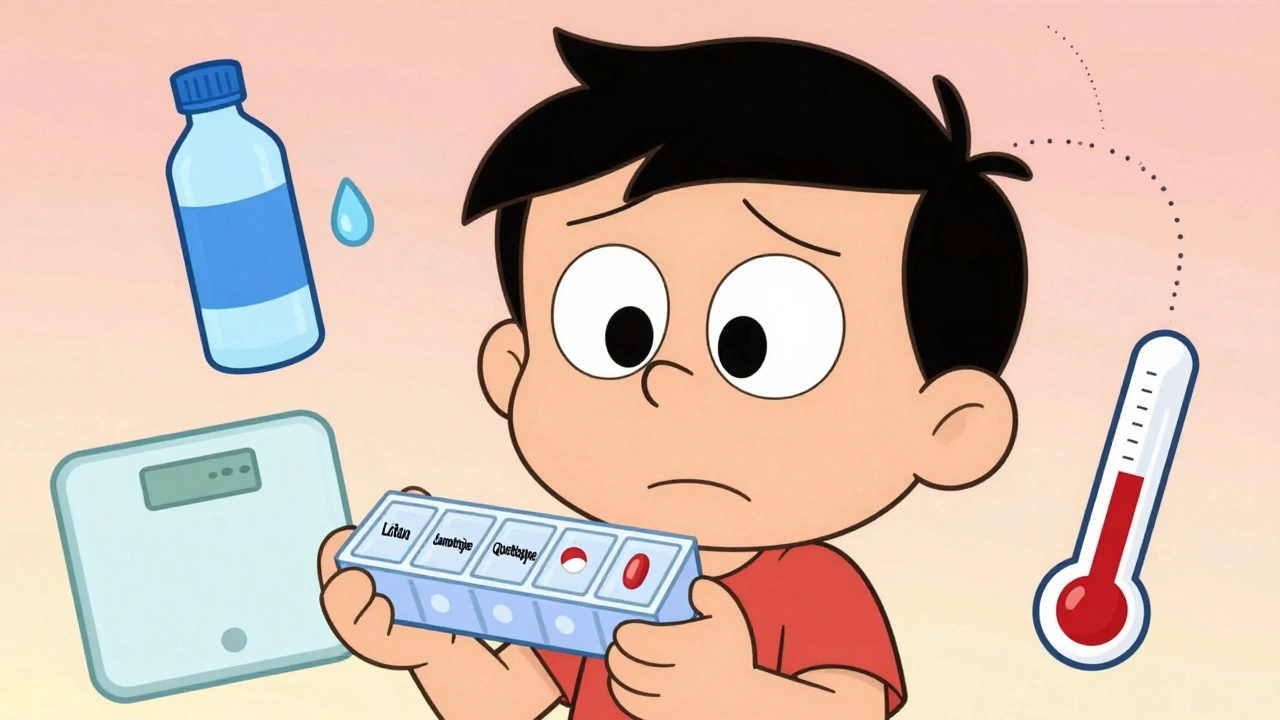
Managing bipolar disorder isn’t about finding one magic pill-it’s about finding the right mix that keeps moods stable without wrecking your body. For many people, that means balancing mood stabilizers and antipsychotics over months or years. These aren’t just pills you pop when you feel off; they’re long-term tools that require careful tuning, regular monitoring, and honest conversations about side effects.
What Mood Stabilizers Actually Do
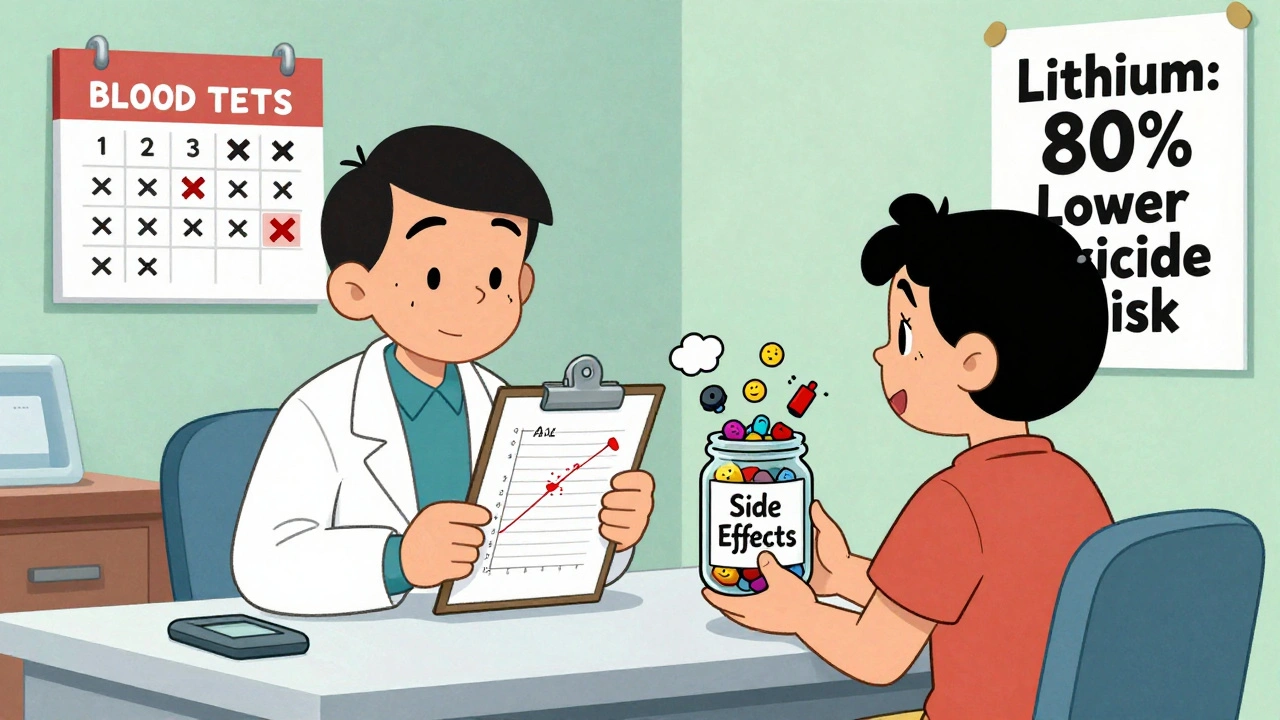
Mood stabilizers are the backbone of bipolar treatment. Lithium, approved by the FDA in 1970, is still the most studied. It doesn’t just calm mania-it lowers suicide risk by 80% compared to no treatment. That’s not a small number. It’s life-changing.
But lithium isn’t simple. You need blood tests every week when you start, then every 2-3 months after that. The goal? Keep levels between 0.6 and 1.0 mmol/L. Too low? It won’t work. Too high? You risk tremors, confusion, or even seizures. About 30-40% of people on lithium drink liters of water daily just to keep up with constant thirst. Weight gain is common-10 to 15 pounds in the first year. Nausea, hand shakes, and thyroid issues follow close behind.
Valproate and carbamazepine are alternatives. Valproate works fast for mania but carries a black box warning: it can cause serious birth defects. If you’re a woman of childbearing age, this isn’t just a footnote-it’s a dealbreaker. Carbamazepine has drug interactions with over 40 common medications, including birth control and painkillers. One wrong combo can spike lithium levels and push you into toxicity.
Lamotrigine is different. It’s the only mood stabilizer proven to help with bipolar depression without triggering mania. About 47% of people see real improvement. But here’s the catch: 1 in 10 develop a dangerous skin rash. It starts as a mild redness, but if you ignore it, it can turn into Stevens-Johnson syndrome-a life-threatening reaction. That’s why doctors start you on 25mg a week and creep up slowly.
Antipsychotics: Fast Relief, Heavy Costs
Antipsychotics like quetiapine, olanzapine, and risperidone aren’t just for psychosis. They’re now first-line for acute mania and bipolar depression. Quetiapine, for example, can lift depression in as little as 7 days-faster than lithium, which takes two weeks or more. That speed matters when you’re stuck in a dark place.
But the trade-off is steep. Quetiapine causes drowsiness in 60-70% of users. Olanzapine leads to an average 4.6kg weight gain in just six weeks. That’s not just “a few pounds”-it’s a 20% jump for some. And it doesn’t stop at the scale. These drugs raise your risk of type 2 diabetes by 20-30%. Blood sugar, cholesterol, and waist size need checking every three months. If you’re on olanzapine or quetiapine long-term, your doctor should be monitoring you like a diabetic patient.
Some newer options are less punishing. Lumateperone (Caplyta), approved in 2023, helps with depression and causes only 0.8kg of weight gain-far less than quetiapine’s 3.5kg. Aripiprazole (Abilify) comes in a monthly shot, so you don’t have to remember pills every day. But even these aren’t perfect. Akathisia-a restless, agitated feeling-hits 15-20% of users. It’s not just discomfort; it’s unbearable for some.
Combining Medications: When More Is Necessary
Most people don’t stay on just one drug. Around 70% of those with treatment-resistant bipolar disorder end up on a combo: a mood stabilizer plus an antipsychotic. It works-response rates jump to 70%. But side effects pile up too. You might get lithium’s thirst and tremors, plus quetiapine’s weight gain and sleepiness. That’s why doctors try to keep it simple. If a single drug works, they stick with it.
One big mistake? Adding antidepressants. SSRIs like fluoxetine can help depression, but they trigger mania in 10-15% of people with bipolar disorder. Some experts say the risk is even higher-up to 25%. If you’re going to use them, it’s only with a mood stabilizer in place, and only for short bursts. Never alone.
Real People, Real Struggles
Reddit threads and patient forums are full of raw stories. One person wrote: “Lithium made me drink 3 liters of water a day and still feel dehydrated. I switched to lamotrigine and couldn’t sleep for weeks.” Another said: “I gained 22 pounds on quetiapine. I stopped working because I was too tired and ashamed to leave the house.”
But there are wins too. “After three meds failed, lithium finally stopped my suicidal spirals,” wrote someone with 85 upvotes. “I gained 15 pounds. But I haven’t been in the hospital in five years.”
A 2022 NAMI survey found 45% of people quit their meds because of side effects. Weight gain was #1 (78%). Cognitive fog was #2 (65%). Sexual dysfunction? #3 (52%). These aren’t minor annoyances-they’re reasons people stop taking life-saving drugs.
How to Manage Side Effects
There’s no magic fix, but there are practical steps:
- Take lithium with food to cut nausea.
- Split your daily dose into two-morning and night-to reduce tremors and thirst.
- If you’re gaining weight on an antipsychotic, ask about metformin. It’s not a weight-loss drug, but it helps reverse insulin resistance and can slow or reverse the gain.
- Track your waist size. For men, over 40 inches; for women, over 35 inches-this signals metabolic risk, even if your BMI looks fine.
- Use a pill organizer. Missing doses makes mood swings worse and increases relapse risk.
And don’t be afraid to speak up. If your doctor says, “It’s just side effects, you’ll get used to it,” push back. That’s not good care. You should be able to live-not just survive.
Monitoring and Long-Term Care
Good management means regular checks:
- Every week during lithium initiation: blood tests for levels, kidney, and thyroid function.
- Every 3 months after stabilization: blood sugar, cholesterol, weight, waist size.
- Annual kidney ultrasound if on lithium long-term-many develop chronic kidney changes over time.
- Genetic testing? It’s not routine yet, but it’s coming. Testing for CYP2D6 and CYP2C19 gene variants can predict how your body processes meds. Some people metabolize lithium too fast; others turn quetiapine into a toxic pile-up. This could cut trial-and-error time by half.
The STEP-BD study showed people with structured medication management had 60% better outcomes than those getting standard care. That means regular appointments, written plans, and clear goals-not just “take your pills.”
What’s Changing in 2025
The landscape is shifting. In 2023, the CANMAT guidelines upgraded lurasidone and cariprazine to first-line for bipolar depression because they cause far less weight gain. Long-acting injectables like Abilify Maintena mean you get dosed once a month-no daily pills to forget.
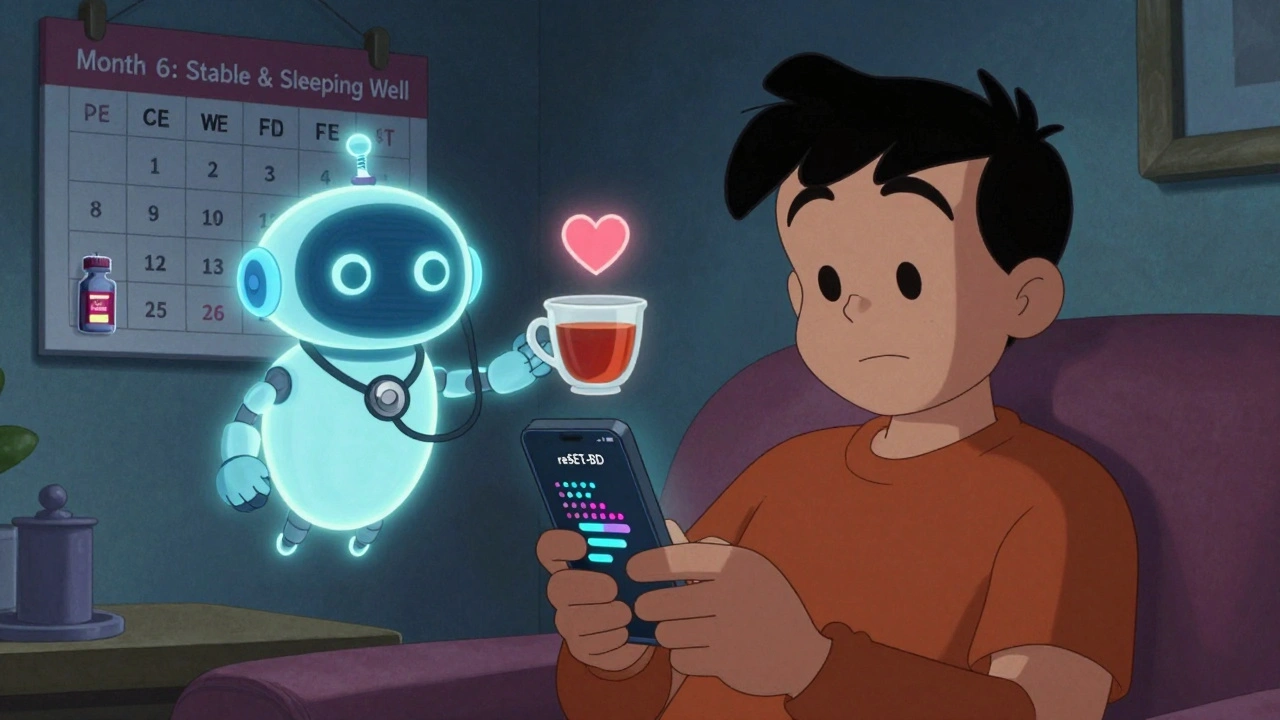
And digital tools are stepping in. reSET-BD, a smartphone app approved by the FDA, tracks mood, sleep, and medication adherence. In trials, it cut relapse by 22%. It’s not a replacement for meds, but it’s a powerful support.
Still, only 35% of people achieve full remission. Six in ten still struggle with side effects that make life harder. That’s why the future isn’t about better drugs alone-it’s about better personalization. Your genetics, your lifestyle, your job, your sleep habits-all of it matters. By 2027, most experts agree, personalized plans based on genetic and metabolic profiles will be standard.
What You Need to Remember
Bipolar disorder isn’t cured by pills. It’s managed. And management means trade-offs. You might trade thirst for stability. Weight gain for fewer hospital stays. Sleepiness for freedom from suicidal thoughts.
There’s no perfect drug. But there is a right one-for you. That’s why communication with your doctor matters more than any study or guideline. If you’re not getting better, or you’re feeling worse, say so. Your life isn’t a clinical trial. It’s your life. And you deserve a treatment plan that lets you live it.
Can you take mood stabilizers and antipsychotics together?
Yes, and many people do. Combining a mood stabilizer like lithium with an antipsychotic like quetiapine is common for treatment-resistant cases. This combo can boost response rates to around 70%, but it also increases side effects like weight gain, drowsiness, and metabolic issues by 25-30%. Doctors usually try one drug first, then add the other only if needed.
Which is better for bipolar depression: lithium or quetiapine?
For depression, quetiapine works faster-often within a week. Lithium takes longer, sometimes weeks to months. But lithium has stronger long-term protection against relapse and suicide. Quetiapine is better for immediate relief; lithium is better for staying stable over years. Many people use both: quetiapine to get out of a depressive episode, lithium to keep it from coming back.
Why do some people stop taking their bipolar meds?
Side effects are the main reason. A 2022 NAMI survey found 45% of people quit their meds because of weight gain (78%), brain fog (65%), or sexual problems (52%). Others feel too sleepy, constantly thirsty, or emotionally numb. It’s not that they don’t want to get better-it’s that the cost feels too high. Working with your doctor to adjust doses or switch meds can help.
Is lithium still the gold standard for bipolar disorder?
Yes, for long-term stability. Lithium reduces suicide attempts by 8.6 times compared to other mood stabilizers. It’s the only medication proven to prevent both mania and depression over decades. But it’s not for everyone. The side effects-kidney strain, thyroid issues, constant thirst-can be hard to live with. Still, for many, it’s the only thing that gives true long-term control.
Can you drink alcohol while on bipolar medication?
It’s risky. Alcohol can worsen drowsiness from antipsychotics and increase lithium toxicity by affecting kidney function. It can also trigger mood episodes-depression after drinking, or mania when you stop. Most doctors advise avoiding alcohol entirely. If you do drink, keep it minimal and talk to your provider about how it interacts with your specific meds.
How long does it take for mood stabilizers to work?
It varies. Lithium and valproate can take 1-3 weeks to show effects in mania. Lamotrigine for depression can take 6-12 weeks. Antipsychotics like quetiapine often work faster-some feel better in 3-7 days. But full stabilization usually takes months. Patience and consistency matter more than speed.
Do bipolar meds cause permanent damage?
Long-term lithium use can affect kidney function in some people, but this is usually slow and manageable with monitoring. Weight gain from antipsychotics can lead to diabetes or heart disease if not addressed. But these aren’t inevitable. Regular blood tests, lifestyle changes, and switching meds early can prevent serious harm. The bigger risk isn’t the meds-it’s untreated bipolar disorder.
Sadie Nastor
December 7, 2025 AT 14:39Oliver Damon
December 9, 2025 AT 10:44Helen Maples
December 10, 2025 AT 11:03David Brooks
December 12, 2025 AT 08:31Nicholas Heer
December 12, 2025 AT 12:37Sangram Lavte
December 13, 2025 AT 20:57Stacy here
December 14, 2025 AT 14:09Kyle Oksten
December 16, 2025 AT 06:47Sam Mathew Cheriyan
December 16, 2025 AT 20:28Ernie Blevins
December 18, 2025 AT 03:49Jennifer Anderson
December 20, 2025 AT 02:58Jane Quitain
December 21, 2025 AT 00:40