
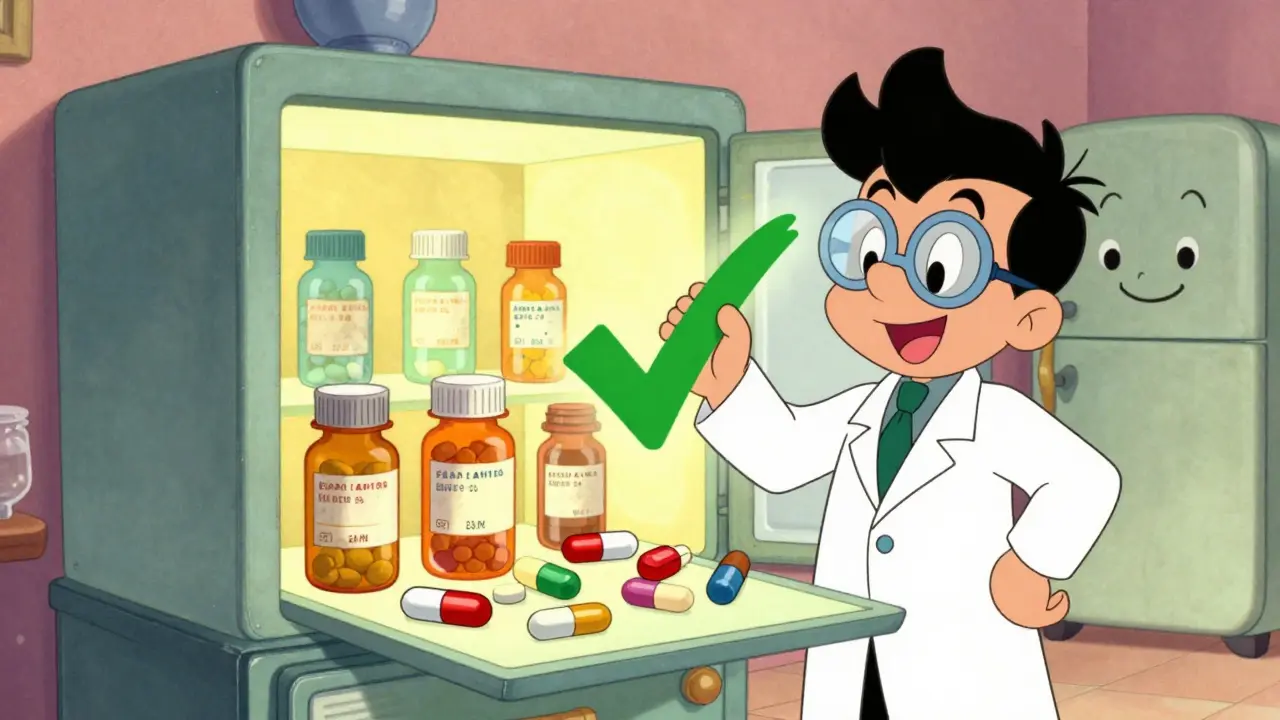
Most people throw away expired medications without a second thought. You see the date on the bottle, it’s passed, and you toss it. But what if that pill you just dumped could still be working just fine? What if your old ibuprofen, your leftover antibiotics, or even your blood pressure medicine aren’t actually useless after the date printed on the label? The truth is, expired medications often remain effective for years-sometimes decades-beyond their labeled expiration dates. And it’s not just speculation. Real science backs it up.
What Expiration Dates Really Mean
Expiration dates aren’t a magic cutoff point where drugs suddenly turn to dust. They’re not a safety alarm that goes off after a certain date. They’re a guarantee. Pharmaceutical companies are required by law to prove their medicine is safe and potent up to that date. After that? They don’t have to prove anything else. The FDA doesn’t require manufacturers to test how long a drug lasts beyond its labeled date. So the date you see? It’s mostly a legal shield, not a scientific deadline.
Think of it like a food product with a "best by" date. That milk might still be good a week after the date if it’s been refrigerated. The same logic applies to pills. The expiration date simply means the manufacturer guarantees full strength until then. It doesn’t mean the drug stops working the next day.
The Science Behind Long-Lasting Drugs
In 2012, researchers from the University of California-San Francisco ran one of the most revealing studies on this topic. They tested 14 different medications that had expired 28 to 40 years earlier. That’s more than 30 years past the date on the bottle. Out of those 14 drugs, 12 still contained at least 90% of their original active ingredient. Eight of them were still at full potency after 40 years. The only ones that failed? Aspirin and amphetamine. Even then, they weren’t completely useless-just a bit weaker.
This isn’t an outlier. The U.S. Department of Defense has been running a program called the Shelf-Life Extension Program (SLEP) since 1986. They’ve tested over 120 drugs from federal stockpiles. Eighty-eight percent of those drugs were found to be safe and effective well beyond their original expiration dates. On average, their usable life was extended by more than five and a half years. One drug lasted over 23 years past its date.
The FDA itself tested more than 100 medications and found that about 90% of them remained stable and effective up to 15 years past their expiration date-if stored properly.
Which Medications Are Stable? Which Aren’t?
Not all drugs behave the same. Form matters. Solid pills and capsules? They last. Liquids? Not so much. Why? Moisture, air, and heat break them down faster.
Here’s what generally stays strong:
- Tablets and capsules (ibuprofen, acetaminophen, antihistamines, statins, blood pressure pills)
- Most prescription painkillers (codeine, hydrocodone)
- Antidepressants and anti-anxiety meds
- Birth control pills
- Many over-the-counter cold and allergy meds
And here’s what you should never use after expiration:
- Insulin
- Nitroglycerin (used for chest pain)
- Epinephrine auto-injectors (EpiPens)
- Liquid antibiotics
- Tetracycline (an older antibiotic that can become toxic)
- Mefloquine (an antimalarial drug)
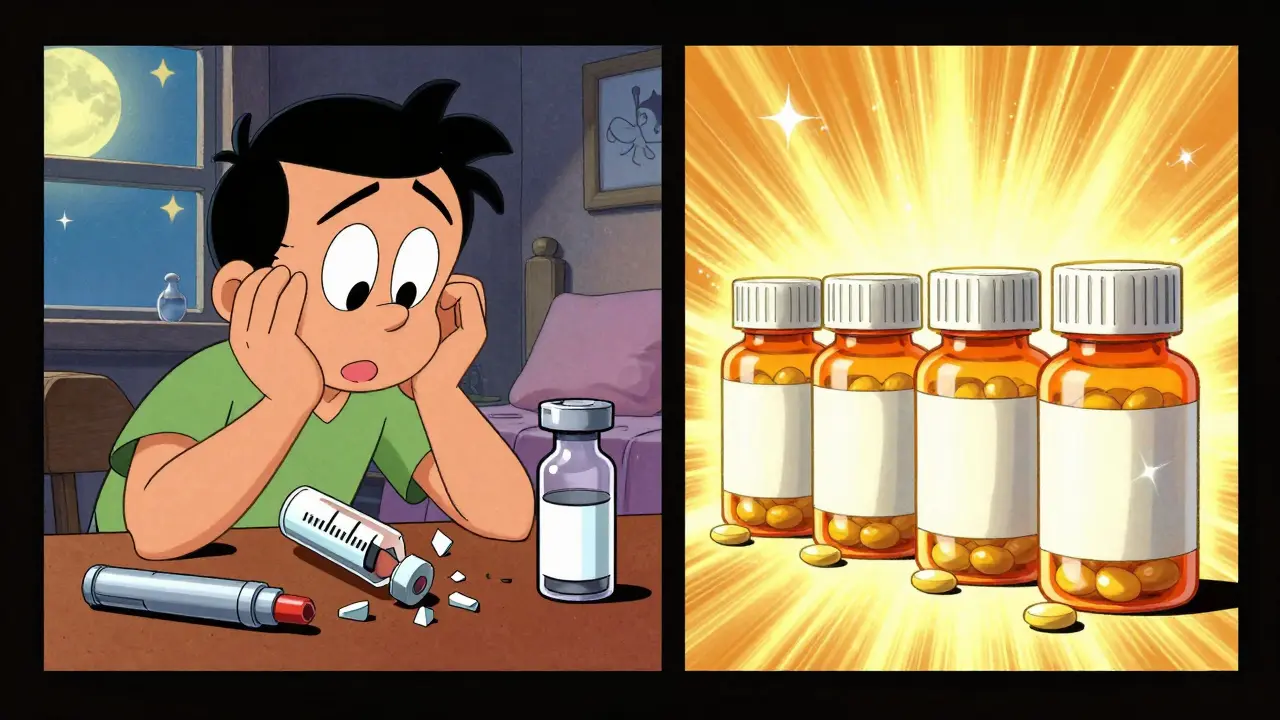
Why these? Because they’re either unstable in liquid form or their failure could be deadly. A weak EpiPen during an allergic reaction? That’s not a risk you can afford. Same with insulin-if it’s lost potency, your blood sugar could spiral. Nitroglycerin that doesn’t work when you need it could cost you your life.
Storage Is Everything
How you store your meds makes a huge difference. The same pill, kept in a bathroom cabinet with steam and heat, will degrade faster than the same pill stored in a cool, dark drawer.
Original sealed containers? Best case scenario. They’re designed to block moisture and light. Once you transfer pills to a pill organizer or a plastic bag? You’re exposing them to air and humidity. That speeds up breakdown. A 2006 study showed that medications kept in pharmacy canisters degraded faster than those left in their original bottles.
Best storage tips:
- Keep meds in their original bottle
- Store in a cool, dry place-not the bathroom, not the kitchen window
- A drawer or cupboard away from sunlight is ideal
- Don’t freeze unless the label says to
Even after opening, many solid medications retain 70-90% of their potency for years. But if the pills are cracked, discolored, or smell weird? Throw them out. That’s a sign something’s wrong.
Why Do Manufacturers Set Such Short Dates?
It’s not about science. It’s about business.
Pharmaceutical companies don’t have to prove how long a drug lasts beyond the expiration date. Testing for 10, 20, or 30 years? That’s expensive. And if they found out a drug lasts 15 years? People would buy less. That’s bad for profits. So they set dates based on minimal testing-usually 1 to 5 years-and that’s it.
The FDA doesn’t require long-term testing. So companies don’t do it. It’s a system built on liability, not longevity. The Department of Defense’s SLEP program proves it’s possible to extend dates safely. But the private sector? No incentive.
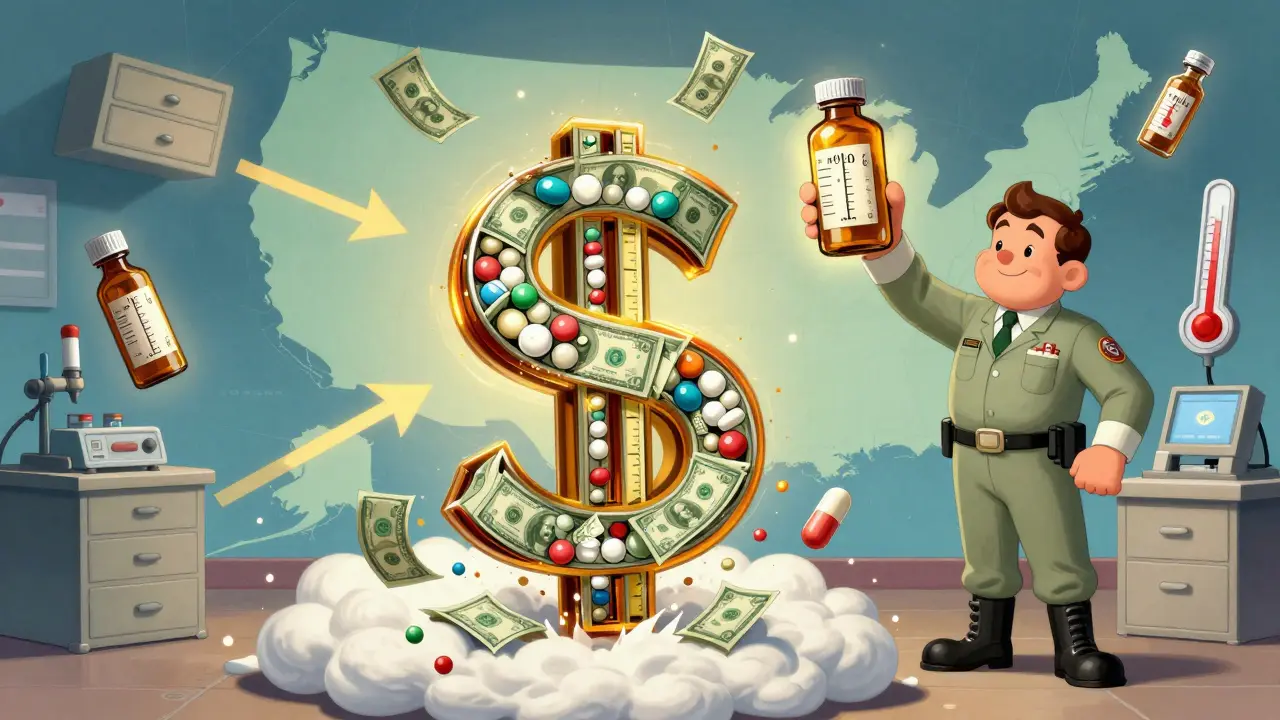
Think about this: Americans spend over $300 billion a year on prescription drugs. If even half of expired meds were still usable, we’d be saving billions. Instead, we throw them away-and pay for new ones.
What Should You Do?
Don’t panic. Don’t dig through your medicine cabinet for a 10-year-old heart pill. But don’t automatically toss everything either.
Here’s a simple rule:
- If it’s a solid pill or capsule, stored properly, and it looks normal-chances are it’s still fine. Especially for non-critical conditions like headaches, allergies, or mild pain.
- If it’s insulin, EpiPen, nitroglycerin, or liquid antibiotics-don’t risk it. Replace it.
- If the pills are crumbling, discolored, or smell off-throw them out.
- If you’re unsure, ask your pharmacist. They can often tell you if a drug is likely still stable.
For chronic conditions, it’s smarter to replace meds before they expire. But for occasional use? A year or two past the date? Probably fine.
The Bottom Line
Expired medications aren’t dangerous junk. Most of them are still working. The expiration date is a legal formality, not a scientific truth. Science shows that under proper storage, the majority of pills retain their strength for years-sometimes decades. The exceptions are few, but critical.
Stop treating expiration dates like a death sentence for your medicine. Use common sense. Store things right. Know the risks. And don’t waste money on pills that might still be good.
Are expired medications dangerous to take?
For most solid medications-like painkillers, antihistamines, or blood pressure pills-expired drugs aren’t dangerous. They just might be less effective. The real danger comes from drugs like insulin, EpiPens, nitroglycerin, or liquid antibiotics. If those lose potency, they can fail when you need them most. Never use them past expiration.
Can I still use antibiotics that expired a year ago?
If they’re tablets or capsules and stored properly, they likely still work. But if they’re liquid antibiotics, don’t use them. Liquid forms break down faster and can become ineffective or even harmful. Also, if you’re treating a serious infection, it’s not worth the risk. Better to get a new prescription.
Why do pharmacies tell me to throw away expired meds?
Pharmacies follow manufacturer guidelines and FDA recommendations to avoid liability. They’re not trained to judge drug stability. If they let you use an expired drug and something goes wrong, they could be held responsible. So they err on the side of caution-even if the science says it’s probably fine.
How long can I keep pills after opening the bottle?
For most solid medications, opening the bottle doesn’t ruin them. As long as you keep them dry and cool, many retain potency for years. But if you transfer them to a pill organizer, exposure to air and humidity can speed up degradation. Stick to the original bottle if possible.
Is it legal to use expired medications?
Yes, it’s not illegal to use expired drugs. The FDA doesn’t ban it. But doctors and pharmacists won’t recommend it because of liability concerns. The law doesn’t require you to throw them out-just that manufacturers guarantee potency up to the date on the label.
tia novialiswati
February 25, 2026 AT 14:41This is so refreshing to read! I’ve been keeping my old ibuprofen for years and always felt guilty, but now I feel like I’m being smart, not sloppy. 🙌
My grandma used to say, ‘If it looks right and doesn’t smell like regret, it’s probably fine.’ And honestly? She was onto something.
Ashley Johnson
February 25, 2026 AT 21:32Of course the FDA and pharma companies want you to throw them away. They make BILLIONS off this. You think they’d spend millions testing if a 10-year-old pill still works? Nah. They’d rather you buy a new box every 6 months. It’s not science-it’s capitalism wrapped in a white coat.
And don’t get me started on how they label everything ‘expired’ to avoid lawsuits. Meanwhile, the military has been using 20-year-old meds since the 90s. Coincidence? I think not.
Christopher Brown
February 27, 2026 AT 02:32USA is the only country that lets corporations dictate health policy. We’re being exploited. The DoD study proves it. But no one in Washington cares. They’re too busy taking bribes from Big Pharma. Fix this or get left behind.
Sanjaykumar Rabari
February 27, 2026 AT 06:29They hide the truth. I saw a documentary once. The government knows drugs last longer. They just don’t tell you. Why? Because if people stop buying new pills, the system collapses. It’s not about safety. It’s about control. I don’t trust any of it.
Kenzie Goode
February 27, 2026 AT 10:34I love how this post balances science with common sense. I used to toss everything, but now I keep my antihistamines and painkillers in a dark drawer. No weird smells, no discoloration-so I keep them.
And I always check with my pharmacist before using anything older than 3 years. They’re way more helpful than the label.
Dominic Punch
February 27, 2026 AT 14:01Let’s be real: this isn’t just about money. It’s about trust. We’ve been conditioned to believe expiration dates are gospel. But the data says otherwise. The SLEP program has been running for decades. It’s not a fringe theory-it’s a federal program.
And yet, most people still panic at a 2-year-old bottle. We need better education. Not fear. Facts.
Valerie Letourneau
February 28, 2026 AT 20:16As a Canadian, I find this discussion fascinating. In our healthcare system, pharmacists are trained to assess drug stability, not just enforce labels. We’ve had cases where expired medications were safely dispensed during shortages.
Perhaps the issue isn’t the science-it’s the institutional inertia. We must reconcile evidence with policy.
Lou Suito
March 1, 2026 AT 13:29So you’re saying I can keep my 10-year-old Xanax? Sure. Why not. I’ve got a whole drawer of expired junk. Who needs insurance when you’ve got a 1998 bottle of Prozac? LOL. Just kidding. But also… not really.
Lisandra Lautert
March 2, 2026 AT 11:06My mom used to say, ‘If it doesn’t look like a science experiment, it’s probably fine.’ She lived to 94. Guess what? She never threw out a pill. Ever.
Cory L
March 3, 2026 AT 05:46Man, I used to be one of those people who tossed meds like expired yogurt. But after reading this? I’ve got a whole ‘vintage pharmacy’ shelf now. Ibuprofen from 2018? Still kickin’. Aspirin from 2015? Still crushin’ headaches.
My wallet thanks me. My pharmacist? Probably hates me. Worth it.