
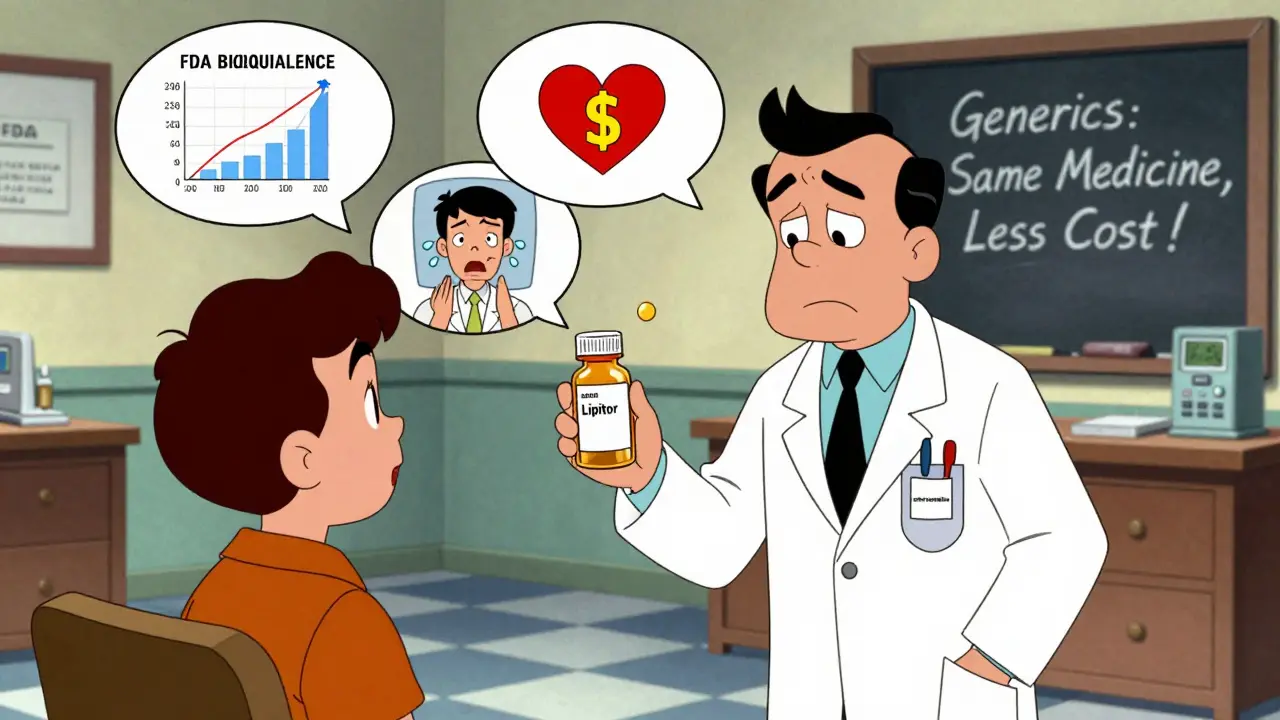
More than 90% of prescriptions in the U.S. are for generic drugs. Yet, despite their widespread use and massive cost savings, many doctors still hesitate to prescribe them confidently. Why? It’s not about money. It’s not about regulation. It’s about trust.
Doctors Don’t Doubt the Science - They Doubt the Real-World Results
The FDA says generics must be bioequivalent to brand-name drugs. That means they deliver the same active ingredient at the same rate and amount. The numbers are clear: 80-125% absorption range. For most drugs, that’s perfectly safe. But doctors aren’t just looking at lab reports. They’re looking at patients. A 2017 study of 134 Greek physicians found that more than 25% believed generics were less effective. That number jumps to 27.3% when asking specifically about therapeutic equivalence. And it’s not just old-school doctors. Even those who’ve been practicing for less than a decade hold these beliefs. What’s driving it? It’s the stories. A patient comes back saying their new generic levothyroxine made them jittery. Another says their blood thinners aren’t working the same. These aren’t anecdotes from confused patients - they’re from people who’ve been on the same brand for years and suddenly switched. When a patient’s condition destabilizes after a switch, the doctor doesn’t immediately think, “It’s probably just variation.” They think, “Maybe the generic isn’t the same.”Age, Gender, and Experience Shape Beliefs - But Not the Way You’d Expect
You might assume older doctors are more resistant to generics. But the data says otherwise. The Greek study found that male doctors, specialists, and those with over 10 years of experience were more skeptical than younger or female colleagues. That’s surprising. You’d think experience would bring more confidence in evidence. Instead, it seems to reinforce caution. Female physicians, contrary to earlier assumptions, were actually more open to generics. Why? Possibly because they spend more time counseling patients and have seen how cost barriers impact adherence. When a patient skips doses because the brand-name pill costs $150 a month, the doctor sees the consequence firsthand. Age also matters. A 2018 PLOS ONE study showed a strong correlation between age and negative perceptions. Older physicians were less likely to believe generics were equally effective, more likely to fear side effects, and less likely to accept substitution - even when the science supported it. The p-values were below 0.001. This isn’t noise. It’s a pattern.Doctors Know Generics Save Money - But Don’t Always Prescribe Them
Here’s the contradiction: 49.4% of doctors agree that increasing generic use would benefit patients. Yet only 32.7% routinely prescribe them as first-line treatment. Why the gap? Time. A 2018 Oxford study found that 74.3% of primary care physicians said they simply don’t have time during appointments to explain why a generic is safe. Another 86.1% admitted they haven’t received enough continuing education on generics since medical school. And then there’s the fear of backlash. One physician in a Reddit thread described switching a patient from brand-name warfarin to a generic - then getting a frantic call two days later. The patient’s INR spiked. The doctor didn’t know if it was the generic, a dietary change, or just bad timing. So they switched the patient back. No harm done. But now they’re afraid to try again.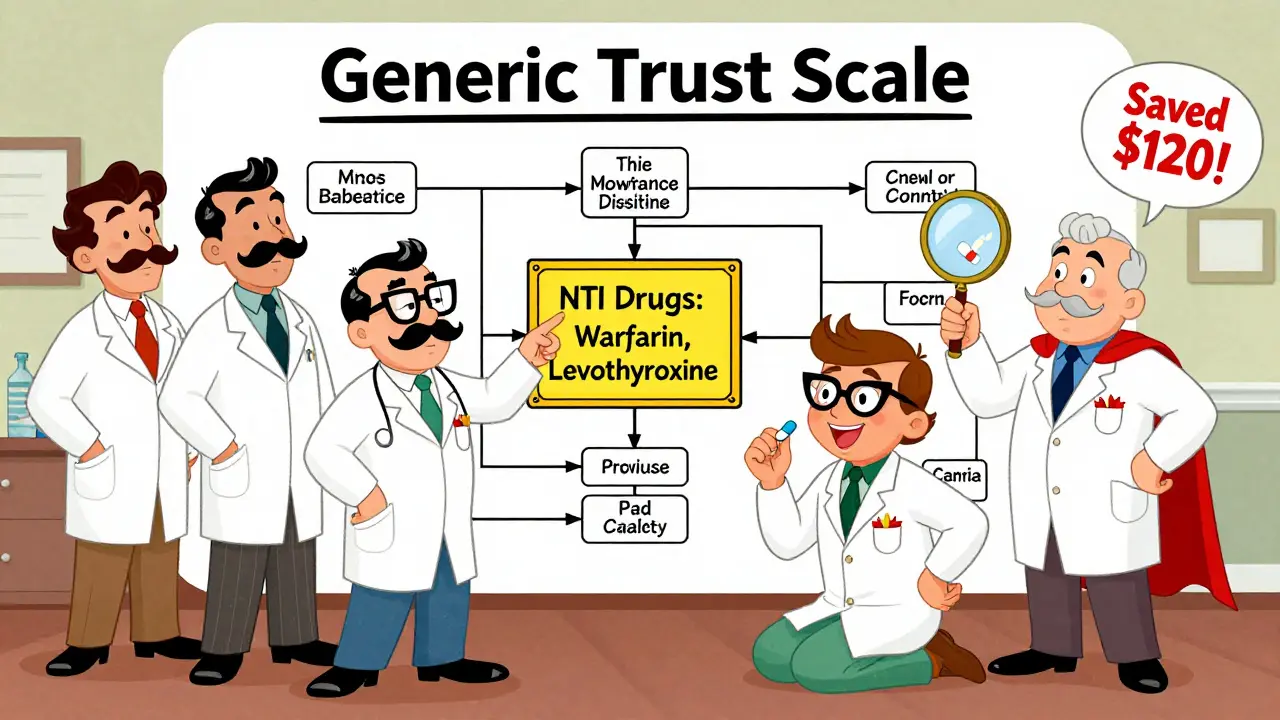
Pharmacists Get It - But Doctors Don’t Always Listen
Pharmacists are far more comfortable with generics. Only 22.1% of them doubt therapeutic equivalence, compared to 28.7% of doctors. Pharmacists see the bottles. They know the manufacturing standards. They’ve seen the same generic used for years without issue. But here’s the problem: patients don’t hear it from pharmacists. They hear it from their doctor. The CDC found that 68.4% of patients learn about generics from their physician - not the pharmacist, not the internet, not the packaging. So if the doctor hesitates, the patient hesitates too. In rural areas, this becomes a dangerous cycle. One in five patients who distrust their doctor’s recommendation on generics stop taking their medication altogether. That’s not just a prescribing issue - it’s a public health risk.The Real Problem Isn’t Quality - It’s Communication
A 2017 study from the University of Thessaly found that when doctors received clear, evidence-based education on generics, their positive attitudes increased by 37.2%. That’s not a small shift. That’s life-changing. But education alone isn’t enough. Doctors need tools. They need talking points. They need data they can show patients. For example: a patient asks why they’re switching from Lipitor to atorvastatin. The doctor can say: “This is the same medicine. The FDA requires it to work the same way. The only difference is you’ll save $120 a month. Here’s a chart showing outcomes from 12,000 patients who made this switch - no difference in heart attacks or side effects.” That kind of conversation doesn’t happen by accident. It happens when clinics have handouts, when EHR systems flag generic alternatives, when residency programs teach it.Some Drugs Are Harder to Switch - And That’s Valid
Not all generics are created equal - and doctors are right to be cautious with certain drugs. Narrow therapeutic index (NTI) medications like warfarin, levothyroxine, and phenytoin require precise dosing. Even small differences in absorption can matter. Reddit threads and clinical reports show real cases where patients had adverse events after switching. These aren’t myths. They’re real. And they fuel skepticism. But here’s the nuance: the problem isn’t the generic itself. It’s the switch. A patient stable on one brand of levothyroxine for five years shouldn’t be randomly switched to a different generic without monitoring. The issue isn’t equivalence - it’s stability. The FDA’s 2023 GDUFA III update now requires more post-market data on NTI generics. Early results from Johns Hopkins show that when doctors get access to real-world effectiveness data - not just lab numbers - their prescribing confidence improves by nearly 30%.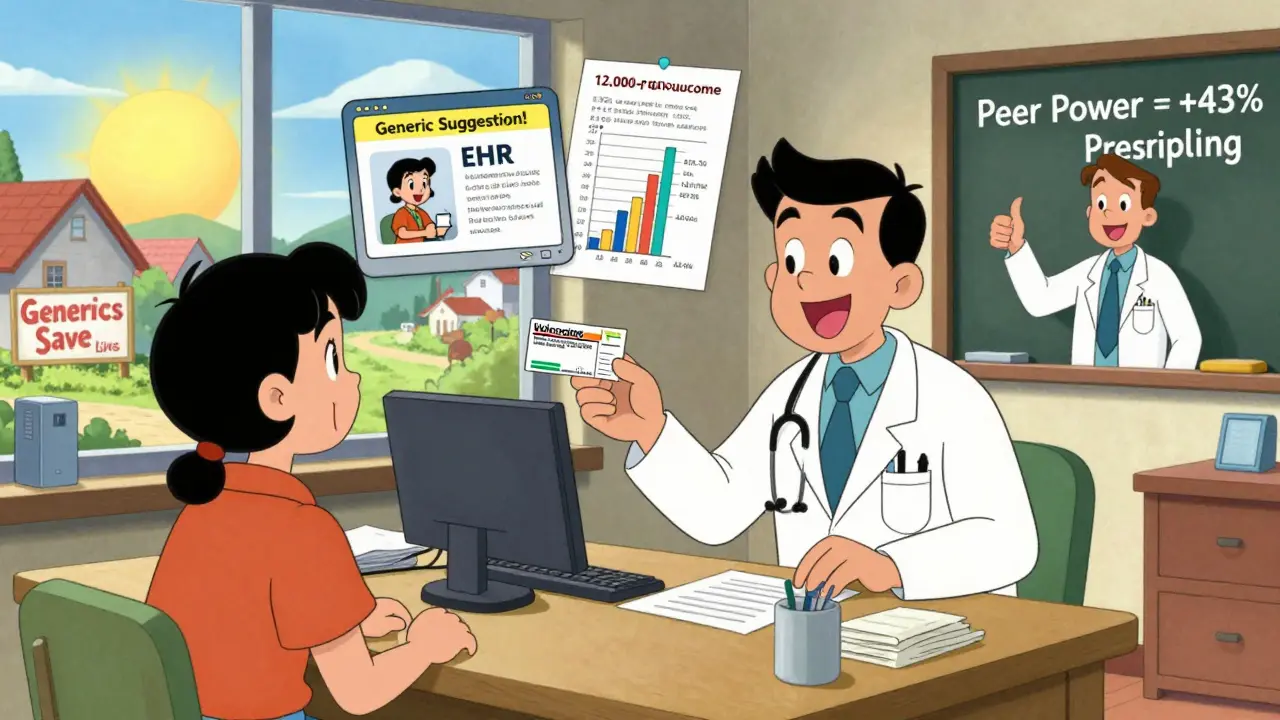
What’s Changing - And What’s Not
The generics market is growing fast. It’s now a $528 billion global industry. Generics make up 90% of prescriptions but only 22% of drug spending. That’s $200 billion in annual savings - if we use them fully. But we’re not. Because attitudes haven’t caught up with the data. The American Medical Association’s 2024 push for simpler generic names - like “Lipitor” becoming “atorvastatin” instead of “(8R,8aR,10aR,12aR)-8-(4-fluorophenyl)-12a-hydroxy-3,5,7,9,11,13-hexamethyl-8,10,12,12a-tetrahydro-8,10a-(epoxymethano)pyrano[3,4-f]chromene-1,6-dione” - is a step in the right direction. Why? Because confusing names make doctors feel like they’re guessing. And the future? By 2030, IQVIA predicts 78% of physicians will view generics as therapeutically equivalent. That’s progress. But it’s slow.What Needs to Happen Now
We can’t wait for generational change. We need action.- Medical schools need to teach bioequivalence early - not as a footnote, but as core curriculum. Right now, only 38.7% of U.S. schools do.
- Clinics need decision aids: quick-reference charts, patient handouts, EHR prompts that suggest generics with a link to outcome data.
- Peer educators matter. Doctors trust other doctors. One study found peer-led education increased generic prescribing by 43% more than outside lectures.
- Regulators need to keep publishing real-world data on generics - not just lab results, but patient outcomes.
It’s Not About Trusting the Drug - It’s About Trusting the System
At its core, this isn’t a drug problem. It’s a trust problem. Doctors don’t distrust generics because they’re unscientific. They distrust them because the system has failed to give them the tools to explain them. They distrust them because they’ve seen patients suffer after switches - and no one gave them the data to prove it wasn’t the drug. The solution isn’t to shame doctors for being cautious. It’s to arm them with better information, better tools, and better conversations. Because when a doctor prescribes a generic with confidence, they’re not just saving money. They’re saving lives.Do doctors really think generic drugs are less effective?
Yes, a significant number do. Studies show that between 25% and 28% of physicians believe generics are less effective or have more side effects than brand-name drugs, even though the FDA requires them to be bioequivalent. These beliefs are strongest among male doctors, specialists, and those with more than 10 years of experience.
Why don’t doctors prescribe generics more often if they save money?
Many doctors want to prescribe generics - but they lack time, training, and confidence. Nearly 75% say they don’t have enough time in appointments to explain the switch, and over 85% feel undereducated on generic drug data. Some also fear patient complaints or adverse events, especially with drugs like warfarin or levothyroxine.
Are generic drugs safe for chronic conditions like high blood pressure or thyroid disease?
For most patients, yes. Generic drugs for chronic conditions are rigorously tested and approved. However, with narrow therapeutic index drugs - like levothyroxine or warfarin - small changes in absorption can matter. That’s why switching from one generic to another, or from brand to generic, should be done carefully and with monitoring. It’s not that generics are unsafe - it’s that stability matters.
Do patients trust generic drugs more if their doctor recommends them?
Absolutely. Studies show that 68% of patients learn about generics from their doctor. If a doctor presents the switch confidently and explains why it’s safe, patient acceptance rises dramatically. But if the doctor seems unsure, patients often refuse - and may even stop taking the medication entirely.
What’s being done to improve doctor confidence in generics?
Several things. Medical schools are slowly adding more generic drug education. The FDA now requires more real-world data on generics after approval. Some clinics are using peer educators - doctors who successfully switched to prescribing generics - to train others. And the AMA is pushing for simpler generic names to reduce confusion. Early results show that even a 90-minute educational workshop can increase generic prescribing by over 20%.
Jody Kennedy
December 28, 2025 AT 06:45My grandma takes her generic levothyroxine like clockwork and hasn't missed a beat. I've seen it firsthand - no jitteriness, no crashes. Doctors need to stop scaring people with horror stories and start sharing the wins too.
Ryan Cheng
December 29, 2025 AT 14:08It's wild how the data says one thing but the gut feeling says another. I'm a med student, and I've had attendings tell me 'never switch a patient on warfarin' like it's gospel. But then they pull up the FDA bioequivalence charts and say 'technically it's fine.' The disconnect is real. We need better tools - not just more lectures.
Ellie Stretshberry
December 30, 2025 AT 11:07Dan Alatepe
December 30, 2025 AT 17:34Bro… I saw a guy in Lagos get a generic blood pressure med and he went from ‘I’m fine’ to ‘I think I’m dying’ in 48 hours. Turns out he was just stressed. But now he won’t touch generics. That’s the real problem - it’s not the drug, it’s the fear. 😅
Jay Ara
January 1, 2026 AT 04:14Michael Bond
January 3, 2026 AT 01:20It’s not about the drug. It’s about the handoff.
Kuldipsinh Rathod
January 4, 2026 AT 18:10My cousin’s a pharmacist in Delhi. She says the real issue is when pharmacies swap generics without telling anyone. That’s when patients get confused. Not the drug itself - the chaos around it.
SHAKTI BHARDWAJ
January 6, 2026 AT 03:42OF COURSE DOCTORS DONT TRUST THEM. THE FDA IS A CORRUPTED BRANCH OF PHARMA. THEY LET THIS HAPPEN SO BIG PHARMA CAN MAKE MORE MONEY. YOU THINK THEY WANT YOU TO SAVE $120? NO. THEY WANT YOU TO BE A SLAVE TO THE SYSTEM.
Matthew Ingersoll
January 6, 2026 AT 05:52As someone who grew up in rural Texas, I’ve seen this play out. The doctor who prescribes the generic? They’re the one getting yelled at when the patient’s cholesterol doesn’t drop. No one blames the insurance company. They blame the drug. And the doctor? They stop prescribing it. It’s not ignorance - it’s self-preservation.
carissa projo
January 7, 2026 AT 10:09What if the real question isn’t ‘Do doctors trust generics?’ but ‘Do we trust doctors to be supported?’ We throw them into rooms with 12 patients an hour, no time, no training, no data - then wonder why they default to what’s familiar. We’re asking them to be superheroes without giving them capes.
josue robert figueroa salazar
January 7, 2026 AT 23:00Typical. Another article pretending doctors are dumb. They’re not. They’ve seen patients crash after switches. You think they want to be the reason someone has a stroke? Wake up. This isn’t about education - it’s about liability.
david jackson
January 9, 2026 AT 21:23Okay but imagine this: you’ve spent 12 years in school learning that brand-name drugs are the gold standard. You’ve watched your mentors write prescriptions with the exact same brand for decades. Now you’re told - ‘Oh, by the way, that thing you’ve been told is sacred? It’s just a copy. And if your patient dies, it’s probably your fault for switching.’ That’s not bias - that’s trauma. And you want to fix it with a PowerPoint? No. You fix it by sitting down with a peer who’s done it successfully. You fix it with stories. Not stats. Stories.
christian ebongue
January 9, 2026 AT 23:25Generic warfarin? Nah. I’d rather pay $150 a month than risk my INR going nuclear. You think I’m scared? Nah. I’m just not dumb.
jesse chen
January 11, 2026 AT 22:59Can we just agree that the system is broken? Doctors aren’t villains. Patients aren’t idiots. Generics aren’t magic. And the FDA isn’t perfect. But if we could just… give doctors five minutes to explain it, and give patients a simple chart, and make sure the pharmacy doesn’t swap brands without telling anyone… we’d solve 80% of this. It’s not rocket science. It’s just… human.