
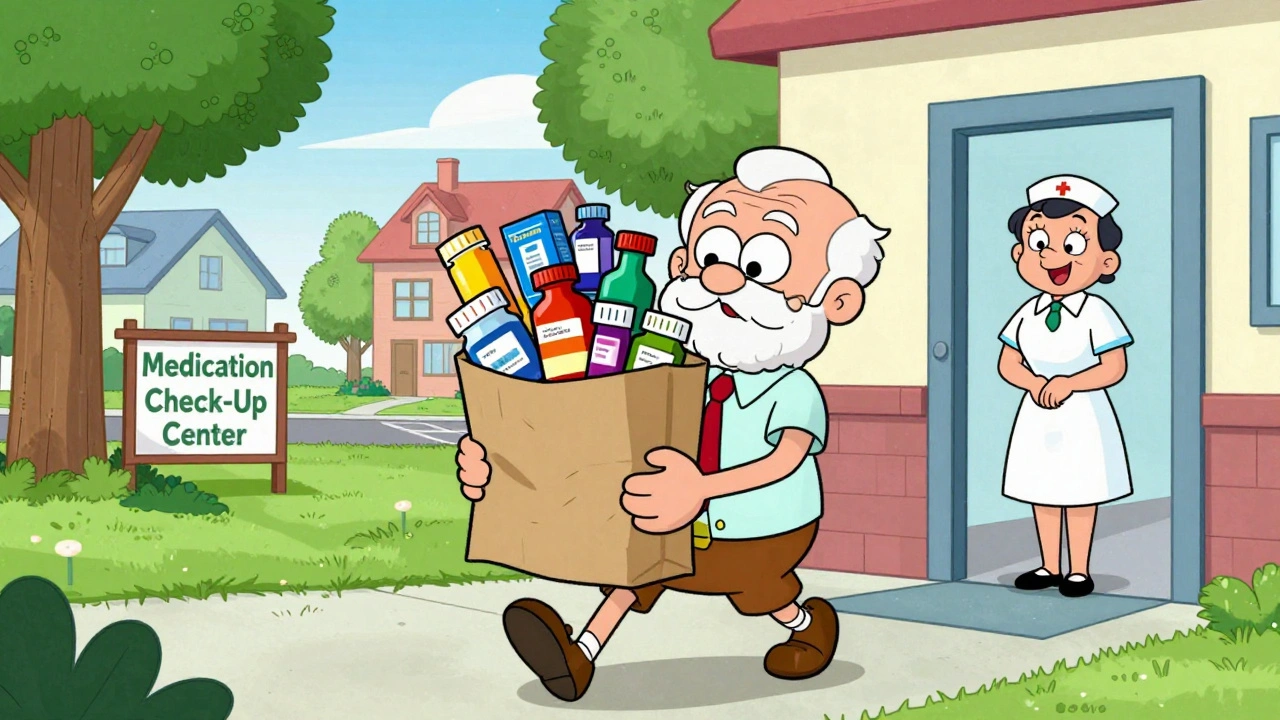
Every year, tens of thousands of people end up in the hospital because of a medication mistake - not because they took the wrong drug, but because no one knew what they were actually taking. It sounds simple: just tell your doctor what pills you’re on. But in reality, most people forget, misremember, or mix up their medications. The most reliable way to avoid this? Bring your actual pill bottles to your appointment.
Why Pill Bottles Matter More Than Your Memory
Your doctor doesn’t guess what you’re taking. They rely on an accurate list - called a medication reconciliation - to make sure your prescriptions don’t clash, your doses are right, and nothing dangerous is being overlooked. The problem? Studies show that 60 to 70% of the time, what patients say they take doesn’t match what’s in their medicine cabinet. That’s not because you’re careless. It’s because remembering 10 different pills, with different times, doses, and reasons, is hard. Especially when you’ve been taking them for years. Bringing the actual bottles - with their original labels - cuts those errors by two-thirds. Why? Because labels have details you can’t recall: exact dosage (is it 5 mg or 10 mg?), frequency (once daily or every 8 hours?), expiration dates, and even the prescribing doctor’s name. The FDA requires every prescription bottle to include this information. That’s not an accident. It’s safety design.What to Bring: It’s More Than Just Prescriptions
Don’t just grab your antibiotics or blood pressure pills. You need to bring everything:- All prescription medications, even ones you stopped taking
- Over-the-counter drugs like ibuprofen, antacids, or sleep aids
- Vitamins, minerals, and supplements - yes, even the “natural” ones
- Herbal remedies, teas, or tinctures
- Any patches, inhalers, or eye drops
Stop Using Pill Organizers - For Now
Many people, especially older adults, use weekly or monthly pill organizers. They’re convenient. But they’re also the #1 source of confusion during medication reviews. A 2023 study showed that 77% of older adults don’t keep pills in their original bottles. Instead, they dump them into plastic cases. One man brought a single container labeled “morning pills” to his appointment. Inside: five different medications, three of which he didn’t recognize. The pharmacist had to call his pharmacy to ID them. For your appointment, bring your original bottles and your pill organizer. Your doctor will compare them side by side. If you’re using a 7-day case, make sure it’s filled with pills from labeled bottles - not random ones from last year’s refill.How to Prepare: A Simple 15-Minute Routine
You don’t need to be a nurse to get this right. Here’s how to do it in less than 20 minutes:- 24 hours before your appointment, gather every pill container you have - from your bathroom cabinet, purse, car, or bedside table.
- Don’t throw away empty bottles. Take a photo of each label before discarding.
- If you use a pill organizer, lay out all the original bottles next to it.
- Write down any pills you can’t identify. Note when you started them and why.
- Put everything in a single bag - no need to sort by type. A “brown bag review” is the gold standard.
What If You Can’t Bring the Bottles?
Life happens. You’re traveling. You forgot. Your pills are in a locked cabinet. What then? You can still help. Use your pharmacy’s app. Most pharmacies - CVS, Walgreens, Rite Aid - let you view your full medication history online. Print it out or show it on your phone. But here’s the catch: pharmacy records don’t show what you didn’t pick up. They don’t show your vitamins. They don’t show the leftover antibiotics from last year. Another option: take clear photos of each bottle’s label. Make sure the name, dosage, and pharmacy are visible. Send them to your doctor’s portal ahead of time. But even this isn’t perfect. A 2024 study found that virtual photo reviews miss 22% of discrepancies - like pills hidden under the lid, mismatched labels, or pills that aren’t in their original containers. The bottom line? Nothing beats the real thing.What Happens During the Appointment
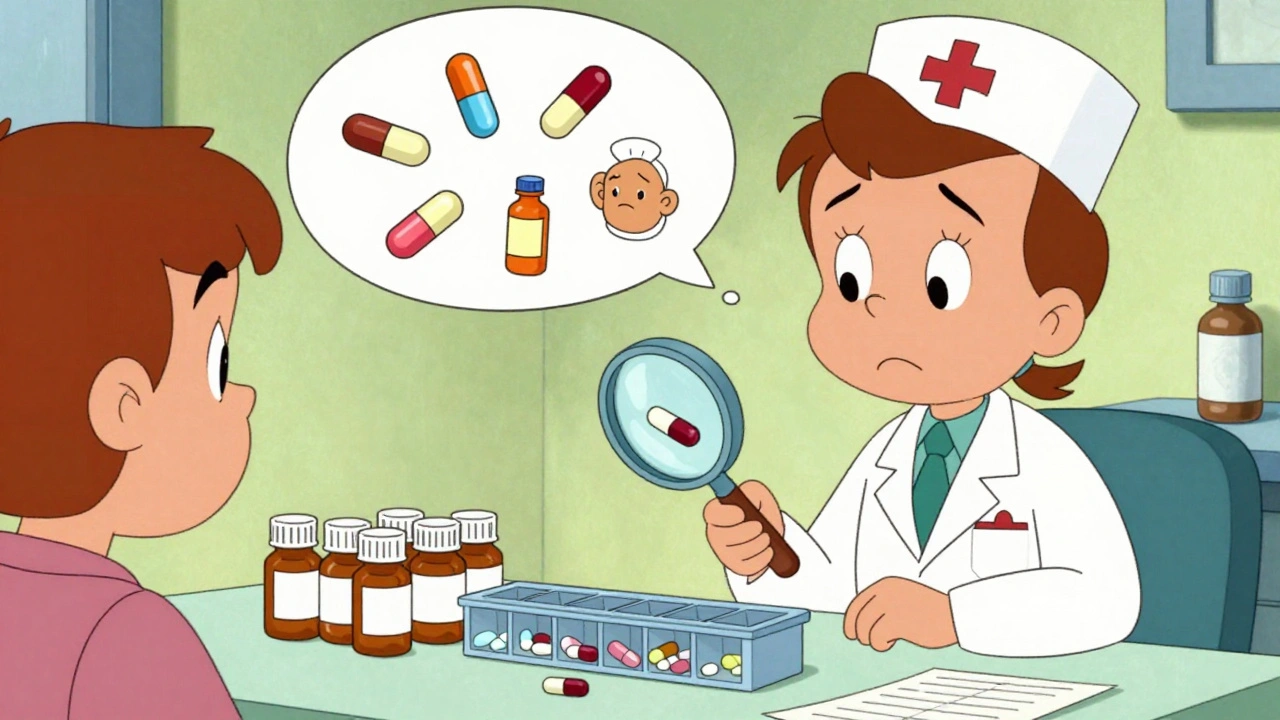
When you hand over your bag of bottles, your doctor or nurse will go through each one. They’ll check:- Drug name and strength (is it 5 mg or 50 mg?)
- Dosage instructions (once daily? twice a day? as needed?)
- Prescribing provider and date
- Expiration dates
- Any pills that don’t match the electronic record
Why This Works Better Than Apps or Digital Lists
There are apps like Medisafe, MyTherapy, and Hero Health that track your meds. They’re great for reminders. But they can’t tell you what’s physically in your house. A 2024 report showed that 45% of patients forget to enter “as needed” meds - like painkillers or anxiety pills - into their apps. Another 28% don’t enter supplements because they think they’re “not real medicine.” Digital tools are useful. But they’re built on what you tell them. Pill bottles are built on what’s real.
Common Problems - And How to Solve Them
Some people feel embarrassed bringing a bag full of bottles. They worry it looks messy or that the doctor will think they’re noncompliant. Here’s the truth: doctors expect it. They’ve seen it all. Here are the top three issues patients face:- “I don’t know what most of these pills are for.” That’s okay. Bring them anyway. Your doctor can ID them. Or your pharmacist can help you label them.
- “I have too many.” If you’re on 10+ medications, it’s overwhelming. Ask your doctor to schedule a dedicated medication review. Many clinics offer this once a year - especially for older adults or those with chronic conditions.
- “I threw out the bottles.” Take photos next time. Or call your pharmacy and ask for a printed list of your current prescriptions.
What Your Doctor Will Do After
After your appointment, your doctor will update your electronic health record with the corrected list. They’ll:- Remove medications you stopped
- Add ones you forgot
- Adjust doses based on what you’re actually taking
- Flag dangerous interactions
- Send a summary to your pharmacy
Final Tip: Make It a Habit
Don’t wait for your annual checkup. Every time you refill a prescription, take a moment to compare the new bottle with your old one. If the dose changed? Write it down. If you were told to stop one? Keep the bottle until your next appointment. Medication reconciliation isn’t a one-time task. It’s part of managing your health. And bringing your pill bottles? That’s the simplest, most effective way to make sure your care is accurate, safe, and truly yours.Do I need to bring every pill bottle, even if I haven’t used it in months?
Yes. Even if you stopped taking a medication weeks or months ago, bring the bottle. Doctors need to know what you’ve taken recently - especially if it could still be in your system or if it caused side effects. Throwing away the bottle makes it impossible to verify what you were on.
Can I just show my pharmacy’s app or printout instead?
A printout or app list helps, but it’s not enough. Pharmacy records don’t include over-the-counter drugs, supplements, or medications you didn’t pick up. They also can’t show if you’re taking pills from an old bottle or mixing them into a pill organizer. Physical bottles give the full picture.
What if I use a weekly pill organizer? Should I bring that too?
Yes. Bring both your pill organizer and the original bottles. Your doctor will compare what’s in the organizer with what’s on the bottle labels. This catches mismatches - like wrong doses, expired pills, or pills that don’t belong.
I’m embarrassed about how many pills I take. Should I hide some?
No. Doctors see patients on 10, 15, even 20 medications every day. They’re not judging you - they’re trying to keep you safe. Hiding pills or leaving some out increases your risk of dangerous interactions or missed diagnoses. Be honest. It’s the best way to get the right care.
Do I need to bring vitamins and herbal supplements?
Yes. Many supplements interact with prescription drugs. For example, St. John’s Wort can make blood thinners and antidepressants less effective. Garlic supplements can increase bleeding risk. Even if you think they’re “natural,” they’re still active substances. Bring them all.
What if I can’t get to my pills before the appointment?
Take clear photos of each label with your phone - make sure the drug name, dosage, and pharmacy are visible. Send them to your doctor’s portal ahead of time. You can also call your pharmacy and ask for a printed list of your current prescriptions. But remember: photos and printouts miss things like unused pills or supplements. Bring the bottles if you can.
Is this only for older adults?
No. While older adults are more likely to take multiple medications, anyone on more than three prescriptions, or who uses OTC drugs or supplements, should bring their bottles. Medication errors happen at any age - especially during transitions like hospital discharge or switching doctors.
Elliot Barrett
December 8, 2025 AT 18:43Bro, I just showed my pharmacy app once and got scolded by my PCP. Why do I gotta lug around a whole bag of bottles? I’m not a walking pharmacy.
Nikhil Pattni
December 10, 2025 AT 02:00Look, I get it, bringing bottles sounds like a chore but it’s literally the only way to stop doctors from guessing. I had a guy in my clinic last week who swore he wasn’t on warfarin-turns out he had a 6-month-old bottle under his sink labeled ‘blood thinner’ and forgot to tell anyone. He almost bled out during knee surgery. The label said 5mg, he thought it was 1mg. That’s not negligence-that’s systemic failure. And yeah, I know you think your app is smart, but apps don’t know if you threw half your pills in the trash after the side effects hit. Real bottles = real data. No emoji needed.
Tejas Bubane
December 11, 2025 AT 05:02Let’s be real-this whole ‘brown bag review’ thing is just a glorified hoarder audit. Of course you bring bottles. Of course you don’t throw out empties. But let’s not pretend this is some revolutionary insight. It’s 2024 and we’re still treating patients like toddlers who can’t remember what they ate for breakfast. The real problem? The system doesn’t integrate with your phone, your pharmacy, or your brain. It makes you do manual labor so the EHR can stay broken. 🤷♂️
Ajit Kumar Singh
December 13, 2025 AT 04:21Man I been doing this since I was 18 after my uncle died from mixing his blood pressure med with that herbal tea he thought was harmless-no one told him it was like pouring gasoline on a fire. So yeah I bring everything. Every bottle. Every capsule. Even the turmeric powder I got from the guy at the temple. You think I care if it looks messy? I care that I’m alive. And if your doctor doesn’t get it? Find a new one. This ain’t rocket science. It’s survival.
Lisa Whitesel
December 14, 2025 AT 14:28If you’re too lazy to bring your pills, you’re not ready to be on them. End of story.
Larry Lieberman
December 15, 2025 AT 05:07Just brought my whole medicine cabinet to my appointment 😅 The nurse laughed and said ‘Welcome to the club.’ We found three meds I forgot I was taking and two I shouldn’t have been. Also discovered my vitamin D bottle was actually my dog’s joint supplement. 🐶💊 Thanks for the reminder, OP-this saved me from a hospital trip.
Sabrina Thurn
December 16, 2025 AT 12:30Medication reconciliation is one of the most underutilized safety protocols in primary care. The gold standard is the brown bag review because it’s the only method that captures polypharmacy discrepancies, non-adherence, and off-label use in real time. Digital tools are adjuncts-they don’t replace physical verification. A 2023 JAMA study showed that 42% of discrepancies in geriatric patients were only detectable via direct inspection of containers. Also, supplements like kava and dong quai have clinically significant CYP450 interactions. Don’t dismiss them as ‘natural.’ They’re pharmacologically active. Bring the bottles. It’s not about compliance-it’s about precision medicine.
Courtney Black
December 17, 2025 AT 13:57We treat our bodies like smartphones-update the software, ignore the manual, hope for the best. But pills aren’t apps. You can’t uninstall a side effect. You can’t reboot your liver. The bottle? It’s the only thing that remembers what you were told. Everything else is just noise.
iswarya bala
December 17, 2025 AT 21:16i used to think this was dumb but then i forgot i was on a statin and got a crazy muscle pain and thought it was from gym… turned out it was the med. now i bring everything. even the gummy vitamins 😅
Michael Robinson
December 18, 2025 AT 05:19If you don’t know what you’re taking, how do you know you’re alive? The bottle doesn’t lie. Your memory does. Simple as that.
ian septian
December 18, 2025 AT 11:17Do this. Every time. Your future self will thank you.