
| System | Primary Manager | Core Focus | Key Strength |
|---|---|---|---|
| VigiBase | Uppsala Monitoring Centre (UMC) | Global signal detection | Massive geographic reach (170+ countries) |
| EudraVigilance | European Medicines Agency (EMA) | Regulatory compliance | Rapid, legally mandated reporting |
| FAERS | U.S. FDA | US Market surveillance | High volume of detailed reports |
The Global Brain: How VigiBase Tracks Every Reaction
At the heart of global safety is the VigiBase database. Managed by the Uppsala Monitoring Centre (UMC) in Sweden, this isn't just a list; it's a living archive of over 35 million individual case safety reports. When a doctor or patient reports a side effect to their national health authority, that data travels to VigiBase. To make this work across different languages and healthcare systems, the same "dictionary" must be used. This is where MedDRA (Medical Dictionary for Regulatory Activities) comes in. It provides a standardized way to describe symptoms-so a "severe headache" in Tokyo is recorded exactly the same way as one in New York. Combined with WHODrug Global, which catalogs over 300,000 medicinal product names, the system can spot a "signal"-a potential new risk-much faster than any single country could alone.Regional Powerhouses: The EU and US Approaches
While the WHO network is a voluntary global umbrella, regions like Europe and North America have stricter, more aggressive systems. The European Medicines Agency (EMA) operates EudraVigilance, which is far more than a database; it's a regulatory hammer. In the EU, pharmaceutical companies are legally required to report adverse events within 15 days. This legal pressure is why the EU can assess safety signals in about 75 days, whereas the global average is closer to 120 days. Across the Atlantic, the FDA uses the FDA Adverse Event Reporting System (FAERS). While FAERS is an independent giant processing millions of reports, it still feeds data into VigiBase to contribute to the global picture. The real magic happens when these systems cross-reference. For instance, the EU has started using electronic health records for 150 million patients, which has boosted their ability to find hidden safety signals by 37% compared to just waiting for doctors to send in reports.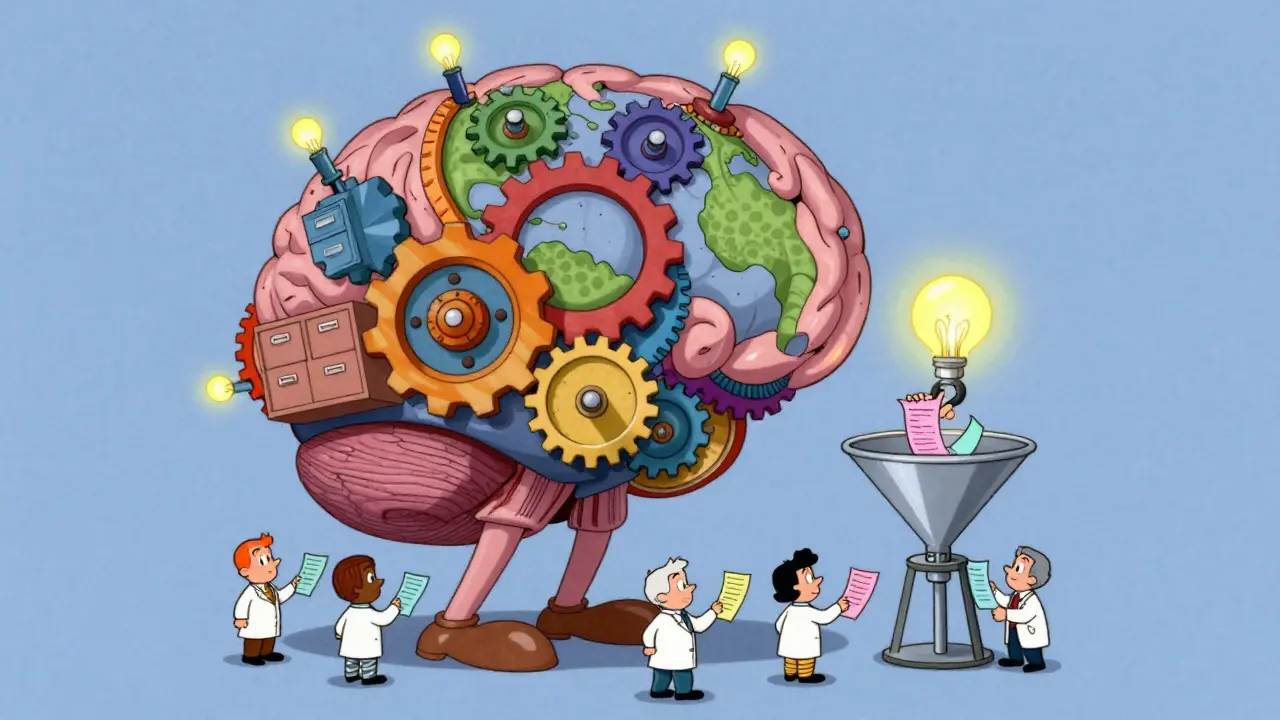
The Reporting Gap: A Tale of Two Worlds
If you look at the data, there's a frustrating reality: drug safety is currently skewed toward wealthy nations. High-income countries make up only 16% of the world's population but submit 85% of all reports to VigiBase. To put that in perspective, Sweden might report 1,200 adverse events per 100,000 people, while Nigeria might only report 2.3. Why the gap? It's rarely about the drugs and usually about the infrastructure. In many low-income countries, there simply isn't a budget. Some African nations have pharmacovigilance budgets as low as $0.02 per person, compared to $1.20 in wealthier states. This means many side effects in the Global South go unrecorded, creating a "blind spot" in global medicine. However, technology is helping. Ethiopia recently used a web-based tool called PViMS to slash their reporting time from 90 days down to 14, proving that digital tools can leapfrog old bureaucratic hurdles.
From Human Reports to AI Detection
For decades, we relied on "spontaneous reporting"-basically waiting for a doctor to notice something and write a letter. That's slow. Today, the industry is shifting toward active surveillance and Artificial Intelligence. The global pharmacovigilance market is booming, expected to hit over $13 billion by 2030, because AI can scan millions of reports for patterns that a human eye would miss. Recent studies show that AI-assisted signal detection at the UMC has already reduced false positives by 28%. This is huge because "false alarms" waste regulatory resources. The next big step is the ISO IDMP standard coming in 2025, which will standardize how medicines are identified globally. This should improve cross-border data matching by 40%, meaning a drug sold under one brand name in France and another in Brazil will finally be recognized as the same chemical entity in the database.How You Can Actually Help
Most people think drug safety is for scientists in white coats, but the most important data point is you. These systems only work if people report their experiences. In the UK, the Yellow Card Scheme has seen massive success by launching a mobile app that healthcare pros and patients use to report issues instantly. If you experience an unexpected side effect, don't just tell your pharmacist-ask them to report it to the national regulatory body. Whether it's a mild rash or a severe reaction, your single report could be the first piece of a puzzle that prevents thousands of others from getting sick. Your data becomes a part of the global shield that keeps medicine safe for everyone.What is the difference between a side effect and an adverse drug reaction (ADR)?
A side effect is generally a known, predicted effect of a drug (like drowsiness from an antihistamine). An adverse drug reaction (ADR) is an unintended, harmful response at normal doses, which may be previously unknown. Pharmacovigilance systems are specifically designed to catch these unpredictable ADRs.
Is VigiBase open to the public?
Yes, through a portal called VigiAccess. While the full VigiBase database is for health authorities, VigiAccess allows anyone to search for reported side effects associated with specific medications to increase transparency.
Why do some countries report more side effects than others?
Higher reporting rates usually indicate a more robust health system, better digital infrastructure, and higher awareness among doctors and patients, rather than the drugs being "more dangerous" in those countries.
How does the WHO handle a safety signal?
Once a signal (a pattern of reports) is detected in VigiBase, the UMC and WHO notify the relevant national centers. These centers then conduct a causality assessment to determine if the drug actually caused the event or if it was a coincidence.
What happens if a drug is found to be unsafe after it's on the market?
Regulators can take several actions: adding a new warning to the label, restricting who can take the drug (e.g., removing it for children), or in severe cases, recalling the drug from the market entirely.