
When you’re pregnant, every choice you make feels bigger. Even something as simple as taking a pain reliever for a headache can turn into a minefield of questions. What’s safe? What’s not? And who do you trust when advice seems to change every time you look it up? The truth is, you’re not alone - and the stakes are real. About 90% of pregnant women take at least one medication during pregnancy, according to the CDC. But not all of them are safe. Some can harm your baby’s development, cause preterm birth, or even lead to stillbirth. The good news? You don’t have to guess. There are clear, evidence-based guidelines - and safer options you can turn to.
Medications That Can Cause Serious Harm
Some drugs are outright dangerous during pregnancy. These aren’t just "maybe" risks - they’re well-documented threats. One of the most serious is isotretinoin (Accutane), used for severe acne. It doesn’t just raise the risk of birth defects - it causes them in more than 25% of pregnancies where it’s taken. These defects can include missing or underdeveloped ears, heart problems, and brain abnormalities. The FDA’s iPLEDGE program requires strict controls for this drug, but if you’re planning a pregnancy or think you might be pregnant, stop it immediately.
Another major concern is ACE inhibitors like lisinopril and ARBs like valsartan. These are common for high blood pressure, but they’re a disaster in pregnancy. They can cause fetal kidney failure, low amniotic fluid (oligohydramnios), and even death. If you’re on one of these and find out you’re pregnant, call your doctor right away. Don’t wait. You’ll need a safer alternative like methyldopa or labetalol.
Then there’s valproic acid (Depakote), often used for epilepsy or bipolar disorder. Studies show it leads to major birth defects in over 10% of pregnancies - more than three times the rate of the general population. If you have a seizure disorder and are thinking about pregnancy, talk to your neurologist about switching to lamotrigine or levetiracetam. Both have much lower risks.
Don’t forget about tetracyclines (like doxycycline) and fluoroquinolones (like ciprofloxacin). Tetracyclines can permanently stain your baby’s teeth and slow bone growth. Fluoroquinolones may harm developing cartilage and joints. These antibiotics are fine for adults - but not for growing babies.
And then there’s warfarin (Coumadin), a blood thinner. It crosses the placenta and can cause fetal warfarin syndrome - a pattern of facial deformities, bone problems, and brain damage. If you’re on warfarin and planning pregnancy, switch to enoxaparin (Lovenox) before conception. Unlike warfarin, enoxaparin doesn’t cross the placenta at all.
The Acetaminophen Controversy
For years, acetaminophen (Tylenol) was the gold standard for pain and fever relief in pregnancy. It was the only OTC painkiller most doctors recommended. But in September 2025, the FDA issued a major update: acetaminophen may be linked to increased risks of ADHD and autism when used for long periods during pregnancy.
This isn’t a sudden scare. A 2021 study of 95,000 mother-child pairs found a 28.6% higher chance of ADHD and a 20.4% higher chance of autism spectrum disorder in children whose mothers took acetaminophen throughout pregnancy. The FDA’s new guidance says: minimize use. That doesn’t mean stop completely. If you have a fever of 102°F or higher, untreated fever can be even more dangerous - increasing the risk of neural tube defects by over 8 times. So if you’re sick, a short course of acetaminophen is still better than no treatment.
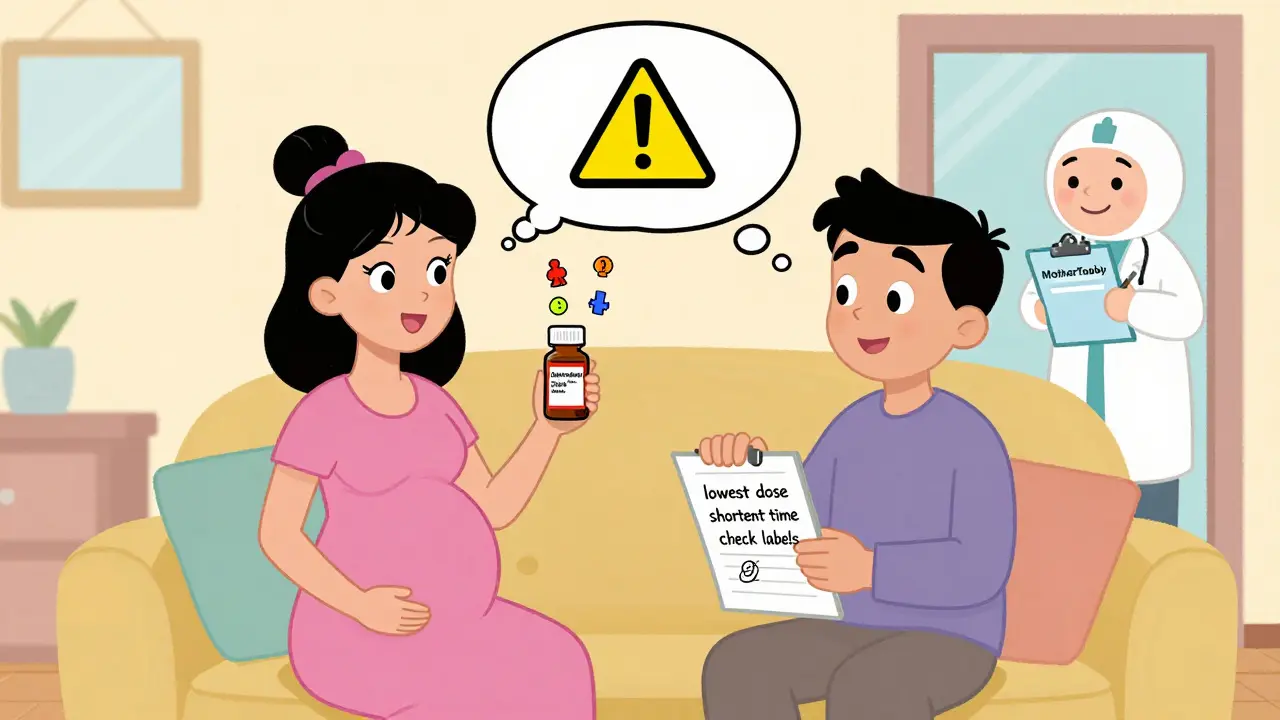
The key? Use the lowest dose possible (325-650 mg) for the shortest time. Don’t take it daily just because you feel a little achy. And never combine it with other products that contain acetaminophen - like cold medicines or sleep aids. Check labels. If you’re unsure, ask your pharmacist.

NSAIDs: The Hidden Danger
Many women reach for ibuprofen (Advil) or naproxen (Aleve) for headaches, back pain, or menstrual cramps. But these non-steroidal anti-inflammatory drugs (NSAIDs) aren’t safe after 20 weeks of pregnancy. The FDA updated its warning in 2020 after studies showed they can cause fetal kidney problems, leading to dangerously low amniotic fluid. In some cases, this leads to lung underdevelopment and stillbirth.
Even aspirin can be risky unless it’s prescribed in low doses (60-150 mg) for preeclampsia prevention. Regular-strength aspirin (325 mg or more) increases bleeding risks and shouldn’t be taken routinely.
Bottom line: Avoid NSAIDs after 20 weeks. If you need pain relief, stick with acetaminophen - but only as needed. And if you’re past 20 weeks and have been taking ibuprofen regularly, tell your provider. A simple ultrasound can check your amniotic fluid levels.
Safer Alternatives for Common Pregnancy Complaints
Let’s get practical. What can you actually take?
- Pain and fever: Acetaminophen (Tylenol) - 325-650 mg every 4-6 hours, max 3,000 mg per day. Use only when needed.
- Allergies: Loratadine (Claritin), cetirizine (Zyrtec), or fexofenadine (Allegra). All are Category B and have been studied in thousands of pregnancies with no increased risk of birth defects.
- Congestion: Saline nasal spray first. If you need more, pseudoephedrine (Sudafed) is okay after the first trimester - but only if you don’t have high blood pressure. It can raise your BP by 5-10 points. Limit to 60 mg every 4-6 hours, max 120 mg daily.
- Constipation: Start with fiber: 25-30 grams a day from fruits, veggies, oats, and beans. Drink plenty of water. If you still need help, docusate sodium (Colace) at 100 mg twice daily or polyethylene glycol (Miralax) at 17g daily are both safe (Category B).
- Heartburn: Calcium carbonate (Tums) or magnesium hydroxide (Milk of Magnesia) are fine. Avoid sodium bicarbonate (baking soda) - it can cause fluid overload.
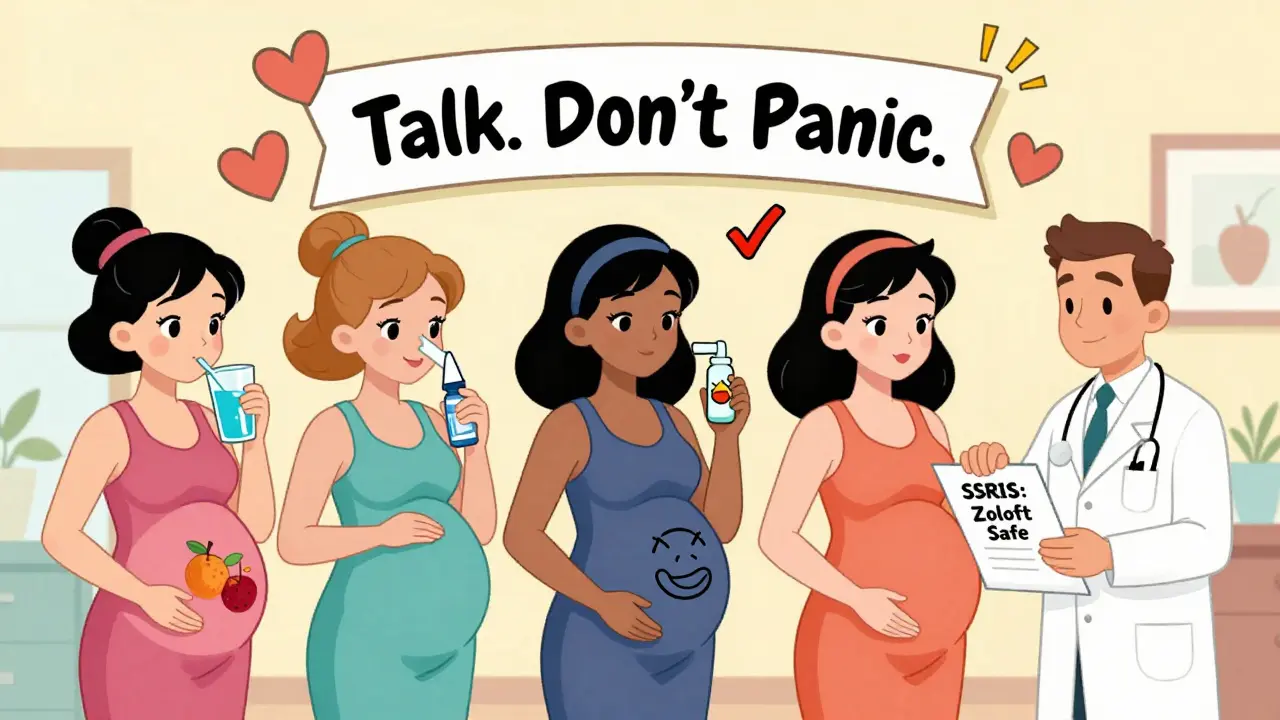
For depression or anxiety, don’t stop your medication without talking to your doctor. Untreated mental health conditions raise the risk of preterm birth and low birth weight. Paroxetine (Paxil) has a slightly higher risk of heart defects, but other SSRIs like sertraline (Zoloft) have strong safety data. The choice isn’t between "meds" and "no meds" - it’s between "harmful meds" and "safer meds."
What to Do Before and During Pregnancy
Don’t wait until you’re pregnant to review your meds. If you’re trying to conceive, schedule a preconception checkup. Bring a full list - prescription, over-the-counter, herbal, and supplements. Even things like St. John’s Wort or high-dose vitamin A can be risky.
Keep a medication log. Write down what you take, why, and when. This helps your provider spot hidden risks. For example, many cold medicines contain acetaminophen + pseudoephedrine + an antihistamine - three ingredients that may not all be safe together.
Use trusted resources. The MotherToBaby service (run by experts in birth defects) offers free, confidential advice. They’ve helped over 2 million families since 2022. You can call, text, or chat online. They don’t judge - they just give you facts.
And if you’ve already taken something risky? Don’t panic. Many women accidentally take a medication before they know they’re pregnant. The risk isn’t always high - and your provider can help you assess it. The goal isn’t guilt. It’s action.
What’s Changing in 2025-2026
The landscape is shifting fast. The FDA’s 2025 notice on acetaminophen wasn’t a one-off. It’s part of a larger push. More drug manufacturers are now running pregnancy exposure registries. The NIH has launched a $15 million initiative to find non-opioid pain solutions for pregnant women. And by 2026, ACOG is expected to update its guidelines to reflect the latest acetaminophen data.
The big takeaway? You’re not being asked to live in fear. You’re being asked to be informed. Medication safety in pregnancy isn’t about black-and-white rules - it’s about balancing risks. Sometimes, the risk of not treating a condition (like high fever or depression) is greater than the risk of the medicine.
What matters most is communication. Talk to your provider. Ask questions. Don’t assume something is safe just because it’s OTC. And don’t stop necessary medications without a plan. Pregnancy is a time to be careful - but not paralyzed.
Is it safe to take Tylenol during pregnancy?
Acetaminophen (Tylenol) is still considered the safest pain reliever for short-term use during pregnancy, but recent research suggests long-term or frequent use may increase the risk of ADHD and autism in children. Use the lowest effective dose (325-650 mg) for the shortest time possible. Avoid daily use unless directed by your provider. Do not exceed 3,000 mg per day. Always check labels - many cold and flu medicines contain acetaminophen too.
Can I take ibuprofen while pregnant?
No - not after 20 weeks of pregnancy. Ibuprofen and other NSAIDs can cause fetal kidney problems, low amniotic fluid, and even heart issues in the baby. Even before 20 weeks, it’s better to avoid them unless your provider says otherwise. For pain relief, use acetaminophen instead. If you’ve taken ibuprofen after 20 weeks, tell your doctor - they may want to check your amniotic fluid levels with an ultrasound.
What antibiotics are safe during pregnancy?
Penicillins (like amoxicillin) and cephalosporins (like cephalexin) are generally safe. Clindamycin and azithromycin are also considered low-risk. Avoid tetracyclines (doxycycline) - they can stain baby’s teeth and affect bone growth. Fluoroquinolones (ciprofloxacin, levofloxacin) may harm developing joints and cartilage. Always confirm with your provider before taking any antibiotic - even if it’s "common."
Is it safe to take antidepressants while pregnant?
Untreated depression can be more harmful than medication in many cases. SSRIs like sertraline (Zoloft) and citalopram (Celexa) have the best safety data. Paroxetine (Paxil) has a slightly higher risk of heart defects, so it’s often avoided. Never stop antidepressants abruptly - talk to your doctor about switching or adjusting your dose. The risk of relapse is 20-25% if you stop cold turkey, which can lead to preterm birth and low birth weight.
What should I do if I took a risky medication before knowing I was pregnant?
Don’t panic. Many women accidentally take a risky medication early in pregnancy before they know they’re pregnant. The risk depends on the drug, the dose, and when it was taken. Contact your provider or call MotherToBaby (1-866-626-6847) for personalized advice. They can help you understand your specific risk level and whether any monitoring is needed. Most exposures don’t lead to birth defects - but knowing what happened lets you take the next right step.
Denise Jordan
March 11, 2026 AT 10:38I get that the FDA updated their guidance, but let’s be real - if you’re taking Tylenol for a headache once a week, you’re not raising your kid’s risk of autism. This whole article feels like fearmongering dressed up as science. I’ve been pregnant twice, took Tylenol like it was candy, and my kids are perfectly fine. Stop scaring people into panic mode over weak correlations.
Gene Forte
March 12, 2026 AT 14:59Every choice we make as parents is a balance - not a binary. The real question isn’t whether a drug is "safe," but whether the alternative is worse. Untreated fever? More dangerous than acetaminophen. Untreated depression? More dangerous than sertraline. We need to stop framing pregnancy as a minefield and start framing it as a journey of informed care. Knowledge isn’t fear. It’s freedom.
Kenneth Zieden-Weber
March 13, 2026 AT 10:51So let me get this straight - we’re supposed to avoid ibuprofen after 20 weeks, but it’s totally fine before? Like, what’s the magic number? 19 weeks and 364 days? And why is acetaminophen suddenly the villain now? I’ve been taking it since week 6. Am I a bad mom? Or is this just another case of science catching up to real life? Also, why does every medical guideline feel like it’s written by someone who’s never held a crying baby at 3 a.m.?
Chris Bird
March 13, 2026 AT 20:31They say "minimize use" of Tylenol. But how? You’re pregnant, you’re tired, you’re achy. You take it. You don’t have time to count milligrams. This article is just making people feel guilty for existing. Also, why is no one talking about how Big Pharma pushed these drugs for decades and now they’re backtracking? Classic.
Miranda Varn-Harper
March 15, 2026 AT 20:25While I appreciate the thoroughness of this analysis, I must respectfully challenge the assertion that acetaminophen is "still considered the safest pain reliever." The emerging longitudinal data from the 2021 cohort study, coupled with the FDA’s recent advisory, strongly suggests that a paradigm shift is not only warranted but ethically imperative. To continue promoting its use without explicit temporal and dosage constraints is, in my view, a disservice to maternal-fetal health.
Donnie DeMarco
March 16, 2026 AT 05:10bro i took tylenol for 7 months straight and my kid is literally a genius. like he reads at 18 months. also i took advil like 3 times after 20 weeks and no one even noticed. maybe the real danger is overthinking everything? just chill. you’re not a lab rat.
Tom Bolt
March 17, 2026 AT 11:21Let me just say this - if you’re taking ANY medication during pregnancy without a full neurodevelopmental risk assessment, you’re not being careful - you’re being reckless. The FDA didn’t just "update" their guidance. They issued a wake-up call. And if you’re still reaching for Tylenol like it’s water, you’re not a mom - you’re a statistic waiting to happen.
Shourya Tanay
March 19, 2026 AT 08:13From a pharmacovigilance standpoint, the risk-benefit calculus for acetaminophen in pregnancy remains nuanced. While the relative risk for neurodevelopmental outcomes is elevated, the absolute risk remains low, particularly with intermittent, short-term use. The confounding variables - maternal stress, genetic predisposition, environmental exposures - are rarely accounted for in population-level studies. A more granular, individualized approach is warranted, rather than blanket recommendations.
LiV Beau
March 21, 2026 AT 08:11Y’all are overthinking this 😭 I took Tylenol every time I had a headache for 9 months and I’m so proud of my 2-year-old who’s already reciting the alphabet. Also, I used Zyrtec, Claritin, and Miralax - all good! 🙌 You got this. You’re not alone. And if you’re scared? Talk to your provider. They’re on your team 💕
Adam Kleinberg
March 21, 2026 AT 22:02David L. Thomas
March 22, 2026 AT 22:03There’s something really beautiful about how medicine is evolving here. We used to say "don’t take anything" - now we’re saying "here’s how to take it wisely." That’s progress. The goal isn’t zero exposure - it’s informed exposure. And that’s actually empowering. We’re moving from fear to agency. That’s huge.
Bridgette Pulliam
March 23, 2026 AT 01:46My OB said "if you need it, take it." That’s all I needed to hear. I had terrible back pain and took Tylenol daily for weeks. My baby is healthy. I’m healthy. I didn’t panic. I listened to my body and my doctor. Sometimes, the best advice is simple: trust yourself, and trust your care team.
Mike Winter
March 23, 2026 AT 09:15It’s fascinating how we’ve gone from "everything is dangerous" to "everything is okay" to now "everything is risky but still okay if you’re careful." I wonder if the real lesson here isn’t about drugs - but about our relationship with uncertainty. Pregnancy forces us to live with ambiguity. Maybe that’s the real medicine.
Randall Walker
March 23, 2026 AT 17:25Wait - so if I took ibuprofen at 21 weeks… does that mean I ruined my baby? I’m not even sure I want to know. I just wanted to stop my headache. I didn’t sign up for a science experiment. Can someone please just tell me what to do without making me feel like a monster?