
Medication Synchronization Eligibility Checker
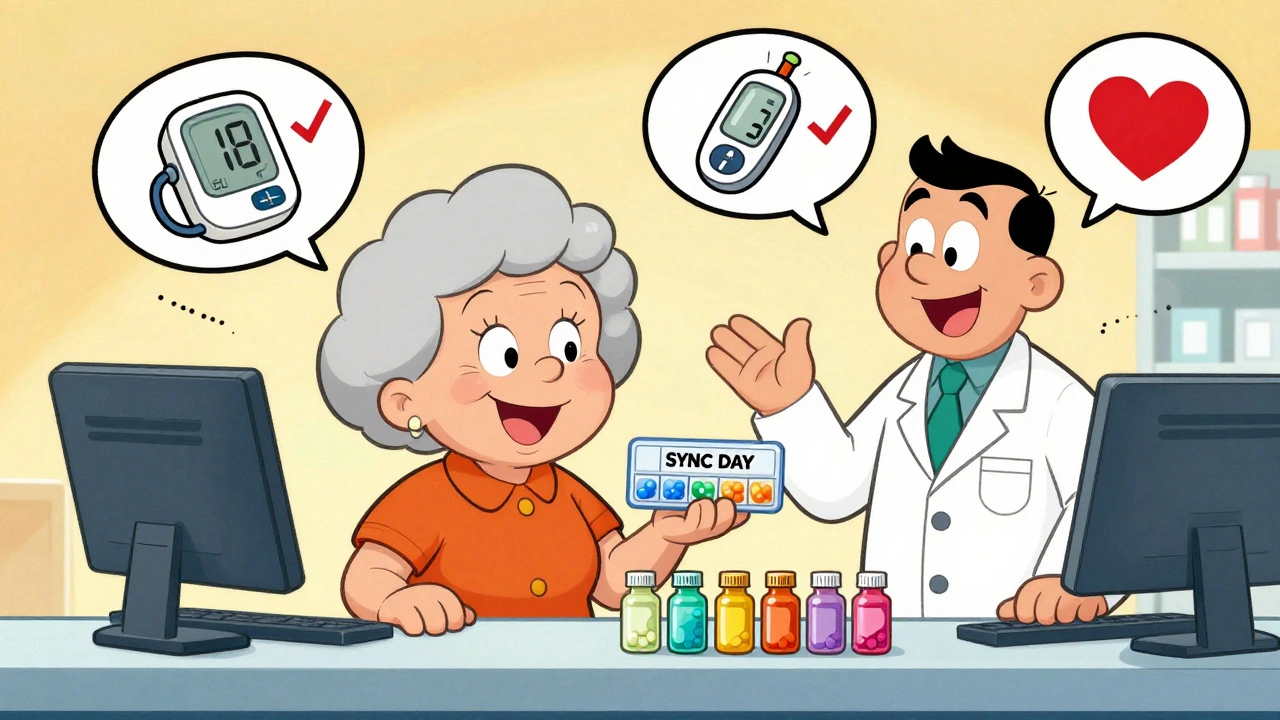
This tool helps determine if medication synchronization (med sync) could benefit you. Med sync aligns all your maintenance prescriptions to be refilled on the same day each month, improving adherence and reducing gaps in therapy.
Eligibility Results
Imagine you’re juggling five different pill bottles, each with its own refill date. One’s due next Tuesday, another in ten days, the third in three weeks. You forget one. You miss a dose. Suddenly, your blood pressure spikes, your diabetes flares up, or you end up in the ER. This isn’t rare. It happens every day to people managing multiple chronic conditions. The fix? Medication synchronization.
What Is Medication Synchronization?
Medication synchronization-often called med sync-is a pharmacy service that lines up all your maintenance prescriptions to be refilled on the same day each month. Instead of running to the pharmacy four or five times a month, you show up once. Your pharmacist makes sure you have everything you need, checks for side effects, and answers questions you might not have thought to ask. This isn’t just a convenience. It’s a safety tool. Gaps in therapy-when you miss doses or run out of meds-lead to worse health outcomes. Studies show that people who miss even a few doses of their chronic meds are far more likely to be hospitalized. In the U.S., medication non-adherence costs over $300 billion a year. A lot of that comes from avoidable hospital trips because someone ran out of their heart medication or didn’t refill their insulin on time. Med sync solves this by turning chaos into routine. It’s been around since 1995, started by a community pharmacist in California who noticed patients were dropping off their meds because the schedules were too messy. Today, nearly 80% of independent pharmacies in the U.S. offer it. And it’s not just for seniors. Busy parents, people with mobility issues, and even young adults with asthma or depression benefit.How It Works: The Simple Five-Step Process
Getting started is easier than you think. Here’s how it actually works:- Identify eligible medications: Only maintenance drugs count. Think blood pressure pills, diabetes meds, cholesterol drugs, thyroid hormone, antidepressants. Not antibiotics, painkillers you take only when needed, or inhalers you use sporadically. Those stay on their own schedule.
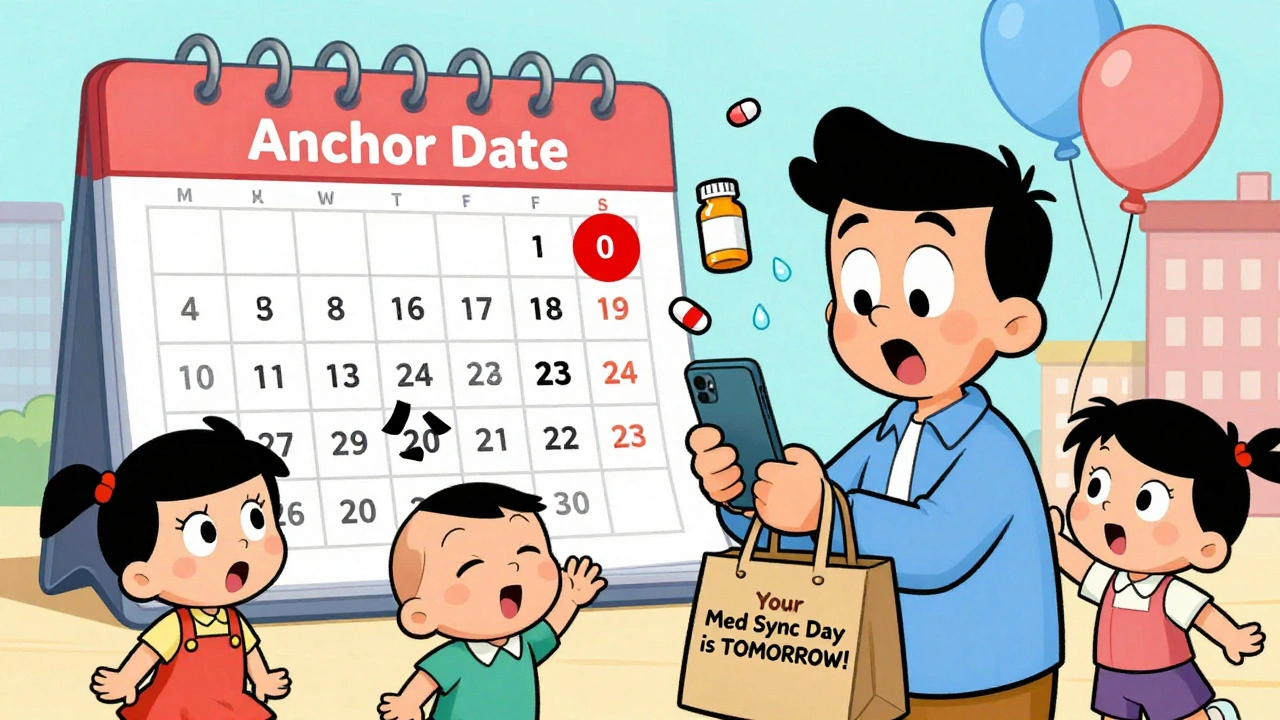
- Choose your anchor date: You and your pharmacist pick one day each month that works for you-say, the second Friday. That’s your new refill day for everything.
- Adjust your prescriptions: Your pharmacist may need to ask your doctor to switch some prescriptions from 30-day to 90-day supplies. This is key. If your doctor only writes a 30-day script, you can’t sync it properly. Most doctors are happy to do this once they understand the benefits.
- Short-fill if needed: If your last refill was two weeks ago but your anchor date is next Friday, your pharmacist might give you just enough for those two weeks. This isn’t a mistake-it’s intentional. They’ll note it as a one-time adjustment for synchronization.
- Monthly check-ins: On your refill day, your pharmacist calls or texts you first. They ask: Are you feeling okay? Any new side effects? Did you start a new med? This isn’t just about picking up pills-it’s about ongoing care.
Who Benefits the Most?
Med sync isn’t for everyone-but it’s life-changing for the right people. The biggest winners are:- People taking three or more daily maintenance medications
- Elderly patients who have trouble driving or remembering dates
- Patients with cognitive challenges or memory issues
- Working parents who can’t take time off for multiple pharmacy trips
- Anyone who’s ever missed a dose because they were “too busy”
What Doesn’t Work in Med Sync?
Not every pill belongs in the sync. Some medications just don’t fit:- As-needed medications: Like albuterol inhalers, nitroglycerin, or painkillers for flare-ups
- Short-term antibiotics: A 7-day course doesn’t sync with a monthly schedule
- Medications with unstable dosages: If your doctor changes your dose every few weeks, syncing isn’t practical yet
- Controlled substances: Some states have restrictions on syncing opioids or benzodiazepines
Common Challenges and How to Overcome Them
It’s not always smooth sailing. Here are the top three hurdles-and how to fix them:1. Insurance Won’t Cover Early Refills
Some Medicare Part D or private plans won’t let you refill a prescription until 75% of the supply is used. That breaks the sync. Solution? Your pharmacist can request a one-time exception. They’ll explain it’s for adherence, not convenience. Most insurers approve it if it’s documented properly.2. Your Doctor Won’t Write 90-Day Prescriptions
Many doctors still default to 30-day scripts out of habit. But 90-day supplies are safer and cheaper. Ask your pharmacist to send a note to your doctor’s office explaining med sync and its benefits. Some clinics now have templates for this. In 2023, Epic EHR started adding “med sync” alerts to remind doctors to write 90-day scripts during annual visits.3. You’re Confused When You Get Less at First
It’s normal to get fewer pills the first time. If your last refill was two weeks ago, you’ll only get enough to cover the next month-not a full 90 days. Don’t panic. It’s temporary. Your pharmacist will explain this upfront. After the first cycle, you’ll get your full supply every month.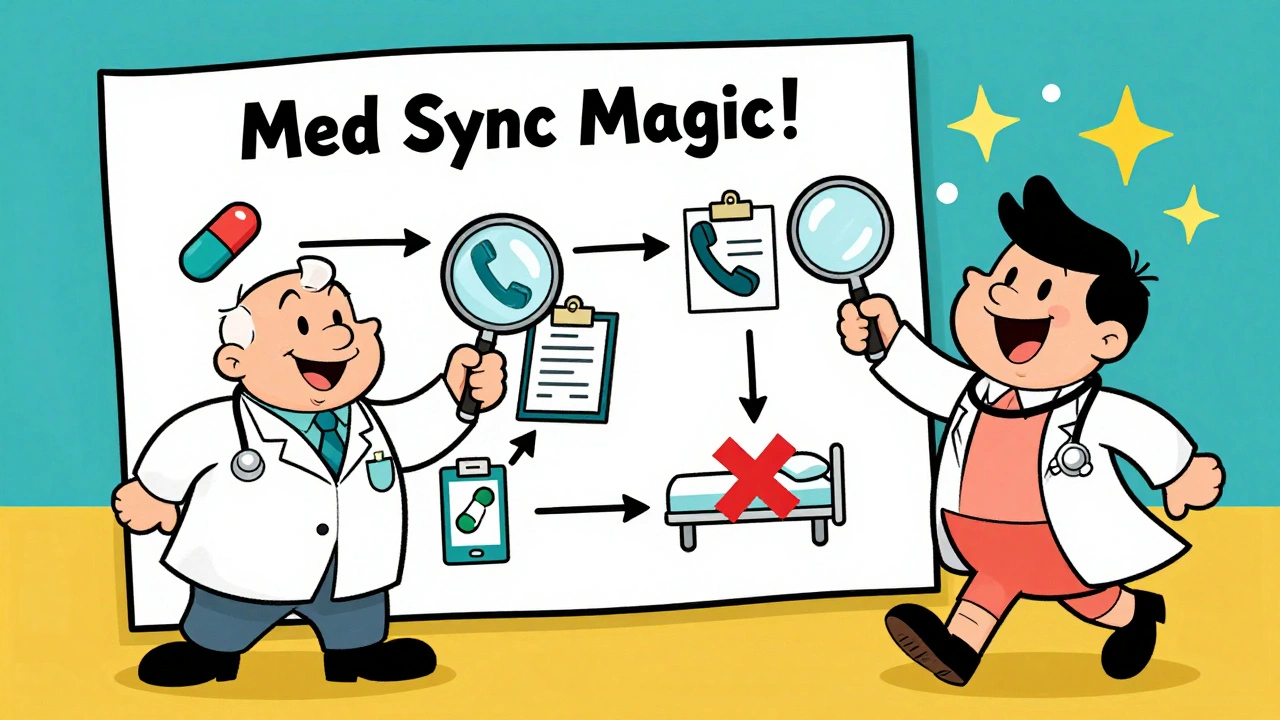
Why This Matters for Your Health
Missing doses isn’t just inconvenient-it’s dangerous. For people with heart disease, stroke risk jumps 50% after just one missed dose of blood pressure meds. Diabetics who skip insulin are 3x more likely to be hospitalized. Even for depression meds, skipping doses can trigger relapses. Med sync doesn’t just help you remember pills. It builds a relationship with your pharmacist. They’re not just filling orders-they’re watching for interactions, side effects, or signs you’re struggling. In fact, 62% of pharmacies now use sync day as a chance to do a full med review. That’s like a mini-annual check-up with your drug regimen. And the numbers back it up. Studies show med sync improves adherence by 15 to 25 percentage points. That’s not a small win. It’s the difference between staying out of the hospital and ending up in one.What’s Next for Medication Synchronization?
This isn’t slowing down. By 2025, Medicare plans may start giving pharmacies bonus payments if they enroll 40% or more of their chronic medication patients in med sync. That’s a big incentive for pharmacies to push it harder. Some are already adding more: automated refill reminders via text, apps that track your doses, and even home delivery for sync patients. Independent pharmacies are leading in personalized service-82% offer custom anchor dates. Chains are catching up with tech, linking sync programs to their apps and automated refill systems. The Congressional Budget Office predicts that by 2027, med sync could reduce hospitalizations among seniors by 12%. That’s over $4 billion saved in Medicare costs alone.How to Get Started
If you’re on three or more daily meds, ask your pharmacy if they offer medication synchronization. Don’t wait until you run out. Go in now. Bring your list of all your prescriptions-even the ones you don’t take every day. Ask:- Can you help me sync my refills?
- Which of my meds qualify?
- What’s my anchor date going to be?
- Will you call me before each refill?
If you’re a caregiver for an elderly parent, do this for them. They won’t ask. But they’ll thank you later.
Can I sync my antibiotics or painkillers?
No. Only maintenance medications that you take daily or regularly should be synced. Antibiotics, painkillers, inhalers, or short-term prescriptions are not part of the program. These are kept on their own refill schedule because they’re used as needed, not on a fixed routine.
Will my insurance cover early refills for sync?
Sometimes, but not always. Some plans restrict refills until 75% of the prescription is used. Your pharmacist can request a one-time exception for synchronization purposes. Most insurers approve this if it’s documented as an adherence strategy, not convenience. If denied, they’ll help you find a workaround.
Do I need to see my doctor before syncing my prescriptions?
Not necessarily, but your pharmacist may need to contact your doctor to switch some prescriptions from 30-day to 90-day supplies. This is common and usually quick. Many doctors are happy to approve it once they understand it improves adherence and reduces hospital visits. Some clinics now have automated prompts for this.
How often will my pharmacist check in with me?
On your sync day, your pharmacist will typically call or text you before your refill to confirm your meds, check for side effects, or ask if anything changed. Some pharmacies also offer monthly follow-ups via email or app. This isn’t just a refill reminder-it’s a safety check.
Is medication synchronization only for older adults?
No. While it’s especially helpful for seniors, anyone managing multiple chronic conditions benefits-whether you’re 25 with asthma and depression, 40 with high blood pressure and cholesterol, or 55 with diabetes and thyroid disease. It’s about complexity, not age.
Chase Brittingham
December 5, 2025 AT 17:00My grandma started med sync last year and she hasn’t missed a dose since. She used to leave pills on the counter and forget them for weeks. Now she just gets everything on the first Friday of the month, and the pharmacist calls her to check in. It’s simple, but it saved her from two ER trips. If you’re juggling meds, just ask. No shame in wanting to stay healthy.
Joe Lam
December 7, 2025 AT 09:01Oh please. This is just another pharmacy-driven profit scheme wrapped in feel-good language. You think they care about your adherence? They care about reducing their own operational overhead. 90-day scripts mean fewer trips, fewer staff hours, and higher bulk margins. And don’t get me started on how often these ‘check-ins’ are just automated voice messages with a pharmacist’s name slapped on them. This isn’t care-it’s cost-cutting dressed up as compassion.
Augusta Barlow
December 8, 2025 AT 22:53Let me tell you something they don’t want you to know-this whole med sync thing? It’s a gateway. First they sync your blood pressure pills, then your antidepressants, then your insulin… next thing you know, they’re tracking your refills through your phone, feeding data to Big Pharma, and your insurance starts denying anything not on the approved list. And who’s to say they won’t start ‘adjusting’ your doses based on algorithmic ‘adherence scores’? I’ve seen the reports. They’re already doing it in Canada. You think this is about safety? It’s about control. And they’re selling it to you as a favor.
Rachel Bonaparte
December 9, 2025 AT 01:48Oh honey, I love this so much-but not because it’s convenient. It’s because it finally treats pharmacists like the healthcare heroes they are. I used to think they just handed out pills like vending machines. Then my aunt got synced, and her pharmacist noticed she was mixing her thyroid med with grapefruit juice-something her doctor never caught. That pharmacist didn’t just refill her meds-they saved her life. And now they call her every month like a friend checking in. That’s not ‘service.’ That’s community. And if you’re rolling your eyes at this, you’ve never had to manage five prescriptions while working two jobs and raising kids. Try living it before you trash it.
Scott van Haastrecht
December 9, 2025 AT 09:42This is why America is falling apart. We’ve turned healthcare into a babysitting service for adults who can’t remember to take a pill. We’re not supposed to be coddled. We’re supposed to be responsible. If you can’t manage your own meds, maybe you shouldn’t be living independently. And now pharmacies are being rewarded for treating us like children? This isn’t innovation-it’s infantilization. And don’t even get me started on the cost to the system. Someone’s paying for this. It’s not magic.
Martyn Stuart
December 10, 2025 AT 19:14Medication synchronization is, without question, one of the most underutilized, yet profoundly effective, interventions in chronic disease management; it addresses adherence not through coercion, but through consistency; it transforms passive compliance into active engagement; and it leverages the pharmacist’s clinical expertise-not merely as a dispenser, but as a vigilant, accessible, and accountable member of the care team. The data is unequivocal: adherence improves, hospitalizations decline, and patient satisfaction soars. Why, then, is this not standard practice in every pharmacy? The answer lies not in clinical efficacy-but in systemic inertia, reimbursement barriers, and a stubborn, outdated medical hierarchy that still views pharmacists as ‘technicians.’
Jessica Baydowicz
December 11, 2025 AT 06:09YESSSSS. This is the kind of thing that makes me want to hug my pharmacist. I used to be the person who’d run out of my anxiety meds on a Friday night and panic until Monday. Now? I get them all on the same day, and my pharmacist texts me, ‘Hey, how’s the sleep?’ like she actually cares. No one else asks that. Not my doctor. Not my therapist. Just her. And now I don’t feel like a failure when I forget. I feel supported. This isn’t just about pills-it’s about dignity.
Ashley Elliott
December 11, 2025 AT 22:25I’ve been on med sync for two years. It’s quiet, it’s simple, and honestly? It’s the only part of my healthcare routine that doesn’t make me want to cry. I don’t have to remember dates. I don’t have to argue with insurance. I just show up, get my pills, and sometimes, if I’m having a rough week, I sit and talk to the pharmacist for five minutes. No judgment. No rush. Just… presence. It’s not glamorous. But it’s real.
Jenny Rogers
December 12, 2025 AT 08:50While the empirical evidence supporting medication synchronization is both statistically significant and clinically compelling, one must not overlook the epistemological implications of delegating therapeutic responsibility to institutionalized pharmacy protocols. The very notion that adherence can be engineered through calendrical alignment rather than through patient autonomy, cognitive reinforcement, or behavioral psychology, represents a troubling reductionism in the ethos of modern medicine. One may achieve temporal consistency in pill ingestion, yet fail to cultivate the internalized discipline requisite for true health agency. Thus, while the mechanism may be efficacious, its philosophical underpinnings remain dangerously paternalistic.