

Carb Calculator for Managing Alpha-Glucosidase Inhibitor Side Effects
Carb Intake Estimator
The article suggests keeping meals under 45g of carbs to minimize side effects. Enter your meal details to see your carb total.
Estimated Carb Total:
0g
Tip: Your meal exceeds the recommended 45g carb limit. Try reducing portion sizes or choosing lower-carb alternatives.
When you're taking a diabetes medication to keep your blood sugar in check, the last thing you want is to feel like your gut is staging a rebellion. That’s exactly what happens with alpha-glucosidase inhibitors - drugs like acarbose and miglitol that help control blood sugar after meals but come with a notorious side effect: gas, bloating, and diarrhea. If you’ve been prescribed one of these and you’re wondering why you’re suddenly avoiding social dinners or running to the bathroom after eating rice, you’re not alone. These side effects are common, predictable, and - most importantly - manageable.
Why Do Alpha-Glucosidase Inhibitors Cause Gas and Bloating?
These drugs don’t get absorbed into your bloodstream the way most medications do. Instead, they stay right where they’re needed: in your small intestine. There, they block the enzymes (alpha-glucosidases) that break down complex carbs like bread, pasta, potatoes, and rice into simple sugars. That sounds good - it slows down sugar spikes. But here’s the catch: the carbs don’t disappear. They just keep moving, undigested, into your colon.
Once they get there, your gut bacteria go wild. They ferment those leftover carbs like a brewery on overdrive. The result? Lots of gas - hydrogen, methane, carbon dioxide - and water pulled into the colon from your body, which leads to bloating and sometimes diarrhea. It’s not an allergic reaction. It’s not an infection. It’s just biology doing what it does when carbs get dumped into the wrong place.
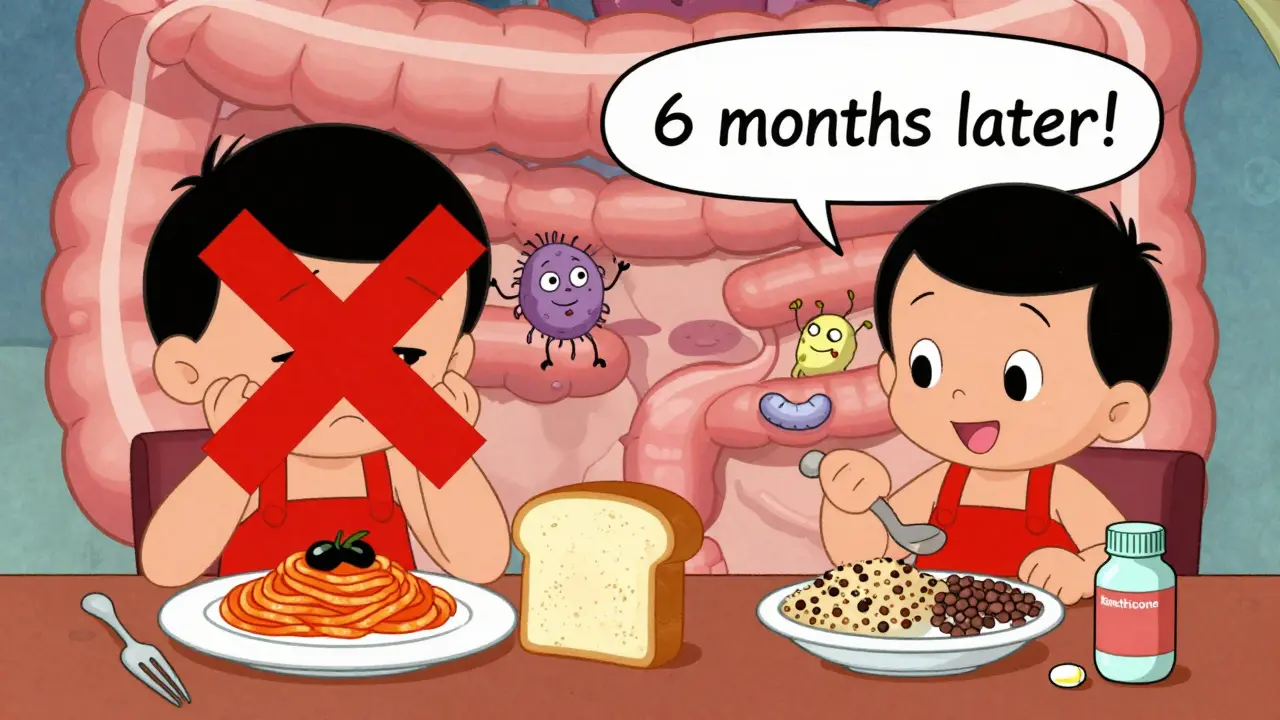
Studies show up to 73% of people experience gas in the first month of taking acarbose. About 30% get diarrhea. And bloating? Nearly everyone feels it at first. The good news? Your gut adapts. After six months, most people see a drop to 25% or less of those symptoms. But that first month? It can feel brutal.
How Common Are These Side Effects - And Are They Worse Than Other Diabetes Drugs?
Let’s put this in perspective. If you’re on metformin, you might get nausea or stomach upset - but it’s usually upper GI, and it often fades. If you’re on a GLP-1 agonist like semaglutide, nausea and vomiting are common, but those are mostly early on. SGLT2 inhibitors? They can cause yeast infections or dehydration, but your gut stays mostly calm.
Alpha-glucosidase inhibitors? They’re the only class that consistently targets the lower gut. And the numbers don’t lie. In clinical trials, 30-50% of users report flatulence, 14-30% have abdominal discomfort, and 10-20% get diarrhea. Real-world data from patient forums like Drugs.com show that 58% of users rate acarbose negatively, mostly because of gas and bloating. One Reddit user wrote: “I had to stop after two weeks. The gas was unbearable.”
But here’s the flip side: these drugs don’t cause low blood sugar. They don’t make you gain weight. And they’re cheap - generic acarbose costs $15-$25 a month. For older adults, people with kidney problems, or those who can’t afford newer drugs, they’re still a viable option - if you can handle the side effects.
How to Start So You Don’t Get Overwhelmed
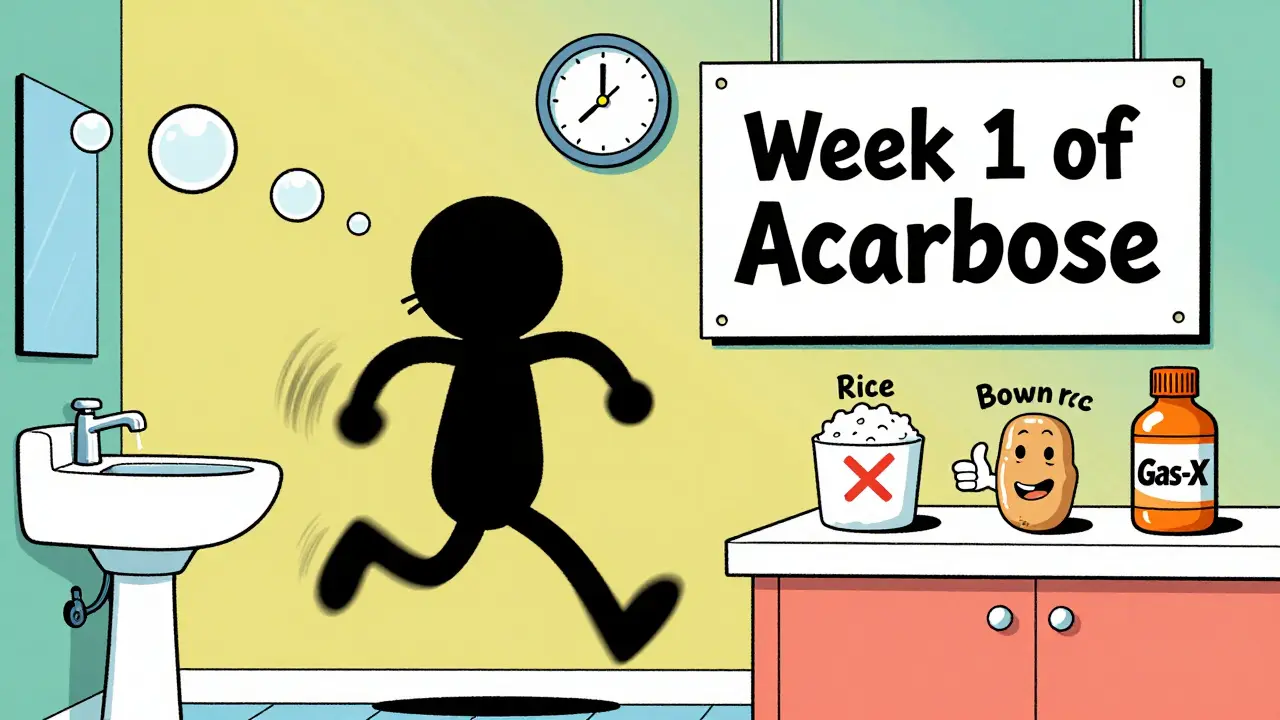
The biggest mistake people make? Starting at the full dose. That’s like pouring gasoline on a fire. The standard starting dose for acarbose is 25 mg once a day, taken with your largest meal. For miglitol, it’s the same. Don’t jump to 50 mg or 100 mg right away. Your gut needs time to adjust.
Here’s a realistic plan:
- Week 1-2: Take 25 mg once daily with your biggest meal (usually dinner).
- Week 3-4: Add a second dose with lunch.
- Week 5-6: Add the third dose with breakfast - only if you’re tolerating the first two.
This slow ramp-up cuts the risk of severe side effects by nearly half, according to a 2022 study from the University of Michigan. Patients who followed this method had a 45% lower chance of quitting the drug within 12 weeks.
Also, take the pill with the first bite of your meal - not 15 minutes before. Taking it with food ensures it’s right where it needs to be when the carbs arrive. Miss that timing, and the drug won’t work as well.
Diet Changes That Actually Help
Medication alone won’t fix this. You have to change what you eat. The goal isn’t to cut carbs entirely - that’s not realistic or healthy. It’s to pick smarter carbs.
Here’s what works:
- Avoid white bread, white rice, potatoes, pastries, and sugary drinks. These are broken down too fast, even with the drug.
- Choose whole grains like brown rice, quinoa, oats, and barley. They digest slower, so less ends up in your colon.
- Include legumes - beans, lentils, chickpeas. They’re high in fiber and resistant starch, which are fermented more gently by gut bacteria.
- Keep meals to 30-45 grams of carbs. That’s about one cup of cooked rice or two slices of whole grain bread. More than that? You’re asking for trouble.
One study from the London Diabetes Centre found that patients who got detailed dietary advice were twice as likely to stick with the drug after six months. That’s huge. You’re not just taking a pill - you’re changing your eating habits. And that’s okay. It’s part of managing diabetes.
What About Over-the-Counter Remedies?
You might think of Beano - it’s made from alpha-galactosidase, an enzyme that breaks down beans and veggies. Sounds perfect, right? Wrong. Beano can interfere with acarbose. It’s like putting two brakes on your car at once. One might help, but they cancel each other out.
Simethicone (Gas-X, Mylanta Gas) is safe. It doesn’t stop gas production - it just breaks up the bubbles. Taking 125 mg before meals can make bloating feel less intense. For diarrhea, loperamide (Imodium A-D) is fine for occasional use - 2 mg when needed. But don’t use it daily. It masks the problem, doesn’t fix it.
And skip probiotics unless they’re prescribed. Not all are helpful. But new research from 2023 shows that a specific combo - Lactobacillus acidophilus and Bifidobacterium lactis - reduced gas severity by 35% in people taking acarbose. That’s promising. Ask your doctor if a targeted probiotic might help you.
When Should You Quit?
Not everyone can tolerate these drugs. If after three months you’re still having daily diarrhea, constant bloating that makes you avoid social events, or severe cramping - talk to your doctor. It’s not a failure. It’s a signal.
For some, the trade-off isn’t worth it. Newer drugs like SGLT2 inhibitors or GLP-1 agonists may be better tolerated - even if they cost more. But if you’re on a tight budget, or you’re older and at risk for low blood sugar from other meds, sticking with acarbose might still make sense.
The key is knowing your limits. If you’re trying to manage your diabetes without adding more stress to your life, then maybe this isn’t the right tool. There are other options. You don’t have to suffer to be healthy.
What’s the Future for These Drugs?
Alpha-glucosidase inhibitors are fading in the U.S. and Europe. They make up less than 4% of diabetes prescriptions now, down from 6% in 2018. Newer drugs work better, have fewer side effects, and even help with weight loss.
But they’re not gone. In Asia, where diets are high in rice and noodles, they’re still widely used. In low-income countries, they’re a lifeline - cheap, effective, and safe for kidneys. And for some people - especially those with prediabetes - acarbose has been shown to delay or even prevent type 2 diabetes.
It’s not about being trendy. It’s about being right for you. If your doctor recommends it, ask: “What’s the plan if the side effects are too much?” If they don’t have one, it’s time to have a deeper conversation.
Final Thoughts
Alpha-glucosidase inhibitors aren’t the first choice anymore - and for good reason. But they’re not useless. They’re a tool with a very specific job: slowing down sugar spikes without causing low blood sugar or weight gain. The trade-off? A messy gut.
If you’re willing to go slow with dosing, change your diet, and give your body time to adapt, you might make it through. Many do. But if the side effects are crushing your quality of life, don’t feel guilty for walking away. Diabetes management isn’t about sticking with a drug because it’s prescribed. It’s about finding what works for you - without making you miserable.
Josh josh
January 25, 2026 AT 03:24SWAPNIL SIDAM
January 26, 2026 AT 03:29Geoff Miskinis
January 27, 2026 AT 12:07Betty Bomber
January 29, 2026 AT 05:16Nicholas Miter
January 29, 2026 AT 19:40Suresh Kumar Govindan
January 31, 2026 AT 08:31George Rahn
February 1, 2026 AT 07:51Ashley Karanja
February 1, 2026 AT 10:59Shweta Deshpande
February 2, 2026 AT 17:23Aishah Bango
February 4, 2026 AT 06:05Simran Kaur
February 5, 2026 AT 03:56Neil Thorogood
February 5, 2026 AT 21:57Jessica Knuteson
February 7, 2026 AT 03:02Robin Van Emous
February 8, 2026 AT 12:50Angie Thompson
February 9, 2026 AT 10:03