
Medication Anxiety Risk Assessment Tool
How This Tool Works
This tool helps you assess if your anxiety symptoms might be related to medications you're taking. Based on information you provide about your medications, symptoms, and personal factors, it will estimate your risk level and provide tailored recommendations.
It’s not just in your head. If you started a new medication and suddenly feel like your heart’s racing, your hands are shaking, or you’re overwhelmed by worry for no reason-you’re not imagining it. Medications can cause anxiety. Not just stress from being sick, not just life getting tough. Real, physical, nervous system-driven anxiety that shows up because of what’s in the pill you swallowed.
What Medications Actually Cause Anxiety?
You might not expect it, but some of the most common prescriptions out there can trigger anxiety. It’s not rare. About 5 to 7% of all anxiety cases are directly tied to medications, and that number jumps when people take more than one drug at a time.
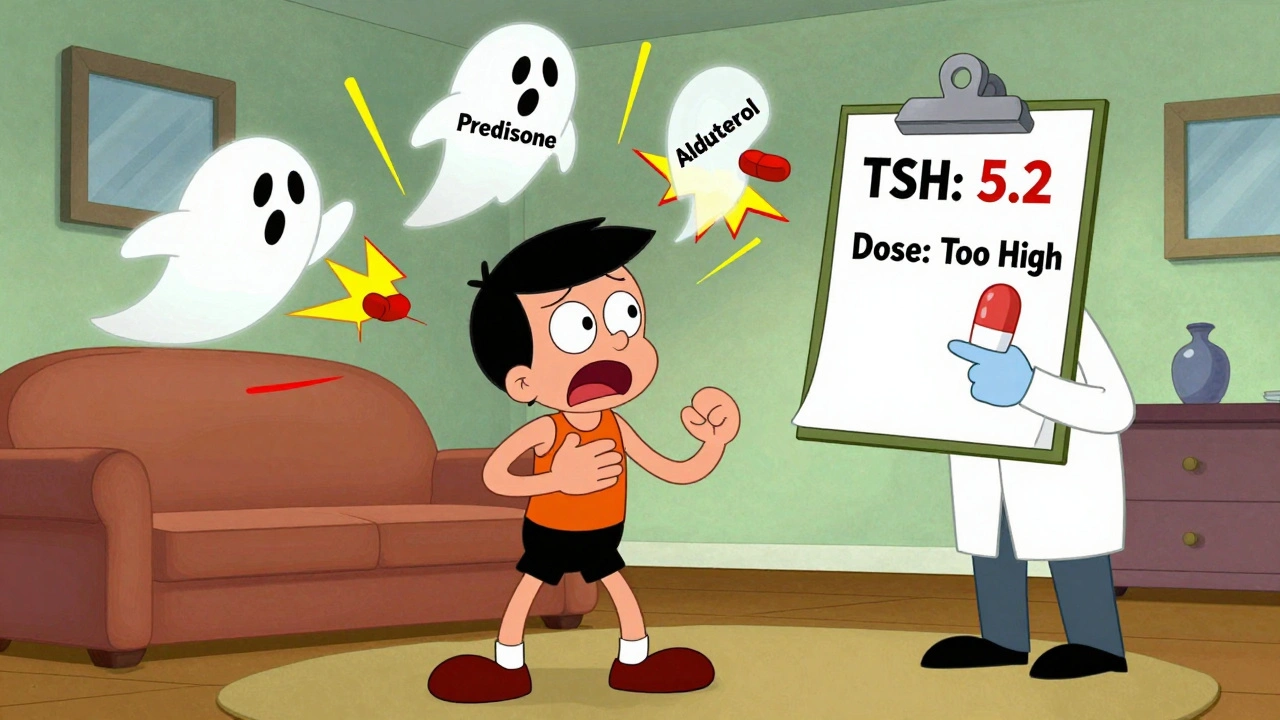
- Corticosteroids like prednisone, hydrocortisone, and dexamethasone-often used for asthma, allergies, or autoimmune issues-are notorious. People report panic attacks, insomnia, and constant nervousness within days of starting them. One user on HealthUnlocked said her anxiety didn’t fade until her doctor cut her prednisone dose by half.
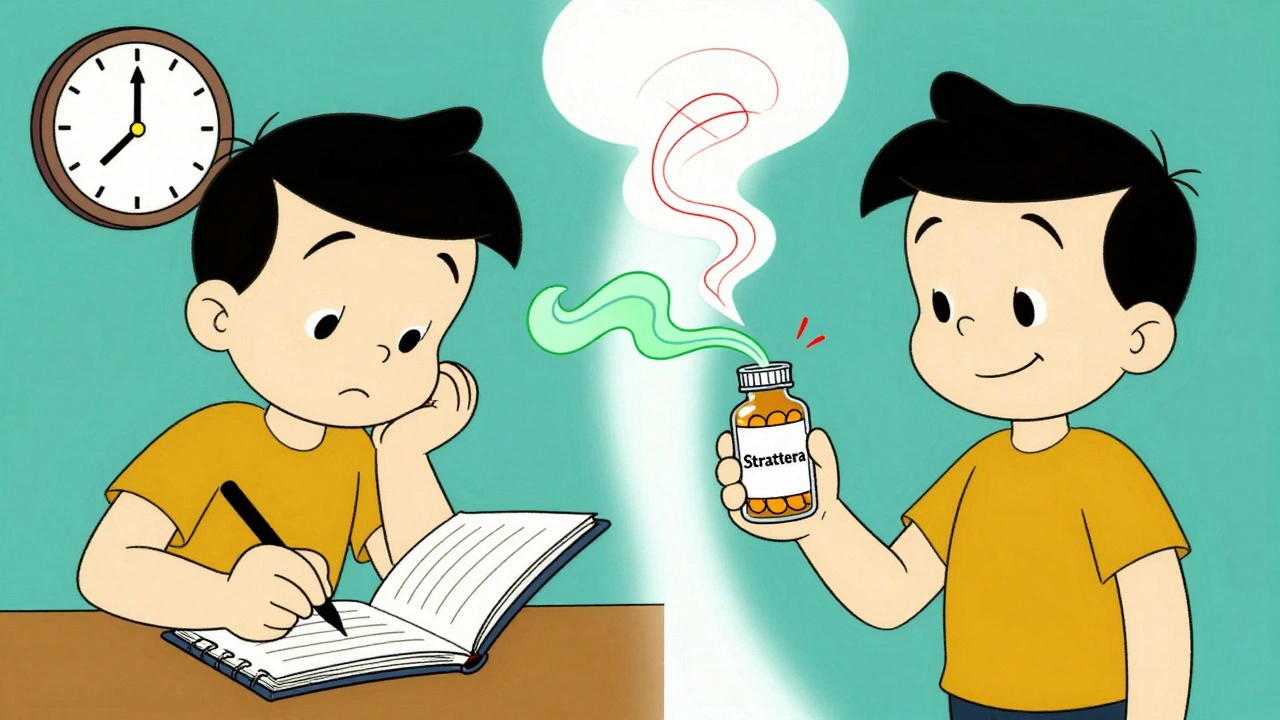
- ADHD stimulants such as Adderall, Vyvanse, and Ritalin are designed to boost focus by stimulating brain activity. But for some, that boost turns into jitteriness, racing thoughts, and dread. Studies show reducing the dose or switching to non-stimulants like Strattera cuts anxiety in up to 70% of cases.
- Asthma inhalers like albuterol (Proventil) and salmeterol (Serevent) can cause trembling, rapid heartbeat, and sweating-symptoms that feel exactly like a panic attack. Many patients mistake this for a mental health crisis when it’s just the medicine overstimulating their nerves.
- Thyroid meds like levothyroxine (Synthroid) are lifesavers for hypothyroidism, but too much can make your body feel like it’s in overdrive. Symptoms include heart palpitations, sweating, and constant worry. The American Thyroid Association says keeping TSH levels between 0.4 and 4.0 mIU/L helps avoid this.
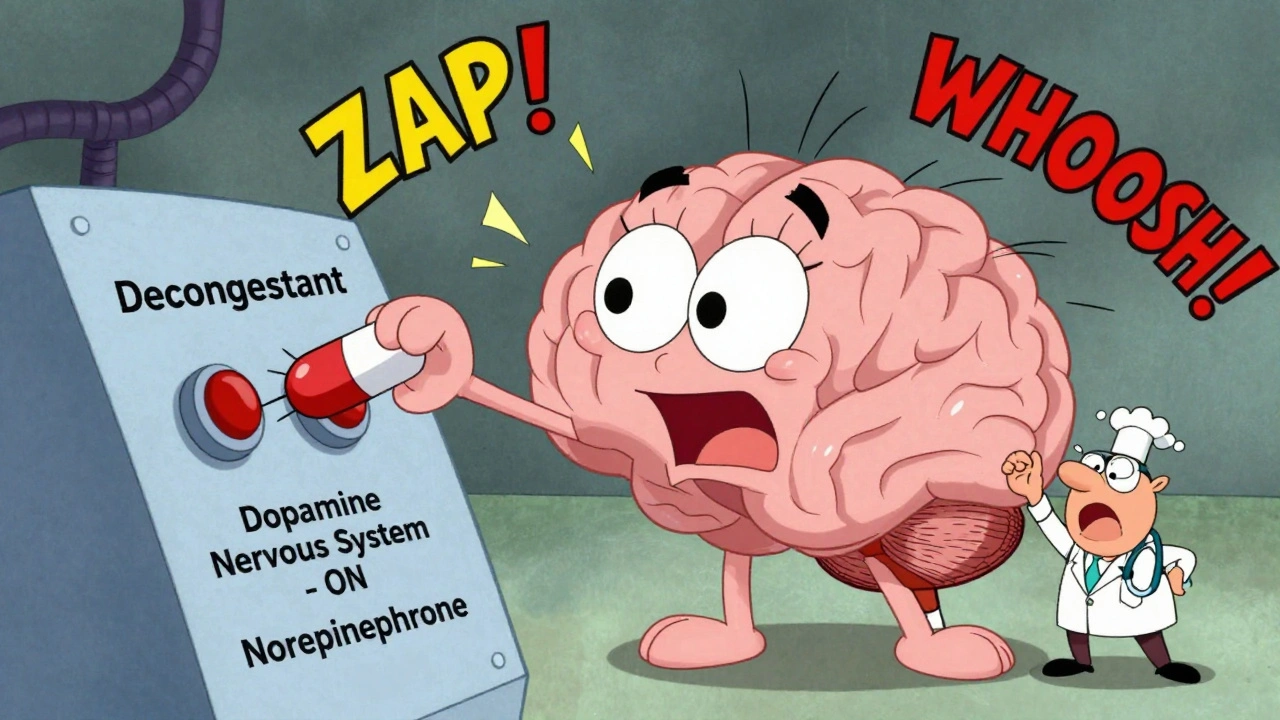
- Decongestants like pseudoephedrine (Sudafed) constrict blood vessels and can spike adrenaline. That’s why you get that wired, can’t-sleep feeling after taking cold medicine.
- Antibiotics and seizure drugs like fluoroquinolones or topiramate also show up in reports. Even anesthesia can trigger anxiety in the hours after surgery.
Why Does This Happen?
Your brain runs on chemicals-serotonin, dopamine, norepinephrine. Medications don’t just target the problem area. They ripple through your whole system.
Corticosteroids mess with your HPA axis-the body’s stress control center. ADHD drugs flood your brain with dopamine and norepinephrine. Asthma inhalers activate the sympathetic nervous system, the same one that kicks in when you’re scared. Even thyroid meds, if too high, trick your body into thinking it’s under constant stress.
This isn’t about being weak or overly sensitive. It’s chemistry. Some people have genetic differences-like variations in the CYP2D6 enzyme-that make them more likely to react badly to certain drugs. Researchers are now using this info to predict who’s at risk before prescribing.
How Do You Know It’s the Medication and Not Just Anxiety?
This is the big question. If you’ve always been anxious, how do you know this new feeling is from the pill? The answer lies in timing and pattern.
Medication-induced anxiety shows up after you start the drug. It often gets worse when you increase the dose. And it usually improves-or disappears-when you stop or lower it.
Doctors use a simple rule: if anxiety symptoms started within days or weeks of beginning a new medication, and they didn’t exist before, it’s likely drug-related. The DSM-5 (and the upcoming DSM-6) says true generalized anxiety disorder needs symptoms to last six months and occur outside of drug use or withdrawal.
One patient, 'MedReaction87' on Reddit, had never felt anxiety before-until she took prednisone for an asthma flare-up. Three panic attacks in two days. She showed her doctor a WebMD article. That’s when the light turned on.
What Should You Do If You Think Your Medication Is Causing Anxiety?
Don’t quit cold turkey. Don’t ignore it. Don’t assume it’s all in your head.
- Track your symptoms. Write down when you feel anxious, how bad it is, and what time you took your medication. Did the anxiety hit 30 minutes after your pill? Or 4 hours later? Patterns matter.
- Call your doctor. Don’t wait. Say: “I started [medication name] and now I’m having panic attacks, racing heart, and trouble sleeping. Could this be related?” Bring your symptom log.
- Ask about alternatives. For ADHD: switch from Adderall to Strattera. For asthma: try a different inhaler or add a steroid nasal spray. For thyroid: check your TSH levels and adjust levothyroxine if needed.
- Ask about dose reduction. Starting low and going slow cuts anxiety risk by 65% with ADHD meds. The same applies to steroids-gradual tapering prevents withdrawal anxiety.
- Consider CBT. While your meds are being adjusted, cognitive behavioral therapy helps you manage the anxiety symptoms. Studies show it works in 60-70% of cases during this transition.
Many people wait months before their doctor connects the dots. Consumer surveys show 42% of patients suffer for over three months before their medication is suspected as the cause. Don’t be one of them.
What If the Anxiety Doesn’t Go Away After Stopping the Drug?
That’s rare-but it happens. If anxiety lingers for more than four to eight weeks after stopping the medication, especially with longer-acting drugs like Valium or methadone, it might mean you had an underlying anxiety disorder that was masked or worsened by the drug.
In those cases, treatment shifts. You might need therapy, lifestyle changes, or even anti-anxiety medication-but only after you’ve fully cleared the original drug from your system. This is why timing matters. Rushing to diagnose anxiety too soon leads to wrong treatments.
How to Prevent This From Happening Again
Prevention is easier than fixing it after the fact.
- If you have a history of anxiety, tell your doctor before starting any new medication-even if it’s for something unrelated.
- Ask: “Can this cause anxiety? Is there a lower-risk option?”
- For steroids and stimulants, always start with the lowest possible dose.
- Get blood tests for thyroid meds. Don’t assume the dose is right just because you’re taking it.
- Don’t mix medications without checking for interactions. Some combos-like decongestants and ADHD drugs-can double the anxiety risk.
Medications save lives. But they’re not harmless. The more you know about how they affect your brain, the better you can protect yourself.
Frequently Asked Questions
Can anxiety from medication go away on its own?
Yes, in most cases. Once the medication is stopped or the dose is lowered, anxiety symptoms usually fade within days to weeks. For short-acting drugs like albuterol or pseudoephedrine, relief can come in 24-48 hours. For longer-acting drugs like steroids or thyroid meds, it may take 2-8 weeks. The key is stopping or adjusting the trigger-not just waiting it out.
Is medication-induced anxiety the same as an anxiety disorder?
No. Medication-induced anxiety is a reaction to a substance. It’s temporary and tied to the drug’s presence or withdrawal. A true anxiety disorder, like generalized anxiety disorder (GAD), exists independently of drugs and lasts at least six months. The difference matters because treatment is different: one requires adjusting meds, the other needs therapy or long-term management.
Which ADHD medication causes the least anxiety?
Non-stimulant options like atomoxetine (Strattera) cause far less anxiety than stimulants like Adderall or Vyvanse. Among stimulants, Vyvanse tends to be smoother than Adderall because it releases more slowly. Starting at a very low dose and increasing slowly also reduces anxiety risk by about 65%.
Can caffeine in medication cause anxiety?
Yes. Some pain relievers, weight-loss pills, and even certain migraine meds contain hidden caffeine. Even 100 mg-about the amount in a cup of coffee-can trigger jitteriness and panic in sensitive people. Check the ingredient list. If you’re prone to anxiety, avoid anything with added caffeine.
Should I stop my medication if I feel anxious?
No. Stopping suddenly can be dangerous-especially with steroids, antidepressants, or seizure meds. It can cause withdrawal anxiety, rebound symptoms, or worse. Always talk to your doctor first. They can help you taper safely or switch to a better option.
ATUL BHARDWAJ
December 3, 2025 AT 10:31Medication anxiety? Happens. In India, we call it 'dawa ka asar'. Just take less, talk to doctor. Simple.
Rebecca M.
December 4, 2025 AT 20:43Oh wow, another ‘your meds are making you anxious’ post. Next they’ll tell me coffee causes existential dread.
Lynn Steiner
December 6, 2025 AT 01:47I took Adderall for 3 years and became a screaming mess. My therapist said it was ‘just stress.’ I almost quit therapy after that. Thanks for validating this.
Alicia Marks
December 7, 2025 AT 09:05You’re not alone. Keep tracking. Talk to your doc. You’ve got this.
Jay Everett
December 9, 2025 AT 01:50Let me tell you something wild-your body isn’t broken, it’s just screaming because the chemicals you poured into it are throwing a rave in your amygdala. ADHD meds? They’re like giving a toddler a jetpack and saying ‘focus.’ Some of us were never meant to fly that way. Strattera? That’s the bicycle. Slower. Safer. Still gets you there. And yeah, if your thyroid dose is off, you’re basically running a marathon while sitting down. Your HPA axis isn’t ‘stressed’-it’s been hijacked by a pharmacy.
And don’t get me started on pseudoephedrine. That stuff is liquid panic. I once took a cold pill and thought I was having a heart attack. Turned out I just needed to stop pretending my body’s a vending machine.
Genetics? Yeah. CYP2D6 poor metabolizers? You’re basically the human version of a glitchy router. The drug doesn’t route right-it just floods the room. No shame. Just science.
And if your anxiety lingers after quitting? That doesn’t mean you’re broken. It means your nervous system learned to panic in a new key. CBT isn’t ‘positive thinking.’ It’s retraining your brain to stop mistaking adrenaline for doom. You’re not weak. You’re wired differently. And that’s okay.
Also-yes, caffeine in meds is a sneaky bastard. Check the label like it’s a treasure map. If it says ‘anhydrous caffeine’ and you’re already jumpy? Put it down. Walk away. Breathe.
Doctors aren’t mind readers. Bring your symptom log. Write down the time. The dose. The mood. They’ll thank you later. And if they roll their eyes? Find a new one. You deserve care that sees you, not just your prescription.
Shannara Jenkins
December 9, 2025 AT 10:12Thank you for writing this. I’ve been too scared to tell my doctor I thought my thyroid med was making me panic. Now I have the words to say it.
Jack Dao
December 10, 2025 AT 22:23Wow, another ‘I’m too sensitive’ story. Maybe if you didn’t take drugs in the first place, you wouldn’t be so fragile. I’ve been on prednisone for years. No anxiety. Just discipline.
Elizabeth Grace
December 12, 2025 AT 01:48OMG I thought I was losing my mind after I took that albuterol inhaler. I called 911. Turned out I just needed to stop panicking about panicking. 😭
Steve World Shopping
December 13, 2025 AT 12:11Pharmacovigilance gap. HPA axis dysregulation + sympathetic overdrive = iatrogenic anxiety cascade. You need biomarker stratification before prescribing. This isn’t anecdotal-it’s a systemic failure.
Steve Enck
December 14, 2025 AT 22:12While I appreciate the anecdotal evidence presented, one must consider the confounding variables of psychosomatic attribution bias, recall error, and the nocebo effect. The DSM-5 criteria for medication-induced anxiety require rigorous temporal correlation and exclusion of primary psychiatric disorders, which this post fails to adequately establish. The data remains correlational, not causal.
dave nevogt
December 16, 2025 AT 11:24It’s funny how we’ve come to treat the body like a machine you can tweak with pills, then blame the machine when it glitches. But the nervous system isn’t a circuit board-it’s a living, breathing, ancient dance of chemicals that evolved over millions of years. When you flood it with synthetic versions of its own signals, it doesn’t just ‘adjust.’ It panics. It doesn’t understand dosage. It doesn’t know the difference between ‘therapy’ and ‘attack.’ And when we dismiss the fear as ‘all in your head,’ we’re not just being cruel-we’re ignoring the fact that your head is the very thing that’s being hijacked. The real tragedy isn’t the anxiety. It’s that we’ve made people feel ashamed of their biology.
Ella van Rij
December 16, 2025 AT 14:11Oh sweetie, you took prednisone and now you’re ‘anxious’? I took it for lupus and still managed to be fabulous. Maybe try yoga? Or a glass of wine? Just saying.
मनोज कुमार
December 17, 2025 AT 15:51Why do Americans always blame drugs? In India we say mind controls body. Just meditate. No need for all this science talk.
Paul Keller
December 17, 2025 AT 15:54While I commend the effort to raise awareness, the tone of this post borders on alarmist. Medications are rigorously tested for adverse effects, and the incidence of medication-induced anxiety is statistically low. Overemphasizing this risk may lead to noncompliance, which carries far greater dangers than transient nervousness. A balanced perspective is essential-medications are tools, not villains.