
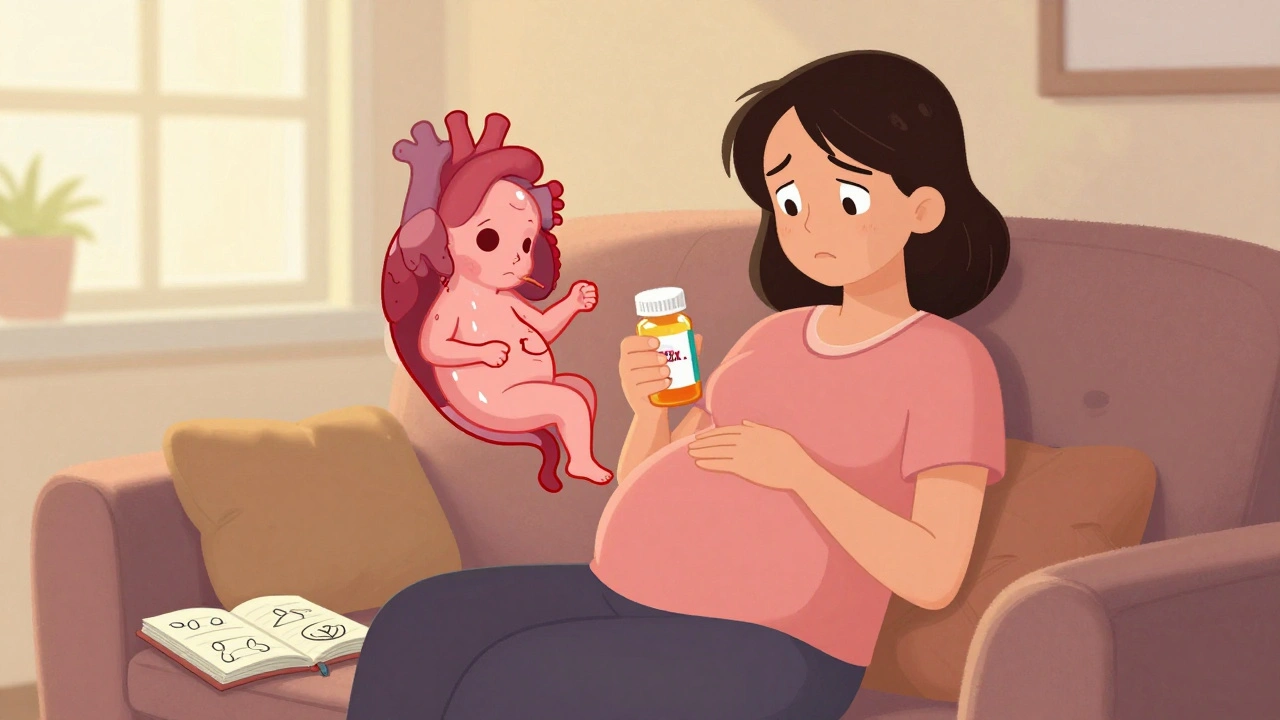
If you’re pregnant or planning to be, and you’ve been taking benzodiazepines for anxiety or insomnia, you’re not alone. But you’re also facing a question that keeps many women awake at night: Is it safe? The answer isn’t simple. It’s not a simple yes or no. It’s about weighing real, documented risks against the very real dangers of untreated anxiety or severe sleep loss during pregnancy.
What Are Benzodiazepines, and Why Are They Used in Pregnancy?
Benzodiazepines are a class of drugs that calm the nervous system. Common ones include lorazepam (Ativan), alprazolam (Xanax), diazepam (Valium), and clonazepam (Klonopin). They work fast - often within an hour - to reduce anxiety, stop panic attacks, and help with sleep. For some women, these medications are the only thing that brings relief from debilitating panic or chronic insomnia during pregnancy.
But here’s the catch: benzodiazepines cross the placenta. That means what you take, your baby takes too. The drug doesn’t just sit in your bloodstream - it builds up in fetal tissue. And because the developing brain and organs are so sensitive, even small amounts can have lasting effects.
The Evidence: What Do Large Studies Actually Show?
Two major studies from 2022 and 2024 changed how doctors think about benzodiazepines in pregnancy. The first, published in PLOS Medicine, looked at over 3 million pregnancies in South Korea. It found a small but real increase in overall birth defects - about 8 extra cases per 1,000 pregnancies exposed in the first trimester. The risk for heart defects was even higher: about 14 extra cases per 1,000.
That might sound small. But when you’re expecting, even one extra case matters. And it’s not just about heart defects. The same study found a dose-response pattern: the more you take each day, the higher the risk. Taking more than 2.5 mg of lorazepam-equivalent daily raised the risk noticeably.
Another study, from the CDC’s National Birth Defects Prevention Study, looked at over 11,000 pregnancies in the U.S. and found something more specific - and more alarming. Women who took alprazolam during the first trimester had nearly four times the risk of anophthalmia or microphthalmia (missing or underdeveloped eyes). They also had nearly three times the risk of esophageal atresia, a serious condition where the tube connecting the mouth to the stomach doesn’t form properly.
Lorazepam was linked to pulmonary valve stenosis - a narrowing of the heart’s main artery. And Dandy-Walker malformation, a rare brain defect, was more than three times more common in babies exposed to benzodiazepines.
Not every study agrees. One 2023 study in the British Journal of Clinical Pharmacology found no clear link. But that study had far fewer women taking these drugs. The larger, more rigorous studies - especially the 2024 JAMA Psychiatry analysis - suggest the risk isn’t just noise. It’s real.
It’s Not Just Birth Defects
Even if your baby is born without a physical defect, benzodiazepines can still affect them. Studies show a higher risk of:
- Miscarriage - up to 85% higher risk after adjusting for other factors
- Preterm birth
- Low birth weight
- Small for gestational age
- Low Apgar scores at 5 minutes
- Neonatal intensive care unit (NICU) admission
And it’s not just during pregnancy. If you’re taking benzodiazepines near delivery, your newborn might be born with withdrawal symptoms: jitteriness, poor feeding, breathing problems, or seizures. These aren’t rare. They happen often enough that hospitals now watch newborns closely if the mother took these drugs late in pregnancy.

What About Alprazolam? Is It Worse?
Yes. Alprazolam stands out. Multiple studies point to it as the most concerning benzodiazepine in pregnancy. It’s linked to the highest risks for eye defects and esophageal problems. That doesn’t mean other benzodiazepines are safe - but if you’re on alprazolam and pregnant, your doctor should be especially cautious.
Some women are switched to diazepam or lorazepam because they’re thought to be slightly less risky. But even those carry risks. No benzodiazepine is proven safe in pregnancy. The idea that one is "safer" is based on limited data, not proof.
What Do Experts Say?
The American College of Obstetricians and Gynecologists (ACOG) says benzodiazepines "may be used cautiously for short-term treatment" - but only if benefits clearly outweigh risks. And they strongly recommend avoiding them in the first trimester, when organs are forming.
The FDA classifies benzodiazepines as Pregnancy Category D - meaning there’s clear evidence of fetal risk. The European Medicines Agency and Canadian guidelines are even stricter: avoid them in pregnancy unless absolutely necessary.
The bottom line? These drugs aren’t first-line treatment anymore. They’re a last resort - and only if nothing else works.
What Are the Alternatives?
If you’re struggling with anxiety or sleep during pregnancy, you have options - and many are safer.
- Cognitive Behavioral Therapy (CBT): Proven to work as well as medication for anxiety and insomnia in pregnancy. No side effects. No risk to the baby.
- Support groups: Talking with other pregnant women who understand can reduce isolation and stress.
- Mindfulness and meditation: Studies show even 10 minutes a day can lower cortisol and improve sleep.
- Exercise: Walking, prenatal yoga, swimming - all help regulate mood and sleep cycles.
- SSRIs: For severe anxiety, some antidepressants like sertraline are considered safer than benzodiazepines in pregnancy. They’re not risk-free, but their risk profile is better understood.
Many women stop benzodiazepines cold turkey. That’s dangerous. Withdrawal can cause seizures, extreme anxiety, or rebound insomnia - which can harm both you and your baby. If you want to stop, work with your doctor to taper slowly, over weeks or months.

What Should You Do If You’re Already Taking Them?
Don’t panic. Don’t stop suddenly. Do this:
- Call your OB-GYN or midwife. Tell them exactly what you’re taking, how much, and for how long.
- Ask for a referral to a perinatal psychiatrist - they specialize in mental health during pregnancy.
- Discuss your options: Can you switch to a safer medication? Can you start therapy? Can you reduce your dose gradually?
- If you’re in the first trimester, focus on minimizing exposure. Avoid new prescriptions if possible.
- If you’re in the third trimester, prepare for possible neonatal withdrawal. Talk to your pediatrician and delivery team.
Many women successfully stop benzodiazepines during pregnancy - with support. You don’t have to do it alone.
The Bigger Picture: Your Mental Health Matters Too
It’s easy to focus only on birth defects. But untreated anxiety and insomnia during pregnancy carry their own risks - including preeclampsia, preterm birth, and postpartum depression. Sometimes, the risk of not treating your mental health is higher than the risk of medication.
The goal isn’t to scare you. It’s to help you make an informed choice. If you’re in crisis - if you’re having panic attacks every day, or can’t sleep for weeks - you deserve help. The right help. Not just any pill. The right treatment plan.
That might mean therapy. It might mean a different medication. It might mean a combination of both. But it doesn’t have to mean continuing a drug with known risks when safer options exist.
Final Thoughts
Benzodiazepines aren’t banned in pregnancy. But they’re no longer the go-to solution. The evidence is clear: they carry real risks - especially in the first trimester, especially at higher doses, especially alprazolam.
But your mental health matters too. You’re not weak for needing help. You’re not selfish for wanting to feel better. The best thing you can do is talk to your doctor - honestly, without shame - and work together to find the safest path forward.
There’s no perfect choice. But there is a thoughtful one. And you deserve that.
Can I take benzodiazepines while pregnant if my anxiety is severe?
Benzodiazepines are not recommended during pregnancy, especially in the first trimester. But if your anxiety is so severe that you can’t eat, sleep, or function, and other treatments have failed, your doctor may consider a low-dose, short-term prescription - only after weighing the risks. Never start or stop these drugs without medical supervision.
Is alprazolam more dangerous than other benzodiazepines in pregnancy?
Yes. Multiple studies show alprazolam carries the highest risk for specific birth defects, including missing or underdeveloped eyes (anophthalmia/microphthalmia) and esophageal atresia. If you’re pregnant and taking alprazolam, talk to your doctor about switching to a different medication or tapering off safely.
What are the safest anxiety medications during pregnancy?
For anxiety, SSRIs like sertraline and citalopram are often preferred over benzodiazepines because their risks are better understood and generally lower. Non-drug treatments like CBT, mindfulness, and exercise are the safest options and are recommended as first-line treatments by ACOG and other medical groups.
Can I breastfeed while taking benzodiazepines?
Some benzodiazepines pass into breast milk. Long-acting ones like diazepam can build up in your baby’s system and cause drowsiness, poor feeding, or breathing problems. Short-acting ones like lorazepam are considered lower risk, but still not ideal. Always talk to your pediatrician and psychiatrist before breastfeeding while on these drugs.
How soon after stopping benzodiazepines is it safe to get pregnant?
There’s no set waiting period, but it’s best to stop benzodiazepines at least 1-2 months before trying to conceive. This gives your body time to clear the drug and reduces the risk of exposure during the earliest, most vulnerable weeks of pregnancy. Work with your doctor to taper safely - stopping abruptly can be dangerous.
Do benzodiazepines cause autism or developmental delays?
Current studies don’t show a clear link between benzodiazepine use in pregnancy and autism or long-term developmental delays. The biggest known risks are birth defects, miscarriage, preterm birth, and neonatal withdrawal. Research is ongoing, but for now, these are the primary concerns.
John Biesecker
December 2, 2025 AT 17:18man i just found out i was preggo and i’ve been on xanax for 3 years 😅 i’m not gonna lie i cried reading this. not because i’m scared but because i didn’t know how much damage i might’ve already done. my dr said it’s fine but now i’m second guessing everything. help??
Genesis Rubi
December 2, 2025 AT 23:04oh please like the gov’t wants you to stop meds so you’re too exhausted to notice the real problems like illegal immigration and woke schools. benzodiazepines are fine if you’re a real american who works hard and deserves peace.
Doug Hawk
December 3, 2025 AT 22:01the dose-response curve in the korean cohort is statistically significant but the absolute risk remains low - 8 per 1000 is less than the background rate of chromosomal anomalies. the real issue is confounding by indication: women with severe anxiety may also have higher rates of smoking, poor nutrition, or delayed prenatal care. the cdc data on anophthalmia is alarming but n=17 for alprazolam-exposed cases. we need larger prospective studies before changing clinical practice.
John Morrow
December 5, 2025 AT 08:04the entire narrative here is emotionally manipulative. it frames medication as inherently dangerous while ignoring the systemic failure of mental healthcare infrastructure that leaves women with no alternatives. if you’re telling someone who hasn’t slept in 6 weeks that they should ‘try yoga’ instead of a life-saving drug, you’re not being compassionate - you’re being cruel. the data shows risk, yes - but it also shows that untreated maternal distress correlates more strongly with adverse outcomes than pharmacotherapy. this article weaponizes fear to push ideology disguised as medicine.
Kristen Yates
December 5, 2025 AT 21:29I’m pregnant and on lorazepam. I talked to my OB and my therapist. We’re slowly lowering my dose. I’m doing CBT twice a week. It’s hard. But I’m trying. I just needed to say that out loud.
Saurabh Tiwari
December 7, 2025 AT 20:50bro i get it you want to be safe but also you gotta live right? i know a girl in mumbai who took diazepam all through pregnancy and her baby is now 2 and super smart. maybe its not all doom and gloom 🤷♂️
Michael Campbell
December 8, 2025 AT 16:32pharma wants you addicted so they can sell more. the FDA is in bed with big drug companies. stop taking it cold turkey - your baby will thank you.
Victoria Graci
December 9, 2025 AT 12:53there’s something deeply poetic about the irony here - we’re told to medicate our pain into silence, then punished for the very silence we were promised would heal us. the body remembers what the mind tries to forget. a fetus doesn’t just absorb a molecule - it absorbs a mother’s fear, her exhaustion, her quiet desperation. maybe the real defect isn’t in the chromosomes - it’s in a system that offers pills instead of presence.
Saravanan Sathyanandha
December 9, 2025 AT 19:32While the statistical data presented is compelling and grounded in large-scale epidemiological studies, it is equally critical to acknowledge the cultural and socioeconomic dimensions of maternal mental health. In many communities, access to CBT or perinatal psychiatry is nonexistent. For such women, benzodiazepines are not a choice but a lifeline. Policy must evolve beyond risk-benefit calculus to include equity in care delivery.
alaa ismail
December 11, 2025 AT 05:25my sister took xanax while pregnant and her kid is now a pro soccer player. maybe the risks are overblown?
ruiqing Jane
December 11, 2025 AT 08:56You’re not alone. I was on sertraline during both pregnancies. I had panic attacks every night. Therapy saved me. You’re not weak for needing help - you’re brave for seeking it. Keep going. You’re doing better than you think.
Paul Santos
December 11, 2025 AT 12:04ah yes, the classic ‘evidence-based medicine’ narrative - so meticulously curated by institutional gatekeepers who’ve never once sat with a woman sobbing at 3 a.m. because her cortisol levels are higher than her baby’s heartbeat. the real tragedy isn’t the 8 extra defects - it’s the 8000 women who were told to ‘just breathe’ while their nervous systems imploded. this isn’t science. it’s moralizing disguised as caution.