
CNS Depressant Risk Calculator
Assess Your Risk
This tool calculates your risk level when combining cannabis with CNS depressants like sleep aids, anxiety meds, or painkillers. Based on data from SAMHSA and medical research.
Risk Assessment
When you take cannabis with sleep aids, anxiety meds, or painkillers, you’re not just doubling up on drowsiness-you’re risking your breathing, your memory, and even your life. This isn’t speculation. It’s documented in emergency rooms, research labs, and patient stories across the country. The combination of cannabis and other central nervous system (CNS) depressants doesn’t just add up-it multiplies. And most people have no idea how dangerous it can be.
How Cannabis Acts Like a CNS Depressant
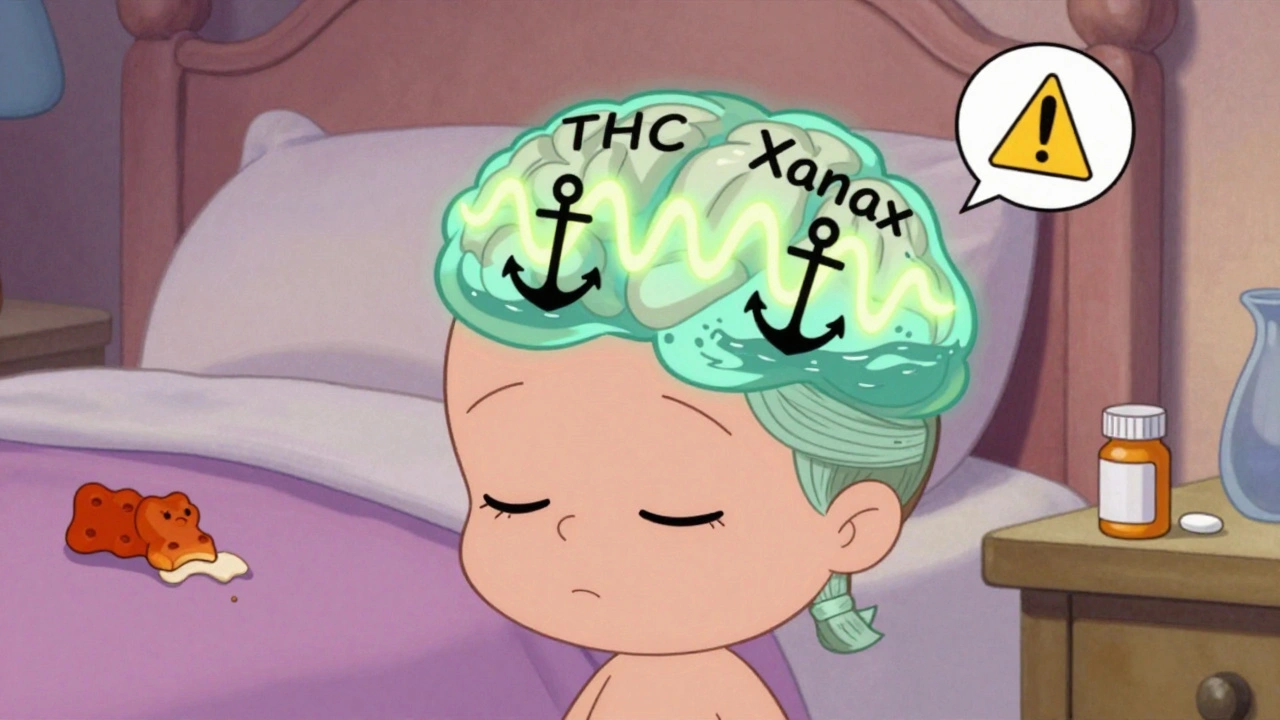
Cannabis isn’t just a mood lifter or a chill pill. At its core, it’s a CNS depressant. That means it slows down your brain and nervous system. The main active ingredient, THC, binds to CB1 receptors in your brain, triggering effects like relaxation, slowed reaction time, and drowsiness. These aren’t minor side effects. They’re the same kinds of effects you get from benzodiazepines like Xanax or opioids like oxycodone. The difference? Most people think cannabis is safe because it’s natural. That’s where the danger starts.
When you smoke or vape cannabis, effects kick in within minutes and peak around 30 minutes. If you eat it-like a gummy or brownie-it takes 30 to 90 minutes to hit, and the high lasts much longer: up to 8 hours. That extended window means you might feel fine after a few hours, but your body is still processing THC. If you take a sleep pill during that time, you’re stacking depressants without realizing it.
Even low doses matter. A 2020 study in The British Journal of Psychiatry found that just 5-10 mg of THC-roughly one small joint or half a gummy-can impair memory, concentration, and coordination. These effects are worse in older adults and people with existing health conditions. And when you add another depressant? The brain doesn’t know the difference between THC and a prescription drug. It just gets slower.
The Real Risk: Additive Sedation
Additive sedation isn’t a buzzword. It’s a medical term for when two drugs together do more than the sum of their parts. Think of it like turning up two volume knobs instead of one. You don’t get 50% louder-you get deafening.
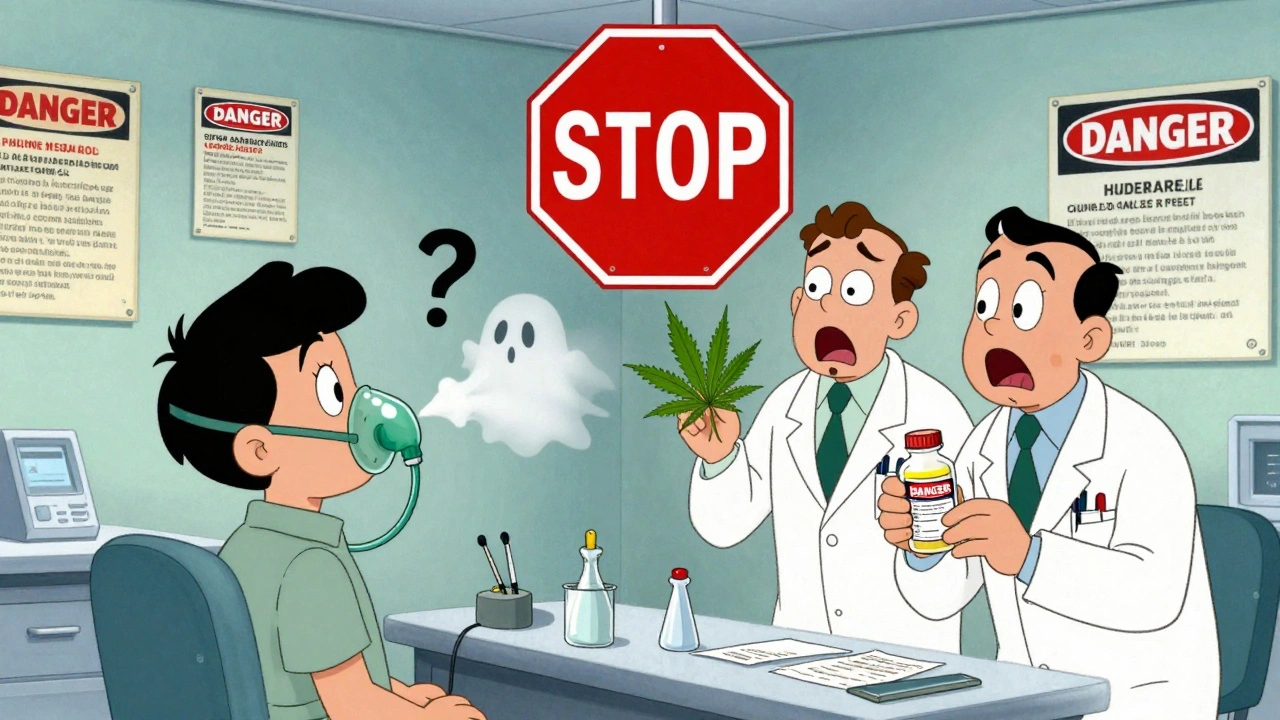
When cannabis is mixed with benzodiazepines (like Valium or Ativan), opioids (like hydrocodone or fentanyl), or even barbiturates, the result is dangerously deep sedation. Your breathing slows. Your heart rate drops. Your brain stops signaling your lungs to work. In extreme cases, this leads to respiratory arrest. Emergency room data from the Substance Abuse and Mental Health Services Administration (SAMHSA) shows a 42% spike in cannabis-depressant visits between 2019 and 2022. Over 7,800 people went to the ER in 2022 alone because of this combo.
One Reddit user, u/AnxietyWarrior, described waking up on the bathroom floor after taking half a Xanax and one hit of 20% THC. Their oxygen level had dropped to 82%. Normal is 95-100%. That’s not a bad trip-that’s a near-fatal event.
Research from the Journal of Clinical Medicine found that people using both cannabis and benzodiazepines had over three times the risk of an ER visit compared to those using benzodiazepines alone. Sixty-seven percent of those visits involved breathing problems. And it’s not just illegal weed. Medical cannabis patients are just as at risk. A 2021 survey of 1,247 medical cannabis users found that nearly 25% had experienced extreme sedation so bad they needed medical help.
Why Opioids and Cannabis Are a Deadly Mix
Here’s the scariest part: cannabis and opioids don’t just add up-they multiply. Both suppress breathing, but through different pathways in the brain. THC affects cannabinoid receptors, while opioids bind to mu-receptors. Together, they shut down the brain’s automatic breathing control more than either drug could alone.
The CDC updated its opioid prescribing guidelines in 2022 to specifically warn about this interaction. They found that patients using both substances had significantly higher rates of overdose and hospitalization. In one study, patients using medical cannabis alongside opioids had a 25% higher risk of respiratory depression during recovery from surgery.
Dr. Evan S. Kharasch from Washington University found that cannabis users needed 20-25% more anesthesia during surgery-but then had 37% more breathing problems afterward. That’s because their bodies had already been slowed down by THC. The drugs meant to keep them asleep ended up pushing them too far.
This isn’t rare. It’s common. In states with medical cannabis programs, nearly 40% of patients are also taking prescription CNS depressants. Many don’t tell their doctors. They assume cannabis is harmless. But when your pain doctor prescribes oxycodone and your anxiety doctor prescribes lorazepam, and you’re using CBD oil with 12% THC for sleep? You’re playing Russian roulette with your breathing.
Who’s Most at Risk?
It’s not just drug users. It’s older adults managing chronic pain, anxiety, or insomnia. It’s veterans on opioids for PTSD. It’s people with epilepsy using CBD while also taking clonazepam. It’s anyone taking more than one medication that makes them sleepy.
People over 65 are especially vulnerable. Their bodies process drugs slower. Their lungs are less resilient. A 2023 study showed that patients over 65 who combined cannabis with benzodiazepines were 2.8 times more likely to fall and fracture a hip. Why? Because their coordination was shot. Their balance was gone. They didn’t even realize they were impaired.
Even young adults aren’t safe. A 2022 case series from the University of Colorado found that young patients using low-dose THC (2.5-5 mg) with low-dose opioids for chronic pain did well under strict supervision. But that’s the key: strict supervision. No one should try this at home. The margin for error is razor-thin.
What Doctors Are Doing About It
Healthcare systems are waking up. The American Medical Association now recommends screening for cannabis use before prescribing any CNS depressant. The CDC advises doctors to ask: “Are you using marijuana, CBD, or any cannabis product?”-not just “Are you using drugs?”
In California, doctors certifying medical cannabis must complete a 2-hour training on drug interactions. Since 2022, high-risk combinations have dropped by 28%. That’s not luck. That’s policy.
The American Society of Health-System Pharmacists created a simple risk tool. It gives points for:
- THC concentration: 1 point for under 5%, up to 5 points for over 15%
- Depressant type: 3 for benzodiazepines, 4 for opioids, 5 for barbiturates
- Age over 65: 2 points
If your score is 7 or higher? You’re in the danger zone. Alternatives are needed.
What You Can Do to Stay Safe
If you’re using cannabis and any CNS depressant-prescription or not-you need a plan.
- Don’t mix them without talking to your doctor. Even if you think it’s fine, your body doesn’t know that.
- Avoid high-THC products. Anything over 15% THC increases sedation risk dramatically. Look for CBD-dominant products (CBD:THC ratio of 20:1 or higher). A 2022 JAMA study showed no significant interaction between high-CBD oil and alprazolam.
- Space out doses. If you must use both, wait at least 4 hours between cannabis and your depressant. Don’t take a gummy before bed and then a sleep pill an hour later.
- Start low and go slow. Use the smallest possible dose of each. If you’re new to cannabis, start with 2.5 mg THC. If you’re on a benzodiazepine, don’t increase your dose without telling your doctor you’re using cannabis.
- Watch for warning signs. If you feel dizzy, confused, extremely sleepy, or have trouble breathing-even mildly-stop using both and call your doctor. Don’t wait until you pass out.
What About CBD?
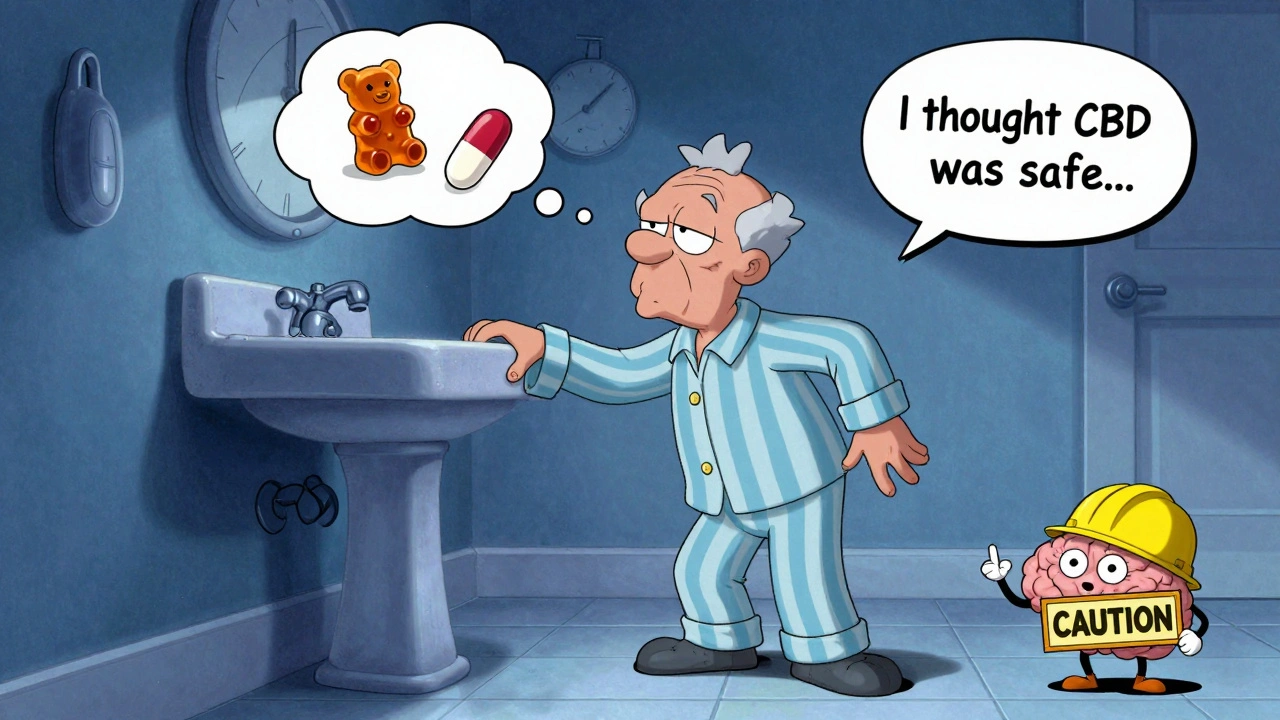
CBD alone doesn’t cause sedation. In fact, it can counteract some of THC’s effects. Studies show CBD-dominant products (with less than 0.3% THC) have minimal interaction with CNS depressants. If you’re using cannabis for anxiety or pain and want to avoid sedation, look for CBD-rich oils, tinctures, or capsules with no more than trace THC.
But don’t assume all CBD products are safe. Some are mislabeled. Some contain hidden THC. Always check third-party lab reports. Look for products that list exact THC and CBD levels per dose.
The Bottom Line
Cannabis isn’t inherently dangerous. But when it’s mixed with sleep aids, anxiety meds, or painkillers, it becomes a silent killer. The effects aren’t theoretical. They’re happening in living rooms, hospitals, and ERs right now. You don’t need to quit cannabis. You don’t need to quit your meds. But you do need to know the risks-and talk to your doctor before combining them.
There’s no shame in asking. Your life depends on it.
Can I use cannabis with my anxiety medication?
Using cannabis with anxiety meds like Xanax, Valium, or Klonopin significantly increases sedation and can cause dangerous drops in breathing. Even small amounts of THC can make these drugs work too well-leading to extreme drowsiness, memory blackouts, or loss of consciousness. If you’re on benzodiazepines, avoid high-THC cannabis. If you want to try CBD, use a product with less than 0.3% THC and tell your doctor first.
Is CBD safe to take with opioids?
Pure CBD (with no THC) has shown little to no interaction with opioids in clinical studies. However, most CBD products on the market contain trace THC, and even small amounts can enhance opioid sedation. If you’re using opioids for pain, stick to lab-tested CBD isolates with zero THC and monitor for drowsiness. Never increase your opioid dose without consulting your doctor if you’re also using any cannabis product.
How long should I wait between taking cannabis and a depressant?
If you must use both, wait at least 4 hours. Inhaled cannabis peaks in 30 minutes and wears off in 2-4 hours. Edibles can last 6-8 hours and linger in your system longer. Waiting 4 hours reduces-but doesn’t eliminate-the risk. The safest approach is to avoid combining them entirely, especially if you’re older, on high-dose meds, or have lung or heart issues.
Can cannabis help me reduce my opioid dose?
Some studies show that low-dose THC (2.5-5 mg) under strict medical supervision can help reduce opioid use by up to 47%. But this only works with careful dosing, regular monitoring, and no other depressants. It’s not a DIY strategy. If you’re thinking about this, talk to a pain specialist who understands cannabis interactions. Never stop or change your opioid dose without medical guidance.
Are there any legal warnings about this combination?
Yes. The FDA issued a Drug Safety Communication in 2022 warning that combining cannabis with CNS depressants can cause increased sedation, respiratory depression, and death. The European Medicines Agency requires all medical cannabis products to carry this warning. In the U.S., all new prescriptions for benzodiazepines and opioids now include language about cannabis interactions. If your medication bottle doesn’t mention it, ask your pharmacist.
bobby chandra
December 2, 2025 AT 23:52Cannabis isn’t the villain here-it’s the mirror. We’ve been sold this myth that ‘natural’ equals ‘safe,’ but your liver doesn’t care if it’s from a dispensary or a pharmacy. THC + benzos = silent suffocation. I’ve seen it in ERs. One guy thought he was just ‘chilling’ after his Xanax and a vape pen. He woke up in ICU with a trach. No drama. Just biology. Don’t gamble with your brainstem.
Archie singh
December 3, 2025 AT 23:57Pathetic. You people treat THC like it’s chamomile tea. It’s a psychoactive neurotoxin that hijacks your endocannabinoid system like a hacker taking over a server. Combine it with opioids? You’re not ‘managing pain’-you’re performing amateur neurosurgery on your medulla oblongata. The CDC data isn’t ‘spiking’-it’s screaming. And yet here we are, debating whether to take a gummy before bed like it’s a snack.
Chloe Madison
December 4, 2025 AT 21:07Hey-I get it. You’re tired. You’re anxious. You just want to sleep. But mixing cannabis with your meds? It’s like putting a second lock on your front door… and then forgetting you did it, so you can’t get out when the fire starts. I’ve helped dozens of clients swap high-THC products for CBD-dominant tinctures. Not because it’s ‘hippie stuff’-because the science says it’s safer. Talk to your doctor. Not Reddit. Your doctor. You deserve to feel better without risking your life.
Rashmin Patel
December 6, 2025 AT 14:05As someone from India where cannabis has been used traditionally for centuries, I’ve seen both sides. In Ayurveda, we use bhang in controlled doses with herbal tonics-not with benzodiazepines. Modern science confirms what our elders warned: synergy isn’t magic, it’s math. THC + opioids = exponential risk. But here’s the hope: CBD-rich oils with zero THC? They’ve helped my aunt reduce her clonazepam by 60% without withdrawal. Always check lab reports. Always start low. And never, ever assume ‘natural’ means ‘harmless.’ 🌿❤️
sagar bhute
December 8, 2025 AT 07:21Everyone’s panicking over a plant while Big Pharma quietly profits off opioid prescriptions. You think your doctor cares if you vape? They’re billing for the Xanax. The real danger isn’t cannabis-it’s the system that pushes you into polypharmacy and then acts shocked when you overdose. Stop blaming the weed. Start blaming the prescriptions. And if you’re taking more than one depressant? You’re already in the danger zone. This article is just damage control for the pharmaceutical industry.
Jim Schultz
December 8, 2025 AT 19:05Okay, but let’s be real-how many people are even doing this? Like, statistically? The article cites 7,800 ER visits… out of how many millions of cannabis users? That’s 0.03%. Meanwhile, alcohol + benzos kills 10,000+ people annually-and nobody’s writing think pieces about ‘alcohol being a CNS depressant.’ This feels like fearmongering dressed as public health. Also-why is everyone ignoring CBD? It’s not sedating. The real issue is unregulated THC, not cannabis.
Kidar Saleh
December 9, 2025 AT 06:23In the UK, we’ve had this conversation for years. The NHS now routinely screens for cannabis use before prescribing sedatives. Why? Because the data is undeniable. I’ve sat with elderly patients who thought CBD oil was ‘just for relaxation’-until they collapsed after taking their nightly lorazepam. It’s not about moral panic. It’s about physiology. Your brain doesn’t care if the depressant comes from a pharmacy or a dispensary. It only cares about receptor binding. And when you stack them? The system overloads. This isn’t opinion. It’s neurology.
Vincent Soldja
December 9, 2025 AT 14:49Agreed.
Makenzie Keely
December 10, 2025 AT 13:52My cousin took a 5mg gummy and her 1mg Ativan before bed-thought she’d sleep better. Woke up at 3am gasping, heart racing, couldn’t move. Called 911. Oxygen was at 84%. Turns out, she didn’t even know the gummy had 10% THC. The ER nurse said, ‘You’re lucky you didn’t stop breathing.’ So I made her a chart: ‘Cannabis + Depressants = Danger Zone.’ I printed it. Laminated it. Taped it to her fridge. If you’re reading this and you’re doing this? Please. Just talk to someone. You’re not alone. And you’re not weak. You just need better info.
Francine Phillips
December 11, 2025 AT 04:13I’ve been on oxycodone for 8 years. Started CBD oil last year for nerve pain. No THC. No issues. Just less pain. I don’t touch THC. I don’t need it. My doctor never asked about cannabis. Should’ve. But I didn’t volunteer it either. Maybe I should’ve. Lesson learned.
Katherine Gianelli
December 13, 2025 AT 02:57For anyone scared to talk to their doctor-here’s what I say: ‘I’ve been using CBD for sleep, and I want to make sure it’s safe with my other meds.’ That’s it. No shame. No drama. Just honesty. Doctors aren’t here to judge-they’re here to keep you alive. I’ve had mine adjust my anxiety med dosage because I switched to a 20:1 CBD:THC tincture. It’s not a betrayal of your treatment. It’s an upgrade. And if your doctor rolls their eyes? Find a new one. Your breathing matters more than their ego.
Joykrishna Banerjee
December 14, 2025 AT 17:34Typical Western medical reductionism. You reduce a centuries-old plant to a ‘CNS depressant’ because your pharma-funded textbooks can’t handle complexity. Ayurveda, Sufi traditions, Taoist medicine-all understood cannabis as a modulator, not a blunt instrument. You’re treating it like a chemical compound when it’s a whole-plant system. CBD counteracts THC. Terpenes modulate effects. You’re ignoring entourage effect because it doesn’t fit your FDA-approved binary. This isn’t safety advice-it’s corporate propaganda dressed as science.
Myson Jones
December 14, 2025 AT 18:37Just to be clear: the CDC doesn’t say cannabis causes respiratory depression. It says the *combination* does. And the risk is dose-dependent. A 2.5mg THC edible with a low-dose opioid under medical supervision? That’s a pain management strategy. A 50mg gummy with a 30mg oxycodone? That’s a death wish. Context matters. Don’t let fear erase nuance. We need education-not alarmism. And for heaven’s sake-ask your pharmacist. They’re the unsung heroes of drug safety.