

Allergy Medication Drowsiness Risk Calculator
How to Use This Calculator
Enter your current allergy medication details to see your potential drowsiness risk. Based on your usage pattern, you'll receive personalized recommendations.
Your Medication
Results
How this works
This calculator assesses drowsiness risk based on the active ingredient concentration. Cetirizine contains 50% inactive component that may cause drowsiness, while levocetirizine is pure active ingredient.
Key Information
Cetirizine
50% inactive component (dextrocetirizine) that may cause drowsiness
2.5 mg of cetirizine contains 1.25 mg active ingredient
Levocetirizine
Pure active ingredient (levocetirizine)
1 mg of levocetirizine contains 1 mg active ingredient
What’s the real difference between cetirizine and levocetirizine?
If you’ve ever taken Zyrtec and felt sluggish the next day, you’re not alone. Many people switch to Xyzal hoping for the same allergy relief without the sleepiness. But is that difference real-or just marketing? The truth lies in chemistry, not commercials.
Cetirizine and levocetirizine are both antihistamines used for hay fever, hives, and other allergies. They work the same way: blocking histamine, the chemical your body releases during an allergic reaction. But one is a mix, and the other is pure. That small difference changes everything.
Cetirizine is a racemic mixture-half the drug you think you’re taking
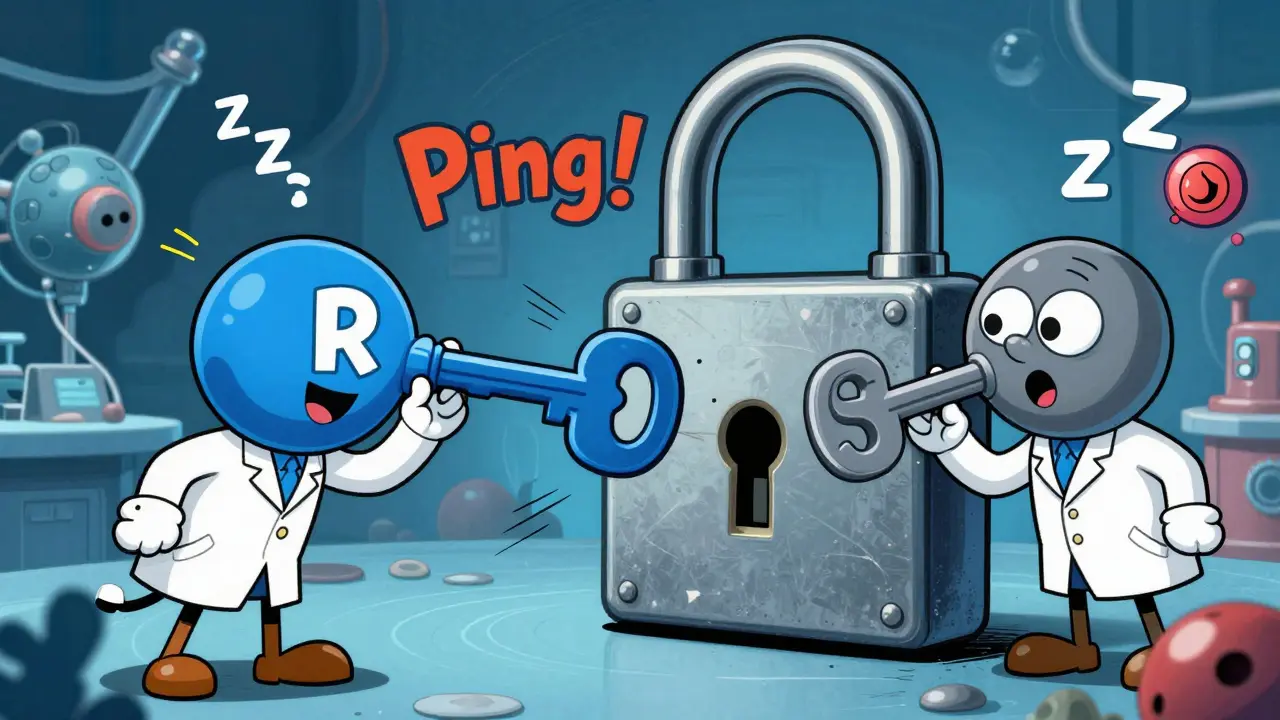
Cetirizine, sold as Zyrtec, isn’t one molecule. It’s two. Specifically, it’s a 50-50 mix of two mirror-image versions of the same compound: levocetirizine (the active one) and dextrocetirizine (the inactive one). Think of it like two identical-looking keys-one opens the lock, the other doesn’t. Cetirizine gives you both, but only half of it actually fights your allergies.
The inactive half, dextrocetirizine, doesn’t help with symptoms. But it does stick around in your body. And that’s where the trouble starts. Studies show this inactive component may contribute to side effects like drowsiness, dry mouth, and headaches. It doesn’t bind well to histamine receptors, but it still interacts with other brain receptors, which can slow you down.
That’s why a 10 mg dose of cetirizine contains only 5 mg of the actual active ingredient. The rest? Just baggage.
Levocetirizine is the clean version-only the part that works
Levocetirizine, sold as Xyzal, is the purified, active half of cetirizine. No extra molecules. No inactive filler. Just the (R)-enantiomer-the one that binds tightly to H1 receptors and blocks histamine.
Because it’s cleaner, levocetirizine works at half the dose. A 2.5 mg tablet of Xyzal does the same job as a 5 mg tablet of Zyrtec. That’s not magic-it’s chemistry. Research from PubMed shows levocetirizine has about 30 times stronger binding to histamine receptors than its inactive twin. That means less drug in your system for the same effect.
And here’s the kicker: fewer molecules floating around means fewer chances to cause side effects. That’s why levocetirizine is classified as a third-generation antihistamine. It’s not just newer-it’s smarter.
Sedation: The real difference between the two
Both drugs are labeled as "non-sedating," but that’s not the whole story. "Non-sedating" doesn’t mean "no drowsiness." It means less than first-gen antihistamines like diphenhydramine (Benadryl). But between cetirizine and levocetirizine? There’s a measurable gap.
A 2008 study published in PubMed tracked 18 healthy adults after they took either cetirizine 5 mg, levocetirizine 2.5 mg, or a placebo. Both antihistamines reduced allergy symptoms equally. But when researchers measured brain activity and self-reported sleepiness, levocetirizine users were significantly less likely to feel drowsy.
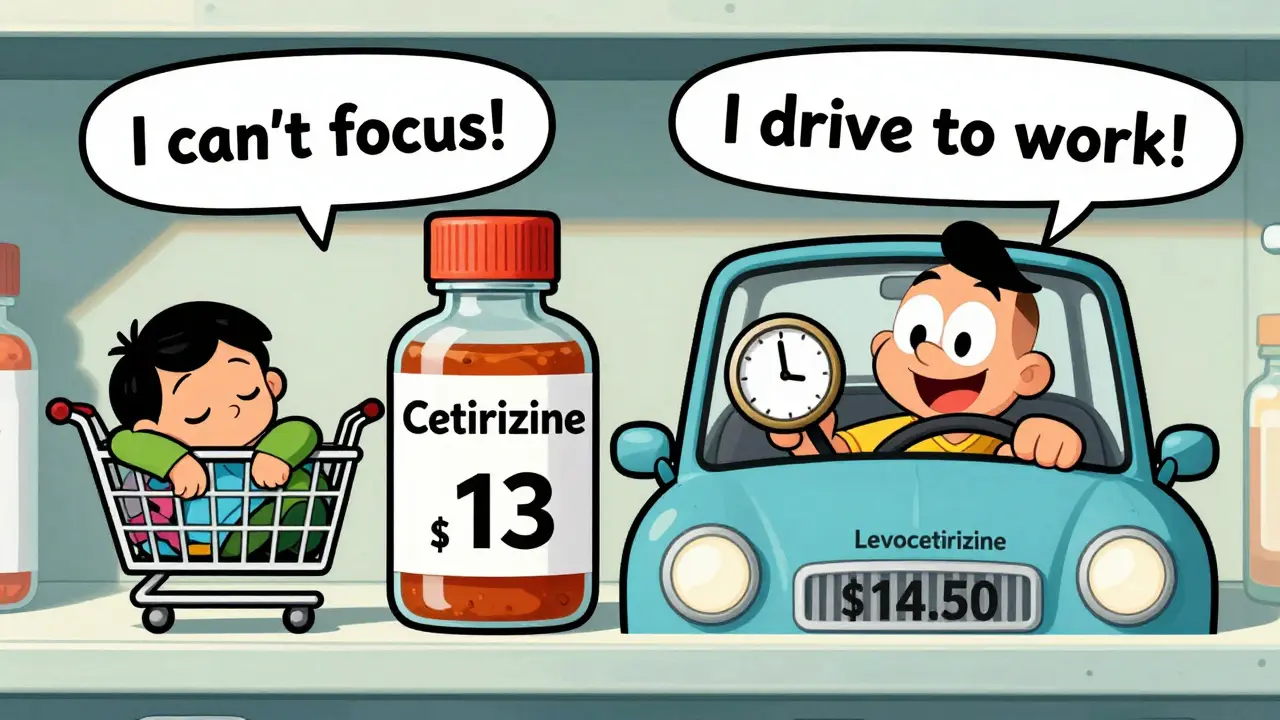
Real-world data backs this up. On Drugs.com, users gave levocetirizine a 6.7/10 for side effects and cetirizine a 5.8/10. Common complaints about cetirizine? "Makes me sleepy even at night," "I can’t focus at work," and "I feel hungover the next day." For levocetirizine? "No drowsiness," "I can drive after taking it," and "finally, an allergy pill that doesn’t knock me out."
That doesn’t mean everyone will feel better on levocetirizine. Some people report no difference. But if you’ve had drowsiness with Zyrtec, switching to Xyzal is the most logical next step.
Side effects: What else should you watch for?
Both drugs are generally safe. The most common side effects for both are similar: dry mouth, headache, fatigue, and sore throat. But because levocetirizine has fewer total molecules in your body, the risk of these side effects is slightly lower.
One study in children with perennial allergic rhinitis found cetirizine was slightly more effective at reducing symptoms-but it also caused more drowsiness. That’s the trade-off: a tiny bit more symptom control, at the cost of more tiredness.
Neither drug causes weight gain or high blood pressure. Neither interacts badly with most medications. But if you have kidney problems, both need dose adjustments. Levocetirizine is cleared more efficiently by the kidneys, so it’s often preferred in older adults with reduced kidney function.
Both are safe during pregnancy (Category B), but always check with your doctor. Neither is recommended for kids under 6 months.
Cost and availability: Is the extra price worth it?
Here’s the practical part. A 30-day supply of generic cetirizine 10 mg costs about $13. Generic levocetirizine 5 mg? Around $14.50. That’s barely a difference.
But here’s what matters: you’re taking half the dose of levocetirizine. So you’re getting the same effect with fewer milligrams. If you’re paying $14.50 for 30 tablets of levocetirizine, you’re paying roughly $7.25 per 2.5 mg dose. With cetirizine, you’re paying $13 for 30 tablets of 10 mg-so $13 for four 5 mg doses. That’s $3.25 per dose. But you’re also getting the inactive half.
So is levocetirizine more expensive? Technically, yes. But if you’re paying for side effects you don’t want, you’re paying for something useless. For many people, the small price difference is worth avoiding the grogginess.
Both are available over-the-counter in the U.S. No prescription needed. You can buy them at any pharmacy, grocery store, or online.
Who should take which?
Here’s a simple guide:
- Take cetirizine if: You’re on a tight budget, don’t notice drowsiness, and just want fast relief. It’s still a great option for many people.
- Take levocetirizine if: You’ve had drowsiness with Zyrtec, work in safety-critical jobs (driving, machinery, healthcare), or need to stay sharp during the day. It’s also better for older adults or those with mild kidney issues.
There’s no "better" drug-just the one that works better for you.
How to switch safely
If you’re switching from cetirizine to levocetirizine, don’t just swap 10 mg for 5 mg. That’s too much. Start with 2.5 mg of levocetirizine once daily. That equals the active dose in 5 mg of cetirizine.
Wait 3-5 days. If your symptoms aren’t fully controlled, bump up to 5 mg. Most people find 2.5 mg is enough.
Don’t double up on doses. Don’t mix them. Don’t take both at the same time. They’re not additive-they’re the same drug, just different versions.
If you’ve been taking cetirizine for years and never had drowsiness? Stick with it. There’s no need to switch just because it’s "older."
What the experts say
The American College of Allergy, Asthma, and Immunology says: "For patients who experience drowsiness with cetirizine, switching to levocetirizine at half the dose often provides equivalent symptom control with less sedation."
But not everyone agrees. Some doctors argue the difference is too small to matter for most people. They point out that both are far less sedating than Benadryl or chlorpheniramine.
The truth? It’s personal. If you’ve ever felt foggy after Zyrtec, you already know the difference. No study can replace your own experience.
What’s next for these drugs?
Researchers are now testing extended-release versions of both drugs to last longer than 24 hours. Some are combining levocetirizine with montelukast (a leukotriene blocker) for people with asthma and allergies.
Long-term, we’re moving toward personalized medicine. Soon, genetic tests might tell you whether you’re more likely to metabolize cetirizine slowly-making you prone to drowsiness. That could mean your doctor recommends levocetirizine before you even try Zyrtec.
For now, though, the choice is simple: if drowsiness is a problem, go with levocetirizine. If it’s not, save your money and stick with cetirizine.
Sarah McQuillan
December 17, 2025 AT 13:26Also, why is everyone acting like drowsiness is the end of the world? I nap after my allergy meds. It's fine.
Aboobakar Muhammedali
December 18, 2025 AT 18:41my uncle take it every day for his pollen allergy
he say if he take xyzal he feel strange like something missing
maybe body know what it need
Laura Hamill
December 20, 2025 AT 01:15THEY MADE CETIRIZINE TO MAKE YOU SLEEPY SO YOU’LL STAY HOME AND NOT ASK QUESTIONS!!
JUST LOOK AT THE PACKAGING - THE BLUE VS THE PURPLE - IT’S A SYMBOL!!
ALSO MY COUSIN’S THERAPIST SAID THIS IS PART OF THE 5G ALLERGY SCAM LOL
Alana Koerts
December 20, 2025 AT 15:55pascal pantel
December 21, 2025 AT 08:15Marsha Jentzsch
December 21, 2025 AT 09:53But then my friend said it was just in my head and now I’m crying because I don’t know if I’m crazy or if this is real??
Also I think my cat can tell when I take it - she cuddles more!! Is that a thing??
Someone please tell me I’m not imagining this 😭
Janelle Moore
December 21, 2025 AT 13:48Also, why are people so obsessed with being 'non-sedated'? Are you running marathons after your allergy meds?
William Liu
December 22, 2025 AT 06:31jessica .
December 22, 2025 AT 19:41xyzal is the truth
the government wants you sleepy so you dont notice the drones
also my neighbor said his dog stopped barking after he switched - coincidence?? i think not
Ryan van Leent
December 24, 2025 AT 18:29Sajith Shams
December 24, 2025 AT 22:41Adrienne Dagg
December 25, 2025 AT 15:30My husband said I stopped sighing at him all day 😭
Also my plants are growing better??
Maybe it’s the placebo… or maybe I’m finally free from the Zyrtec curse 🙏
Erica Vest
December 27, 2025 AT 05:12Chris Davidson
December 27, 2025 AT 06:49Kinnaird Lynsey
December 28, 2025 AT 07:35