
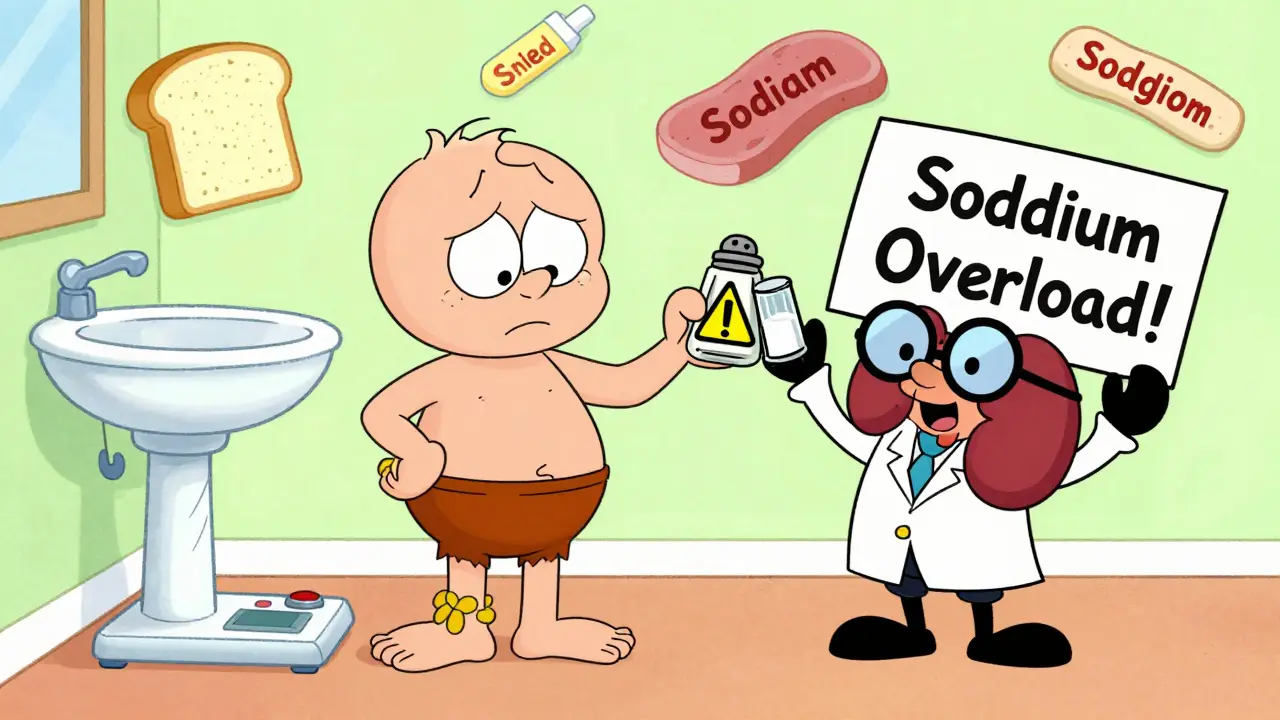
When your kidneys start to fail, your body doesn’t just slow down-it starts to swell. Edema in chronic kidney disease (CKD) isn’t just a nuisance; it’s a sign your body is drowning in fluid it can’t get rid of. You might notice your ankles puffing up, your shoes feeling tighter, or even your face looking puffy in the morning. This isn’t normal aging. It’s your kidneys struggling to balance sodium and water, and if left unchecked, it can lead to high blood pressure, heart strain, and hospital visits.
Why Edema Happens in CKD
Your kidneys normally filter out about 120-150 quarts of blood every day, pulling out waste and extra fluid to make about 1-2 quarts of urine. But when CKD progresses-especially past stage 3, when your eGFR drops below 60 mL/min/1.73m²-this system starts to break down. Sodium, which pulls water along with it, builds up in your bloodstream. That extra fluid increases pressure in your capillaries, forcing water out into your tissues. The result? Swelling, especially in your legs, feet, and sometimes around your eyes or belly. This isn’t just about drinking too much water. It’s about your kidneys losing their ability to say "no" to sodium. Even if you’re not eating salty food, your body holds onto what’s already there. And once fluid starts pooling, gravity makes it worse in your lower limbs. Standing all day? It gets worse. Sitting for hours? Same thing.Diuretics: The First Line of Defense
If your doctor prescribes a diuretic, they’re not trying to make you pee more for fun-they’re trying to restore balance. Loop diuretics like furosemide, bumetanide, or torsemide are the go-to for most people with CKD, especially when eGFR is below 30. These drugs work in the loop of Henle, a part of the kidney that’s still somewhat active even in advanced disease. A typical starting dose is 40-80 mg of furosemide daily. If that doesn’t cut it, your doctor might bump it up by 20-40 mg every few days, sometimes up to 160-320 mg a day. But here’s the catch: diuretics aren’t magic. They can hurt as much as they help. A 2016 NIH study tracked 312 non-dialysis CKD patients and found those on diuretics lost kidney function 3.2 mL/min/1.73m² per year-almost double the rate of those not on them. And if you take too much, you risk sudden drops in blood pressure, muscle cramps, or even acute kidney injury. That’s why doctors avoid pushing doses over 160 mg furosemide equivalent daily in stage 4 CKD. For people with higher eGFR (above 30), thiazide diuretics like hydrochlorothiazide can still work at low doses (12.5-25 mg daily). But the real game-changer? Combining a loop diuretic with a thiazide. This "sequential nephron blockade" hits the kidney at two different points, boosting fluid removal by up to 40%. But it also raises the risk of kidney injury by 23%. So it’s only used when swelling is stubborn and other options have failed. Spironolactone, a potassium-sparing diuretic, is another tool-but only for specific cases. It’s recommended if you also have heart failure (NYHA class III or IV) or severe ascites from liver disease. But in late-stage CKD, it can spike potassium levels dangerously high. Over 25% of patients with stage 4 or 5 CKD who take it end up with hyperkalemia. That means regular blood tests are non-negotiable.Salt Restriction: The Silent Hero
No diuretic works well if you’re still eating a bag of chips every day. The National Kidney Foundation’s KDOQI guidelines say you should aim for no more than 2,000 mg of sodium per day-roughly 5 grams of salt. For advanced CKD (stages 4-5), they recommend even less: 1,500 mg. But here’s the problem: 75% of the sodium you eat doesn’t come from the salt shaker. It’s hidden. Two slices of bread? 300-400 mg. One cup of canned soup? 800-1,200 mg. Two ounces of deli meat? 500-700 mg. Even "healthy" foods like yogurt, frozen meals, and sauces are loaded. A 2022 American Kidney Fund survey found that people who stuck to a strict 2,000 mg/day sodium limit saw a 30-40% reduction in swelling within just 2-4 weeks-without any diuretics. That’s powerful. But it’s not easy. Most people struggle. Taste changes with CKD. Social events become minefields. Low-sodium food options are limited and expensive. That’s why dietitians are critical. A renal dietitian doesn’t just hand you a list-they teach you how to read labels, cook without salt, and spot sneaky sodium in things like tomato juice, pickles, and even some medications. Four structured sessions with a dietitian can double your chances of success. And don’t forget fluids. If you’re swollen, you might need to limit total liquid intake to 1,500-2,000 mL per day. That includes water, tea, coffee, soup, yogurt, and even water-rich fruits like watermelon. One cup of watermelon = 200 mL of fluid. That adds up fast.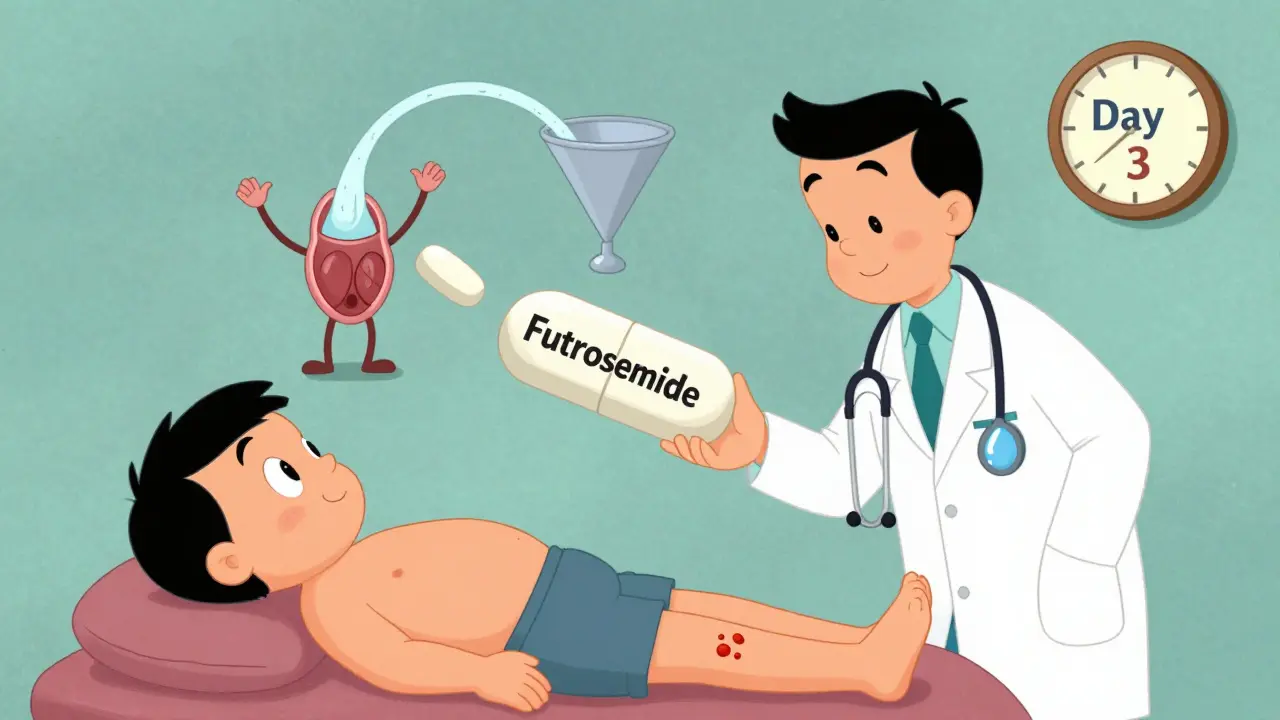
Compression Therapy: More Than Just Socks
Diuretics and salt control help your kidneys, but compression helps your body. For leg swelling, graduated compression stockings (30-40 mmHg at the ankle) are one of the most underused tools. They squeeze your legs just enough to push fluid back toward your heart and reduce swelling by 15-20% in four weeks, according to the American Venous Forum. But wearing them isn’t enough. You need to move. Sitting still makes swelling worse. Walking 30 minutes five days a week improves lymphatic drainage and cuts edema by 22% compared to just resting, according to a 2021 Cochrane review. Elevating your legs above heart level for 20-30 minutes a few times a day also helps-gravity works both ways. For severe cases, especially in nephrotic syndrome, intermittent pneumatic compression devices can add another layer. These machines inflate and deflate around your legs in cycles, mimicking muscle movement. One study showed they reduced leg circumference 35% more than regular compression socks alone. Still, adherence is low. Only 38% of people keep using compression stockings after three months. Why? They’re hard to put on, cause skin irritation, or just feel uncomfortable. If you’re struggling, talk to your physical therapist. They can teach you donning techniques or recommend easier-to-use alternatives.The Balancing Act
There’s no one-size-fits-all fix for edema in CKD. Too little fluid removal? You risk heart failure, pulmonary edema, and higher death risk-studies show a 28% higher mortality in patients with persistent swelling. Too much? You risk crashing your blood pressure, damaging your kidneys further, or needing emergency dialysis. The goal isn’t to eliminate all swelling overnight. It’s to reach "dry weight"-the lightest weight you can safely maintain without symptoms like shortness of breath, swollen ankles, or fatigue. Most doctors aim for a safe weight loss of 0.5 to 1.0 kg per day in acute cases. New tools are helping. Bioimpedance spectroscopy (BIS) can now measure your body’s fluid levels without a scale. The NIH’s FOCUS trial, wrapping up in late 2025, is testing whether using BIS to guide diuretic dosing reduces hospitalizations by 32%. That’s huge. And in March 2025, the FDA approved an injectable form of furosemide specifically for CKD patients with very low kidney function (eGFR under 15). It clears fluid 38% faster than oral pills-game-changing for those who can’t absorb meds through their gut anymore.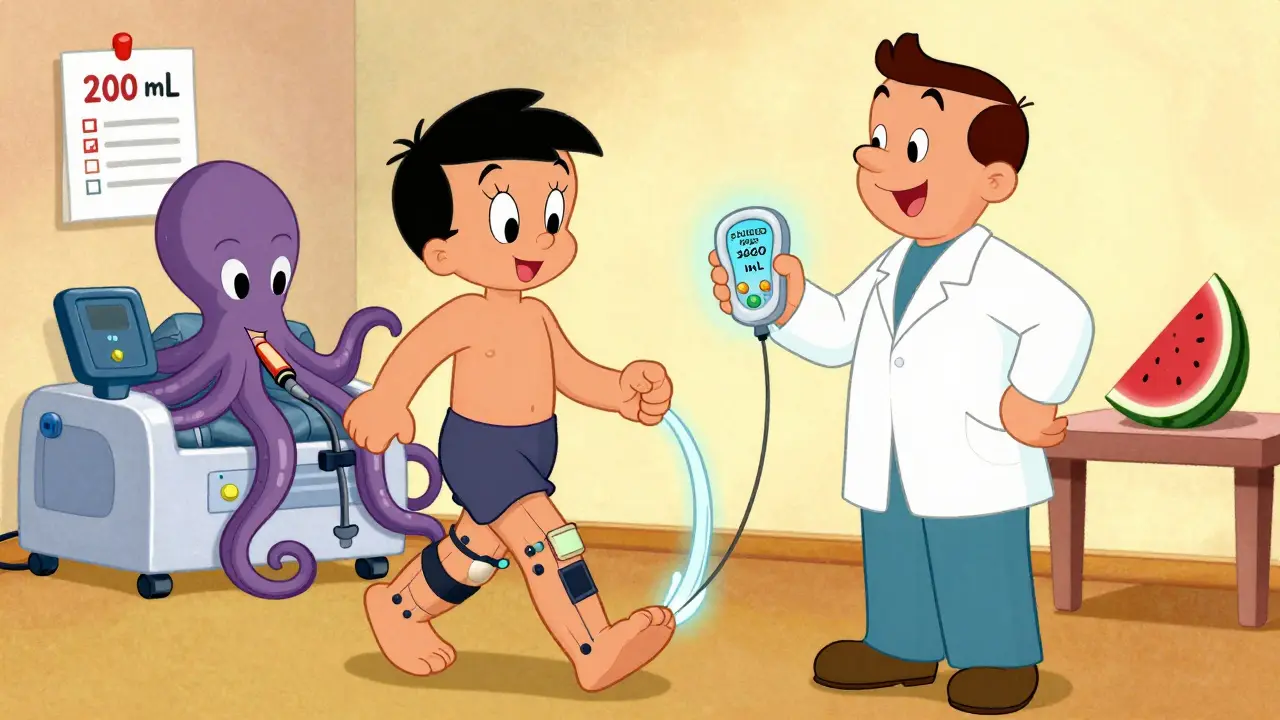
What Works in Real Life
Real success stories aren’t about one miracle drug. They’re about teamwork. A patient in the Mayo Clinic registry who worked with a nephrologist, dietitian, and physical therapist had a 75% success rate in controlling edema within eight weeks. Compare that to 45% with standard care alone. If you’re struggling with swelling, ask for help. Don’t just take your pills. Ask for a dietitian. Ask about compression. Ask if your fluid intake is right. Ask if your diuretic dose is still appropriate. Your kidneys can’t fix this alone-but you don’t have to fix it alone either.What to Watch For
- Sudden weight gain (more than 2 kg in 2 days) = fluid buildup - Shortness of breath when lying flat = possible lung fluid - Swelling that leaves a dent when you press it = pitting edema - Muscle cramps, dizziness, or fainting = possible over-diuresis - High potassium levels (nausea, irregular heartbeat) = watch for spironolactone side effects If any of these happen, call your doctor. Don’t wait.Can I stop taking diuretics if my swelling improves?
Never stop diuretics without talking to your doctor. Even if your swelling goes down, your kidneys are still struggling to manage fluid. Stopping suddenly can cause fluid to build up again quickly, sometimes faster than before. Your doctor may lower your dose, but they’ll likely keep you on some level of diuretic long-term to prevent rebound swelling.
Is it safe to use salt substitutes if I have CKD?
Most salt substitutes replace sodium chloride with potassium chloride. That sounds good-until you have CKD. Your kidneys can’t clear extra potassium well, and high potassium levels can cause dangerous heart rhythms. Unless your doctor specifically approves it and monitors your blood levels, avoid salt substitutes entirely.
Why does my swelling get worse at night?
During the day, gravity pulls fluid down to your legs. At night, when you lie flat, that fluid redistributes. If your kidneys aren’t removing it, you may wake up with puffy eyes or feel short of breath. Elevating your legs during the day and limiting fluids in the evening can help. Avoid large meals or salty snacks before bed.
Can compression stockings make swelling worse?
Only if they’re worn incorrectly. Too-tight or poorly fitted stockings can cut off circulation, especially if you have peripheral artery disease. Always get fitted by a professional. If you notice numbness, tingling, or skin discoloration, stop using them and talk to your provider.
How long does it take to see results from salt restriction?
Most people notice less swelling in 2-4 weeks with strict sodium control. Some feel better in just a few days, especially if they were eating a lot of processed food. The key is consistency. One high-sodium meal can undo days of progress.
Next Steps
Start with three simple actions:- Ask your doctor for a referral to a renal dietitian-this is the single most effective step for long-term control.
- Get properly fitted compression stockings (30-40 mmHg) and wear them daily, even if just for a few hours.
- Keep a daily log: weight, fluid intake, sodium intake, and swelling level. Bring it to every appointment.
Retha Dungga
December 31, 2025 AT 01:59Jenny Salmingo
January 1, 2026 AT 11:51Brandon Boyd
January 2, 2026 AT 14:24Frank SSS
January 3, 2026 AT 22:07Paul Huppert
January 5, 2026 AT 06:23Brady K.
January 6, 2026 AT 17:31Kayla Kliphardt
January 8, 2026 AT 13:27John Chapman
January 10, 2026 AT 12:26Urvi Patel
January 12, 2026 AT 09:02Marilyn Ferrera
January 12, 2026 AT 19:37Robb Rice
January 13, 2026 AT 13:07