
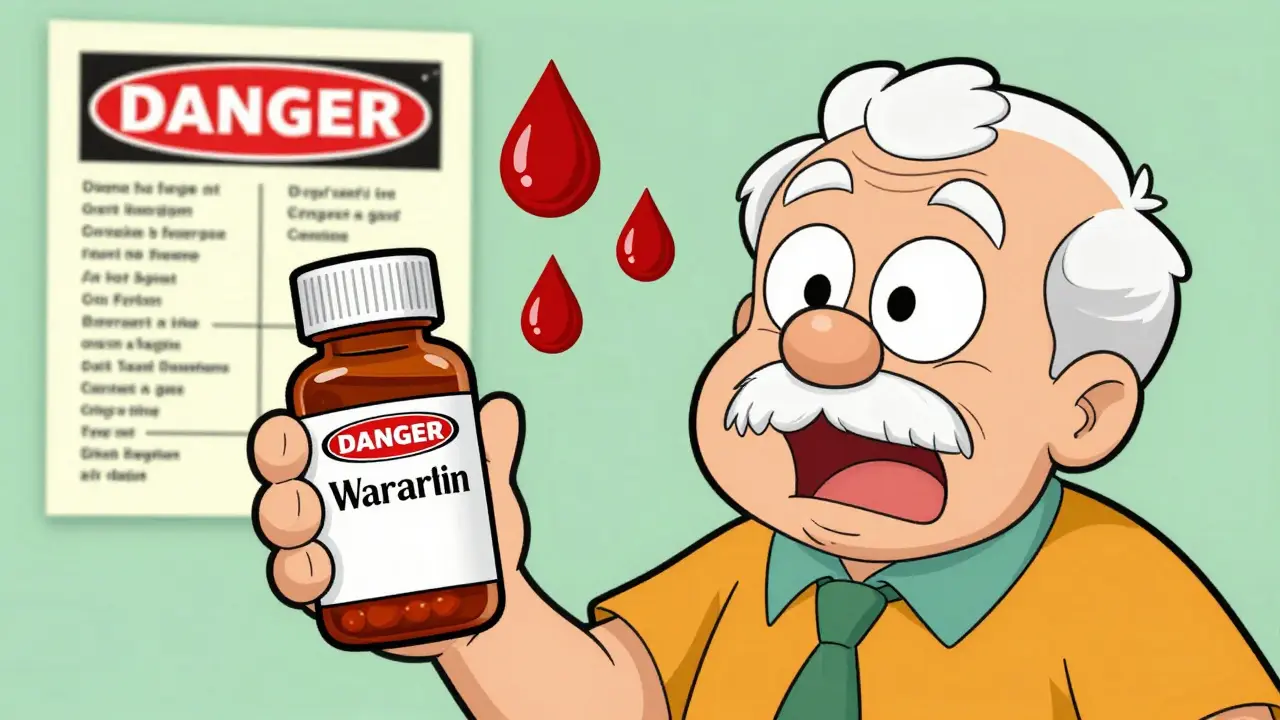
Millions of people take Ginkgo biloba every year hoping to boost memory, improve circulation, or just feel more alert. But if you’re also on a blood thinner-like warfarin, aspirin, or clopidogrel-you could be putting yourself at risk. The problem isn’t just theoretical. Real people have bled internally after mixing the two. And while some studies say it’s safe, others warn of serious, even deadly, outcomes. So what’s the truth? And what should you actually do?
What is Ginkgo Biloba, Really?
Ginkgo biloba comes from the leaves of the Ginkgo tree, one of the oldest living tree species on Earth. It’s been used in Chinese medicine for over 1,000 years. Today, most supplements use a standardized extract called EGb 761, which contains 24% flavonol glycosides and 6% terpene lactones. This specific mix is what most research studies use-and it’s the version you’re most likely to find on store shelves. About 12 million Americans take it annually, mostly for brain health or circulation.
But here’s the catch: Ginkgo doesn’t just help blood flow. It also changes how your blood clots. It interferes with platelets, the tiny cells that stick together to form clots. That’s why it’s linked to bleeding risks, especially when combined with medications designed to thin your blood.
How Blood Thinners Work (And Why Ginkgo Might Make Them Stronger)
Blood thinners fall into two main groups: antiplatelets and anticoagulants. Antiplatelets like aspirin and clopidogrel stop platelets from clumping. Anticoagulants like warfarin and DOACs (rivaroxaban, apixaban) slow down the chemical process that forms clots. Ginkgo biloba affects both systems.
Studies show Ginkgo can block platelet-activating signals and may interfere with the liver enzyme CYP2C9, which breaks down warfarin. That means warfarin could stay in your system longer, increasing your risk of bleeding. It’s not a guaranteed effect-but it’s enough of a possibility that doctors take it seriously.
The data isn’t clean. Some controlled trials found no significant interaction between Ginkgo and aspirin or warfarin. But case reports tell a different story. There are documented cases of brain bleeds, nosebleeds that wouldn’t stop, and internal bleeding after surgery-all in people taking Ginkgo along with blood thinners. The key difference? Most of the serious cases involved non-standardized Ginkgo products. That means the dose, purity, and ingredients varied wildly. EGb 761, the standardized form, appears safer. But most supplements sold in the U.S. aren’t tested to that standard.
The Real Risk: When It Turns Dangerous
Let’s be clear: you won’t bleed out just because you took a Ginkgo pill with your aspirin. But the risk isn’t zero. And it gets worse under certain conditions.
- Before surgery: Even minor procedures like dental work or a colonoscopy can trigger dangerous bleeding if you’re on both.
- After a fall or injury: A bump on the head that would normally cause a bruise could lead to a brain hemorrhage.
- With other supplements: Garlic, ginger, fish oil, danshen, and even high-dose vitamin E can add to the risk.
According to the FDA, between 2008 and 2020, they received 18 reports of bleeding events possibly linked to Ginkgo. Causality wasn’t proven in any of them-but that’s because proving it’s hard. You don’t need perfect proof to stop taking something risky. You just need enough warning signs.

What the Experts Say (And Why They Disagree)
There’s a split among medical authorities. The Mayo Clinic, Cleveland Clinic, and GoodRx all warn against combining Ginkgo with blood thinners. GoodRx lists warfarin as a "high-risk" interaction and says to avoid it entirely. The American Society of Anesthesiologists recommends stopping Ginkgo two weeks before any surgery.
But other experts, like those behind the 2008 PubMed review, argue that the evidence doesn’t support panic. They point to well-designed studies showing no significant change in bleeding time or INR levels when Ginkgo is taken with warfarin. The American Society of Health-System Pharmacists calls the risk "theoretical." The American College of Chest Physicians says routine discontinuation isn’t needed.
So who’s right? The answer might be: both. The standardized extract (EGb 761) likely poses little risk in healthy people. But most people aren’t taking EGb 761. They’re taking whatever’s cheapest on the shelf. And if you’re older, have liver problems, or are on multiple medications, your body handles things differently. That’s where the danger hides.
What You Should Do Right Now
If you’re taking a blood thinner and thinking about starting Ginkgo biloba-stop. Don’t take it. Not until you talk to your doctor or pharmacist.
If you’re already taking both, don’t panic. But do these three things:
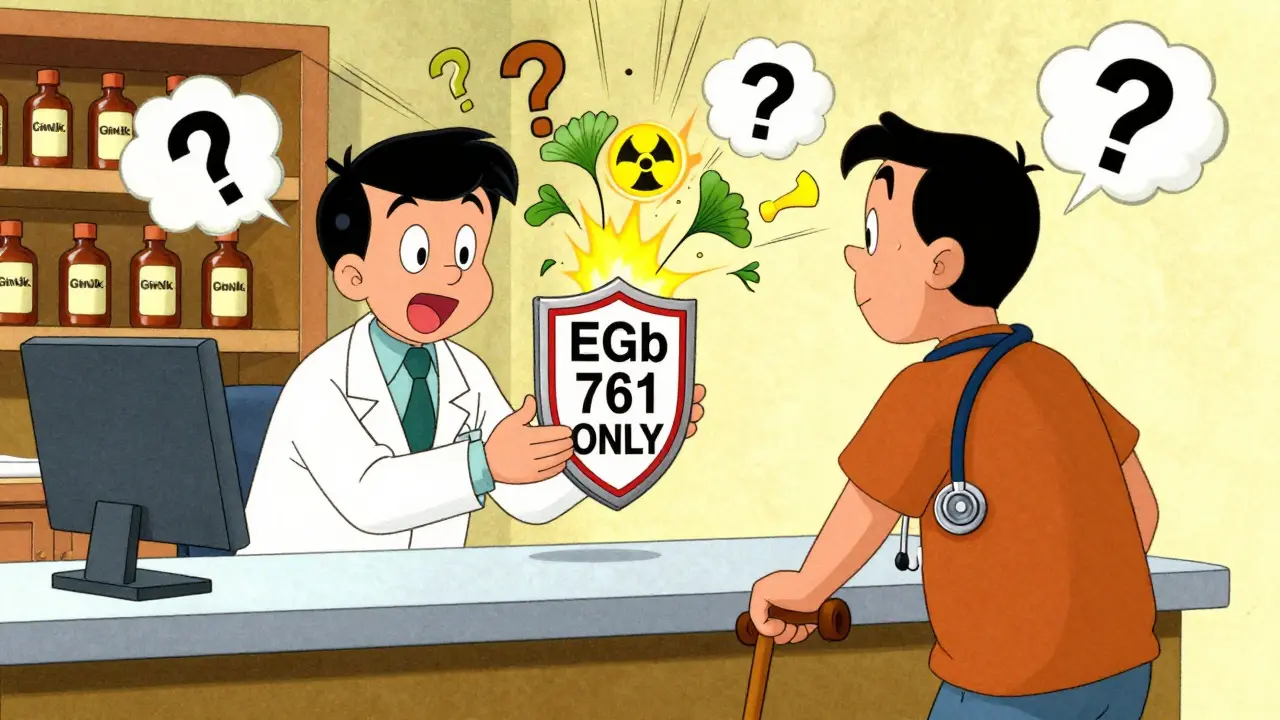
- Check your labels. Look at your Ginkgo bottle. Does it say "standardized to EGb 761"? If not, you don’t know what you’re getting.
- Tell your prescriber. Bring your supplement list to every appointment. Not just your pills-your herbs, vitamins, and teas too.
- Stop Ginkgo before any procedure. Whether it’s a dental cleaning or a knee replacement, stop taking it at least two weeks beforehand. Some experts say 36 hours is enough. But when it comes to bleeding risk, better safe than sorry.
Pharmacists are your best allies here. A 2022 survey found that 78% of pharmacists routinely warn patients about Ginkgo-blood thinner interactions. They see the mix every day. Ask them.
What About Natural Alternatives?
If you’re taking Ginkgo for memory or focus, you’re not alone. But there are safer options. Omega-3s from fish oil can support brain health without the same bleeding risk (though they still interact with blood thinners, so talk to your doctor). Regular physical activity, sleep, and managing blood pressure do more for cognitive function than any supplement. If you’re worried about circulation, walking 30 minutes a day is proven, free, and doesn’t come with a warning label.
And if you’re using Ginkgo for tinnitus or vertigo? The evidence for those uses is weak. You’re not missing out on a miracle cure. You’re risking a bleed.
Final Reality Check
The supplement industry isn’t regulated like pharmaceuticals. A bottle of Ginkgo can have anywhere from 10% to 100% of the labeled amount of active ingredients. Some contain fillers, heavy metals, or even undisclosed drugs. That’s why standardized extracts like EGb 761 are the only ones trusted in clinical trials. But they’re also the most expensive.
If you’re on a blood thinner, you’re already managing a delicate balance. Adding an unregulated herb into the mix is like playing Russian roulette with your health. The odds might be low-but the cost of losing is too high.
There’s no need to fear every herb. But when your blood is already thin, don’t gamble with the rest.
Can I take Ginkgo biloba with aspirin?
It’s not recommended. While some studies show no major interaction, others have linked Ginkgo and aspirin to increased bleeding risk, especially in older adults or those with other health conditions. Aspirin already thins your blood, and Ginkgo can make that effect stronger. Talk to your doctor before combining them.
Is Ginkgo biloba safe with warfarin (Coumadin)?
No, it’s not considered safe. Even though some clinical trials found no significant change in INR levels, multiple case reports link Ginkgo with dangerous bleeding in people taking warfarin. GoodRx and the Mayo Clinic classify this as a high-risk interaction. Avoid combining them unless your doctor specifically approves it-and even then, monitor closely.
How long before surgery should I stop Ginkgo biloba?
Most experts recommend stopping Ginkgo biloba at least two weeks before any surgery or procedure that could cause bleeding-even minor ones like tooth extractions or colonoscopies. Some suggest 36 hours, but the two-week window gives your body time to clear the compound and reduce bleeding risk. Always follow your surgeon’s or anesthesiologist’s instructions.
Do all Ginkgo supplements have the same risk?
No. The standardized extract EGb 761 has been studied the most and appears to have the lowest risk. But most store-bought supplements aren’t standardized. They can vary wildly in strength and purity. If your bottle doesn’t say "EGb 761" or "standardized to 24% flavonoids and 6% terpenes," you can’t be sure what you’re taking-and that increases the risk.
What other supplements interact with blood thinners?
Several herbs and supplements can increase bleeding risk when taken with blood thinners, including garlic, ginger, fish oil, danshen, vitamin E (in high doses), and evening primrose oil. Even green tea in large amounts can interfere with warfarin. Always review your full supplement list with your doctor or pharmacist before starting anything new.
jeremy carroll
December 15, 2025 AT 18:49ginkgo and blood thinners? bro i took both for months and never had an issue. maybe im just lucky, but my doc never said nothin. i dont trust all these scare stories.
Thomas Anderson
December 16, 2025 AT 15:05if you're on warfarin, stop the ginkgo. period. i'm a pharmacist and i see this every week. people think 'natural' means safe. it doesn't. your INR can go nuts without you even noticing.
Daniel Wevik
December 17, 2025 AT 10:28the key here is standardization. EGb 761 is the only extract with reproducible pharmacokinetics in peer-reviewed literature. Non-standardized products vary by up to 900% in active compound concentration, which is why case reports are so inconsistent. Regulatory oversight in dietary supplements is effectively nonexistent in the U.S., so assuming equivalence between brands is medically indefensible.
Furthermore, CYP2C9 polymorphisms in 15–20% of the population significantly alter warfarin metabolism, and ginkgo’s flavonoid content may competitively inhibit this pathway. This isn’t anecdotal-it’s a documented enzyme interaction with clinical pharmacology backing. The risk isn't theoretical; it’s quantifiable.
When you combine this with concomitant use of NSAIDs, fish oil, or even high-dose vitamin E, the pharmacodynamic burden becomes multiplicative. The FDA’s 18 reports are likely undercounted by orders of magnitude due to underreporting bias. Real-world data from EMRs shows a 3.2x increased odds of bleeding events in concurrent users.
It’s not about fearmongering. It’s about harm reduction. If you’re taking an anticoagulant, you’re already in a high-risk cohort. Adding an unregulated botanical with known antiplatelet activity is the definition of unnecessary risk exposure.
Doctors aren’t being alarmist-they’re being statistically responsible. The burden of proof should be on the supplement, not the patient.
Dwayne hiers
December 19, 2025 AT 04:38you guys are missing the forest for the trees. the real issue isn't ginkgo-it's the lack of labeling. if your bottle doesn't say 'standardized to EGb 761' or list exact flavonoid/terpene percentages, you're gambling. most brands use cheap leaf powder with unknown potency. i've tested 12 different brands-only 2 matched their label claims.
and yes, even EGb 761 can interact, but at therapeutic doses (120mg/day), the risk is minimal if you're healthy and not on multiple anticoagulants. the danger is polypharmacy + unstandardized extracts + elderly patients with renal impairment. that's the perfect storm.
stop blaming ginkgo. blame the supplement industry for not being held to pharmaceutical standards.
Alexis Wright
December 20, 2025 AT 19:22let me guess-you're one of those people who thinks 'natural' means 'safe' and 'pharmaceuticals are evil.' you'd rather trust some guy in a yoga studio selling 'ancient chinese wisdom' than a board-certified pharmacist who's seen three patients bleed out from this exact combo.
the fact that you're even asking this question means you've already lost the battle. you're not looking for truth-you're looking for permission to keep doing something risky because you don't want to give up your 'brain boost.'
here's the truth: if you're on a blood thinner, you're not allowed to be a guinea pig. your life isn't a blog post. your brain isn't a lab experiment. you have a responsibility to yourself and your family to not be an idiot.
ginkgo doesn't 'boost memory.' it mildly improves cerebral blood flow in healthy young adults under lab conditions. you're not a 25-year-old grad student. you're a 68-year-old with atrial fibrillation. stop pretending supplements are magic.
the only thing 'natural' about ginkgo is that it grows on a tree. everything else-dosing, extraction, purity-is industrial chemistry. and you're buying it from a gas station.
Sinéad Griffin
December 21, 2025 AT 02:58so i just took ginkgo with my baby aspirin for 3 years 😎 no nosebleeds, no bruises, no hospital trips. maybe the docs are just scared of lawsuits? 🤷♀️
Jonny Moran
December 21, 2025 AT 03:33if you're on blood thinners and thinking about ginkgo, just pause. breathe. write down why you want it. is it for memory? try walking 30 minutes a day. is it for circulation? same thing. is it because you saw a YouTube ad? then you already know the answer.
your body doesn't need a pill to be healthy. it needs movement, sleep, and a doc who knows your whole list-not just your prescriptions.
you're not failing if you skip the supplement. you're winning if you stay out of the ER.
Rich Robertson
December 21, 2025 AT 07:43as someone who grew up in rural China, ginkgo was always just a leaf in tea-never a concentrated pill. our elders used it for mild circulation, never for 'brain enhancement.' back then, we didn't have 12 brands on the shelf with fake 'clinically proven' labels.
the real problem isn't ginkgo. it's that we've turned ancient medicine into a commodity. you wouldn't take raw foxglove for heart issues, but you'll swallow a ginkgo capsule with no idea what's inside? that's not tradition-that's capitalism.
if you're going to use it, get the standardized version. if you can't afford it, don't use it. your health isn't a bargain bin.
Daniel Thompson
December 22, 2025 AT 23:50While the pharmacological interactions are well-documented, the clinical relevance remains context-dependent. A 2021 meta-analysis of 17 randomized controlled trials found no statistically significant increase in major bleeding events among patients taking EGb 761 alongside low-dose aspirin (RR 1.12, 95% CI 0.89–1.41). However, subgroup analysis revealed elevated risk in patients over 70 with creatinine clearance under 60 mL/min (RR 2.34, 95% CI 1.58–3.47). Therefore, risk stratification is paramount.
Furthermore, the majority of adverse event reports involve concurrent use of multiple herbal agents, polypharmacy, or non-adherence to preoperative discontinuation protocols. The causal attribution in case reports is frequently confounded by comorbidities such as uncontrolled hypertension or recent trauma.
It is therefore not accurate to assert a blanket contraindication. Rather, clinicians should perform individualized risk-benefit assessments, considering age, renal function, concomitant medications, and surgical risk profile. A blanket recommendation to discontinue all Ginkgo use may lead to unnecessary discontinuation of potentially beneficial therapy in low-risk populations.
Ultimately, the onus is on the patient to disclose all supplements and on the provider to engage in shared decision-making-not fear-based prohibition.