
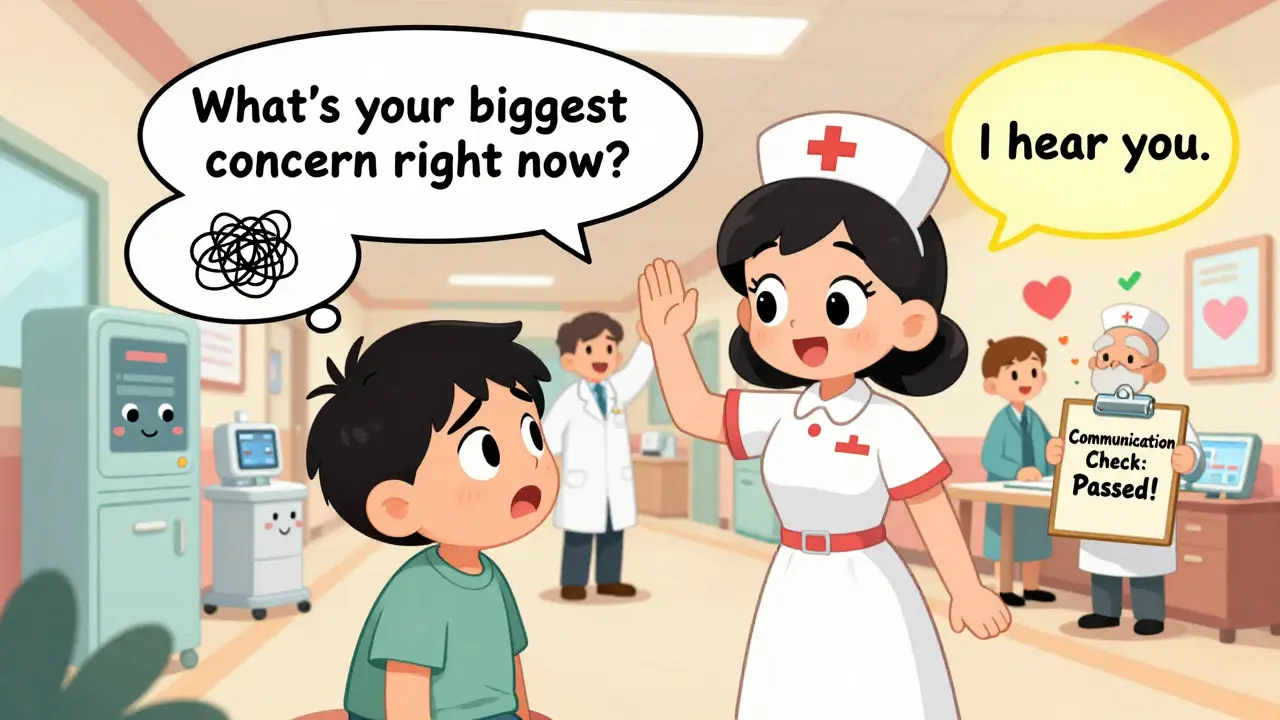
When patients walk into a clinic, they don’t just need a diagnosis-they need to understand it. Too often, they leave confused, anxious, or worse, misinformed. That’s not just bad customer service. It’s a safety risk. Studies show that communication failures contribute to up to 80% of serious medical errors, according to The Joint Commission. The good news? There’s a growing movement to fix this-not with posters or pamphlets, but with structured, evidence-based education programs built right into hospitals, universities, and public health systems.
Why Communication Training Isn’t Optional Anymore
It’s easy to assume that doctors and nurses know how to talk to patients. But knowing how to diagnose doesn’t mean you know how to explain. A 2019 study from Johns Hopkins Medicine found that physicians who completed formal communication training had 30% fewer malpractice claims. Why? Because patients who feel heard are less likely to sue. They’re also more likely to follow treatment plans. The data doesn’t lie. Press Ganey’s 2022 analysis showed a strong correlation (r=0.78) between communication quality and patient satisfaction scores. That’s not a coincidence. When a nurse takes time to ask, “What’s your biggest concern right now?” instead of jumping straight to lab orders, outcomes improve. That’s not fluff-it’s clinical practice. And it’s not just about patients. Poor communication between nurses, pharmacists, and doctors leads to medication errors, delayed treatments, and duplicated tests. The Agency for Healthcare Research and Quality found that 65% of communication failures in hospitals happen between teams, not between staff and patients. That’s why modern training programs don’t just teach empathy-they teach coordination.What These Programs Actually Teach
These aren’t one-hour webinars on “being nice.” They’re intensive, skill-based curricula designed around real clinical pain points. Take the Program for Excellence in Patient-Centered Communication (PEP) at the University of Maryland. It’s a 6.5-credit workshop accredited by the AMA, built on decades of research from the Academy of Communication in Healthcare. Trainees don’t just listen to lectures-they practice. They learn to:- Elicit the patient’s full story before jumping to conclusions
- Respond with empathy, not just sympathy
- Use silence effectively instead of filling every pause
- Negotiate treatment plans that fit the patient’s life, not just the protocol
Programs Tailored for Different Roles
Not every healthcare worker needs the same training. That’s why programs are becoming more specialized. The Society for Healthcare Epidemiology of America (SHEA) runs a $75-$125 online course for infection preventionists. It covers policy advocacy, media relations, and social media use-skills no one teaches in med school. One reviewer from Cleveland Clinic said Module 4 helped her correct vaccine misinformation reaching over 50,000 people monthly. Meanwhile, the Health Communication Training Series from UT Austin, developed with Texas Health and Human Services, focuses on public health emergencies. Launched in March 2022, their “Pandemic Preparedness Communication” module addresses the 40% delays in early pandemic response tied to poor messaging. It’s free, self-paced, and designed for public health workers who aren’t clinicians but still need to speak clearly to scared communities. And then there’s the big picture: master’s degrees. Johns Hopkins offers a 30-credit Online MA in Communication with a Health Concentration. It’s rigorous, theory-heavy, and takes 12 to 18 months. Perfect for policy advisors, health educators, or hospital administrators-but not for a nurse trying to improve her morning rounds tomorrow.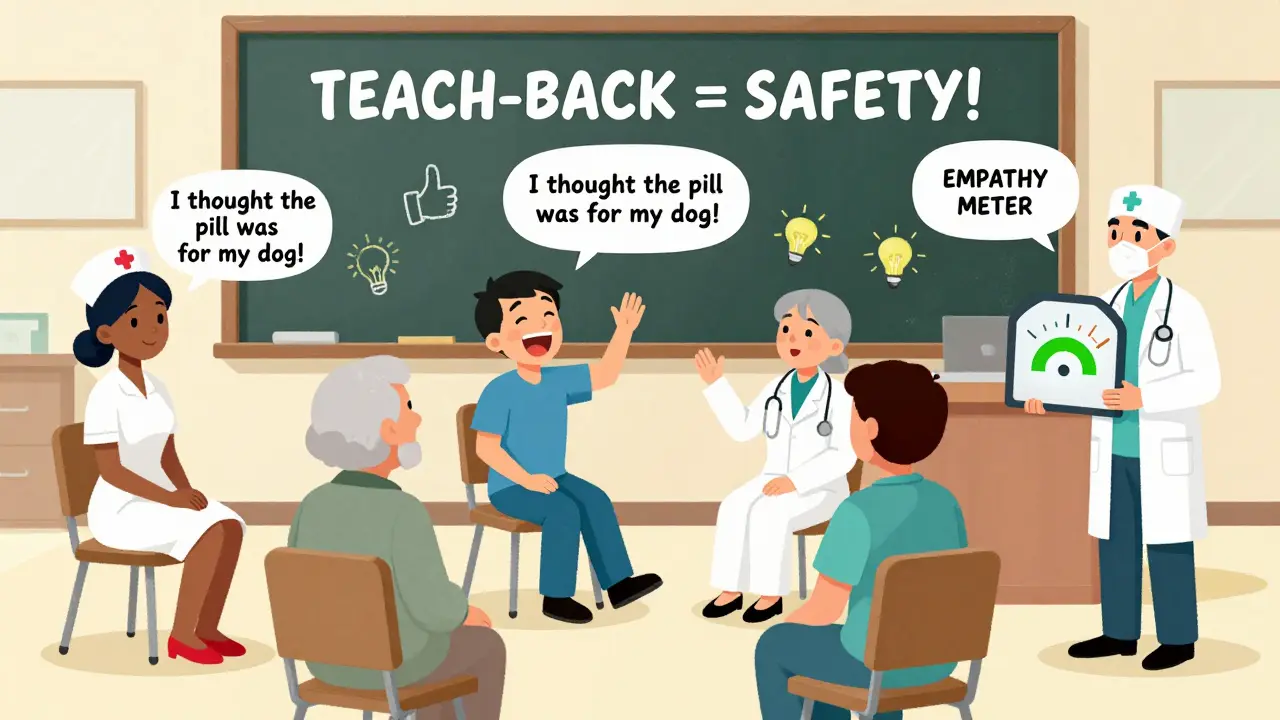
What’s Missing From Most Programs
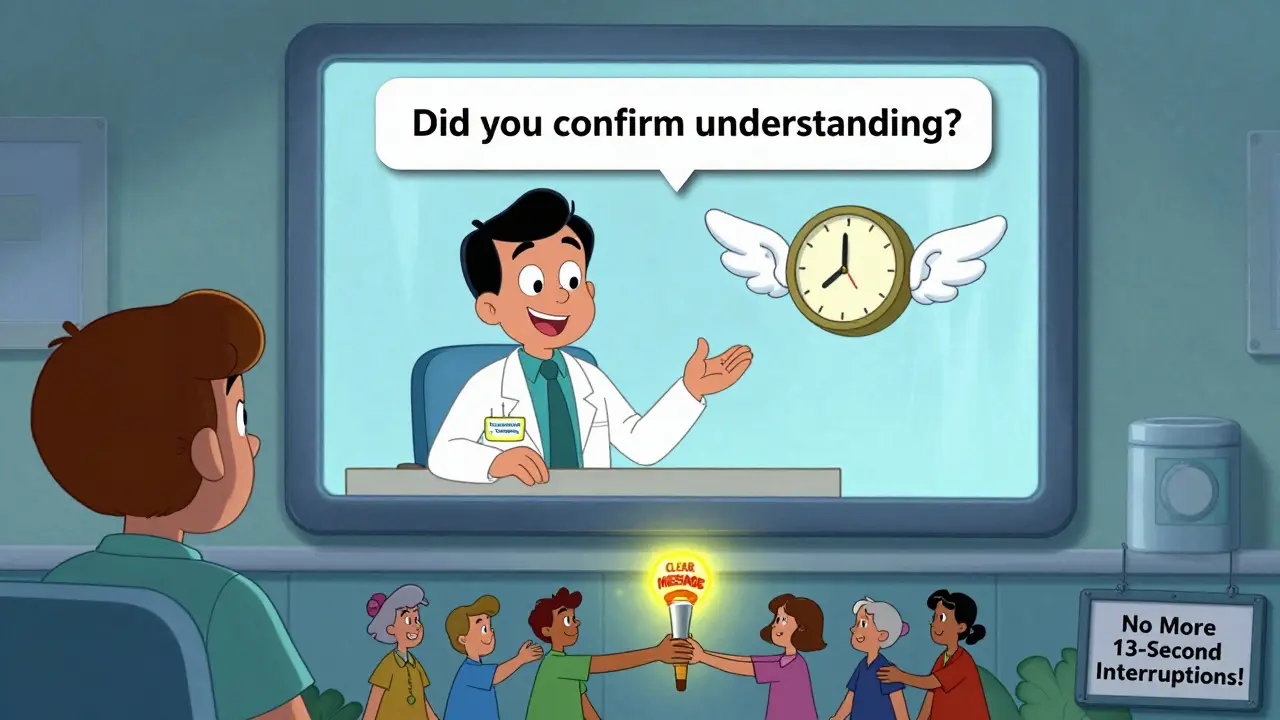
Even the best programs have blind spots. A 2021 JAMA Internal Medicine review found that only 12% of communication training programs track whether skills are used more than six months after the course. That’s a huge gap. Learning empathy in a workshop is one thing. Keeping it alive during a 15-minute appointment with 12 patients waiting is another. Dr. Robert Wachter from UCSF points out a harsh truth: “Physicians average only 13.3 seconds before interrupting patients-even after training.” Time pressure is real. No amount of role-play fixes a broken system. Another gap? Health equity. A 2023 AAMC report found that 60% of communication curricula ignore cultural humility, language barriers, or racial disparities. In 2023, AHRQ reported a 28% satisfaction gap between white patients and minority patients when it came to communication. That’s not just unfair-it’s dangerous. Newer programs, like those launched by UT Austin in January 2024, are finally addressing this with modules on bias, translation, and community trust-building.How Hospitals Actually Make It Work
Training alone doesn’t change behavior. Integration does. Successful hospitals follow a four-step model from the Academy of Communication in Healthcare:- Assess: Use patient surveys to find the biggest communication gaps.
- Prioritize: Focus on 3-5 high-impact behaviors (e.g., asking open-ended questions, checking understanding).
- Contextualize: Use real cases from your own ER, clinic, or ICU-not hypotheticals.
- Embed: Add prompts into the electronic health record. “Did you confirm the patient understands the next steps?” becomes a required field.
The Cost of Doing Nothing
The healthcare communication training market hit $2.8 billion in 2023-and it’s growing at 11.3% a year. Why? Because regulators are finally holding hospitals accountable. Medicare now ties 30% of hospital reimbursement to HCAHPS scores, which include questions like, “Did your doctor explain things clearly?” Hospitals that ignore communication training risk losing millions. The Joint Commission requires “effective communication processes” under Standard RI.01.01.01. CMS Conditions of Participation §482.22(c) mandate communication training for all staff. Compliance isn’t optional anymore. Yet only 22% of rural facilities have formal programs. And 42% of hospital-based programs have no dedicated funding. That’s why partnerships are rising. In February 2024, Mayo Clinic and SHEA announced a collaboration to scale their training models across more hospitals.What You Can Do Today
You don’t need a master’s degree to start improving communication. Here’s what works right now:- Start your next patient visit with: “What’s the one thing you’re most worried about?”
- Use the “teach-back” method: “Can you tell me in your own words what we talked about?”
- Don’t rush the silence. Wait three seconds after they answer. Often, the real concern comes after the pause.
- If you’re a manager, pick one communication skill and make it part of your team’s monthly review.
Are healthcare communication programs only for doctors?
No. These programs are designed for everyone who interacts with patients or the public-nurses, pharmacists, receptionists, infection control specialists, public health workers, and even hospital administrators. Some programs, like SHEA’s, are tailored specifically for infection preventionists. Others, like UT Austin’s, target public health staff. Even billing clerks benefit from training on how to explain insurance costs clearly.
How long does it take to see results from communication training?
Skill improvement can be seen within weeks, but full integration takes 3 to 6 months. Studies show that without ongoing reinforcement, communication skills plateau at about 70% proficiency. Programs that embed prompts into electronic health records and hold monthly peer check-ins see sustained improvement. Northwestern’s data shows 37% higher retention at six months when using mastery learning.
Do these programs actually reduce medical errors?
Yes. The Joint Commission links poor communication to 80% of serious medical errors. Studies show that teams using structured communication protocols have fewer medication mistakes, fewer missed diagnoses, and better handoffs between shifts. Johns Hopkins found a 30% drop in malpractice claims among trained staff. Communication isn’t soft skill-it’s a safety protocol.
Why do some healthcare workers resist communication training?
Common reasons include time pressure, skepticism that “talking better” changes outcomes, and fear of being evaluated. Some feel it’s not part of their job. Northwestern’s program found 30-40% of learners feel anxious during simulations at first. The fix? Peer modeling. When respected colleagues lead training, resistance drops. Also, showing real data-like a 40% drop in burnout or fewer complaints-helps change minds.
Is there free communication training available?
Yes. The University of Texas at Austin’s Health Communication Training Series offers free, self-paced online courses, including pandemic preparedness and health equity modules. The Academy of Communication in Healthcare also provides over 125 free teaching tools, videos, and scripts. Many hospitals offer in-house training at no cost to staff. You don’t need to pay for a degree to start improving.
How do these programs address cultural and language barriers?
Historically, most programs ignored this. But since 2023, 74% of new programs now include cultural humility and health equity training. UT Austin’s 2024 updates specifically address the 28% satisfaction gap between white and minority patients. Best practices now include using trained medical interpreters, avoiding jargon, recognizing cultural beliefs about illness, and asking patients, “What do you think is causing your symptoms?” instead of assuming.