
Medication Side Effects Emergency Kit Builder
Your Medication Emergency Kit Assessment
Answer these questions to build a personalized emergency kit for medication side effects. Select all that apply to your household.
Your Personalized Emergency Kit Recommendations
When you or someone in your home takes medication daily, you’re not just managing a condition-you’re managing risk. Even common prescriptions like antibiotics, blood pressure pills, or pain relievers can trigger unexpected reactions. A headache might turn into a rash. A stomachache could spiral into severe diarrhea. In rare cases, a simple allergy could become life-threatening within minutes. Most people don’t think about this until it happens. But if you’ve ever had to scramble for antihistamines during an allergic reaction or panicked because you didn’t know what to do when someone vomited after taking a new pill, you know how vital it is to be prepared.
Why a Medication-Specific Emergency Kit Matters
Standard first-aid kits are great for cuts and burns, but they won’t help if you develop hives from a new antibiotic or get dizzy from a blood pressure med. That’s why a medication side effects emergency kit is different. It’s built for pharmacological emergencies-not physical injuries. The Mayo Clinic updated its guidelines in May 2023, stressing that 70% of U.S. adults take at least one prescription drug. With that many people on meds, it’s not a matter of if a side effect will happen-it’s when.
The goal isn’t to treat serious emergencies at home. It’s to stabilize the situation, reduce discomfort, and give you time to call for help. Studies show that 75% of medication-related ER visits could be avoided with better home preparedness. That means your kit isn’t just useful-it’s potentially life-saving.
Essential Medications to Keep on Hand
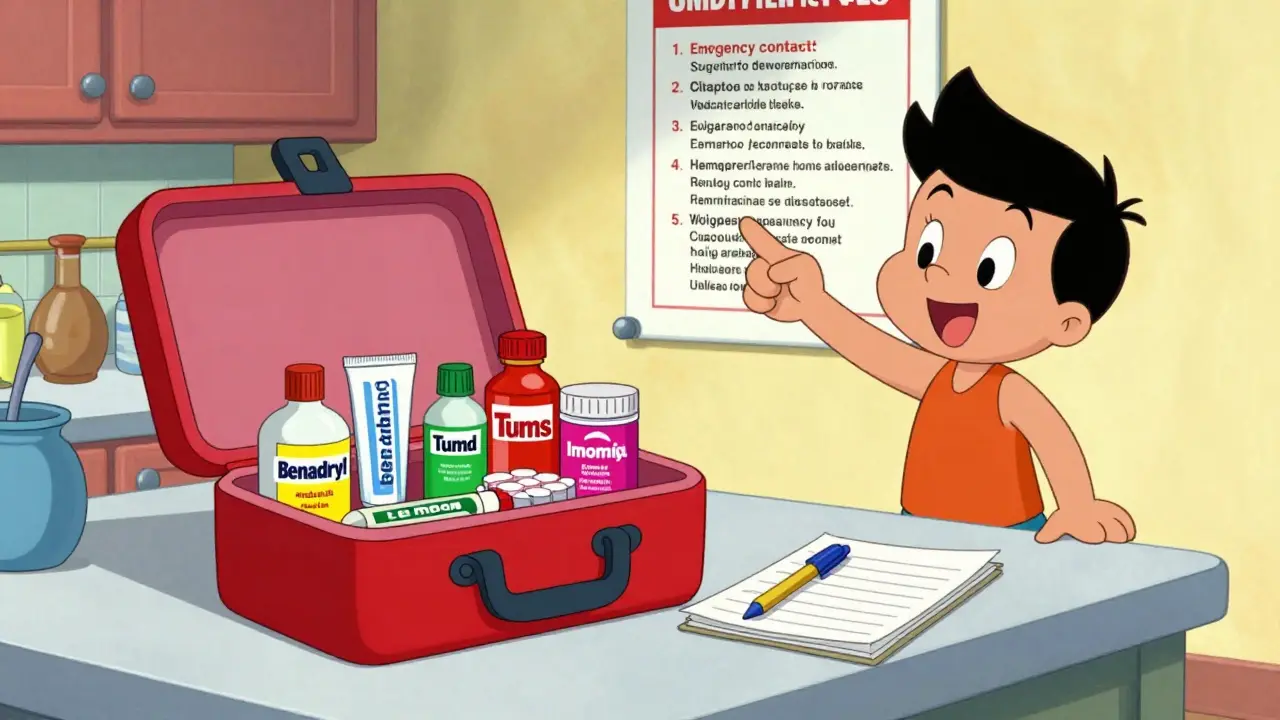
Your kit should include OTC drugs that target the most common side effects. Don’t guess-use what experts recommend.
- Antihistamines (diphenhydramine/Benadryl): For itching, swelling, or hives from allergic reactions. About 5-10% of people experience these after taking new meds. Keep tablets or liquid on hand, but never give to children under 2 without a doctor’s advice.
- Hydrocortisone cream (1%): For skin rashes, redness, or irritation. This is one of the most frequent side effects-2-3% of all adverse drug reactions involve the skin. Apply as soon as symptoms show up.
- Antacids (like Tums or Maalox): For heartburn, nausea, or stomach upset. Up to 30% of people on meds like NSAIDs or antibiotics get GI issues. Take them at the first sign of discomfort-don’t wait.
- Imodium (loperamide): For sudden diarrhea, especially after antibiotics. About 25% of antibiotic users get this. Keep it in the kit, but only use it for short-term relief. If diarrhea lasts more than 48 hours, call your doctor.
- Epinephrine auto-injector (EpiPen): Only if prescribed. If you or a family member has a known severe allergy to a medication, this isn’t optional. Anaphylaxis can strike in under 10 minutes. Keep it accessible, not locked away.
- Glucose tablets: For people on insulin or diabetes meds. Low blood sugar from medication interactions can cause confusion, shaking, or fainting. Keep 3-4 tablets in the kit.
- Acetaminophen (Tylenol) or ibuprofen: For fever or mild pain. But be careful-don’t double up. Many cold and flu meds already contain acetaminophen. Taking extra can cause liver damage. The FDA says over 56,000 ER visits each year are from accidental acetaminophen overdose.
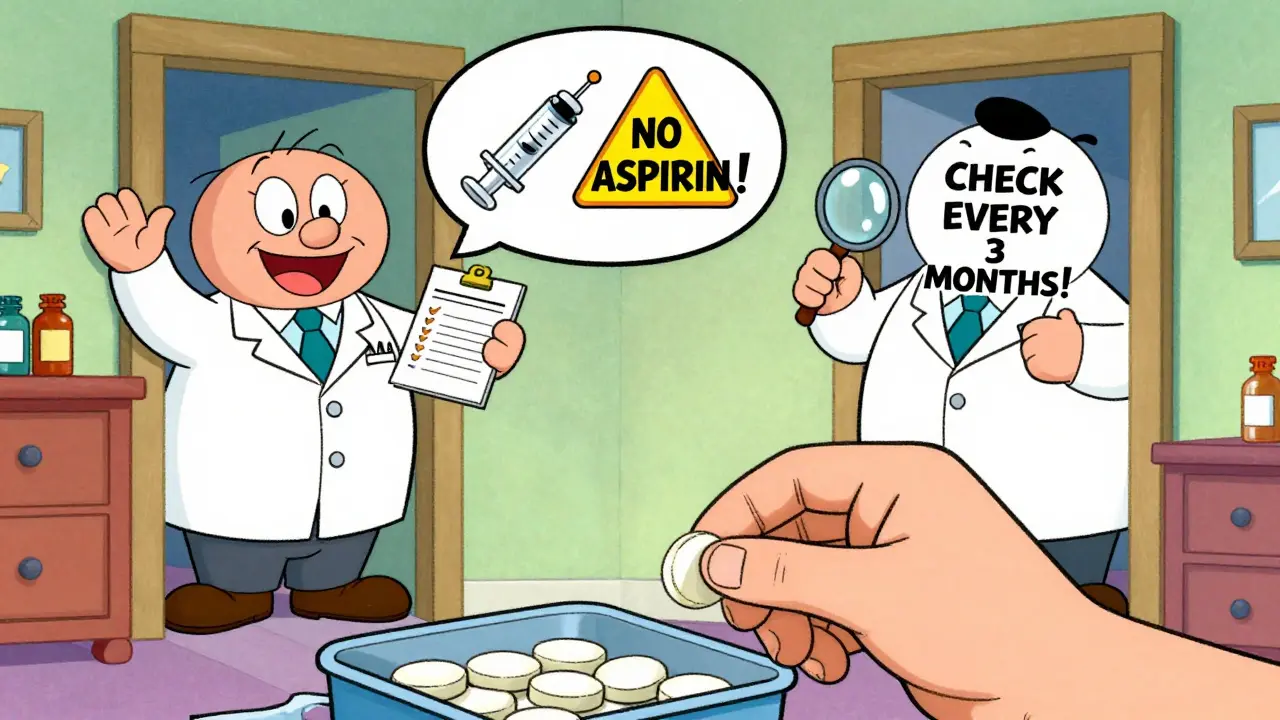
Important: Never give aspirin to children or teens. It can cause Reye’s syndrome, a rare but deadly condition with a 20-40% death rate. Use acetaminophen or ibuprofen instead, dosed by weight.
Emergency Contacts: Don’t Rely on Memory
In a crisis, your brain doesn’t work well. You won’t remember your doctor’s number. You won’t recall the poison control line. That’s why you write it down-on paper, in bold, and in the kit.
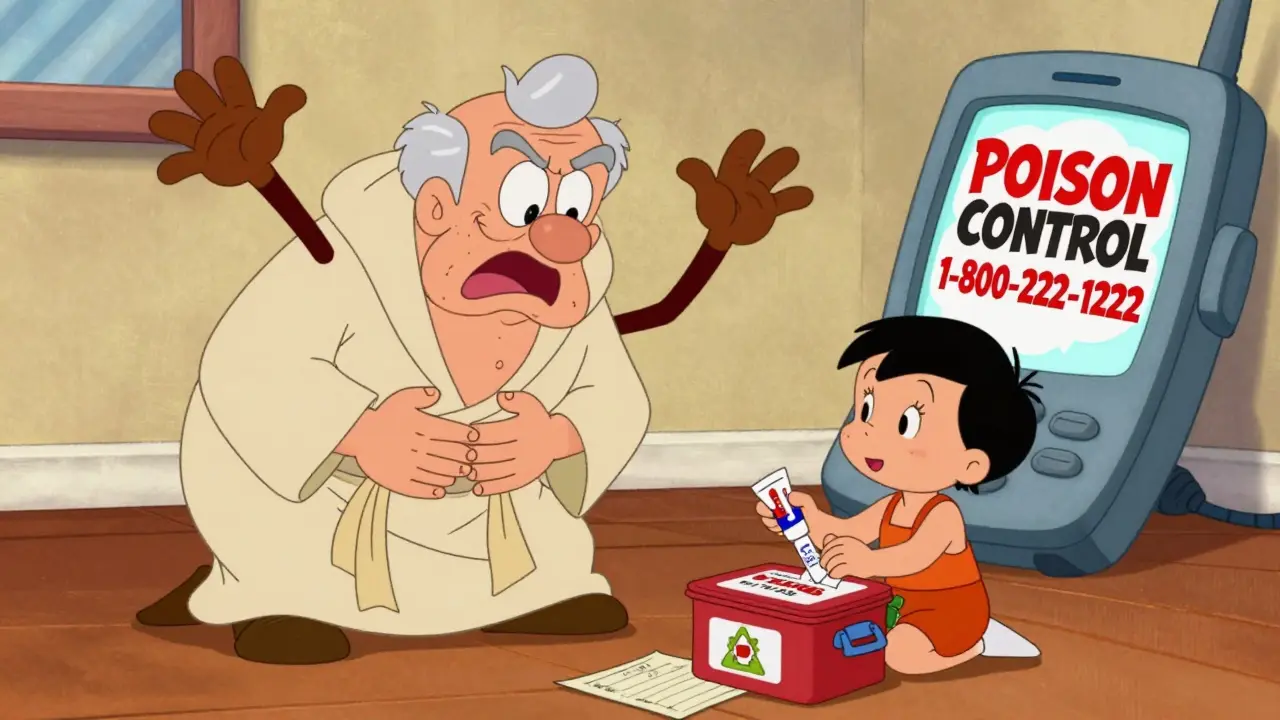
- Poison Control (1-800-222-1222): Free, 24/7, and confidential. In 2022, U.S. poison centers handled over 2 million cases-11% were from medications. Call before you do anything else if you suspect an overdose or strange reaction.
- Your primary care doctor: Include their name, number, and after-hours line.
- Your pharmacist: They know your meds better than anyone. Add their direct line if possible.
- Local emergency services (911): For chest pain, trouble breathing, swelling of the throat, or loss of consciousness. Your kit is for stabilization-not replacement. If it’s life-threatening, call 911 immediately.
- Emergency contacts for children or elderly: Include pediatrician or geriatric specialist numbers if applicable.
Medical Documentation: Your Lifeline for Care
A paramedic won’t know what meds your grandmother takes unless you tell them. And if she’s confused or unconscious, you need to speak for her. That’s why each person in your home needs a printed medical summary.
Each form should include:
- Full name and date of birth
- Current medications (name, dose, frequency)
- Allergies (including reactions: rash, swelling, breathing trouble)
- Previous adverse reactions to meds
- Chronic conditions (diabetes, heart disease, epilepsy)
- Emergency contact names and numbers
Follow the 5 Rights of Medication Safety: right patient, right drug, right dose, right route, right time. Write them on the form. It helps you and healthcare providers avoid mistakes.
Also include a week’s supply of essential meds that can’t be stopped suddenly-like beta-blockers or antidepressants. Stopping these cold turkey can cause dangerous withdrawal symptoms in 20-30% of users.
Storage and Maintenance: Keep It Ready
A kit full of expired pills or melted cream is useless. You need to treat this like your smoke detector: check it regularly.
- Location: Store in a cool, dry place-not the bathroom. Heat and moisture ruin meds. A kitchen cabinet or bedroom drawer works best.
- Accessibility: Keep it where adults can reach it, but out of children’s sight and reach. The CDC says 60,000 kids end up in ERs each year from accidental poisonings.
- Expiration dates: Check every 3 months. Medications lose potency over time-even before their printed date. If it’s expired, replace it.
- Original packaging: Never transfer pills to pill organizers for long-term storage in the kit. Keep them in bottles with labels. You need to know what’s in each one.
- Batteries: If your kit includes a thermometer or digital device, check batteries every 6 months.
Special Considerations: Kids, Seniors, and Chronic Conditions
One size doesn’t fit all. Your kit should match your household’s needs.
For children:
- Use liquid antihistamines and fever reducers-never tablets.
- Dose acetaminophen at 10-15 mg per kg of body weight. Ibuprofen at 5-10 mg per kg.
- Keep a weight chart taped to the inside of the kit lid so you can dose correctly in a hurry.
For seniors:
- People over 65 take an average of 4-5 prescriptions. Include a simplified weekly med schedule with large-print labels.
- Keep a list of all meds, including supplements. Many seniors don’t realize ginkgo or garlic can interact with blood thinners.
- Include a small magnifying glass for reading tiny labels.
For chronic conditions:
- If you take insulin, add glucose tablets and a glucagon kit if prescribed.
- If you have epilepsy, include a seizure action plan and rescue meds like diazepam nasal spray (if prescribed).
- If you have heart disease, keep aspirin (81 mg) in the kit-but only chew it if you suspect a heart attack and your doctor has approved it.
What NOT to Include
Some things seem helpful but aren’t. Avoid these:
- Activated charcoal: Older guides suggested it for overdoses, but the American Academy of Clinical Toxicology says it doesn’t work for most drugs and can cause harm if misused.
- Unlabeled pills: Never store random pills from old prescriptions. Throw them away properly.
- Alcohol wipes or hydrogen peroxide: These don’t help with drug reactions and can irritate skin.
- Multiple painkillers: Don’t stack acetaminophen, ibuprofen, and aspirin. It increases overdose risk.
Document Reactions-It Helps Doctors
When you get a side effect, write it down. Not just what happened-but when, how bad, and what you did.
Include a small notepad and waterproof pen in your kit. Record:
- Time the med was taken
- Time symptoms started
- What symptoms appeared (rash? dizziness? nausea?)
- What you took from the kit and when
- Whether symptoms improved or got worse
The American Medical Association says detailed notes improve diagnostic accuracy by 40% in emergency cases. That could mean faster, safer care.
Final Rule: Call for Help-Don’t Guess
Your kit is a bridge-not a destination. It buys you time. It doesn’t replace professional care.
If you’re unsure whether it’s an emergency, call Poison Control at 1-800-222-1222. They’re trained to tell you if you need to go to the ER or can wait. Don’t wait until you’re panicked. Keep the number taped to the front of the kit.
And if someone is having trouble breathing, chest pain, swelling in the throat, or becomes unconscious-call 911 immediately. Don’t wait. Don’t try to drive them yourself. Emergency responders are trained for this.
Build It Once. Check It Often.
This isn’t a one-time task. Set a reminder every three months-like a calendar alert-to review your kit. Replace expired meds. Update medical forms. Add new prescriptions. Talk to your pharmacist about what you’re keeping. They can tell you what’s safe, what’s outdated, and what you might be missing.
Medication side effects aren’t rare. They’re common. But they’re manageable-if you’re ready. A well-stocked, well-organized kit gives you control when things go wrong. And that peace of mind? It’s worth more than the cost of a few bottles of pills and a notepad.
What should I include in a home emergency kit for medication side effects?
Your kit should include antihistamines like diphenhydramine for allergic reactions, hydrocortisone cream for skin rashes, antacids for stomach upset, loperamide for diarrhea, and glucose tablets if you take insulin. If prescribed, include an epinephrine auto-injector. Also add emergency contact numbers, medical history forms for each person, a notepad to record symptoms, and a waterproof pen. Keep everything in original packaging and check expiration dates every three months.
Can I use my regular first-aid kit for medication side effects?
No. A standard first-aid kit is for cuts, burns, and sprains. It won’t help with allergic reactions, nausea, or low blood sugar from meds. You need a separate kit focused on drug-related side effects. Keep both-your injury kit and your medication kit-but don’t mix them.
Is it safe to keep medications in the bathroom?
No. Bathrooms are hot and humid, which can make pills and creams lose potency faster. Store your kit in a cool, dry place like a bedroom drawer or kitchen cabinet-not near the sink or shower.
What should I do if someone has a severe allergic reaction?
If they have an epinephrine auto-injector, use it right away. Then call 911. Even if symptoms improve, they still need emergency care-reactions can return. If they don’t have an EpiPen, call 911 immediately. Don’t wait to see if it gets worse.
Should I include aspirin in my kit?
Only if prescribed for heart attack risk, and only for adults. Never give aspirin to children or teens-it can cause Reye’s syndrome, a rare but deadly condition. If you’re unsure, skip it. A regular-strength aspirin can be helpful during a suspected heart attack, but only if your doctor has told you to use it.
How often should I check my emergency kit?
Every three months. Check expiration dates on all meds, test batteries if you have a thermometer, and update medical forms if someone starts or stops a medication. Replace anything expired or damaged. Set a phone reminder so you don’t forget.
Do I need to tell my pharmacist about my emergency kit?
Yes. Pharmacists can help you choose the right OTC meds, warn about interactions, and tell you what’s safe for your specific conditions. They can also help you dispose of old meds properly. Bring your list when you refill prescriptions-they’ll often update it for you.
What if I don’t know what side effects my meds can cause?
Ask your pharmacist or doctor when you get a new prescription. Most side effects are listed on the label, but they’re easy to miss. Write them down and add them to your medical form. Common ones include dizziness, nausea, rash, and fatigue. Knowing what to watch for helps you respond faster.
Himanshu Singh
January 23, 2026 AT 23:12Man, this is the kind of post that makes you pause and think. I used to think my first-aid kit was enough until my cousin had a reaction to amoxicillin and we had zero antihistamines. Now I keep Benadryl, hydrocortisone, and a printed med list in my drawer. 🙏 It’s not glamorous, but it’s peace of mind. Check your kit every 3 months like clockwork-your future self will thank you.
Jamie Hooper
January 24, 2026 AT 16:04ok so like… i just threw all my old pills in the trash and called it a day. who even has time for this?? 🤷♂️ also why is everyone so obsessed with paper? my phone has all my meds saved. also epipen?? bro i dont even know what that is.
Patrick Gornik
January 25, 2026 AT 19:03Let’s deconstruct the epistemological fallacy embedded in this ‘medication-side-effects-kit’ paradigm. You’re assuming pharmacological risk is linear, quantifiable, and controllable through material accumulation. But what if the real emergency isn’t the drug reaction-it’s the systemic abandonment of holistic care? The FDA doesn’t care if you have Tums in your drawer; they care about profit margins. Your ‘kit’ is a Band-Aid on a hemorrhage. And don’t even get me started on ‘Glucose tablets’-a neoliberal fantasy for diabetics who can’t afford insulin. You’re not preparing-you’re performing preparedness. The real solution? Universal healthcare. Until then, you’re just stocking up on placebo safety.
Luke Davidson
January 26, 2026 AT 14:25I love this so much. My mom’s on 7 meds and I used to panic every time she felt a little dizzy. Now we have the kit-printed forms, EpiPen (she’s allergic to sulfa), glucose tabs, and a little notepad where we log every weird symptom. Last month she got a rash from a new blood pressure pill, we used the cream, called poison control, and they told us to wait it out. No ER. No stress. Just calm, smart prep. Seriously, do this. It’s not about fear-it’s about love. 💙
Karen Conlin
January 28, 2026 AT 09:07THIS. IS. EVERYTHING. I’m a nurse and I’ve seen too many people show up to the ER because they didn’t know what was happening. Your kit isn’t just a collection of pills-it’s a lifeline. I give this exact list to every new parent, every senior citizen, every caregiver I meet. And yes, the bathroom is the WORST place to store meds. Moisture turns your pills into science experiments. Keep it in the bedroom. Write it down. Update it. And for the love of all that’s holy, don’t ignore expiration dates. Your grandma’s antihistamine from 2018 isn’t gonna save anyone. 🙌
asa MNG
January 29, 2026 AT 12:50ok but like… what if the kit gets stolen?? i mean, what if someone breaks in and takes your epipen?? or what if your kid finds it and thinks it’s candy?? i saw this one video on tiktok where a kid ate 12 benadryl and had to be airlifted?? and what if your meds are expired but you forgot?? what if the poison control line is busy?? and what if your printer jams when you’re trying to print the med list?? like… this whole thing feels like a trap?? 😭
Sawyer Vitela
January 31, 2026 AT 00:3470% of adults take prescription meds? That’s not a statistic-it’s a failure. The real emergency kit is a functional healthcare system. This post is just glorified consumerism wrapped in fear. You don’t need glucose tablets-you need affordable insulin. You don’t need hydrocortisone-you need doctors who listen. Stop buying into the myth that individual prep fixes institutional collapse.
Shanta Blank
January 31, 2026 AT 17:24Okay but I’m just gonna say it-this whole thing is a scam. Who the hell has time to check expiration dates every 3 months? Who even remembers what their 3-year-old’s weight is? And why is everyone acting like this is new? I’ve been doing this since 2012. Also, why is the author so obsessed with paper? I have a digital vault. I have a blockchain-medical-record NFT. You’re all living in 2008. 🤦♀️
Viola Li
February 1, 2026 AT 08:31Why are we normalizing the idea that people need to DIY their own emergency medical response? This isn’t empowerment-it’s the collapse of public health. If you need an EpiPen for a drug reaction, that means your doctor prescribed something dangerous. If you need glucose tablets, your insulin is too expensive. This isn’t a checklist-it’s a cry for help. And we’re turning it into a Pinterest project.
Dolores Rider
February 2, 2026 AT 23:52ok but what if the government is secretly using these kits to track us?? i heard they put microchips in the antacids now. and the poison control number? it’s not a number-it’s a backdoor. i called once and they asked me my zodiac sign. i’m not joking. also my neighbor says the epipen contains nanobots that sync with your phone. i’m not paranoid. i’m PREPARED. 🕵️♀️💊👁️