
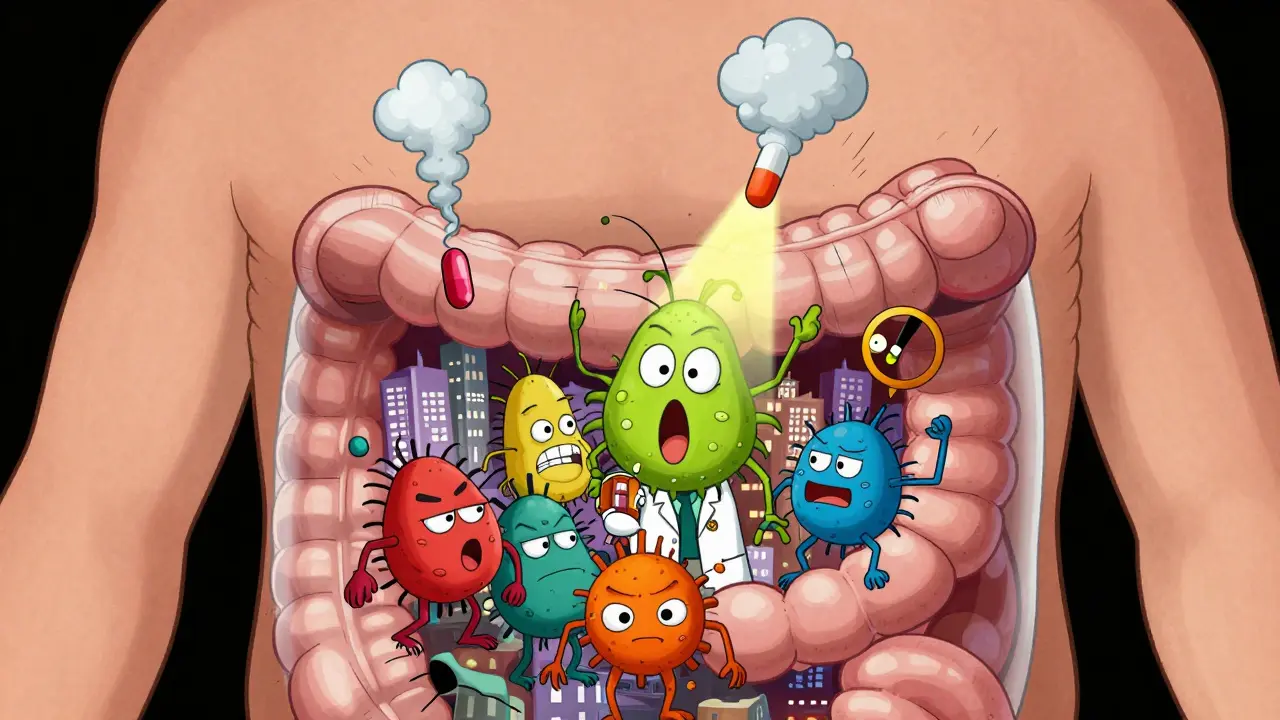
Why do some people have terrible side effects from a drug that works fine for others? It’s not always about dosage, age, or liver function. A growing body of research shows the real culprit might be living inside you-your gut bacteria.
The Hidden Drug Factory in Your Gut
Your gut is home to trillions of bacteria, viruses, and fungi. Together, they make up your microbiome. For decades, doctors thought of these microbes as passive residents, maybe helping with digestion or immune function. But now we know they’re active players in how your body handles medicine. In 2019, scientists at Yale found that gut bacteria directly change the chemical structure of three common drugs, turning them into toxic compounds. In some cases, up to 80% of the harmful metabolites circulating in the blood came from bacterial enzymes, not the human body. That means two people taking the same pill could end up with completely different levels of poison in their system-just because of their gut bugs. This isn’t rare. A 2022 analysis identified 63 widely used drugs that are affected by the microbiome. That includes painkillers, antidepressants, chemotherapy agents, and heart medications. The gut microbiome doesn’t just break down drugs-it can activate them, deactivate them, or turn them into something dangerous.How Bacteria Turn Medicine Into Toxins
Bacteria have their own set of enzymes, and they use them to break down food. But they don’t care if the compound they’re chewing on is a drug. They treat it like lunch. One of the clearest examples is the chemotherapy drug irinotecan. It’s designed to kill cancer cells, but it also damages the lining of the gut. Why? Because gut bacteria produce an enzyme called beta-glucuronidase. This enzyme reverses a safety step built into the drug, turning a harmless waste product back into a potent toxin called SN-38. In 30-40% of patients, this leads to severe, sometimes life-threatening diarrhea. Studies show the more beta-glucuronidase activity a patient has, the worse their diarrhea gets-correlation is 0.87, meaning it’s almost predictable. Another example is digoxin, a heart medication. About 10-30% of people don’t respond to it at all. Why? Their gut contains a specific bacterium, Eggerthella lenta, that breaks down digoxin before it can be absorbed. If you have this bug, the drug just passes through you. No effect. Even common drugs like clonazepam, used for seizures and anxiety, behave differently in people with different gut bacteria. In germ-free mice (those raised without any microbes), clonazepam levels in the blood were 40-60% higher than in normal mice. That means the microbiome is actively removing it-so if you have a different mix of bugs, you might need a higher or lower dose.When Bacteria Make Medicine Work
It’s not all bad. Sometimes, bacteria are the reason a drug works at all. Take prontosil, an early antibiotic from the 1930s. It’s useless on its own. But once it hits the gut, bacteria chop it apart and release sulfanilamide-the real active ingredient. Without gut microbes, prontosil doesn’t work. In mice treated with antibiotics, its effectiveness dropped from 90% to just 12%. Other drugs, like the painkiller nitrazepam, become less toxic when gut bacteria are removed. In rodent studies, antibiotics cut the risk of birth defects caused by nitrazepam by 78%. That’s not a side effect-it’s a hidden mechanism. The drug itself isn’t the problem. The bacteria turning it into something harmful are. This flips the script on how we think about drug safety. It’s not just about what’s in the pill. It’s about what’s in your gut.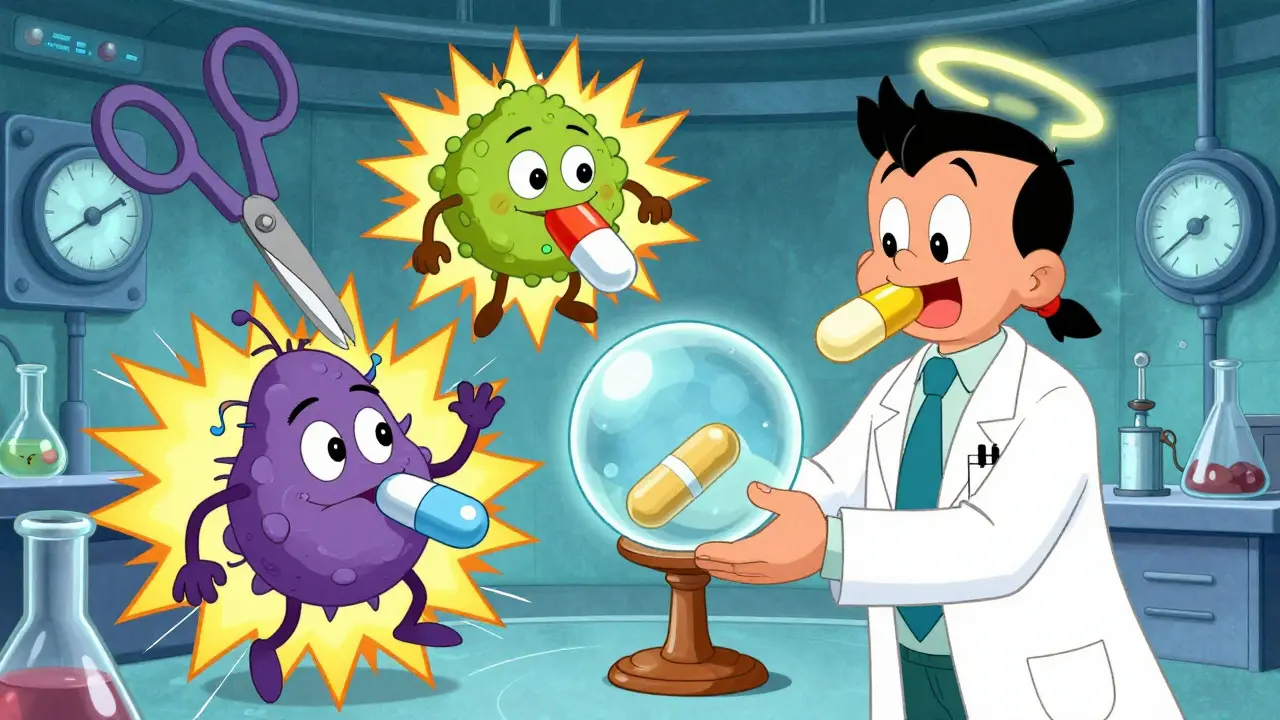
Why This Matters for Your Health
Adverse drug reactions send over 1.3 million people to U.S. emergency rooms every year. Many of these cases are labeled "unexplained." But now, we’re starting to see patterns. A patient who gets violent diarrhea after chemotherapy? Maybe their gut has too much beta-glucuronidase. A person whose blood pressure meds don’t work? Maybe they have Eggerthella lenta in their colon. This isn’t theoretical. Pharmaceutical companies are already acting on it. Since 2020, Pfizer and Merck have started testing new drugs against human fecal samples in Phase I trials. Why? To catch microbiome-related problems before the drug hits the market. It adds about $2.5 million to development costs-but saves an estimated $500 million in lawsuits, recalls, and patient harm down the line. The FDA and European Medicines Agency now recommend microbiome testing for drugs with narrow safety margins, especially in oncology. By 2025, 65% of new cancer drugs will include microbiome data in their approval packages. Neurology and cardiology are catching up.What Can You Do Right Now?
You can’t change your genes. But you can influence your microbiome. If you’re on a drug that’s causing unexpected side effects, talk to your doctor about your gut health. Ask: Could my gut bacteria be affecting how this drug works? There are already tools to test for this. A simple stool test-costing $300-$500-can screen for key bacterial enzymes like beta-glucuronidase or genes linked to drug metabolism. It’s not yet standard care, but it’s available. In some cases, doctors are using targeted approaches:- For patients on irinotecan: Beta-glucuronidase inhibitors are in clinical trials and have reduced diarrhea by 60-70%.
- For those with digoxin resistance: Probiotic strains that block Eggerthella lenta are being tested in Phase I trials.
- For people on long-term antibiotics: Monitoring cholesterol levels is critical-some statins lose up to 35% of their effect if gut bacteria are wiped out.
The Future: Personalized Medicine Based on Your Gut
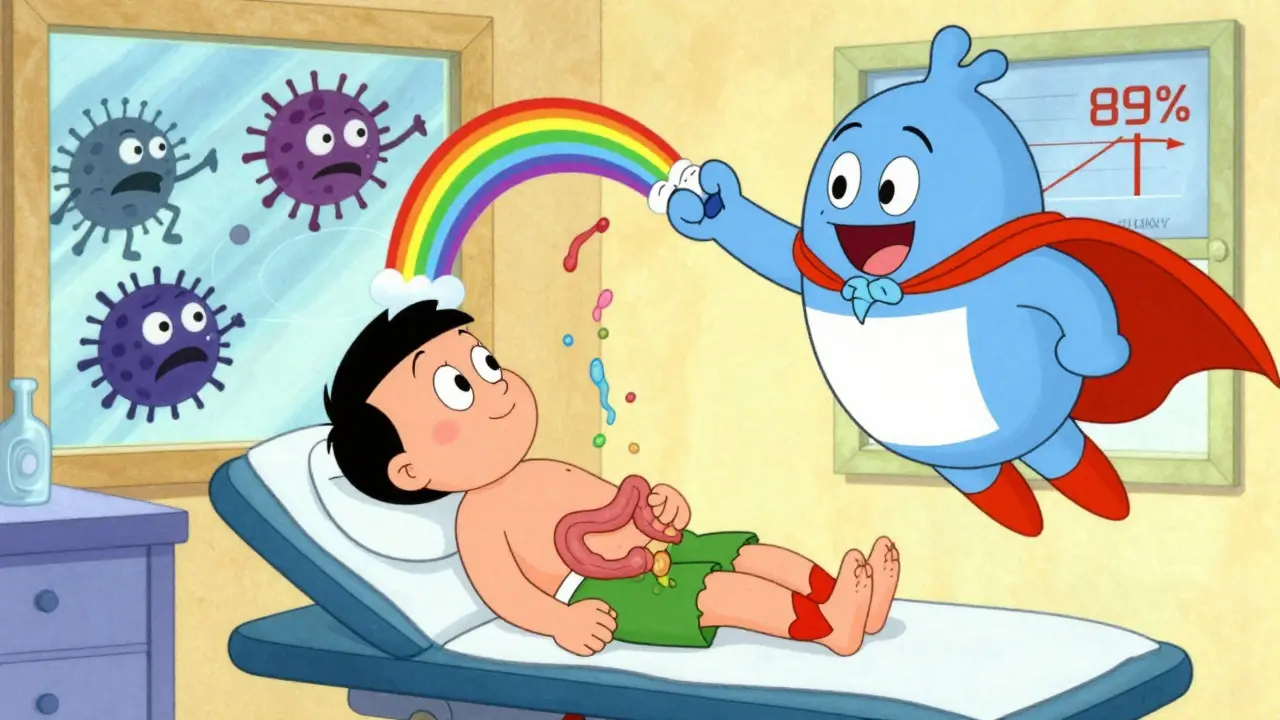
The next big leap isn’t just testing your microbiome-it’s customizing your treatment around it. Researchers are building algorithms that predict how your gut will handle a drug based on your bacterial profile. Early models already predict drug metabolism with 89% accuracy. By 2030, doctors may prescribe not just a drug, but a specific probiotic combo to go with it. Imagine this: You’re diagnosed with colon cancer. Before your first chemo, you get a stool test. The results show high beta-glucuronidase. Your doctor prescribes a short course of a beta-glucuronidase blocker before starting irinotecan. Your diarrhea risk drops from 40% to under 10%. The NIH has invested $14.7 million in this area through 2025. Global spending on microbiome-based therapies is expected to hit $1.8 billion by 2027. This isn’t science fiction. It’s the next chapter in medicine.What’s Still Unknown
We’re still early in this field. Not every drug interaction is mapped. We don’t yet know how diet, stress, or sleep affect drug-metabolizing bacteria long-term. And here’s the catch: drugs can also harm your microbiome. Antibiotics are the obvious one-but even antidepressants, NSAIDs, and metformin can shift your gut balance in ways we don’t fully understand. This creates a loop: a drug changes your bacteria, your bacteria change how the drug works, and that affects your health again. It’s complex. But that complexity is exactly why we can’t ignore it anymore.Final Thought: Your Gut Is Part of Your Prescription
Your doctor prescribes a pill. But your gut decides whether that pill helps, hurts, or does nothing. The future of safe, effective medicine won’t just be about what’s in the bottle-it’ll be about what’s in you.Can gut bacteria make my medication less effective?
Yes. Certain gut bacteria can break down drugs before your body absorbs them. For example, the bacterium Eggerthella lenta inactivates digoxin, a heart medication, in about 10-30% of people. If you have this bug, the drug won’t work-even at normal doses. Similar effects have been seen with some antidepressants and chemotherapy drugs.
Can probiotics help reduce drug side effects?
In some cases, yes. Clinical trials are testing probiotics designed to block harmful bacterial enzymes. For example, beta-glucuronidase inhibitors have reduced severe diarrhea in chemotherapy patients by 60-70%. Probiotic strains that compete with drug-metabolizing bacteria are also being developed. But over-the-counter probiotics aren’t proven for this yet-always talk to your doctor before trying anything new.
Should I get my gut microbiome tested if I’m on long-term medication?
It’s not standard yet, but it’s becoming more common-especially for drugs like chemotherapy, digoxin, or antidepressants with unexplained side effects or poor response. Stool tests that screen for key metabolic genes cost $300-$500 and can identify if your gut bacteria are likely breaking down your medication. Ask your doctor if testing could help explain your symptoms.
Do antibiotics affect how drugs work?
Absolutely. Antibiotics wipe out gut bacteria, which can either reduce drug toxicity (like with nitrazepam) or reduce drug effectiveness (like with statins or prontosil). One study showed long-term antibiotic use cut lovastatin’s effectiveness by 35%. Even a single course can alter drug metabolism for weeks or months.
Is this why some people have bad reactions to common drugs?
Yes. For decades, doctors blamed liver function or genetics for unexplained side effects. Now we know gut bacteria play a major role. For example, up to 73% of the toxic metabolite from one antiviral drug comes from gut microbes-not the human body. This explains why two people can take the same pill and have completely different experiences.
Anu radha
December 18, 2025 AT 01:02This made me think about my mom. She was on that heart pill for years and nothing worked. Turns out she had that bacteria. No one ever told her to check her gut. I wish doctors would talk about this more.
Victoria Rogers
December 18, 2025 AT 01:50so like... your gut is just a drug dealer now? cool. next they’ll say your colon is voting republican. this is why americans are so sick. we eat too much kale and think bacteria are magic.
Steven Lavoie
December 18, 2025 AT 20:35What’s fascinating is how this bridges ancient wisdom and modern science. Traditional medicine systems across Asia and the Middle East have long emphasized gut health as central to overall wellness. Now we’re seeing the molecular proof. This isn’t just about drugs-it’s about redefining what ‘internal balance’ means in a biomedical context.
Brooks Beveridge
December 20, 2025 AT 07:34Man, this is wild. 🤯 Think about it-your gut bacteria are literally your co-prescriber. You take a pill, but your microbes decide if it’s a miracle or a nightmare. It’s like your body has a secret team running interference. Don’t panic, but maybe start eating more fiber. Your bugs will thank you.
Radhika M
December 21, 2025 AT 15:34I work in a clinic in Delhi. We had a patient on chemo who got terrible diarrhea. We asked about diet, meds, everything. Then I remembered this study. We did a stool test. High beta-glucuronidase. Gave him a simple probiotic from the pharmacy. His diarrhea dropped in a week. No fancy drugs. Just science.
Philippa Skiadopoulou
December 22, 2025 AT 15:47There is compelling evidence here. However, clinical translation remains limited. Without standardized testing protocols and regulatory frameworks, microbiome-based diagnostics cannot be routinely implemented. Cost and accessibility remain significant barriers.
Pawan Chaudhary
December 23, 2025 AT 04:49This is actually super hopeful! Like, if your gut is messing with your meds, then fixing your gut might fix your whole treatment. No need to give up on pills-just give your bacteria some love. Eat veggies, sleep well, chill out. Your insides will do the rest. 💪
Linda Caldwell
December 24, 2025 AT 05:24So let me get this straight-my poop is the real doctor? I’m not mad. I’m impressed. I’ve been eating kimchi since 2020 and now I know why my anxiety meds finally worked. Gut health isn’t a trend. It’s the new baseline. Who knew?
CAROL MUTISO
December 25, 2025 AT 20:04Oh wow, so now my gut is a pharmaceutical lab? And I didn’t even get a union card? Guess I’m just a walking bioreactor now. Great. Next they’ll charge me rent for the microbes living in my colon. At least they’re not unionizing. Yet.
Erik J
December 25, 2025 AT 20:28Interesting. But how many of these drug-microbiome interactions are causal versus correlational? The studies cited show association, but not always mechanism. Replication in diverse populations is still limited.
BETH VON KAUFFMANN
December 27, 2025 AT 02:12Let’s be real. This is just pharmacogenomics with a microbiome veneer. We’ve known for decades that individual metabolism varies. Now we’re slapping ‘gut’ on it and calling it innovation. The FDA’s pushing this because they’re out of ideas. $1.8B by 2027? That’s a marketing budget, not science.
Martin Spedding
December 28, 2025 AT 06:50my gut is a drug cartel and i didn’t even get a cut. this is why i hate science. one day you’re healthy, next day your poop is sabotaging your heart meds. someone call the fbi.
Nishant Desae
December 29, 2025 AT 16:28I’ve been reading up on this since my cousin got sick after chemo. I didn’t know it was her gut. Now I’m eating fermented foods daily, cutting sugar, and even taking a probiotic that targets beta-glucuronidase. I don’t know if it’s helping, but I feel better. And honestly? I’m not scared of my gut anymore. I’m kind of proud of it. It’s doing a lot of heavy lifting I never knew about. We treat our guts like trash cans, but they’re actually the most complex organ we’ve got. Maybe we should stop treating them like something to be fixed and start treating them like a partner. It’s not just about drugs-it’s about respect. Your gut has been with you since day one. Maybe it’s time we listened.
Meghan O'Shaughnessy
December 29, 2025 AT 21:40As someone raised in a household where food was medicine, this makes total sense. My grandmother never gave me pills-she gave me yogurt, turmeric, and silence. Turns out she was onto something. This isn’t new science. It’s old wisdom with a lab report.