
Why Your Family Needs a Medication Routine
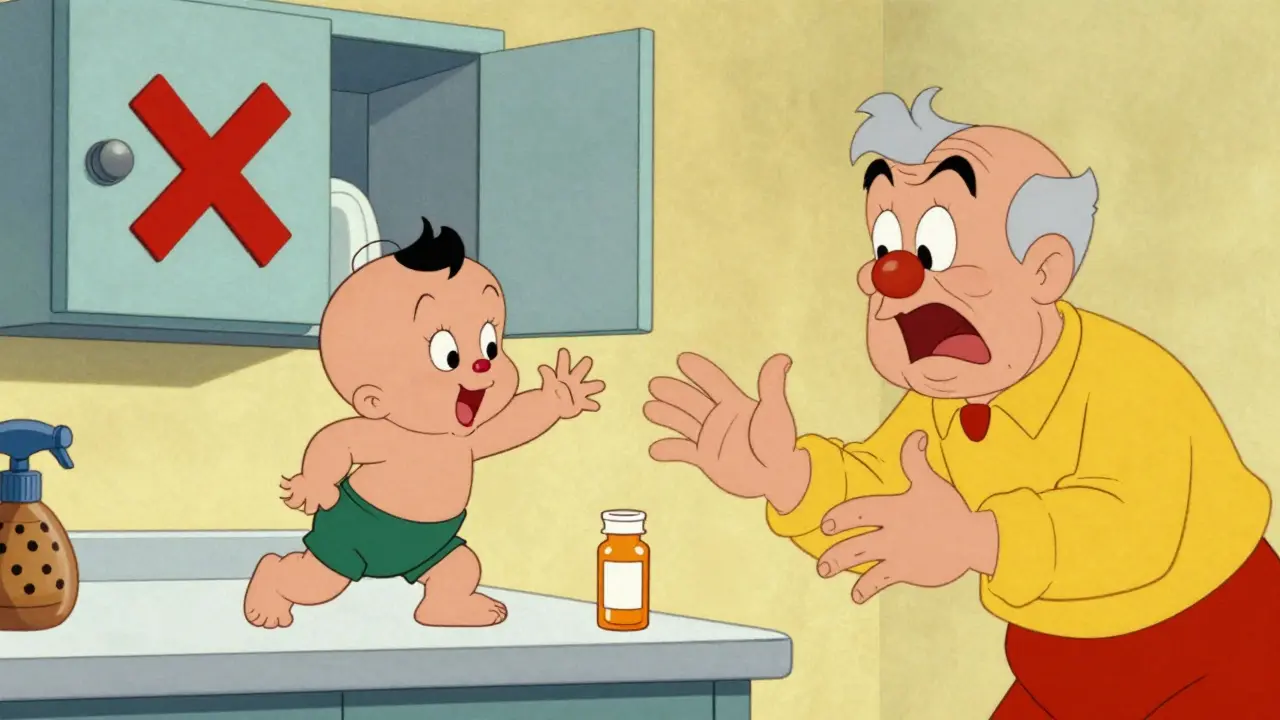
Every year, tens of thousands of children end up in the emergency room because they got into medicine they weren’t supposed to. Most of these accidents happen in the home - not in a hospital, not at school, but right where your family lives. A grandparent leaves a pill bottle on the counter. A toddler climbs up to reach a medicine bottle in a bathroom cabinet. A caregiver mixes up doses because two pills look alike. These aren’t rare mistakes. They’re common, preventable, and often deadly.
Creating a safe medication routine isn’t about being perfect. It’s about building simple, repeatable habits that protect everyone in your home - especially young kids and older adults who are most at risk. The CDC says 80% of pediatric medication poisonings happen when someone other than the parent is watching the child. That means even well-meaning caregivers can accidentally put your family in danger.
Store Medications Up and Away - and Locked
The old advice - "just keep it out of reach" - isn’t enough anymore. Kids are climbers. They pull themselves up on chairs, countertops, and even diaper bags. A 2022 study found that storing medications at eye level or higher reduced pediatric exposures by 34%. But even that’s not enough if the container isn’t locked.
Here’s what works: keep all medications - prescriptions, over-the-counter pills, vitamins, even topical creams - in a locked cabinet. Not just any cabinet. One with a childproof latch or a key lock. Don’t rely on child-resistant caps alone. They’re designed to slow down kids, not stop them. And don’t store meds in the bathroom. Humidity from showers and sinks can ruin the potency of pills and liquids.
If you have opioids in the house - like oxycodone, hydrocodone, or fentanyl patches - you need to be extra careful. These can be deadly in tiny amounts. Keep them locked away, and consider having naloxone (Narcan) on hand. It’s the only thing that can reverse an opioid overdose. Keep it in the same locked cabinet, but make sure everyone who cares for your kids knows where it is and how to use it.
Use the Five Rights Every Time You Give Medicine
When you hand a pill to your child or help your parent take their meds, pause for five seconds. Ask yourself these five questions:
- Right child? Is this medicine meant for the person I’m giving it to?
- Right medication? Is this the exact name on the prescription label? (Generic and brand names can be different.)
- Right dose? Are you using the right tool? A teaspoon isn’t accurate. Use the oral syringe that came with the medicine.
- Right route? Is this meant to be swallowed, applied to the skin, or inhaled? Don’t give an eye drop orally.
- Right time? Is it the correct time of day? Some meds need to be taken with food, others on an empty stomach.
These aren’t just hospital rules. They’re lifesavers at home. A 2023 survey found that 28% of medication errors involved giving the wrong dose - often because people used kitchen spoons instead of syringes. If your child’s medicine comes with a syringe, use it. Always.
Keep a Master Medication List - and Update It
Most families don’t know exactly what everyone is taking. They forget about the vitamin D, the fish oil, the herbal tea, the cough syrup from last winter. But all of these can interact with prescriptions.
Make a master list for every person in your home. Include:
- Brand and generic names
- Dosage and frequency
- Why it’s prescribed
- Start date
- Any side effects you’ve noticed
Write it down. Print it. Put it on the fridge. Keep a copy in your wallet or phone. Update it every time a doctor changes a prescription - even if it’s just a dose adjustment.
Every six months, do a "brown bag" check. Gather every pill bottle, liquid, patch, and supplement from your medicine cabinet. Take them to your pharmacist. They’ll spot duplicates, interactions, and drugs that are no longer needed. A 2022 study showed this cuts adverse drug events by 27%.
Use Pill Organizers and Digital Reminders
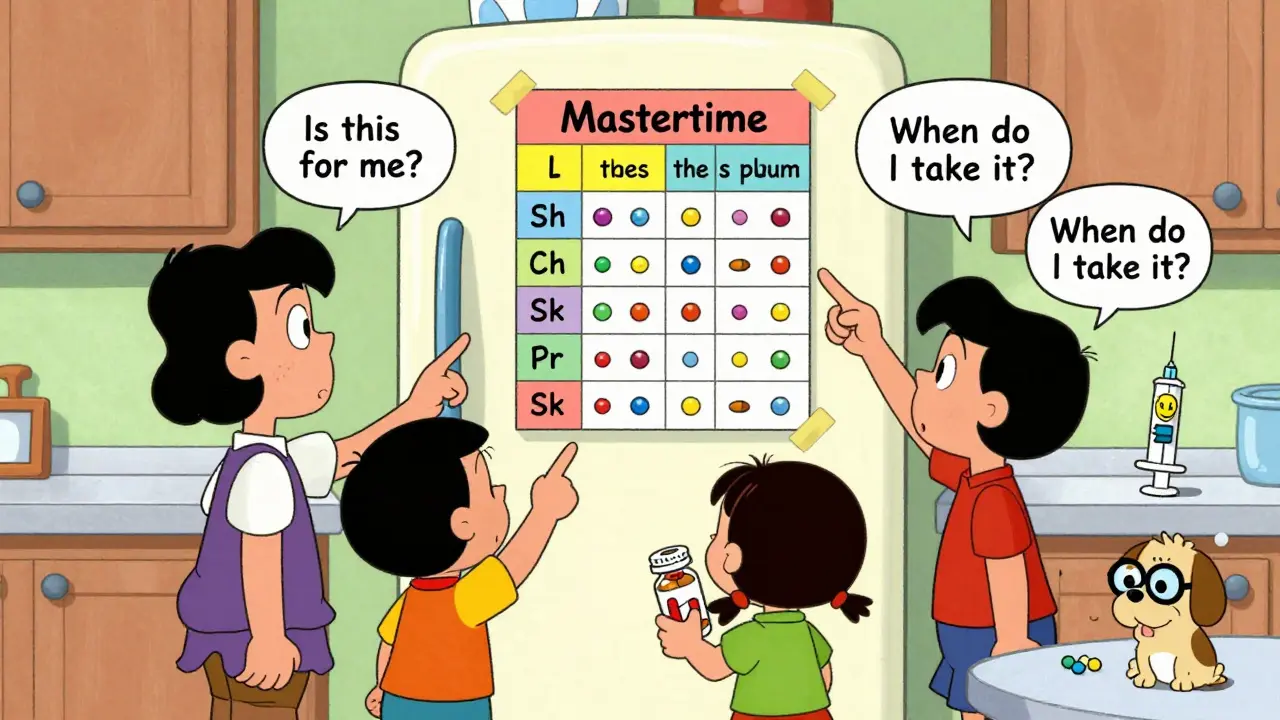
If someone in your family takes five or more medications daily, you’re at high risk for errors. The American Geriatrics Society says 15% of hospital visits for seniors are caused by bad medication use. A simple 7-day pill organizer can cut that risk dramatically.
Look for ones with alarms, or pair a basic organizer with a phone app like Medisafe or MyTherapy. Set daily reminders. But don’t rely on tech alone. Many older adults abandon apps after a few weeks. Combine digital alerts with a visual cue - like a sticky note on the coffee maker or a colored tape on the cabinet door.
One caregiver on Reddit color-coded all pill bottles with painter’s tape: red for morning meds, blue for night. She said it cut her mistakes by 60%. You don’t need fancy gadgets. You just need consistency.
Know What to Do When You Miss a Dose
Life happens. You’re late for work. Your parent sleeps through the alarm. You forget the pill on a trip.
Don’t panic. Don’t double up. Here’s what to do:
- If you miss a dose, give it as soon as you remember.
- If it’s almost time for the next dose, skip the missed one.
- Never give two doses at once unless your doctor says so.
Some meds, like antibiotics or blood pressure pills, need strict timing. Others, like vitamins, are more forgiving. Check the label or call your pharmacist if you’re unsure. Never guess.
Dispose of Old or Unused Medications Safely
Don’t flush pills down the toilet. Don’t throw them in the trash with the bottle open. Don’t leave them in a drawer for "just in case." Unused meds are a hazard - and a temptation.
Use a drug take-back program. Many pharmacies, hospitals, and police stations have drop boxes. If there’s none nearby, mix pills with coffee grounds or cat litter in a sealed bag before tossing them. Remove personal info from bottles before recycling them.
Getting rid of old meds isn’t just safe - it’s smart. The Institute for Safe Medication Practices says 80% of home medication errors come from cluttered, outdated medicine cabinets.
Teach Everyone in the House
Medication safety isn’t just the parent’s job. Grandparents, babysitters, older siblings - everyone who helps with meds needs to know the rules.
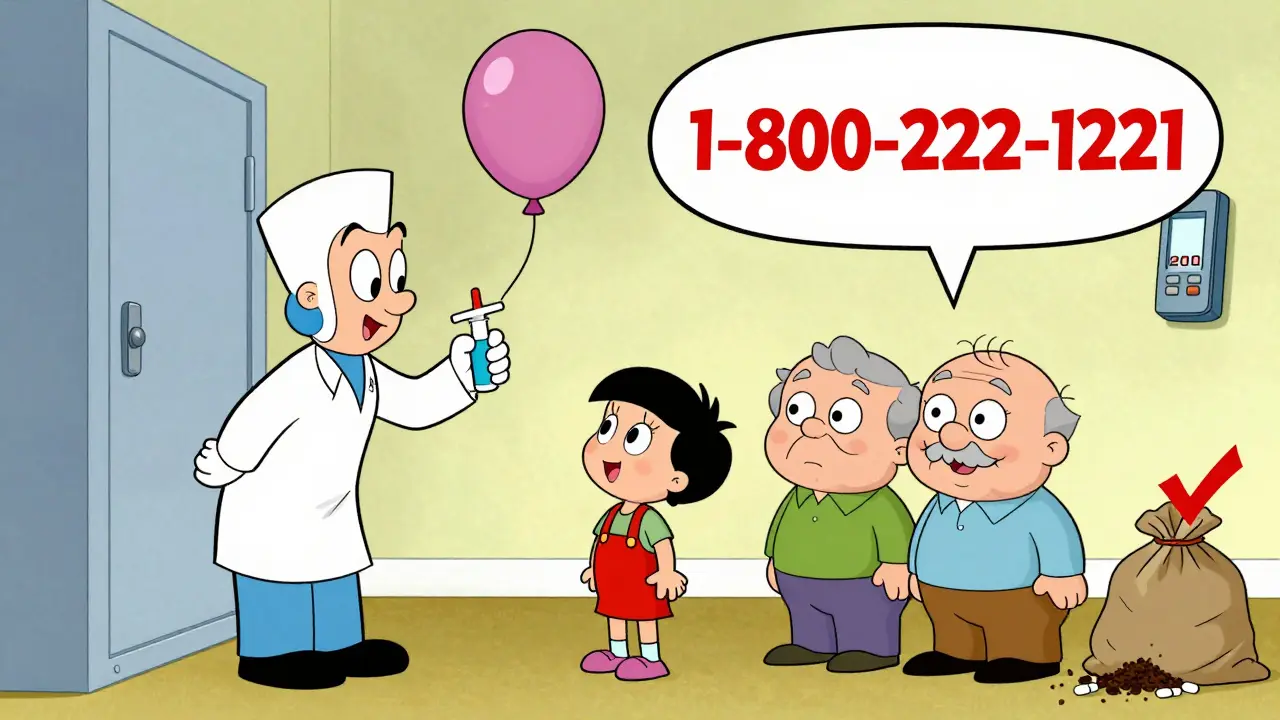
Have a 10-minute family meeting. Show everyone where the meds are stored. Demonstrate how to use the syringe. Point out the master list on the fridge. Explain what to do if a child gets into medicine: call Poison Control immediately at 1-800-222-1222.
Most people don’t know that number. The CDC says 60% of households don’t have it saved. Save it in your phone. Write it on the fridge. Put it on your child’s backpack. In an emergency, seconds matter.
What to Do If Someone Gets Into Medicine
If a child swallows something they shouldn’t - even if they seem fine - call 1-800-222-1222 right away. Don’t wait for symptoms. Don’t try to make them throw up. Don’t give them milk or charcoal unless a professional tells you to.
Keep the medicine bottle handy. The poison control center will ask for the name, dose, and time of ingestion. If you have the bottle, you’ll save precious minutes.
And if someone shows signs of an opioid overdose - very small pupils, slow or shallow breathing, unresponsiveness - give naloxone immediately. Then call 911. Naloxone can bring someone back from the edge. It’s not a cure, but it buys time.
Start Small. Stay Consistent.
You don’t need to overhaul your whole home in one day. Pick one thing to fix this week. Maybe it’s locking the medicine cabinet. Or putting the master list on the fridge. Or switching from a cup to a syringe for liquid meds.
It takes 2 to 3 weeks to build a new habit. Stick with it. Your family’s safety isn’t about being perfect. It’s about being predictable. When everyone knows where the meds are, how to take them, and what to do in an emergency - you’ve done more than just organize pills. You’ve built a shield.
What to Do Next
- Today: Find every medicine in your home. Put them in one place.
- This week: Make a master list for each person. Print two copies.
- Next month: Schedule a brown bag review with your pharmacist.
- Always: Save 1-800-222-1222 in your phone. Tell your family where it is.
Medication safety isn’t a one-time task. It’s a routine - like brushing your teeth or locking your door. Do it every day, and your family will be safer for it.
Madhav Malhotra
January 11, 2026 AT 08:35Jason Shriner
January 12, 2026 AT 20:13Sam Davies
January 13, 2026 AT 07:18Christian Basel
January 13, 2026 AT 09:04Alex Smith
January 14, 2026 AT 00:47Roshan Joy
January 14, 2026 AT 08:34Matthew Miller
January 14, 2026 AT 22:17Alfred Schmidt
January 15, 2026 AT 16:27Sean Feng
January 16, 2026 AT 01:23Adewumi Gbotemi
January 17, 2026 AT 11:45Michael Patterson
January 18, 2026 AT 08:07