
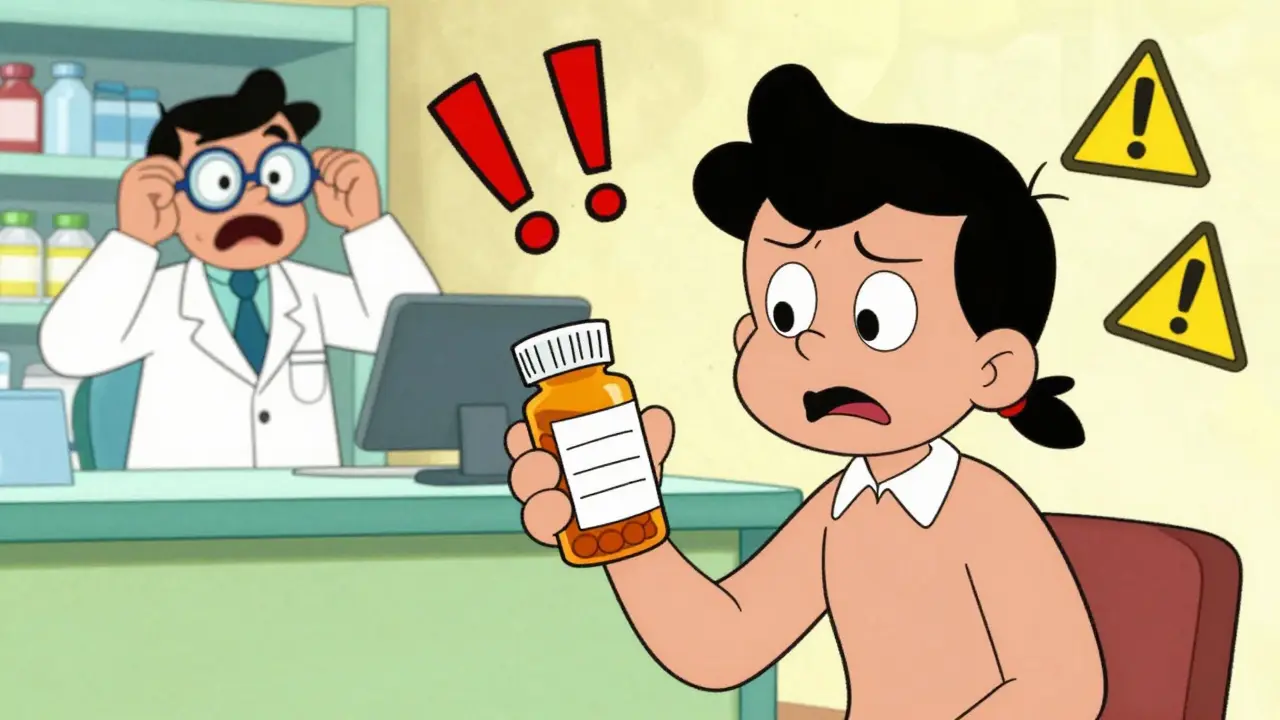
It happens more often than you think. You take your pill, and something feels off. Maybe the tablet looks different. Maybe you were given the wrong dose. Or maybe you started feeling dizzy, nauseous, or broke out in a rash after a new prescription. You’re not imagining it. And you’re not overreacting. Medication errors are one of the most common causes of preventable harm in healthcare - affecting over 5 million people in the U.S. every year. The good news? You have power. You can report it. And doing so might save someone else’s life.
Recognize the Error Before It’s Too Late
The first step isn’t calling your doctor - it’s noticing something’s wrong. Medication errors come in many forms: the wrong drug, the wrong dose, the wrong time, the wrong route (like swallowing a patch meant to be stuck on your skin), or even a drug that clashes dangerously with something else you’re taking. Sometimes it’s obvious - you were prescribed 5mg but got 50mg. Other times, it’s subtle. A new symptom that showed up right after starting a new pill? That’s a red flag. Don’t wait for it to get worse. If you feel different - physically, mentally, emotionally - after a medication change, write it down. Note the date, time, what you took, and how you felt. Take a photo of the pill bottle if the label looks off. Keep the original packaging. These aren’t just memories; they’re evidence.Gather the Facts - Be Specific
When you’re ready to speak up, you need to be clear. Vague complaints like “I think something’s wrong with this medicine” won’t get you far. Providers need details to act. Here’s what you need to collect:- The name of the medication - both brand and generic if you know it
- The dose and form - e.g., 10mg tablet, 5mL liquid
- The prescribed schedule - e.g., “once daily at bedtime”
- The actual dose you received - what the pharmacy gave you or what the nurse administered
- The date and time the error occurred
- Your symptoms - what happened, when, and how bad
- Your medical history - allergies, other conditions, other meds you take
- Who was involved - pharmacist, nurse, doctor’s name if you know it
Start with Your Provider - But Don’t Stop There
Your first call should be to the person who prescribed or dispensed the medication. Call your doctor’s office. Go to the pharmacy. Speak to the nurse. Say clearly: “I believe I experienced a medication error, and I need help.” Don’t soften it with “I’m not sure, but…” or “Maybe I’m wrong.” You’re not guessing - you’re reporting a safety issue. If they dismiss you - “That’s just a side effect,” or “It’s probably nothing” - don’t walk away. Ask: “Can I get a copy of my medical record for this visit?” Under HIPAA, you’re entitled to it within 30 days. If they delay or refuse, escalate. Ask to speak to a patient advocate or the clinic manager. Most hospitals and clinics have one. They’re there to help patients like you.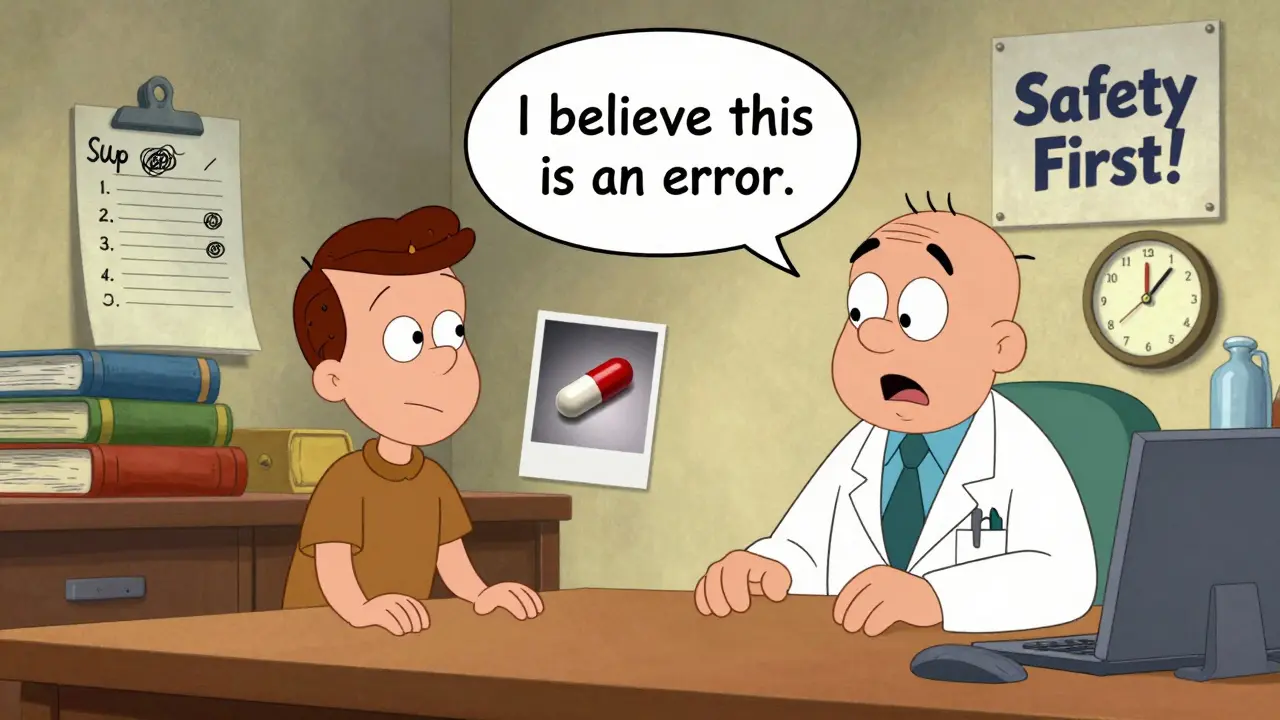
Report It to the Right Place - Beyond Your Provider
Your provider should fix what went wrong. But systemic errors? Those need to go higher. That’s where official reporting comes in. The FDA’s MedWatch program is the national system for reporting medication problems. It’s not just for doctors. Patients can report directly. The FDA gets about 140,000 reports a year - but experts say less than 1% of serious errors are reported. Your report matters. The new online form takes under 10 minutes. You can find it at fda.gov/medwatch. You’ll need the details you gathered. If you have photos of the wrong label or packaging, upload them. If you’ve had a reaction, describe it. The FDA uses these reports to issue recalls, update warnings, and even pull dangerous drugs off the market. Another powerful option is the Institute for Safe Medication Practices (ISMP). They run a confidential, non-punitive reporting system focused on learning, not blame. They’ve helped fix over 200 medication safety issues since 1991. You can report online at ismp.org. They don’t share your identity, and they publish safety alerts that hospitals and pharmacies use to prevent future mistakes.What Happens After You Report?
Many people worry: “Will I get in trouble?” or “Will they stop treating me?” The truth: if you report a medication error, you’re not the problem - the system is. In a well-run healthcare setting, your report triggers a review. A pharmacist might check the dispensing logs. A nurse might review the chart. A safety team might look at how the error happened - was it a mislabeled bottle? A confusing prescription? A rushed handoff? The goal isn’t to punish someone. It’s to fix the process so it doesn’t happen again. You might not hear back right away. Only about 28% of FDA reports get a direct reply. But if you report through your provider, you’re far more likely to get feedback - up to 89% of the time. If you don’t hear anything after two weeks, follow up. Ask: “What did you learn from my report? What’s being done to prevent this?”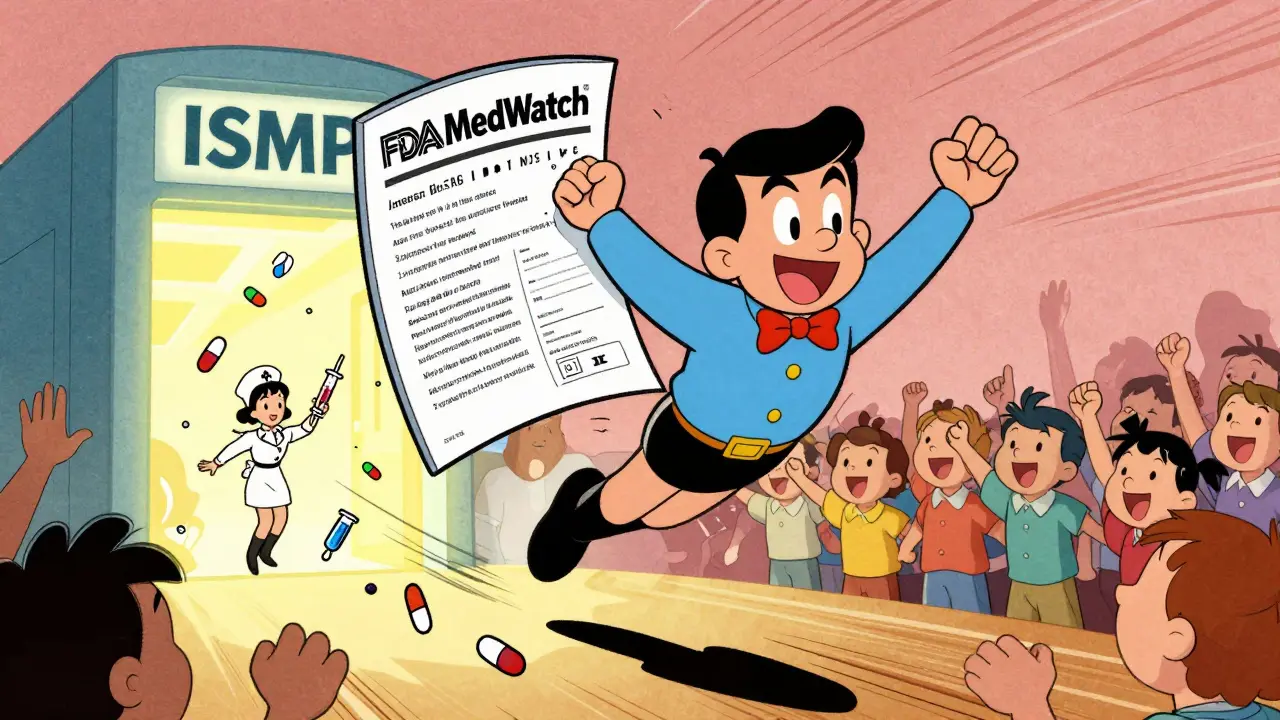
Common Barriers - And How to Beat Them
You’re not alone if you’ve felt ignored. A 2022 survey found that 82% of patients who reported medication errors felt their concerns were dismissed at first. Here’s how to push through:- They say, “It’s not a big deal.” - Respond: “It might not have been serious this time, but it could be deadly next time. I’m reporting to make sure it doesn’t happen to someone else.”
- They won’t give you records. - Say: “I’m entitled to them under HIPAA. If you don’t provide them within 30 days, I’ll file a complaint with the Department of Health and Human Services.”
- They blame you. - “I followed the instructions exactly. The error was in the system, not me.”
- They’re too busy. - Ask to speak to a patient safety officer. They’re paid to handle this.
Why This Matters - More Than You Think
One report might not stop a hospital error. But 100 reports? 1,000? That’s how systems change. The FDA recalled a popular blood pressure drug in 2023 after just 17 patient reports flagged dangerous side effects. A school district in Ohio changed its entire medication protocol after a parent reported a child got the wrong asthma inhaler - twice. Studies show that healthcare organizations that actively encourage reporting reduce repeat errors by up to 75%. That’s not magic. That’s data. And you’re part of that data. You’re not just protecting yourself. You’re protecting the next person who walks into that pharmacy. The next child who gets medicine at school. The next elderly patient who relies on a nurse to get their pills right.What to Do If You’re Still Not Heard
If your provider won’t listen, and official reports go unanswered:- File a formal complaint with your state’s medical board or department of health.
- Reach out to a patient advocacy group like the Patient Advocate Foundation.
- If you suffered serious harm, consider contacting a medical malpractice attorney. Many offer free consultations.
What counts as a medication error?
A medication error is any mistake that happens during prescribing, dispensing, or taking a drug. That includes the wrong drug, wrong dose, wrong patient, wrong time, wrong route (like swallowing a patch), or a drug interaction you weren’t warned about. Even if no harm occurred, it still counts - and should be reported.
Can I report a medication error if I didn’t get hurt?
Yes - and you should. Many errors are caught before they cause harm. These are called “near misses.” Reporting them helps prevent future incidents. In fact, near misses are the most valuable reports because they show where systems are failing before someone gets injured.
Will reporting a medication error get me in trouble?
No. Reporting an error you experienced as a patient does not put you at risk. Healthcare providers are trained to treat patient reports as safety data, not accusations. If you’re concerned about retaliation, report anonymously to the FDA or ISMP. Your identity is protected.
How long do I have to report a medication error?
There’s no strict deadline, but the sooner you report, the better. Internal reports to your provider should be made within 24-72 hours. For the FDA’s MedWatch, report as soon as possible - especially if the medication is still in use. Evidence like pill bottles and symptoms fade over time, making it harder to prove the error.
Do I need a lawyer to report a medication error?
No. You don’t need a lawyer to report an error to your provider, the FDA, or ISMP. Those are safety reports, not legal claims. You only need legal help if you’ve suffered serious harm and want to pursue compensation. Even then, many attorneys offer free consultations to assess your case.
Can I report a medication error that happened at a pharmacy?
Yes. Pharmacies are required to report dispensing errors internally. But you can also report directly to the FDA’s MedWatch or ISMP. Include the pharmacy name, location, and pharmacist’s name if you know it. The FDA tracks pharmacy errors closely - and has issued multiple recalls based on patient reports.
What if my child had a medication error at school?
Schools in 48 U.S. states are required to report medication errors involving students. Immediately ask for a written incident report. Demand to know what steps the school is taking to prevent it from happening again. If you don’t get a response within a week, contact your school district’s health services office or your state’s department of education. You have the right to know what’s being done.
Poppy Newman
January 6, 2026 AT 18:30Kamlesh Chauhan
January 7, 2026 AT 09:06Adam Gainski
January 7, 2026 AT 12:31Mina Murray
January 8, 2026 AT 18:31Christine Joy Chicano
January 10, 2026 AT 11:27Anastasia Novak
January 11, 2026 AT 10:56Anthony Capunong
January 12, 2026 AT 10:09Emma Addison Thomas
January 12, 2026 AT 11:18