
Half of all people with chronic conditions don’t take their medications as prescribed. Not because they’re careless. Not because they don’t care. But because they’re confused, scared, overwhelmed, or afraid to tell their doctor the truth. And the silence? It’s deadly. Medication nonadherence causes 125,000 deaths in the U.S. every year and costs the healthcare system $300 billion. The problem isn’t the pills. It’s the conversation.
Why Talking About Medication Use Is Hard-And Why It Matters
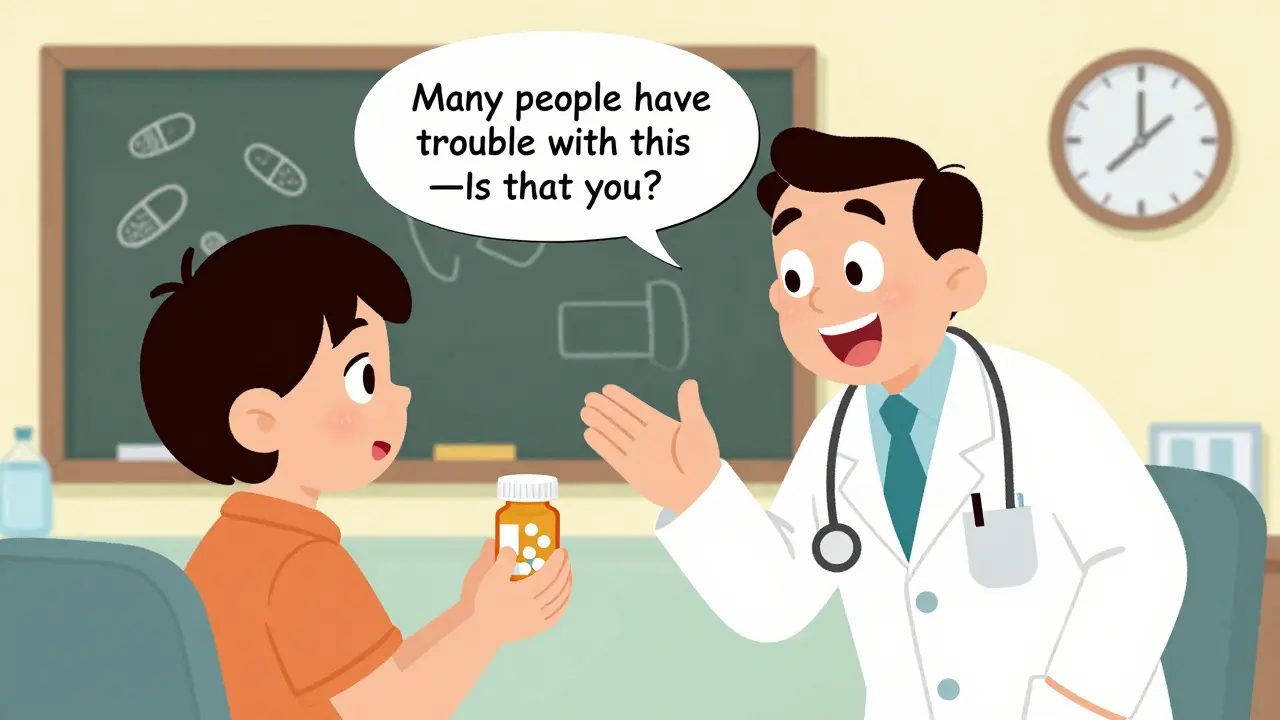
Most patients don’t admit they’re skipping doses, cutting pills in half, or stopping because of side effects. Why? They fear being judged. They think their doctor will blame them. Or worse-they believe the doctor won’t care. A 2021 study in JAMA Internal Medicine found that when doctors ask, "Why aren’t you taking your meds?" patients shut down. But when they say, "Many people have trouble taking their pills on time. Is that true for you?"-disclosure jumps by 37%. The truth is, doctors aren’t mind readers. If you’re not telling them what’s really going on, they can’t help. And the consequences aren’t theoretical. Nonadherent patients are 22.4% more likely to be readmitted to the hospital within 30 days. For someone with heart failure, diabetes, or after a transplant, missing even a few doses can mean a trip to the ER-or worse.What Doctors Are Trained to Do (But Often Don’t)
Leading medical groups like the American Medical Association and the American Academy of Family Physicians now teach specific communication skills for medication adherence. These aren’t fluffy ideas-they’re proven techniques backed by data. Here’s what works:- Ask open-ended questions: Instead of "Are you taking your blood pressure pill?" try "How has your pill routine been going this week?"
- Use nonjudgmental language: Phrases like "Lots of people struggle with this" reduce shame and increase honesty.
- Listen without interrupting: Patients who feel heard are 23.7% more likely to follow through, according to Johns Hopkins research.
- Use the teach-back method: Ask the patient to explain, in their own words, how and when to take the medication. This simple step boosts adherence by 17.3%.
- Involve the patient in the plan: Don’t just hand out a prescription. Ask, "What part of this schedule feels hardest?" Then adjust together.
These aren’t extra steps. They’re core parts of care. A 2022 AAFP survey found that 92% of U.S. healthcare systems now require these practices. But many doctors still skip them-often because they’re rushed. That’s why the most effective clinics train medical assistants to screen for adherence before the doctor even walks in.
What Patients Should Say-Even If It’s Hard
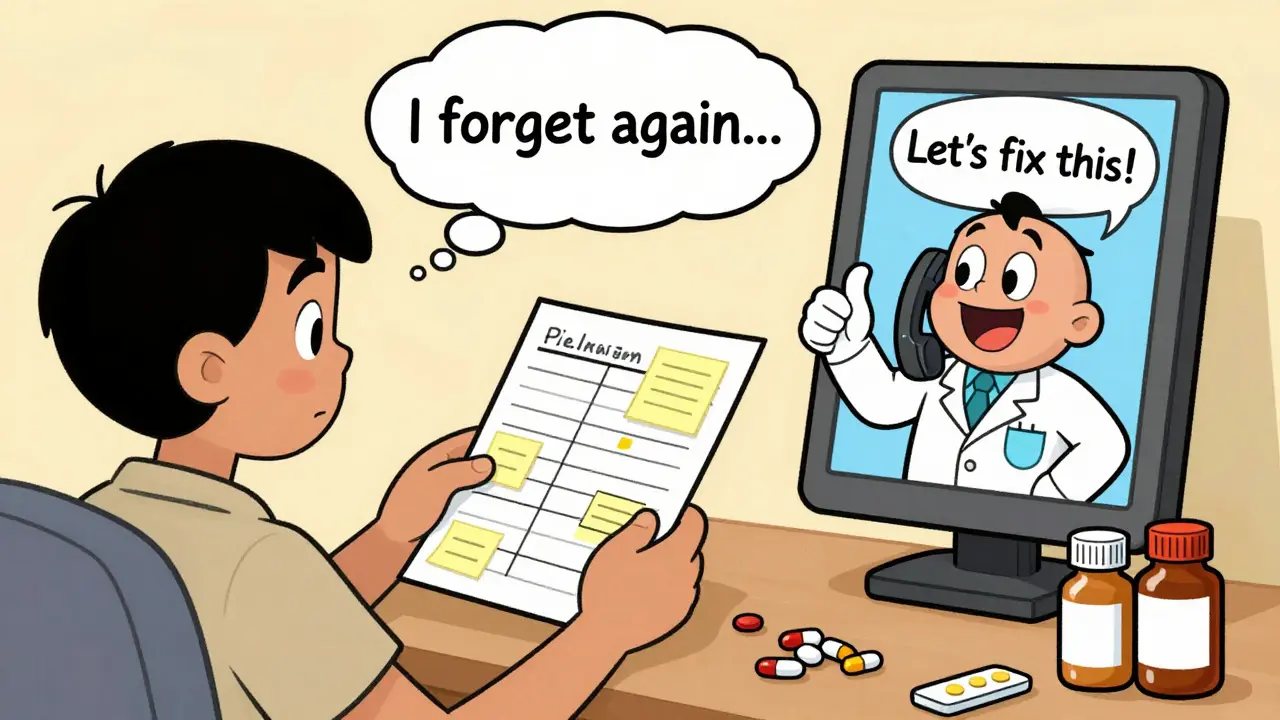
You don’t need to be an expert. You just need to be honest. Here’s what to say, and when:- If you’re skipping doses: "I’ve been missing my pills because I forget. Is there a way to make this simpler?"
- If side effects are bad: "The nausea from this pill is so bad I can’t eat breakfast. Is there another option?"
- If you can’t afford it: "This prescription is too expensive. Can we look at a cheaper version or a generic?"
- If you don’t understand why you’re taking it: "I’m not sure what this is for. Can you explain how it helps me?"
One patient on Reddit shared how her doctor’s simple question-"Many people have trouble remembering pills. Is that you?"-led to her finally admitting she hadn’t taken her blood pressure meds in months. They switched her to a once-daily pill. Her blood pressure dropped. She hasn’t missed a dose since.
What Doesn’t Work-And Why
Some approaches make things worse. Avoid these:- Shaming: "You’re lucky you even have these meds." This makes patients lie.
- Overloading with jargon: "Take this ACE inhibitor with a low-sodium diet to reduce afterload." Most patients don’t know what that means.
- Assuming: "You’re doing fine, right?" Don’t assume. Ask.
- Only giving written instructions: A 2021 study found 50% of patients leave the office not remembering what they were told. Verbal + written + teach-back is the only combo that works.
One woman stopped her transplant meds after her doctor yelled at her for missing one dose. She felt so ashamed she lied for months-until her body started rejecting the organ. That’s not just a mistake. It’s a failure of communication.
How to Prepare for Your Appointment
You don’t have to wait for your doctor to start the conversation. Be ready:- Write down your pill schedule-what you take, when, and how often.
- Mark which pills you’ve missed and why.
- Write down any side effects-even if they seem small.
- Bring your pill bottles or a photo of your medication list.
- Ask: "What’s the most important thing I need to know about these meds?"
Bring a friend or family member if you’re nervous. Studies show patients who bring support are 19% more likely to follow through on treatment plans.
What to Do If Your Doctor Doesn’t Ask
If your doctor never brings up adherence, don’t wait. Start the conversation yourself. Say:"I want to make sure I’m taking my meds right. Can we talk about what’s working and what’s not?"
That’s it. You don’t need to be confrontational. You’re not asking for permission-you’re claiming your health. Most doctors will be relieved you brought it up. They want to help. They just need you to lead the way.
Technology Can Help-But Only If You Use It
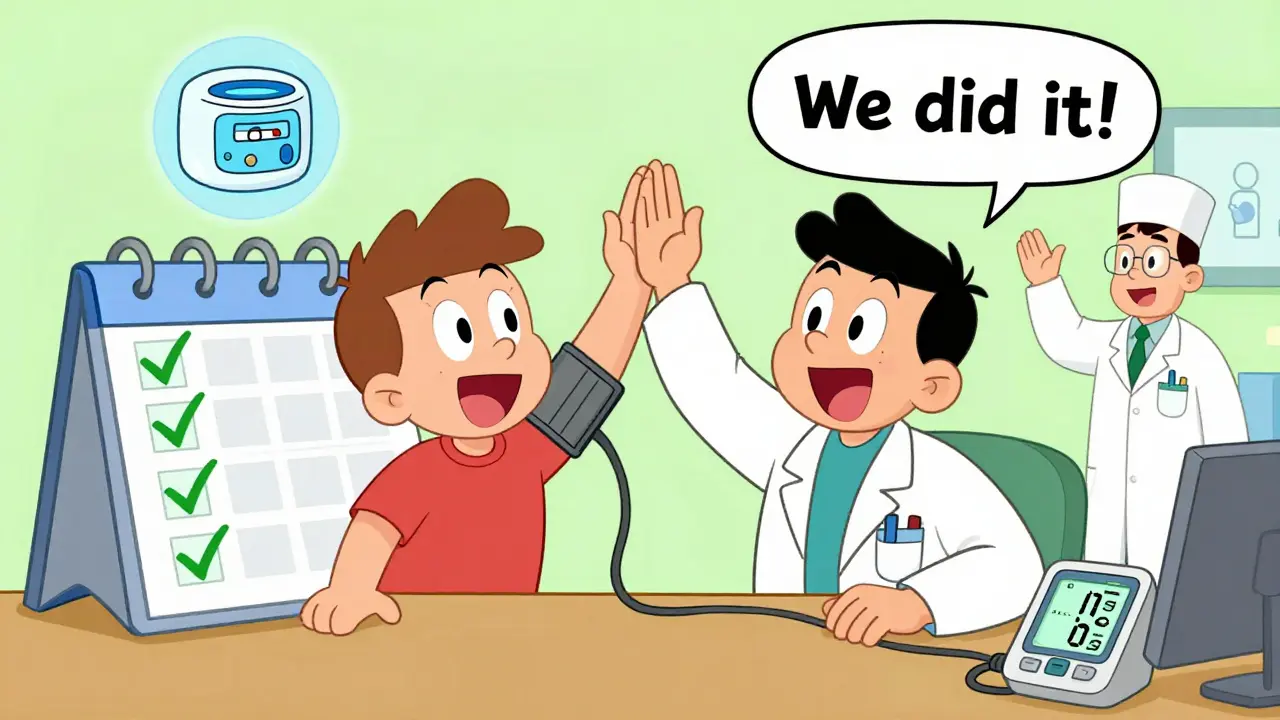
There are apps, pill dispensers, and text reminders. But tech alone doesn’t fix adherence. A 2023 KLAS report found that AI chatbots and smart pillboxes only work when paired with human communication. The best systems combine tech with check-ins from nurses or pharmacists. If your clinic offers a medication support app, sign up. But don’t assume it replaces talking to your doctor.The Bigger Picture: Why This Isn’t Just About Pills
Medication adherence isn’t a behavior problem. It’s a communication problem. The World Health Organization says improving adherence would have a greater impact on public health than any single drug. That’s not hyperbole. It’s data. When patients and doctors talk openly, hospitalizations drop. Costs fall. Lives improve.And it’s not just about being "good" with pills. It’s about being heard. It’s about feeling like your concerns matter. That’s what turns a prescription into a plan-and a plan into a healthier life.
What if I forget to take my medication? Should I just double up next time?
Never double up unless your doctor tells you to. Missing a dose happens to everyone. The best move is to call your doctor or pharmacist and ask what to do. Some meds are safe to take late; others can be dangerous if doubled. Your provider can give you a clear plan based on your specific medication.
My pills are too expensive. What can I do?
Tell your doctor. Many medications have generic versions, patient assistance programs, or coupons. Some pharmacies offer $4 generic lists. Your doctor may also be able to switch you to a similar drug that’s covered by your insurance. Don’t skip doses because of cost-ask for help instead.
I feel fine, so why do I still need to take this pill?
Many medications-like those for high blood pressure, cholesterol, or diabetes-work silently. You won’t feel them working, but they’re preventing damage. Stopping them can lead to sudden, serious problems like a heart attack or stroke. Ask your doctor to explain what the medicine is protecting you from. That often makes it easier to stick with it.
My doctor won’t listen to me. What now?
If you feel dismissed or judged, it’s okay to find a new provider. Your health matters. Look for clinics that emphasize patient-centered care or ask for a referral to a pharmacist who specializes in medication management. You deserve a team that works with you-not against you.
Can my pharmacist help me with medication adherence?
Yes. Pharmacists are trained to review your full medication list, spot interactions, and simplify schedules. Many offer free medication therapy management services. Ask if your pharmacy offers pill organizers, reminders, or one-on-one consultations. They’re often more accessible than your doctor and can be a key part of your adherence plan.
Next Steps: What to Do Today
Don’t wait for your next appointment. Start now:- Look at your pill bottles. Count how many you’ve taken this week.
- Write down one thing that makes it hard to take your meds.
- Call your pharmacy and ask if they offer a free adherence review.
- Next time you see your doctor, say: "I want to do better with my meds. Can we talk about how?"
Medication adherence isn’t about perfection. It’s about progress. And it starts with one honest conversation.
Darren McGuff
January 10, 2026 AT 13:41Let me tell you something real - I’m a pharmacist in London, and I see this every single day. People don’t skip meds because they’re lazy. They skip them because the system is broken. Pill bottles with 20 different instructions. No one explaining why the blue pill matters if you feel fine. And then they get blamed when their numbers go south. It’s not compliance - it’s communication. The stuff in that post? That’s not advice. That’s basic human decency.
And yes - pharmacists can help. We’re not just the people who hand out pills. We’re the ones who notice you haven’t picked up your statin in three months. We’re the ones who call you and say, ‘Hey, you good?’ That’s not ‘extra.’ That’s care.
Stop treating adherence like a moral failure. Treat it like a systems problem. Because it is.
Lindsey Wellmann
January 11, 2026 AT 13:44OMG YES. I literally cried reading this. 🥹 My dad had heart failure and he stopped his meds because he said ‘they made him feel like a zombie.’ No one ever asked him that. He just got yelled at for ‘not trying.’
We switched him to a once-daily combo pill, and now he’s back to gardening. He says, ‘I feel like me again.’
Doctors need to stop acting like we’re robots with pill slots. We’re people. With feelings. And bad mornings. And bills. And fear.
Thank you for saying this. 💙
Catherine Scutt
January 13, 2026 AT 11:33So you’re saying we should just coddle patients who can’t follow basic instructions? What’s next? Giving them gold stars for taking their insulin?
Meghan Hammack
January 14, 2026 AT 03:47Hey, I’m a nurse, and I’ve seen this too many times. You don’t need to be perfect. You just need to be honest.
One time, a 72-year-old woman told me she was crushing her blood pressure pills because she couldn’t swallow them. She was terrified to say anything. So she just… didn’t take them.
We switched her to a liquid form. She started crying. Said she thought no one would care.
Here’s the thing - your doctor isn’t your judge. They’re your teammate. And if they act like they’re above you? Find a new one. You deserve better.
And yes - bring your pill bottles. Bring your list. Bring your friend. Bring your fear. They can handle it. You’ve got this.
Angela Stanton
January 14, 2026 AT 12:14Let’s quantify this. Nonadherence costs $300B? That’s a red flag for systemic failure - not patient failure. But here’s the kicker: 68% of patients who miss doses do so because of polypharmacy. That’s not ‘forgetting.’ That’s a pharmacokinetic nightmare.
And the teach-back method? Validated in 17 RCTs. But only 12% of primary care visits actually implement it. Why? Time constraints. Reimbursement structures. EHR design.
This isn’t about ‘talking more.’ It’s about redesigning care delivery. Until we fix the workflow, we’re just slapping bandaids on a hemorrhage.
Also - AI chatbots? Useless without human escalation paths. We’re automating the wrong things. Again.
Heather Wilson
January 15, 2026 AT 06:13Wow. So now we’re blaming doctors for patients being irresponsible? Let me guess - next we’ll say the pills are too heavy to carry?
People skip meds because they’re selfish, forgetful, or don’t care. Stop making excuses. I’ve seen patients throw away $500/month meds because they ‘didn’t like the side effects.’ Then they show up in the ER asking why they’re dying.
This post reads like a guilt trip for providers. It’s not helping. It’s enabling.
Diana Stoyanova
January 15, 2026 AT 08:26Let’s go deeper. This isn’t just about pills. It’s about dignity.
When you’re chronically ill, you’re not just managing a disease - you’re managing the grief of losing your old life. You’re scared you’ll be a burden. You’re ashamed you can’t ‘just be normal.’ You’re tired of being told to ‘be grateful you’re alive.’
So when your doctor asks, ‘Are you taking your meds?’ - you say yes. Because you don’t want to be seen as weak. As broken. As the problem.
But what if the question wasn’t ‘Are you taking them?’
What if it was ‘What’s it like to live with this?’
That’s the shift. Not more checklists. Not more apps. Not more guilt.
Just presence.
That’s what heals.
And I’m not just talking about patients. I’m talking about all of us. We’re all carrying invisible weights. Maybe we just need someone to ask - gently - how heavy it is.
Elisha Muwanga
January 15, 2026 AT 21:32This is typical liberal medical paternalism. You’re telling patients they’re too fragile to handle responsibility? We’ve got people overseas risking their lives for freedom, and here we are babying Americans who can’t remember to take a pill.
Medication adherence is a personal discipline issue. Not a communication problem. If you can’t manage your own health, don’t blame the system. Blame yourself.
And don’t tell me ‘they’re scared.’ Everyone’s scared. But you still show up for work. You still pay your bills. So why not your meds?
Stop coddling. Start demanding accountability.
Ashley Kronenwetter
January 16, 2026 AT 01:24As a healthcare administrator, I can confirm: 92% of U.S. healthcare systems require the communication protocols outlined. However, implementation varies wildly due to staffing shortages, EHR inefficiencies, and lack of provider training. The gap between policy and practice is not due to indifference - it’s due to unsustainable workloads.
Patients: You are not the problem. The system is. But your voice - your honesty - is the catalyst for change.
Doctors: You are not the villain. You are the frontline soldier in a broken machine. Support them. Advocate for them. And yes - speak up for yourself.
Kiruthiga Udayakumar
January 16, 2026 AT 09:33My mom in India takes 7 pills a day. She forgets. She can’t read the labels. She’s scared to ask her doctor because he’s always in a hurry. We got her a simple pill box with pictures. We made a WhatsApp reminder with her granddaughter’s voice saying, ‘Maa, time for your heart pill.’
It worked.
It’s not tech. It’s love.
You don’t need a fancy app. You need someone who cares enough to remind you.
And if your doctor doesn’t care? Find someone who does. You’re worth it.
Drew Pearlman
January 16, 2026 AT 15:57I used to be the person who skipped meds because I thought I was fine. Then I had a stroke at 38. Not because I was reckless. Because I didn’t understand. No one ever explained what ‘hypertension’ meant beyond ‘high blood pressure.’
My new doctor sat down. Drew a picture. Said, ‘Your blood vessels are like garden hoses. If the pressure’s too high for too long, they burst.’
That’s when it clicked.
It’s not about being good. It’s about being understood.
If you’re reading this and you’re still skipping pills - I get it. I was you. But please - just say one thing to your doctor. Just one. You don’t have to be brave. Just honest.
You’re not alone.
Maggie Noe
January 18, 2026 AT 14:55It’s funny how we blame doctors for not asking… but never ask ourselves why we lie.
I didn’t take my antidepressants for 18 months. I told my doctor I was ‘fine.’ Why? Because I didn’t want to admit I still felt like garbage.
When she finally asked, ‘What’s the hardest part?’ I broke down.
She didn’t judge. She just said, ‘Let’s fix this together.’
That’s the magic. Not the technique. Not the script. Just… someone who didn’t look away.
So if you’re hiding something - I see you. And you’re not weak for it.
You’re human.
And that’s enough. 💛
Darren McGuff
January 18, 2026 AT 18:42^ This. This right here. This is why I do what I do.
Not because I’m a hero.
Because someone once asked me, ‘How’s it going?’ - and meant it.
That’s all it takes.