
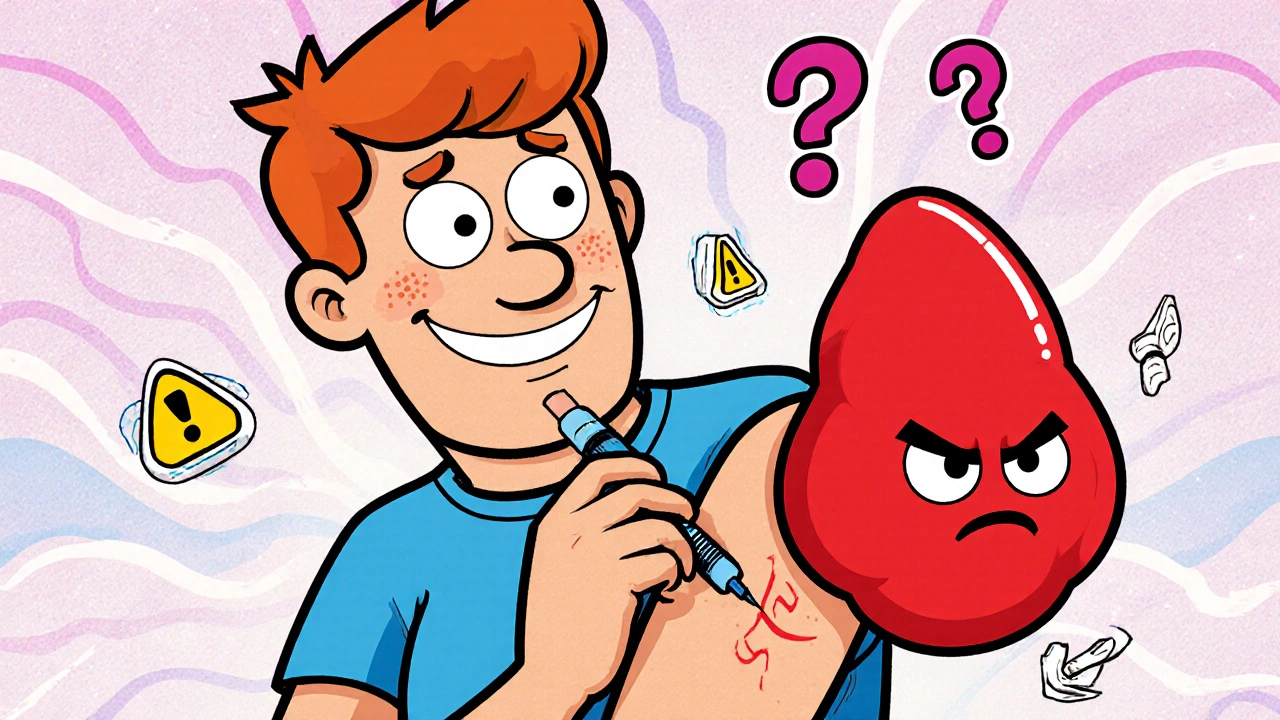
Most people with diabetes assume that insulin is safe - and for the vast majority, it is. But if you’ve ever noticed a red, itchy bump at your injection site that won’t go away, or worse - sudden swelling, trouble breathing, or a rash spreading across your body - you might be dealing with something more serious than a bad needle prick. Insulin allergy is rare, affecting only about 2.1% of insulin users, but it can be life-threatening if ignored. The good news? It’s manageable. And knowing what to look for can keep you alive and on your insulin therapy.
What Does an Insulin Allergy Actually Look Like?
Not every red spot or itch is an allergy. Many people confuse low blood sugar symptoms - like sweating, shaking, or anxiety - with allergic reactions. But true insulin allergies are immune-driven. They happen because your body sees insulin or something mixed with it as a threat. There are three main types of reactions:- Localized reactions: These are the most common, making up about 97% of all cases. You’ll see swelling, redness, and itching right where you injected. Sometimes, hard lumps form under the skin within 30 minutes to 6 hours. These can last a day or two but usually fade on their own.
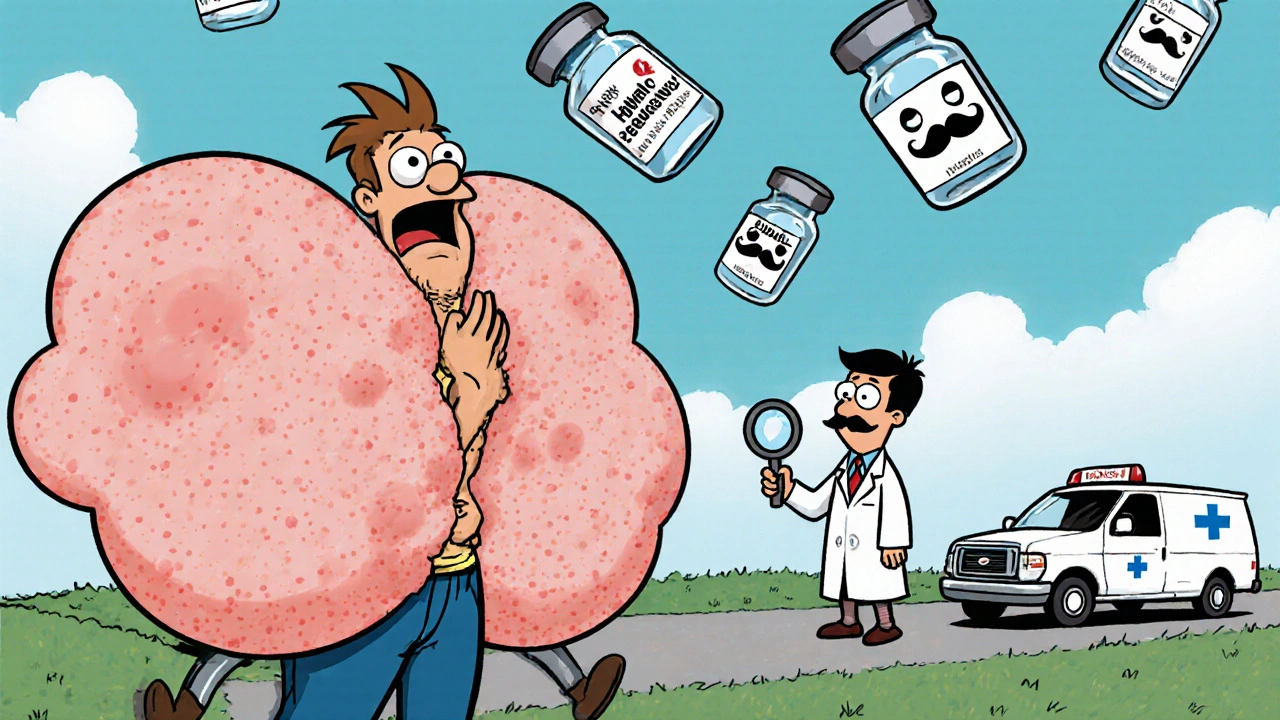
- Systemic reactions: These are rare - less than 0.1% of users - but dangerous. Symptoms include hives, swelling of the lips or tongue, wheezing, low blood pressure, and trouble breathing. This is anaphylaxis. If this happens, call emergency services immediately.
- Delayed reactions: These can show up hours or even days later. Think joint pain, muscle aches, or bruising that takes 1-2 weeks to heal. This isn’t IgE-mediated like the others; it’s T-cell driven. Even people who’ve used insulin for 10+ years can suddenly develop this.
What’s surprising? You don’t have to be new to insulin for this to happen. One patient in a 2008 study developed delayed reactions after 12 years of stable insulin use. Your body can change its mind.
Is It the Insulin - Or the Stuff Around It?
Here’s a key point most people miss: you might not be allergic to insulin itself. You could be reacting to the preservatives or additives. Many insulin brands contain metacresol or zinc to stabilize the formula. Humalog, for example, has higher levels of metacresol than other insulins. If you switch from one brand to another and suddenly get reactions, it might not be the insulin molecule - it’s the filler. That’s why switching insulin types works for about 70% of people with allergies. Going from human insulin to a newer analog like glargine or degludec often clears up symptoms. But if you’re reacting to metacresol, switching to a brand without it - like some newer formulations - can help.How Doctors Diagnose It
You can’t diagnose this yourself. If you suspect an allergy, your diabetes team will refer you to an allergist. Here’s what they do:- Skin prick test: A tiny drop of insulin is placed on your skin, then lightly pricked. If you’re allergic, a red bump forms within 15-20 minutes.
- Intradermal testing: A small amount of insulin is injected just under the skin. More sensitive than prick tests, this helps catch milder reactions.
- Blood tests: They measure IgE antibodies specific to insulin or excipients like metacresol.
These tests aren’t done in a rush. The allergist will test different insulin types and preservatives to find the exact trigger. That’s critical - because if you’re allergic to metacresol, you can still use insulin… just not the ones with that additive.
What to Do If You Have a Reaction
For mild, localized reactions:- Apply a topical calcineurin inhibitor like tacrolimus or pimecrolimus right after injection, then again 4-6 hours later. This calms the skin’s immune response.
- Use a mid-to-high potency steroid cream (like flunisolide 0.05%) for delayed bruising or lumps.
- Take an over-the-counter antihistamine like loratadine or cetirizine daily during flare-ups.
Don’t stop injecting. Skipping insulin because of a rash can lead to diabetic ketoacidosis - a medical emergency that’s far more dangerous than the allergy.
For systemic reactions (anaphylaxis):- Call 999 (or your local emergency number) immediately.
- Use an epinephrine auto-injector if you have one.
- Do NOT drive yourself to the hospital. Emergency responders can start treatment en route.
Even if the reaction seems to fade, go to the ER. Anaphylaxis can come back hours later.
When Medication Switching Isn’t Enough
If switching insulin types doesn’t help - or if you have severe, recurring reactions - there’s another option: insulin desensitization. This isn’t a quick fix. It’s a slow, controlled process done under medical supervision. You start with a tiny, diluted dose of insulin - sometimes just a fraction of a unit - and gradually increase it over hours or days. Your body learns to tolerate it. A 2008 study of four patients showed that 66.7% had complete symptom resolution after desensitization. The rest saw major improvement. This works even for people allergic to multiple insulin types. But here’s the catch: you have to keep the regimen going. Stopping insulin for even a few days can reset your sensitivity. That’s why consistency matters - even when you feel fine.What About Oral Medications?
If you have type 2 diabetes and insulin allergies are unmanageable, switching to oral drugs like metformin, SGLT2 inhibitors, or GLP-1 agonists is an option. About 25% of patients in the 2008 study made this switch successfully. But if you have type 1 diabetes? Insulin is non-negotiable. Your body doesn’t make it. There’s no pill that replaces it. That’s why desensitization and allergist-led care are critical - they’re your lifeline.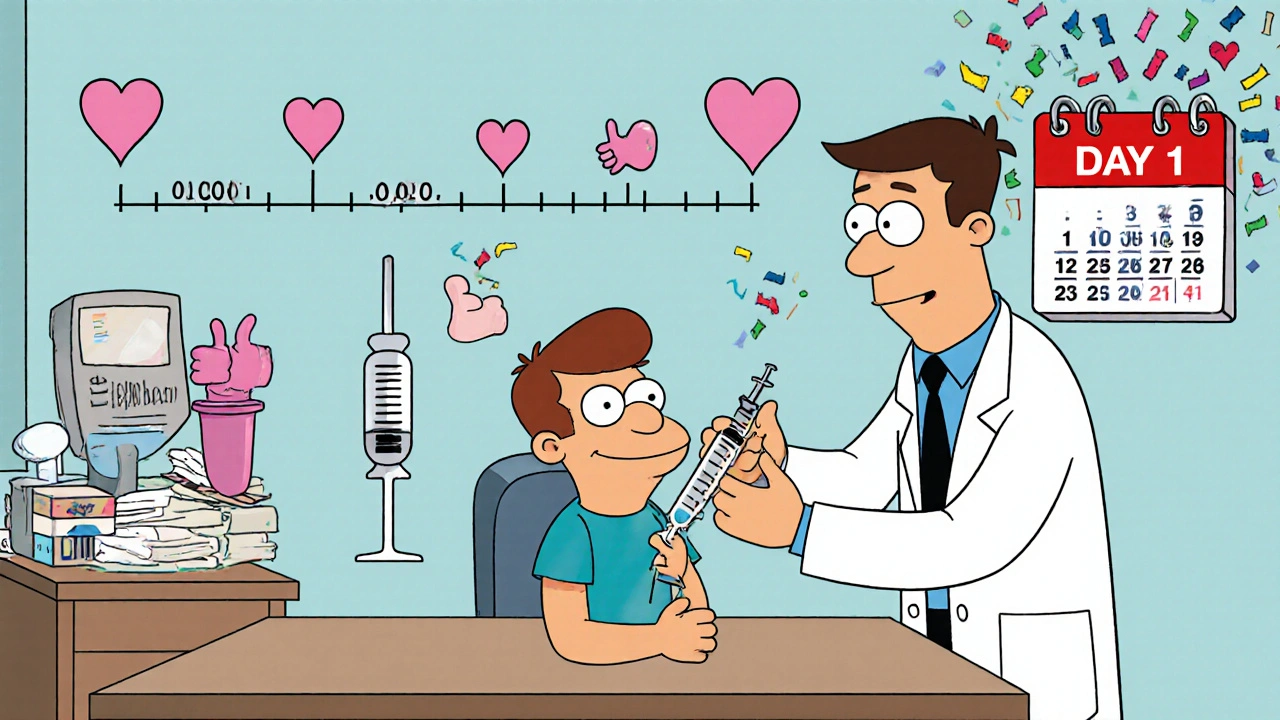
What You Should Track
Keep a simple log:- Date and time of injection
- Brand and type of insulin
- Injection site
- Reaction type (itch, swelling, pain, breathing trouble)
- Time reaction started
- How long it lasted
This helps your doctors spot patterns. Maybe you only react to NovoRapid after dinner. Or maybe all your reactions happen when you inject in your thigh - not your arm. Details matter.
What Not to Do
- Don’t stop insulin. Even if you’re scared. DKA kills faster than allergies.
- Don’t assume it’s just irritation. A rash that won’t go away after 48 hours needs evaluation.
- Don’t self-diagnose. Low blood sugar and allergies feel similar. Only testing confirms the cause.
- Don’t ignore delayed reactions. Joint pain or bruising weeks later? That’s not normal. Document it.
The Bottom Line
Insulin allergy is rare. But it’s real. And it’s treatable. You don’t have to choose between your health and your insulin. With the right testing, the right insulin, and the right care team, you can keep injecting safely. The key is acting fast - not waiting for a reaction to get worse. Talk to your diabetes provider the moment you notice anything unusual. Get referred to an allergist. Keep track. And never, ever stop your insulin without medical guidance.People with insulin allergies live full, active lives. They travel, work, raise families - and they manage their diabetes. It’s not easy. But it’s possible.
Can you outgrow an insulin allergy?
There’s no evidence that people outgrow insulin allergies. Unlike childhood food allergies, insulin reactions don’t typically resolve on their own. But with proper management - like switching insulin types or undergoing desensitization - symptoms can disappear completely. The allergy doesn’t vanish, but your body learns to tolerate it.
Can you be allergic to one type of insulin but not another?
Yes. Insulin allergies are often specific to the formulation - not the insulin molecule itself. You might react to Humalog because of its metacresol content but tolerate Lantus or Tresiba, which use different preservatives. Allergists test each type individually to find the safest option.
Is insulin allergy more common with animal insulin?
Yes - but it’s rare today. In the 1930s, up to 15% of people on animal insulin had allergic reactions because the insulin came from cows or pigs and looked foreign to the human immune system. Modern human insulin and analogs are nearly identical to natural insulin, cutting the rate to about 2.1%. Still, some people react to impurities in older formulations, so switching to newer analogs helps.
Can you use an EpiPen for an insulin allergy reaction?
Yes - if you’re having a systemic reaction like trouble breathing, throat swelling, or a sudden drop in blood pressure. An epinephrine auto-injector is the first-line emergency treatment for anaphylaxis, regardless of the trigger. If you’ve had a severe reaction before, your doctor may prescribe one. Always carry it if you’re at risk.
How long does it take to desensitize to insulin?
Desensitization usually takes 1 to 3 days in a hospital setting. You start with a dose so small it’s barely detectable - sometimes 0.001 units - and slowly increase every 15 to 30 minutes. Once you reach your full therapeutic dose, you continue with daily injections to maintain tolerance. It’s not a one-time fix; you must keep up with your regimen.
Can insulin allergies cause long-term damage?
Not directly. The allergy itself doesn’t harm organs. But if you avoid insulin because you’re afraid of reactions, high blood sugar can damage nerves, kidneys, eyes, and blood vessels over time. That’s why managing the allergy - not avoiding insulin - is the goal. Proper treatment prevents both the allergy symptoms and diabetes complications.
Are there new insulins that cause fewer allergies?
Yes. Newer insulin analogs are designed to be more stable and use fewer additives. Brands like Fiasp and Lyumjev have modified formulations that reduce immunogenicity. Some are also being tested without metacresol entirely. If you’ve had reactions, ask your doctor about the latest options - they may offer a better fit.
Brandy Walley
November 23, 2025 AT 00:54shreyas yashas
November 23, 2025 AT 13:32Suresh Ramaiyan
November 24, 2025 AT 19:11Katy Bell
November 26, 2025 AT 13:58Ragini Sharma
November 27, 2025 AT 05:31Linda Rosie
November 28, 2025 AT 17:44Vivian C Martinez
November 29, 2025 AT 09:48Ross Ruprecht
December 1, 2025 AT 09:09Bryson Carroll
December 2, 2025 AT 15:48Lisa Lee
December 4, 2025 AT 13:16Jennifer Shannon
December 4, 2025 AT 19:20Suzan Wanjiru
December 6, 2025 AT 04:31Kezia Katherine Lewis
December 8, 2025 AT 01:57Henrik Stacke
December 9, 2025 AT 11:59