
Sedative-Melatonin Interaction Risk Calculator
Assess Your Combination Risk
This tool calculates your risk level when combining melatonin with common sedatives based on medical research.
Many people reach for melatonin when they can’t sleep. It’s natural, over-the-counter, and feels harmless-like a vitamin. But here’s the truth: when you take melatonin with prescription sedatives, you’re not just doubling the sleepiness. You’re multiplying it. And that can be dangerous.
Why Melatonin Isn’t Just a ‘Natural’ Sleep Aid
Melatonin is a hormone your body makes naturally to signal it’s time to sleep. Supplements mimic this signal. But unlike vitamins, it doesn’t just help you fall asleep-it affects your central nervous system. It binds to receptors in your brain that slow down activity, and it also interacts with GABA and opioid pathways. That’s why it has sedative effects. The dose matters. Most people take 1mg to 5mg, but studies show even 0.3mg can be effective. The body absorbs only about 15% of what you swallow, and it peaks in your blood within 30 to 60 minutes. That’s why you’re told to take it 30 minutes before bed. But if you’re also taking a sedative-whether it’s a sleeping pill, anti-anxiety med, or even an antidepressant-those effects don’t just add up. They stack.What Counts as a Sedative?
It’s not just Ambien or Xanax. Sedatives include:- Benzodiazepines: diazepam (Valium), lorazepam (Ativan), alprazolam (Xanax)
- Non-benzodiazepine sleep pills: zolpidem (Ambien), eszopiclone (Lunesta), zaleplon (Sonata)
- Opioids: codeine, oxycodone, tramadol
- Antidepressants: trazodone, mirtazapine
- Antipsychotics: quetiapine (Seroquel)
- Some antihistamines: diphenhydramine (Benadryl), doxylamine (Unisom)
The Real Danger: Additive Drowsiness
Additive drowsiness sounds mild. But it’s not. It means you feel more tired than you should. You might fall asleep at the wheel. You might forget how you got to the kitchen. You might wake up hours later with no memory of the night. Research from the Journal of Clinical Sleep Medicine found that combining melatonin with benzodiazepines increases the risk of respiratory depression by 47%. That’s when your breathing slows to dangerous levels-especially if you have sleep apnea or are older. The American Geriatrics Society says this combo raises fall risk by 68% in seniors. One fall can mean a broken hip, months in rehab, or worse. Real stories back this up. On Reddit, users describe waking up 14 hours later, disoriented, with no memory of the night. One person in a forum post said they drove home after taking melatonin and zolpidem-and woke up in a ditch. These aren’t rare cases. A 2022 survey found 37% of people who mixed melatonin with sedatives had unintended oversedation. Four percent needed emergency care.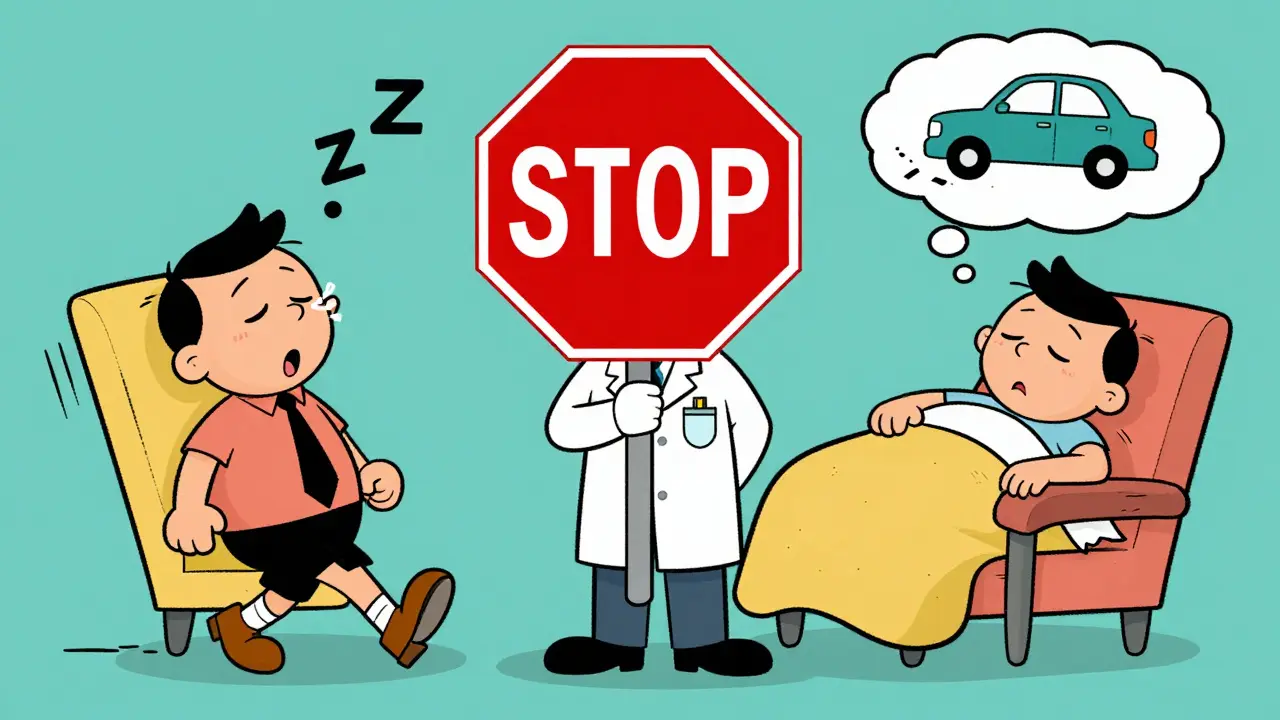
Why People Think It’s Safe
It’s easy to assume melatonin is harmless because it’s sold without a prescription. You can buy it at the grocery store. No doctor’s note. No warning labels on many bottles. That’s changing, but slowly. In Europe, products like Circadin come with clear warnings: “Do not combine with sedatives.” In the U.S., the FDA has issued 12 warning letters to manufacturers in 2022 for misleading labels. The 2023 Draft Guidance requires all melatonin products to include interaction warnings by mid-2024. But right now, many bottles still say nothing. A 2023 National Sleep Foundation survey found 78% of U.S. adults believe melatonin is safe to mix with other sleep aids. That’s a dangerous myth. Only 22% of primary care doctors now recommend combining them-down from 47% in 2018.What to Do Instead
If you’re taking a sedative and thinking about adding melatonin, stop. Talk to your doctor first. Here’s what safe alternatives look like:- Lower the dose. If your doctor says it’s okay to use both, reduce melatonin to 0.3mg-0.5mg and cut your sedative dose by at least 25%.
- Wait five hours. The Mayo Clinic recommends at least a five-hour gap between doses. Don’t take melatonin right before bed if you’ve taken a sedative earlier in the day.
- Allow eight hours for sleep. If you’re combining them, give yourself more time. Eight hours of uninterrupted sleep is safer than seven.
- Try CBT-I. Cognitive Behavioral Therapy for Insomnia is now the first-line treatment for chronic sleep problems, according to the American College of Physicians. It works better than pills-and has zero interaction risks.
What Your Doctor Should Check
Before prescribing or recommending melatonin, your doctor should screen for 14 classes of medications that interact with it. These include:- Benzodiazepines
- Non-benzodiazepine hypnotics
- Opioids
- SSRIs and SNRIs
- Antipsychotics
- Anticonvulsants
- Barbiturates
- Alcohol
- Antihistamines
- CYP1A2 inhibitors (like fluvoxamine)
What to Watch For
If you’re already mixing melatonin and sedatives, watch for these signs:- Waking up groggy, even after 8+ hours of sleep
- Feeling dizzy or unsteady when standing
- Forgetting recent events or conversations
- Difficulty concentrating during the day
- Slurred speech or slowed breathing
What’s Changing in 2026
The tide is turning. The American Academy of Sleep Medicine now classifies combining melatonin with sedatives as “conditionally recommended against.” That means it’s not just discouraged-it’s considered unsafe unless you’re under strict medical supervision. Time-released melatonin formulations reduce interaction risks by 31% compared to immediate-release versions. But even these aren’t risk-free. The safest path forward is to avoid combining them entirely. Meanwhile, CBT-I is gaining ground. It’s not magic. It’s work. But it’s work that rewires your brain’s sleep patterns without drugs. And unlike pills, it doesn’t wear off. It lasts.Bottom Line
Melatonin isn’t the villain. Sedatives aren’t the villain. But together? They’re a dangerous pair. You don’t need both. You don’t want both. If you’re struggling to sleep, talk to your doctor about alternatives that don’t put your safety at risk.There’s no shortcut to good sleep. But there are safer paths. Choose one that doesn’t put you to sleep-permanently.
Can I take melatonin with a sleeping pill like Ambien?
No. Combining melatonin with zolpidem (Ambien) or other prescription sleep aids significantly increases the risk of extreme drowsiness, impaired coordination, and even respiratory depression. Studies show this combination can be more dangerous than taking two sedatives alone. Always consult your doctor before mixing them.
Is melatonin safer than prescription sleep meds?
In isolation, yes. Melatonin has a much lower risk of dependence, withdrawal, or next-day impairment compared to drugs like Ambien or Valium. But when combined with sedatives, its safety advantage disappears. The interaction risk makes it just as dangerous-sometimes more so-than the prescription drug alone.
How long should I wait between taking melatonin and a sedative?
The Mayo Clinic recommends at least a five-hour gap. But even that isn’t foolproof. The safest approach is to avoid combining them entirely. If your doctor approves it, reduce melatonin to 0.3-0.5mg and lower your sedative dose by 25% or more.
Can melatonin cause daytime drowsiness on its own?
Yes. Even without other medications, melatonin can cause daytime sleepiness in about 8.7% of users. Taking too high a dose (over 5mg) or taking it too late in the evening increases this risk. The NHS advises against driving or operating machinery within five hours of taking it.
What’s the best alternative to melatonin for sleep?
Cognitive Behavioral Therapy for Insomnia (CBT-I) is now the top-recommended treatment for chronic sleep problems. It doesn’t involve pills, has no interaction risks, and its effects last long after treatment ends. Studies show it works better than sleep medications over time. Ask your doctor for a referral.
Annette Robinson
January 8, 2026 AT 03:57I’ve been taking melatonin for years with my low-dose trazodone, and honestly? I never thought twice about it. But reading this made me pause. I woke up groggy last week and just blamed it on stress. Now I’m wondering if it’s the combo. I’m scheduling a chat with my doctor tomorrow. Thanks for the wake-up call.
Luke Crump
January 8, 2026 AT 05:36Oh wow. So now even vitamins are dangerous? Next they’ll tell us oxygen is a sedative when combined with coffee. We’re turning into a nation of paranoid pharmacists. Melatonin is a hormone. So is cortisol. Should we ban sunlight too?
Molly Silvernale
January 9, 2026 AT 07:25Here’s the thing-melatonin isn’t a drug, it’s a signal. Like a whisper in the dark saying, ‘Hey, it’s bedtime.’ But when you layer on benzodiazepines? You’re not just whispering-you’re screaming into a megaphone while standing on a cliff. And nobody’s telling you the drop is real. We’ve normalized ‘just take one more thing’ until our bodies forget how to sleep without a symphony of chemicals. It’s not about safety-it’s about surrender.
Prakash Sharma
January 10, 2026 AT 06:02USA always overreacts. In India, people take ashwagandha, melatonin, and sedatives together for decades. No one dies. No one ends up in ditch. You people fear everything. This article is fear-mongering dressed as science.
Kristina Felixita
January 11, 2026 AT 17:39okay so i just wanna say-i’ve been using melatonin with my mirtazapine for like 3 years now and i’ve never had a problem?? but also i’m a 5’2” 110lb woman who takes 0.5mg melatonin and 7.5mg mirtazapine so maybe my body is just chill?? also i just want to say thank you for writing this because i didn’t realize how many meds are sedatives?? like i thought my nausea pill was just for nausea?? wow. i’m gonna call my dr. tomorrow. <3
Joanna Brancewicz
January 12, 2026 AT 21:56CBT-I is the gold standard. No interaction risk. No tolerance. No withdrawal. Proven efficacy. Long-term results. Stop chasing pills.
Evan Smith
January 12, 2026 AT 22:05So… if I take melatonin and then a Benadryl for allergies… am I basically just trying to sleep through my own funeral? 😅
Lois Li
January 13, 2026 AT 11:21I appreciate how thorough this is. I’ve seen too many older relatives fall because they didn’t realize how much drowsiness was stacking. My grandma took melatonin with her blood pressure med and ended up in the ER after tripping over her cat. She didn’t even remember it happened. This isn’t theoretical. It’s real. And we need to talk about it more.
christy lianto
January 15, 2026 AT 11:01STOP. Just stop. If you’re combining anything with melatonin, you’re not solving sleep-you’re numbing your life. I used to be one of those people who took 10mg because ‘it didn’t work.’ Then I got CBT-I. I slept worse at first. Then I slept better. Then I slept like a human again. No chemicals. No panic. Just rhythm. You can do this. I believe in you.
Ken Porter
January 17, 2026 AT 05:26Why is this even a thing? Just don’t take the damn pills. Grow up.
swati Thounaojam
January 17, 2026 AT 12:12i live in india and we dont have melatonin here… but my sister took it from usa and mixed with her sleep med… she woke up in hospital… no one told her… so sad… please warn people
Manish Kumar
January 18, 2026 AT 20:53Let’s not forget that human beings evolved without melatonin supplements. We slept when the sun went down. We woke when it rose. We didn’t need chemicals. We didn’t need apps. We didn’t need to ‘optimize’ our sleep like it was a spreadsheet. Modernity didn’t give us better rest-it gave us more reasons to fear rest. We’re not broken. We’re just out of sync. And no pill, no matter how ‘natural,’ will fix that. The answer isn’t in a bottle. It’s in the rhythm of the earth. And we’ve forgotten how to listen.
Aubrey Mallory
January 20, 2026 AT 14:07People need to stop treating sleep like a problem to be fixed. It’s a process. A sacred one. And when you throw chemicals into it, you’re not helping-you’re hijacking your biology. I used to be skeptical of CBT-I. Now I teach it. It’s not quick. But it’s the only thing that lasts. And it doesn’t leave you wondering if you’re going to die in your sleep.
Dave Old-Wolf
January 21, 2026 AT 23:11Wait-so if I take melatonin and then a cold med with diphenhydramine… is that like a one-two punch? I thought Benadryl was just for allergies. I’ve been doing this for months. Should I be worried?
Donny Airlangga
January 23, 2026 AT 10:52My dad took melatonin with his tramadol after back surgery. Woke up confused, didn’t remember his own name for two hours. Scared the hell out of us. He’s off both now. CBT-I is his new thing. He says he feels more awake during the day than he has in ten years. This isn’t hype. It’s life-changing.