
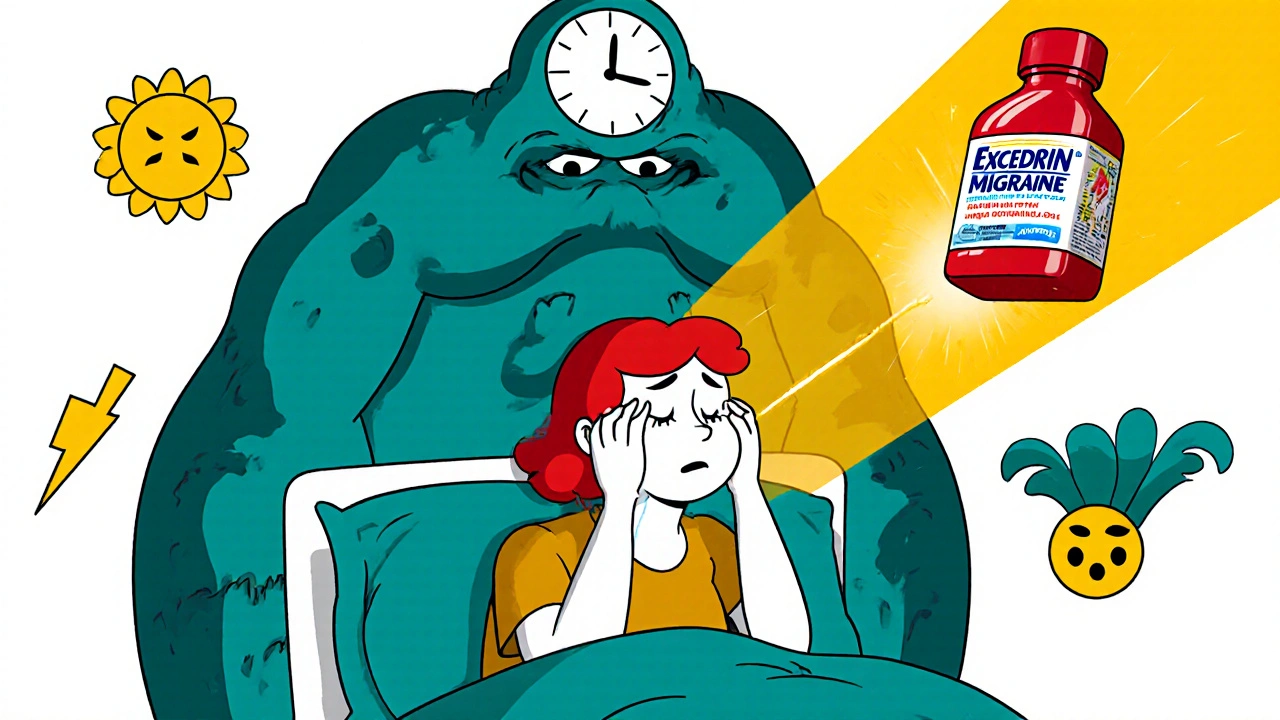
Chronic migraines aren’t just bad headaches. They’re neurological events that can knock you out for hours or even days - nausea, light sensitivity, vomiting, and a pounding pain that feels like a drill in your skull. About 39 million people in the U.S. alone deal with this, and women are three times more likely to be affected. The good news? We now have more tools than ever to stop attacks before they start and shut them down fast when they do. The challenge? Many people are still stuck using outdated or ineffective treatments, like opioids, while proven options sit unused.
What Are Abortive Medications, and When Do They Work Best?
Abortive medications are your first line of defense when a migraine hits. They don’t prevent the attack - they stop it in its tracks. And timing matters more than you think. If you take them within the first hour of pain starting, you’re far more likely to get relief and avoid a rebound headache later. Waiting until the pain is at its peak? That’s like trying to put out a house fire after it’s already engulfed the roof. The most reliable abortive options fall into three main groups: NSAIDs, triptans, and newer CGRP blockers. NSAIDs like ibuprofen (400mg), naproxen sodium (550mg), and aspirin (900-1000mg) are often the first thing people try. They work by calming inflammation in the brain. For mild to moderate migraines, they’re effective for 20-53% of users within two hours. Even better? A combo of acetaminophen (250mg), aspirin (250mg), and caffeine (65mg) - sold as Excedrin Migraine - has been shown in multiple trials to work as well as some triptans, without the heart risks. Triptans - like sumatriptan, rizatriptan, and zolmitriptan - are the gold standard for moderate to severe migraines. They target serotonin receptors in the brain to constrict swollen blood vessels and block pain signals. Around 42-76% of people get pain-free results within two hours, depending on the drug and dose. But they’re not for everyone. If you have heart disease, high blood pressure, or a history of stroke, triptans can be dangerous. That’s where the newer options come in. Drugs like rimegepant (Nurtec ODT) and ubrogepant (Ubrelvy) block CGRP, a molecule that triggers migraine pain. They work just as well as triptans for many people, but without the cardiovascular risks. Rimegepant is even approved for both acute treatment and prevention - one pill does double duty. In a 2021 meta-analysis, both drugs helped over half of users achieve pain freedom at two hours. And then there’s lasmiditan (Reyvow), a serotonin 5-HT1F agonist. It’s especially useful if triptans have failed. Studies show it’s 56% more effective than placebo at relieving pain within two hours. The catch? It can cause dizziness and sedation. Don’t drive after taking it.Preventive Medications: Stopping Migraines Before They Start
If you’re having 4 or more migraine days a month, or if abortive meds aren’t cutting it, it’s time to talk about prevention. Preventive medications are taken daily - even on days you feel fine - to reduce how often and how hard migraines hit. The old-school options still hold up. Beta-blockers like propranolol and metoprolol have been used for decades and are backed by solid evidence. Topiramate, an anticonvulsant, reduces migraine frequency by about 50% in many patients. Amitriptyline, a low-dose antidepressant, helps not just with pain but also sleep and mood - both big triggers for chronic migraine. But the real game-changer? CGRP monoclonal antibodies. These are injectables - not pills - given monthly or quarterly. Erenumab (Aimovig), fremanezumab (Ajovy), and galcanezumab (Emgality) block the CGRP pathway directly. In clinical trials, about half of users cut their migraine days in half. Some even go from 20 headache days a month down to 5 or fewer. What’s different about these? They’re migraine-specific. Older drugs were repurposed from epilepsy or depression treatment. These were designed just for migraines. And they work even when nothing else does. For women with menstrual migraines, long-acting triptans like frovatriptan (taken 2-3 days before your period and continued through it) can be a lifesaver. One study showed a 70% drop in attack frequency with this approach.Combining Treatments for Better Results
One pill isn’t always enough. Many people get better results when they combine treatments - not just for prevention and abortive use, but even within the same category. For example, taking a triptan with an NSAID like naproxen gives you a one-two punch. A 2007 study found that eletriptan plus naproxen led to 32% of users being pain-free at two hours - compared to just 22% with the triptan alone. That’s a big jump. Some people also use anti-nausea meds like metoclopramide or ondansetron alongside their migraine meds. Why? Migraines slow down your stomach. If your stomach isn’t moving, pills won’t absorb. A suppository or nasal spray can bypass that problem entirely. Even non-drug tools help. Ice packs on the neck, dark quiet rooms, and even acupressure bands can boost the effect of medication. One survey found 63% of users who combined these with drugs reported better outcomes than those who used meds alone.
What Doesn’t Work - And Why It’s Still Prescribed
Here’s the uncomfortable truth: 15.2% of migraine patients in the U.S. still get opioids like oxycodone or hydrocodone for acute attacks. That’s according to data from 2,860 doctor visits between 2006 and 2013. Opioids don’t treat migraine - they mask it. And they carry a huge risk: medication overuse headache (MOH). That’s when taking painkillers too often turns your migraines into daily headaches. Triptan users risk MOH after about 10 doses a month. NSAID users after about 15. And opioids? Even less. Yet they’re still handed out because they’re fast, cheap, and easy. But they don’t fix the problem. They make it worse. The American Headache Society and the American Academy of Neurology have been clear for years: opioids should never be first-line treatment. Yet the gap between guidelines and practice is wide.Cost, Access, and the Real Barriers to Care
The best drug in the world doesn’t help if you can’t get it. CGRP medications are expensive. Ubrogepant can cost $900 for six pills without insurance. Even with coverage, many insurers make you try cheaper drugs first - a process called step therapy. About 72% of commercial insurers require this for CGRP inhibitors. For many, the cost is a dealbreaker. But there are options. Manufacturer coupons, patient assistance programs, and generic versions of older drugs (like propranolol, which costs less than $10 a month) can make a big difference. And don’t overlook support. The National Headache Foundation runs a nurse-staffed hotline that answered 92% of calls within three minutes in 2022. They help people navigate prescriptions, insurance, and even how to keep a headache diary - which, if done for just eight weeks, helps identify triggers with 70% accuracy.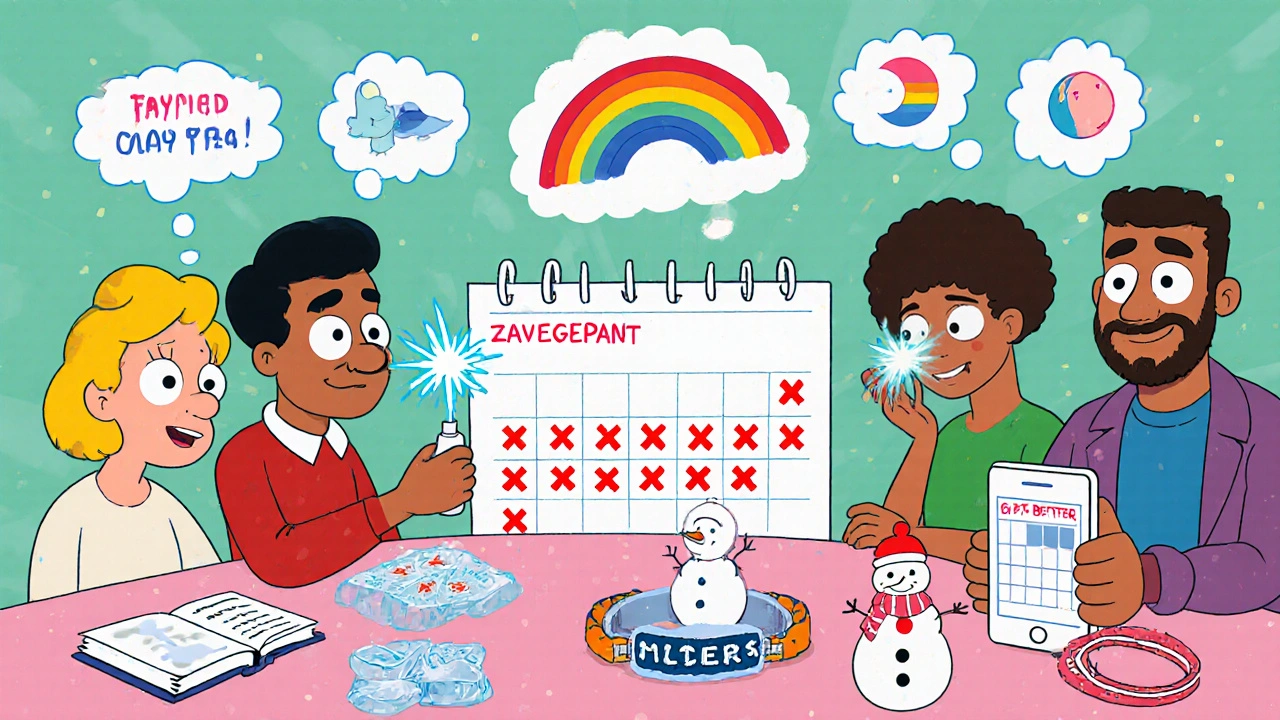
What’s Coming Next?
The migraine treatment landscape is changing fast. In late 2023, the FDA approved zavegepant (Zavzpret), a CGRP blocker you spray up your nose. It works in 15 minutes and avoids the stomach entirely - perfect for people with nausea. Atogepant (Qulipta), a daily oral CGRP blocker, is being studied for episodic migraine prevention. Results expected in late 2024 could expand its use beyond chronic cases. And researchers are already looking at personalized medicine. Blood tests, genetic markers, and brain imaging might soon help doctors pick the right drug for the right person - no more trial and error.What Should You Do Right Now?
If you’re struggling with migraines:- Track your attacks. Use a simple calendar or app. Note timing, triggers, meds used, and how you felt afterward.
- Take abortive meds early. Don’t wait for the pain to peak.
- Ask about CGRP options. Especially if triptans don’t work or you have heart issues.
- Avoid opioids. They make migraines worse over time.
- Combine treatments. Medication + ice + quiet room = better results.
- See a headache specialist. Not every neurologist knows migraines well. Look for someone certified in headache medicine.
Peter Lubem Ause
November 29, 2025 AT 19:30Man, I wish I'd known all this five years ago. I used to pop oxycodone like candy when my migraines hit - thought I was being smart. Turns out I was just training my brain to suffer daily. Started using rimegepant after my neuro gave me a stern talk, and holy hell - my attack frequency dropped from 18 days a month to like 4. No more vomiting, no more hiding in the dark for 48 hours. It’s not magic, but it’s the closest thing I’ve found. Also, ice pack on the neck? Non-negotiable. Pair it with a dark room and you’re basically winning life.
Stop waiting till the pain is unbearable. Take the meds at the first flicker. Your future self will thank you.
linda wood
November 29, 2025 AT 22:39So let me get this straight - we’ve got these fancy $900 pills that work better than opioids, but insurers make you try ibuprofen first? Like, what even is this, 2008? I’m supposed to suffer through 12 migraines before I can get the drug that was literally designed for my condition? And they call this ‘healthcare’?
Also, ‘step therapy’ sounds like a new yoga trend. Spoiler: it’s not. It’s corporate cruelty wrapped in bureaucracy.
LINDA PUSPITASARI
December 1, 2025 AT 12:40OMG YES to the combo of triptan + naproxen!! 🙌 I used to think I was broken because sumatriptan alone didn’t cut it - turns out I just needed the NSAID buddy 😭
Also, metoclopramide is a SECRET WEAPON. My stomach shuts down during migraines so hard I can’t swallow pills. Once I started using the suppository form? Game. Changed.
And if you’re on CGRP meds - PLEASE don’t give up if the first one doesn’t work. I tried Aimovig, then Ajovy, then Emgality. Only the last one stuck. But now? I’ve had zero migraines for 5 months. I’m basically a new person. 🥹💖
Brandy Johnson
December 1, 2025 AT 23:36It is imperative to note that the promotion of CGRP inhibitors as panaceas constitutes a dangerous conflation of pharmaceutical marketing with clinical efficacy. The long-term safety profile of these monoclonal antibodies remains inadequately characterized, and their cost-benefit ratio is demonstrably inferior to that of established, low-cost alternatives such as propranolol and amitriptyline. The current clinical paradigm reflects a systemic failure of evidence-based medicine, replaced by profit-driven therapeutic escalation.
Furthermore, the assertion that opioids are universally deleterious ignores individual patient variability and the legitimate role of palliative care in refractory cases. To dismiss them categorically is not evidence-based - it is dogmatic.
Jennifer Wang
December 3, 2025 AT 04:58The data supporting the use of CGRP monoclonal antibodies for migraine prevention is robust and consistent across multiple Phase III trials. The reduction in monthly headache days is clinically significant, with effect sizes exceeding those of beta-blockers and anticonvulsants. Furthermore, the safety profile is favorable, with injection-site reactions being the most common adverse event, occurring in less than 10% of patients.
Insurance barriers are not a reflection of clinical utility but rather a failure of healthcare policy. Patients should be empowered to appeal denials using published guidelines from the American Headache Society and the American Academy of Neurology. Documentation of treatment failure with at least two preventive classes is typically sufficient to justify prior authorization for CGRP inhibitors.
stephen idiado
December 4, 2025 AT 11:35Triptans? Overrated. NSAIDs? Weak. CGRP blockers? Corporate hype. Real solution: caffeine + sleep. Done.
You’re overcomplicating it. Your brain’s just lazy. Fix your circadian rhythm. Stop scrolling at 2am. Problem solved.
Subhash Singh
December 5, 2025 AT 00:36While the pharmacological interventions described are scientifically sound, I am curious about the cultural and socioeconomic factors influencing medication adherence in low-resource settings. In India, for instance, many patients rely on traditional remedies such as Ayurvedic herbs or acupuncture due to cost constraints. Is there any data on the efficacy of combining these complementary approaches with CGRP inhibitors or triptans? Furthermore, how do language barriers and health literacy impact the utilization of headache diaries and specialist referrals in non-Western populations?
Geoff Heredia
December 6, 2025 AT 02:42Did you know the FDA approved these CGRP drugs because Big Pharma bought off the review board? The real reason they’re pushing these is so they can charge $900 a pill - and the government lets them because they’re in bed with the drug companies.
And what about the 5G networks? They’re triggering migraines. I’ve measured the spikes. Every time a new tower goes up, my headaches get worse. They don’t want you to know this. They want you to take pills. But the truth is - your migraines are caused by electromagnetic poisoning. The drugs just mask it. The real cure? Faraday cages. And aluminum foil hats. I wear mine every day. It’s working.
Also, why do all the studies say ‘women are 3x more likely’? Coincidence? I think not. It’s the hormones. The government’s been injecting estrogen into the water since the 90s. You’re being slowly poisoned. Wake up.
Tina Dinh
December 6, 2025 AT 17:03YESSSSS to combining treatments!! 🎉 I use Nurtec + ice pack + noise-canceling headphones + dark room + 10 mins of deep breathing - and I’m back to work in 90 minutes instead of 3 days 😭💖
Also, if you’re on CGRP meds and it’s working? Celebrate it. You’ve earned it. This isn’t weakness - it’s science. You’re not broken. You’re just fighting a neurological war. And you’re winning. 💪🫶
Andrew Keh
December 6, 2025 AT 21:43This is one of the clearest, most helpful summaries of migraine treatment I’ve ever read. Thank you for laying out the options without hype or fear. I’ve seen too many people feel guilty for needing medication - as if it’s a personal failure. But migraines are a medical condition, not a character flaw. The fact that we now have targeted therapies like CGRP blockers is a triumph of science.
My advice? Don’t compare your journey to someone else’s. What works for one person might not work for another. Keep track. Talk to your doctor. And don’t settle for opioids just because they’re easy. You deserve better - and you’re not alone.