
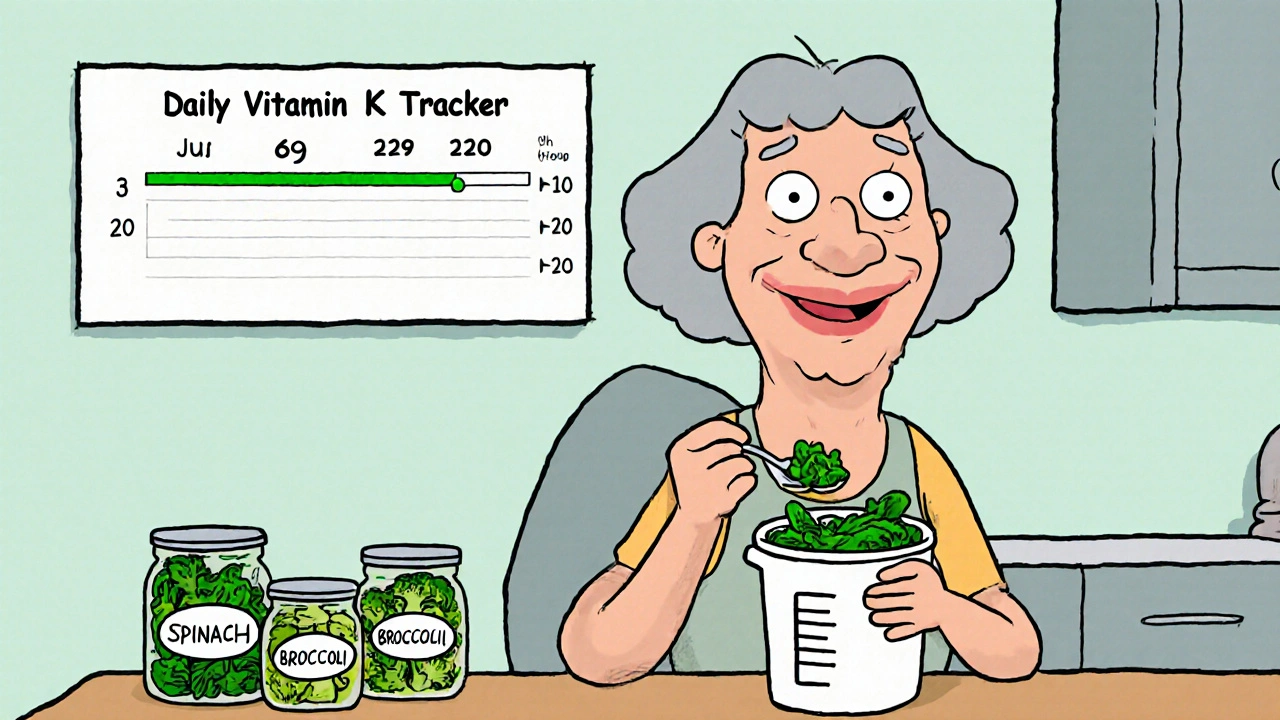
Learn how to eat vitamin K foods safely on warfarin. Consistency-not restriction-is the key to stable INR levels. Discover which foods matter most and how to build a routine that works.
INR Stability: What It Means and How Medications Affect Your Blood Clotting
When you're on a blood thinner like warfarin, a common anticoagulant used to prevent dangerous blood clots. Also known as Coumadin, it works by slowing down how quickly your blood clots. But it's not enough to just take it—you need INR stability, a measure of how long your blood takes to clot, tracked through a simple blood test. If your INR is too low, you're at risk for strokes or clots. Too high, and you could bleed internally from a minor bump. Keeping it steady isn’t optional—it’s life-saving.
Many things throw off your INR. Alcohol, whether it’s beer, wine, or spirits, can make your INR swing unpredictably. Even small amounts interfere with how your liver breaks down warfarin. Some antibiotics, antifungals, and even common painkillers like ibuprofen can do the same. And it’s not just drugs—your diet matters. Eating more leafy greens? That’s vitamin K, which directly counters warfarin’s effect. A sudden change in your spinach intake can drop your INR overnight. That’s why people on these meds need consistent meals, not fad diets. Even sleep patterns and stress levels can nudge your numbers. This isn’t about perfection—it’s about routine.
What makes INR stability tricky is how easily it’s disrupted. A single missed dose, a new supplement, or even a cold medicine can send your numbers off track. That’s why regular testing isn’t just recommended—it’s non-negotiable. Some people test weekly. Others every few weeks, depending on how steady they are. The goal isn’t to hit one perfect number every time, but to stay in your target range most of the time. Your doctor will set that range based on your condition—whether it’s for atrial fibrillation, a mechanical heart valve, or a past clot. And if your INR keeps bouncing around, it’s not you failing—it’s your treatment needing an adjustment.
You’ll find posts here that dig into how everyday things like alcohol, generics, and even drug shortages can quietly mess with your INR. One article breaks down how generic drugs can vary slightly in how they’re absorbed, which matters when you’re on the edge of a dangerous range. Another explains how desmopressin injection, used for bleeding disorders and bedwetting, can affect fluid balance and indirectly shift INR. There’s even a guide on how to spot when a medication side effect isn’t just annoying—it’s a red flag for your clotting levels. These aren’t theoretical discussions. They’re real-world insights from people who’ve been there.
If you’re managing INR stability, you’re not just taking a pill—you’re managing a system. It’s a balance of meds, food, habits, and monitoring. The posts below give you the practical tools to understand what’s really going on with your blood, why small changes matter, and how to stay safe without living in fear. You’ll learn what to watch for, what to ask your doctor, and how to avoid the hidden traps that make INR control feel impossible.