
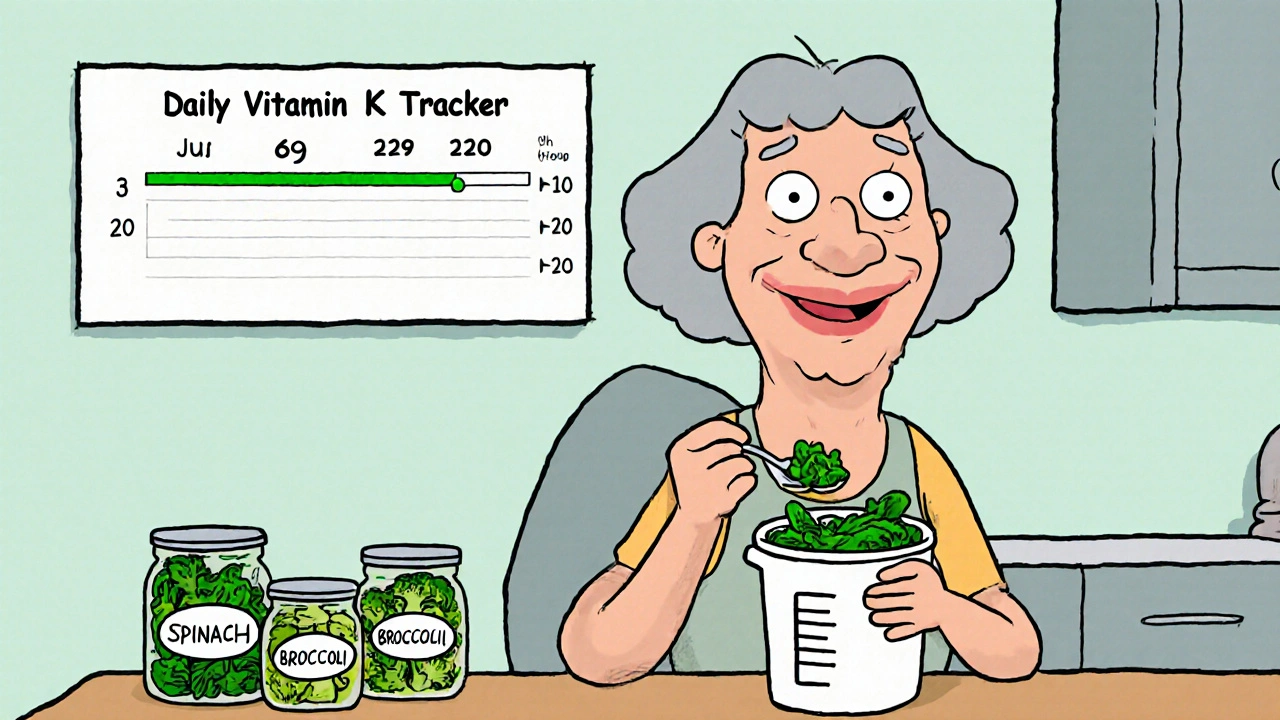
Learn how to eat vitamin K foods safely on warfarin. Consistency-not restriction-is the key to stable INR levels. Discover which foods matter most and how to build a routine that works.
Warfarin and Spinach: What You Need to Know About Food and Blood Thinners
When you take warfarin, a blood thinner used to prevent dangerous clots in people with atrial fibrillation, artificial heart valves, or a history of deep vein thrombosis. Also known as Coumadin, it works by blocking vitamin K’s role in clotting. But here’s the catch: spinach, a leafy green packed with vitamin K, a nutrient your body needs to make clotting proteins can directly interfere with how well warfarin works. It’s not about avoiding spinach entirely—it’s about keeping your intake steady. Sudden spikes or drops in vitamin K from foods like spinach, kale, broccoli, or Brussels sprouts can make your blood too thin or too thick, raising your risk of stroke or dangerous bleeding.
Many people think they have to give up healthy greens when on warfarin, but that’s not true. The real issue is vitamin K consistency, the steady daily intake of vitamin K-rich foods that helps keep your INR (a blood test that measures clotting time) stable. If you eat a big bowl of spinach Monday and none all week, your INR will swing. But if you eat a small serving every day, your body adjusts, and your warfarin dose stays effective. Your doctor or pharmacist will monitor your INR regularly, but you play the biggest role by eating the same amount of vitamin K each week. Don’t confuse this with avoiding all greens—just avoid wild swings. Other factors like alcohol, antibiotics, or even herbal supplements can also throw off your levels, which is why tracking your diet matters as much as taking your pill on time.
What you’ll find in the posts below isn’t just a list of foods to avoid. It’s a practical guide to living safely on warfarin without giving up the foods you love. You’ll learn how to balance your meals, recognize hidden sources of vitamin K, and spot early signs your medication isn’t working right. Whether you’re new to warfarin or have been on it for years, these real-world tips help you take control—not just follow rules.