
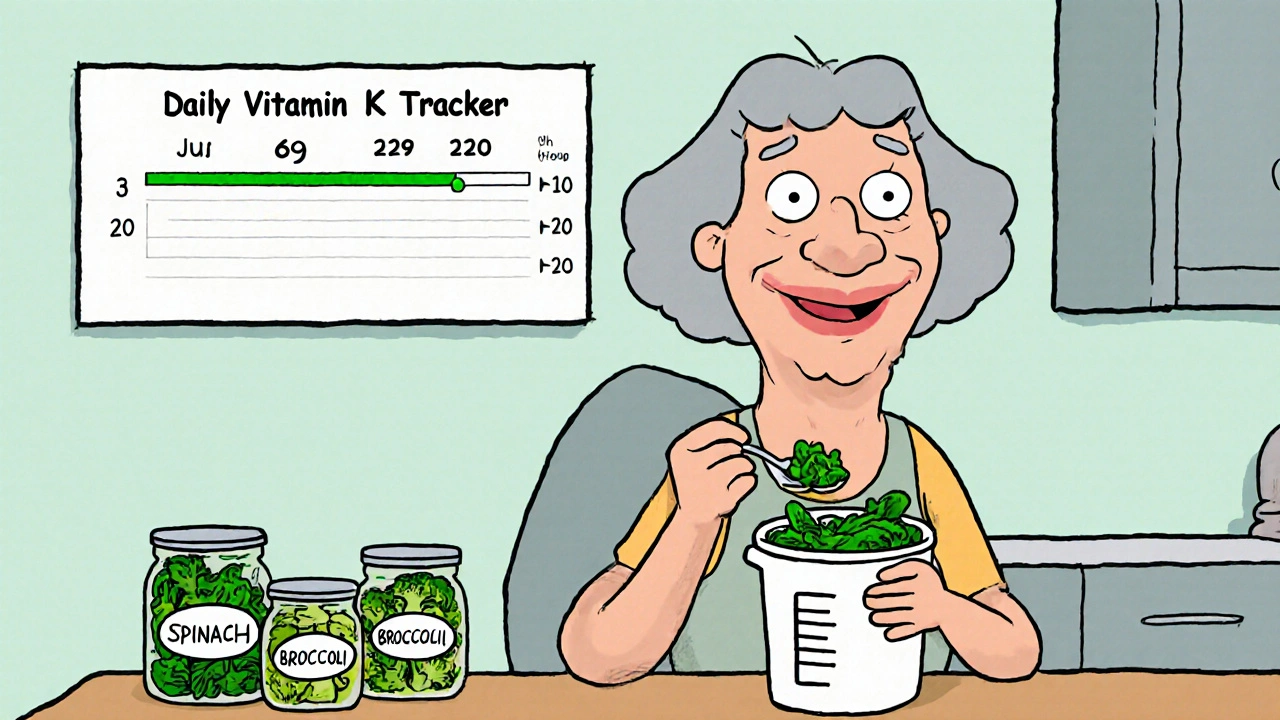
Learn how to eat vitamin K foods safely on warfarin. Consistency-not restriction-is the key to stable INR levels. Discover which foods matter most and how to build a routine that works.
Warfarin Diet: What to Eat and Avoid for Safe Blood Thinners
When you're on warfarin, a blood thinner used to prevent dangerous clots in people with atrial fibrillation, artificial heart valves, or a history of deep vein thrombosis. Also known as Coumadin, it works by blocking vitamin K from helping your blood clot. But here’s the catch: your diet directly changes how well it works. Eat too much vitamin K one week and too little the next, and your INR levels swing like a pendulum—putting you at risk for clots or dangerous bleeding.
Vitamin K, a nutrient your liver needs to make clotting factors is the main player here. Leafy greens like spinach, kale, and broccoli are packed with it. So are Brussels sprouts, cabbage, and green tea. That doesn’t mean you have to quit them. It means you need to keep your intake steady. If you normally eat a big salad every day, keep doing it. But if you suddenly switch to a kale smoothie every morning, your doctor will see your INR drop. On the flip side, alcohol, cranberry juice, and some herbal supplements like garlic, ginkgo, and St. John’s wort can make warfarin stronger, raising your bleeding risk. Even over-the-counter painkillers like ibuprofen can interfere. Your body doesn’t care if it’s from a pill or a smoothie—it just reacts to what’s in your system.
INR, the test that measures how long your blood takes to clot is your daily guide. Most people on warfarin aim for an INR between 2 and 3. Go below 2, and clots can form. Above 3, you’re at higher risk of bleeding, even from a minor bump. That’s why regular blood tests aren’t optional—they’re your safety net. And while you can’t control everything, you can control your plate. Stick to consistent portions of vitamin K foods. Don’t go on a detox cleanse or suddenly become a vegan warrior overnight. If you’re eating a lot of vitamin K, your dose may be adjusted—but only by your doctor, not by you.
You’ll find posts here that break down exactly which foods are safe, which to watch, and how alcohol, supplements, and even your favorite smoothies can throw your levels off. Some articles explain why generic warfarin isn’t always interchangeable with brand-name versions. Others show how side effects like bruising or nosebleeds can be early warning signs. There’s even a guide on what to do if you miss a dose or accidentally eat a huge serving of kale. This isn’t about fear. It’s about control. With the right diet and routine, warfarin keeps you safe. Without it, small choices can lead to big problems. What you eat today might be the difference between a normal day and a trip to the ER tomorrow.