
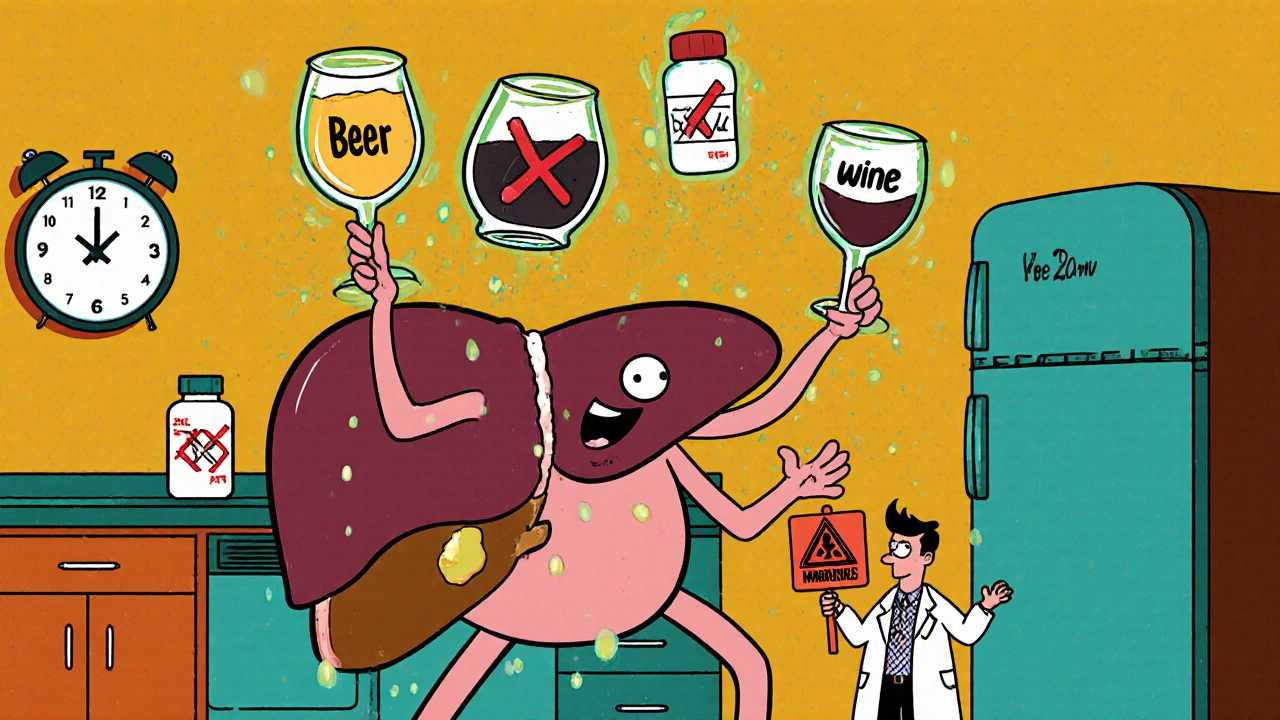
Alcohol interacts dangerously with many medications, regardless of whether it's beer, wine, or spirits. The real risk comes from ethanol content, not the drink type. Learn what's safe and what could be life-threatening.
Wine and Pills: What You Need to Know About Alcohol and Medications
When you take wine and pills, the combination of alcohol and prescription or over-the-counter drugs. Also known as alcohol-drug interactions, it can turn a simple evening drink into a serious health risk. This isn’t just about getting drunk faster—it’s about how alcohol changes how your body handles medicine, sometimes with life-threatening results.
Alcohol, a central nervous system depressant slows down your brain and liver. That’s fine on its own. But when you mix it with medications, substances designed to alter your body’s chemistry, things go sideways. Warfarin, for example, thins your blood. Add wine, and your INR can spike dangerously high. Statins already risk muscle damage—alcohol ramps up that risk. Even common painkillers like acetaminophen can turn toxic when paired with regular drinking. Your liver doesn’t have enough bandwidth to process both at once, and it starts dropping the ball.
It’s not just about the big stuff. Beta-blockers, sedatives, antidepressants, even allergy meds—alcohol makes them stronger, weaker, or unpredictable. You might feel dizzy when you stand up. Your heart might race. You could pass out. Or worse, your body might not break down the drug properly, leaving it hanging around longer than it should. And here’s the thing: you won’t always feel it coming. Many people think, "I’ve had wine with my pills for years, nothing happened." But that’s like saying, "I’ve driven without a seatbelt and never crashed." One time is all it takes.
Some meds are worse than others. Insulin? Alcohol can mask low blood sugar symptoms—your body stops warning you before it crashes. Desmopressin? Alcohol messes with fluid balance, raising the risk of dangerously low sodium. Even something as simple as a sleep aid becomes a gamble when mixed with wine. And if you’re on generic drugs—like those saved billions in U.S. healthcare spending—don’t assume they’re safer. The active ingredient is the same. The alcohol interaction doesn’t care if it’s brand or generic.
It’s not about giving up wine. It’s about knowing when it’s safe. If you’re on any regular medication, check the label. Ask your pharmacist. Look up the interaction yourself. Most doctors won’t bring it up unless you ask. Don’t wait for a reaction to teach you. The safest move? Keep wine and pills separate. If you’re unsure, skip the glass. Your body will thank you.
Below, you’ll find real, practical guides on how specific drugs behave with alcohol, what side effects to watch for, and how to avoid hidden dangers—whether you’re on warfarin, statins, insulin, or something else entirely. No fluff. Just what you need to know to stay safe.