
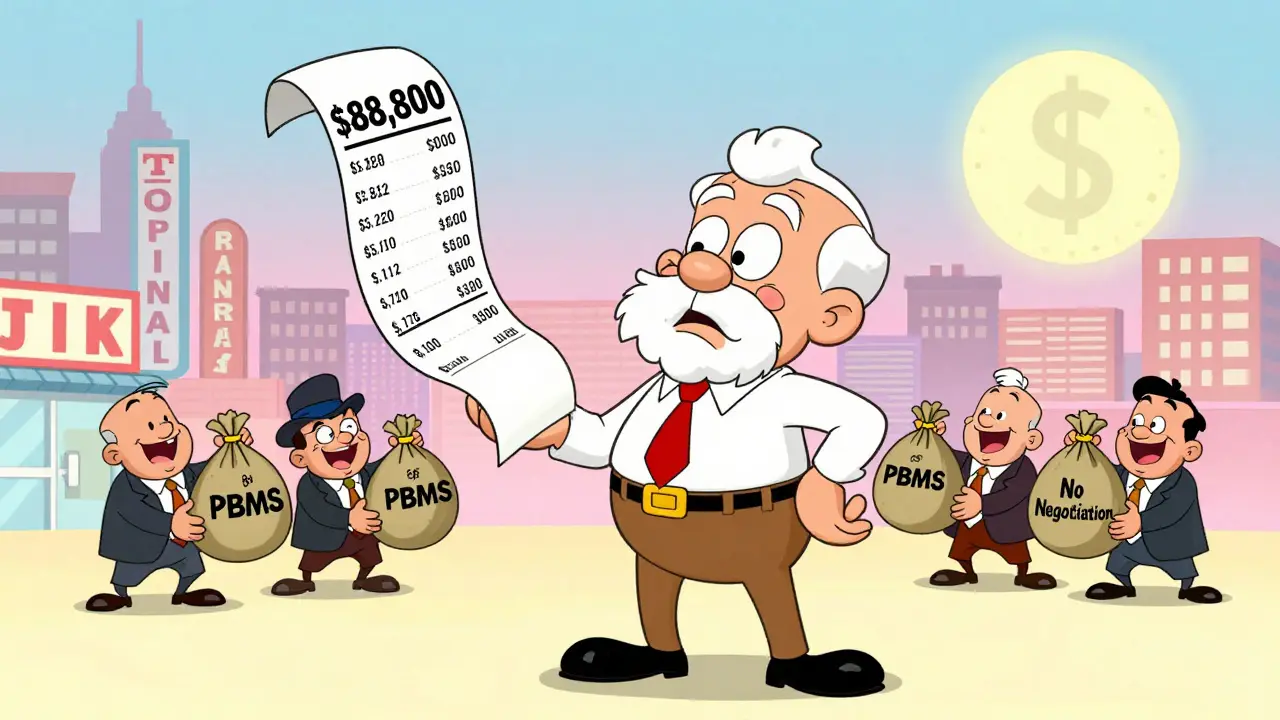
If you’ve ever stared at a pharmacy receipt and wondered how a small bottle of pills could cost more than your monthly internet bill, you’re not alone. In the United States, people pay more than three times what patients in other wealthy countries pay for the exact same medication - often made in the same factory, with the same ingredients. A drug called Galzin, used to treat Wilson’s disease, costs $88,800 a year in the U.S. In the UK, it’s $1,400. In Germany, $2,800. That’s not a mistake. That’s the system.
How Did We Get Here?
The roots of America’s high drug prices go back decades, to laws written with good intentions but unintended consequences. The biggest one? The Medicare Modernization Act of 2003. It created Medicare Part D, the prescription drug benefit for seniors. Sounds helpful, right? But the law specifically banned Medicare from negotiating drug prices directly with manufacturers. That meant the government, which buys drugs for over 60 million people, couldn’t use its massive buying power to get lower prices - unlike Canada, the UK, or Germany. Meanwhile, pharmaceutical companies were free to set whatever price they wanted. And they did. The result? The U.S. accounts for less than 5% of the world’s population but makes up nearly 75% of global pharmaceutical profits. That’s not because Americans are sicker. It’s because they’re paying far more.The Middlemen: Who’s Really Making Money?
You might think the drugmaker sets the final price. But that’s only the start. Between the factory and your hands, there are layers of middlemen - and each one takes a cut. Enter Pharmacy Benefit Managers, or PBMs. These companies were originally hired by insurers to negotiate discounts. Today, they’re huge corporations that own pharmacies, manage insurance networks, and control which drugs get covered. Their business model? They get paid based on the list price of drugs - not the final price you pay. So the higher the list price, the bigger their rebate. That creates a perverse incentive: PBMs push for higher list prices to maximize their own profits, even if it makes drugs more expensive for patients. Insurers, hospitals, and distributors all add their own fees. But none of them are transparent about how much they’re charging. You never see the full breakdown. The price you’re shown at the pharmacy counter? It’s not the real price. It’s a messy mix of list price, rebates, discounts, and hidden fees.Specialty Drugs Are Breaking the Bank
Not all drugs are created equal. The biggest price spikes are coming from specialty medications - drugs for cancer, rare diseases, diabetes, and obesity. These aren’t old generics you’ve been taking for years. They’re new, complex, and expensive to develop. Take Ozempic and Wegovy. These diabetes and weight-loss drugs became household names. In 2025, the White House announced deals to cut their prices from over $1,000 a month to $350. That sounds like progress. But here’s the catch: those prices were set by the manufacturer, not negotiated by the government. And even at $350, that’s still $4,200 a year. For someone on a fixed income, that’s a lot. IQVIA reports that in 2024, U.S. drug spending jumped 11.4% - up from 4.9% the year before. The main drivers? These new specialty drugs. They’re not just expensive. They’re growing fast. More people are using them. More insurers are covering them. And more profits are being made.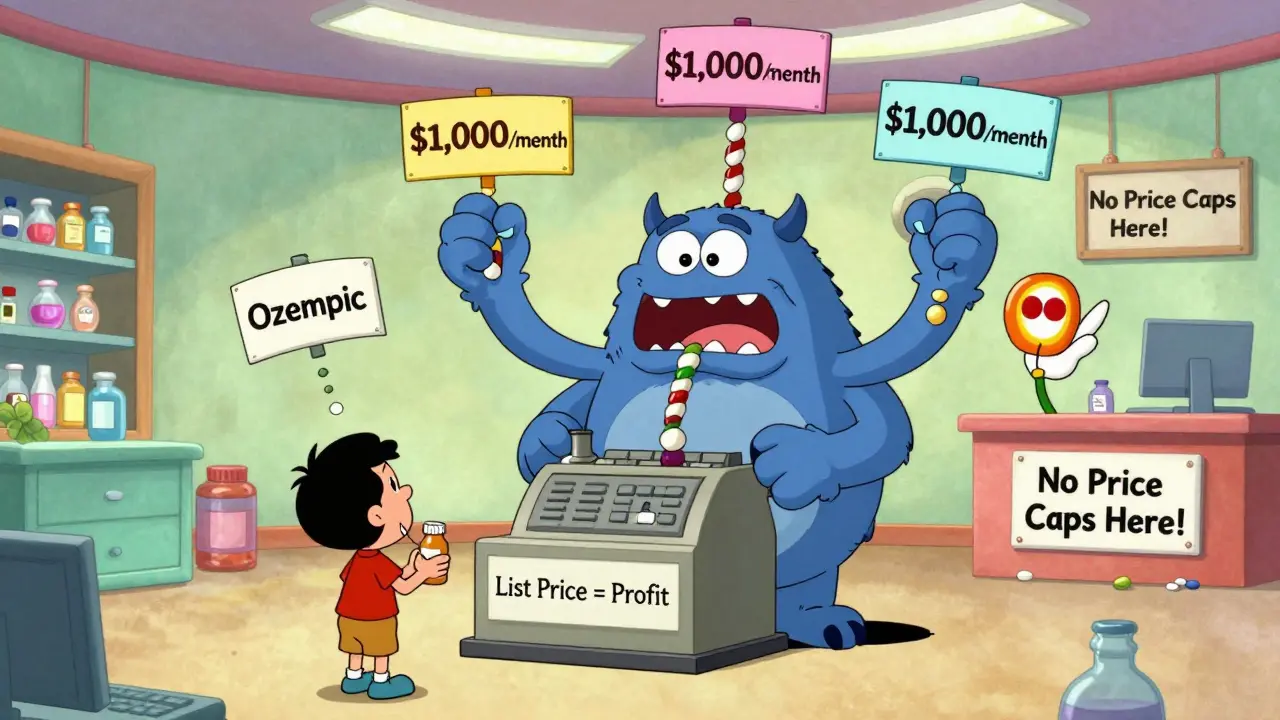
The Inflation Reduction Act: Real Change or Window Dressing?
In 2022, Congress passed the Inflation Reduction Act. It was supposed to fix this mess. The law gave Medicare the power to negotiate prices for a small number of drugs - ten in 2026, up to 20 by 2029. It also forced drugmakers to pay rebates if they raised prices faster than inflation. By January 2025, the Department of Health and Human Services announced savings on 64 drugs. For many Medicare beneficiaries, that meant lower monthly bills. The law also capped out-of-pocket drug costs at $2,000 a year for seniors - a huge win for people who used to skip doses or split pills to stretch their supply. But here’s the problem: the 2025 budget bill weakened the law. It slowed down the negotiation process and reduced the number of drugs eligible. Experts at KFF estimate this will cost Medicare at least $5 billion more over the next decade. And while the White House touts the $350 price cuts on Ozempic and Wegovy, those were voluntary deals - not results of negotiation. The core issue remains: Medicare still can’t negotiate prices for most drugs.Why Other Countries Don’t Have This Problem
Look at Germany. They set prices based on what other countries pay. If a drug costs $10,000 in the U.S. and $2,000 in France, Germany will cap it at $2,000. Canada does something similar. The UK’s National Health Service negotiates directly with drugmakers - and wins. In the U.S., we don’t have any of that. No price controls. No reference pricing. No real negotiation. Drugmakers can charge whatever they want, and there’s no legal limit. That’s why Senator Bernie Sanders calls it a global subsidy: Americans pay the difference so other countries can afford their medicines. Even when presidents promise to lower prices - like the Trump administration’s 2025 executive order to align U.S. prices with those in other nations - the results are mixed. Sanders’ report found 87 drugs got more expensive after those letters were sent. The system isn’t broken because of bad actors. It’s broken because the rules were designed to let profits run wild.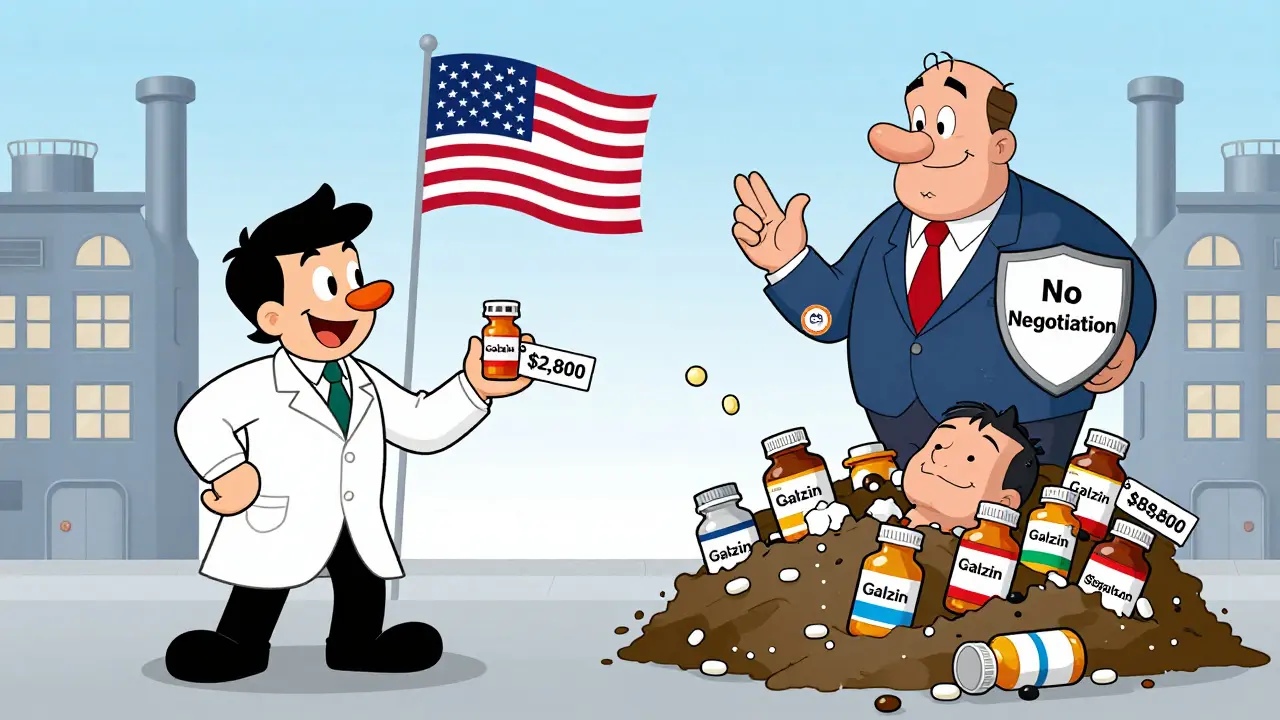
What’s Next? The Fight Isn’t Over
The pressure is building. More patients are rationing insulin. More seniors are choosing between medicine and groceries. The American Progress report warns that a future plan called Project 2025 could raise costs for 18.5 million Medicare beneficiaries. That’s not speculation. That’s a policy proposal. The real solution? Start with negotiation. Let Medicare bargain like every other wealthy country. End the PBM rebate system that rewards higher prices. Require full price transparency - so patients know what they’re really paying. And stop letting patent loopholes keep drugs expensive for decades. Some say drug companies need high prices to fund research. But the truth is, most new drugs are built on decades of publicly funded science - from NIH labs to university research. The private sector just packages it and sells it at 10x the cost. For now, the system still works - for drugmakers and PBMs. It’s just not working for the people who need the pills.What You Can Do
If you’re struggling with drug costs, you’re not powerless.- Ask your pharmacist if a generic version exists - even if your doctor didn’t prescribe it.
- Use GoodRx or SingleCare to compare prices across pharmacies. Sometimes the cash price is lower than your insurance copay.
- Apply for patient assistance programs. Most drugmakers offer them - if you know where to look.
- Call your Medicare plan and ask: which drugs are on the preferred list? Can I switch to a lower-cost alternative?
- Join advocacy groups pushing for price negotiation. Your voice matters.
There’s no magic fix. But change is possible - if enough people demand it.
Why are prescription drugs so much more expensive in the U.S. than in other countries?
The U.S. doesn’t allow the government to negotiate drug prices for Medicare or private insurers, unlike Canada, the UK, or Germany. Drugmakers set their own prices, and middlemen like Pharmacy Benefit Managers profit from higher list prices. There are no legal price caps, so companies can charge what the market will bear - and Americans pay the difference.
Do Pharmacy Benefit Managers (PBMs) make drug prices higher?
Yes. PBMs are paid based on the list price of drugs, not the final cost to patients. This creates a conflict of interest: they benefit when list prices go up, even if it makes drugs harder to afford. They often push for higher-priced drugs to get bigger rebates, and they keep the rebate money instead of passing it to consumers.
Has the Inflation Reduction Act lowered drug prices?
It has helped - but only for a few drugs. In 2025, Medicare started negotiating prices for 10 drugs, and rebates were triggered on 64 others that raised prices faster than inflation. The $2,000 annual out-of-pocket cap for Medicare Part D also saved many seniors money. But the 2025 budget bill weakened the law, slowing down future negotiations and reducing potential savings.
Why do some drugs cost $88,000 a year in the U.S. but under $2,000 elsewhere?
It’s because the U.S. lacks price controls. A drug like Galzin, used for Wilson’s disease, is made by the same company and shipped from the same factory worldwide. In countries with price negotiation, the government sets a fair price. In the U.S., the manufacturer charges what it wants - and insurers, PBMs, and pharmacies accept it because there’s no legal way to challenge it.
Are drug companies justified in charging high prices because of R&D costs?
Not entirely. While developing new drugs is expensive, most breakthroughs come from publicly funded research - like NIH grants and university labs. Private companies often take those discoveries, patent them, and sell them at 10x or 100x the cost. In fact, the top 10 drugmakers spent more on stock buybacks and executive pay than on research in 2024, according to a KFF analysis.
What’s Project 2025, and how would it affect drug prices?
Project 2025 is a policy plan from conservative groups that proposes major changes to Medicare. One key part would eliminate the $2,000 out-of-pocket cap and weaken Medicare’s ability to negotiate drug prices. According to the Center for American Progress, it could raise costs for as many as 18.5 million seniors and people with disabilities on Medicare.
Can I really save money on prescriptions right now?
Yes. Use GoodRx or SingleCare to compare cash prices - sometimes they’re lower than your insurance copay. Ask your pharmacist for generics or therapeutic alternatives. Apply for manufacturer patient assistance programs - most offer free or low-cost drugs to qualifying patients. And if you’re on Medicare, review your plan’s formulary every year to switch to lower-cost options.
Bryan Coleman
February 1, 2026 AT 00:18man i just got hit with a $400 copay for my diabetes med last month. i work full time and still cant afford it. they say 'use goodrx' but half the pharmacies dont even take it. the system is rigged.
Naresh L
February 2, 2026 AT 09:29it’s fascinating how capitalism turns health into a commodity. in india, we don’t have this madness - generics are cheap because the government regulates them. here, profit is the only law. i wonder if the founders of this nation ever imagined pills would cost more than rent.
Sami Sahil
February 3, 2026 AT 08:23bro i just found out my cousin in canada pays $15 for the same insulin i pay $300 for. we’re talking same drug same factory. this isnt capitalism this is robbery with a white coat. time to burn the system down 🔥
Aditya Gupta
February 3, 2026 AT 17:12you dont need to be a doctor to get this. if you can buy a $1000 phone but cant afford $500 meds - something’s wrong. the answer isnt more apps. its price caps. and pbms need to go. theyre the middlemen eating the whole pie.
Nidhi Rajpara
February 5, 2026 AT 10:58While I appreciate the sentiment expressed herein, it is imperative to acknowledge that pharmaceutical innovation necessitates substantial capital investment. Without the ability to recoup R&D expenditures through premium pricing, future breakthroughs may be jeopardized. The current framework, while imperfect, incentivizes advancement.
Chris & Kara Cutler
February 6, 2026 AT 23:25OMG YES!! I used GoodRx and saved $200 on my thyroid med 😭 thank you for posting this - i feel less alone now. also pbms are evil. just sayin'.
Donna Macaranas
February 7, 2026 AT 09:12i’ve been rationing my asthma inhaler for months. i dont say anything because i dont want to sound like a complainer. but reading this? it made me cry. thank you for saying what so many of us are too scared to say out loud.
Rachel Liew
February 8, 2026 AT 19:38my mom split her 50mg pill in half just to make it last. she’s 72. she’s not lazy. she’s just poor. this isn’t about being irresponsible - it’s about a system that doesn’t care if you live or die as long as the stock price goes up.
vivian papadatu
February 10, 2026 AT 19:28as someone who lived in germany for five years, i can confirm - their drug pricing system works. they negotiate. they cap. they prioritize health over profit. here, we have a healthcare system designed by lobbyists, not doctors. it’s not an accident. it’s by design.
Melissa Melville
February 12, 2026 AT 06:04so let me get this straight - we pay $88k for a pill that costs $1.4k elsewhere, and the CEO gets a bonus? cool. cool cool cool. next time i go to the pharmacy i’m gonna bring a sign that says ‘I AM A SUBSIDY FOR GERMANY’.
Naomi Walsh
February 12, 2026 AT 17:46you’re all missing the point. this isn’t about fairness - it’s about value. if a drug saves a life, it’s worth whatever it costs. your outrage is emotional, not economic. the market determines price, not your feelings. get over it.