

Autoimmune thyroid eye disease isn’t just dry eyes or puffiness you can blame on lack of sleep. It’s a serious, often misunderstood condition where your immune system turns against the tissues around your eyes - causing bulging, double vision, pain, and sometimes permanent vision loss. If you’ve been told you have Graves’ disease and your eyes feel like they’re being pushed forward, or you can’t close them fully at night, this isn’t normal. It’s thyroid eye disease - or TED - and the way we treat it has changed dramatically since 2020.
What Exactly Is Thyroid Eye Disease?
Thyroid eye disease (TED), also called Graves’ orbitopathy, happens when immune cells attack the fat and muscles behind your eyes. These cells carry antibodies that mistakenly latch onto receptors in your eye tissues - the same receptors thyroid cells use. This triggers inflammation, swelling, and scarring. About 90% of TED cases happen in people with Graves’ disease, an autoimmune disorder that overstimulates the thyroid. But it can also show up in people with underactive thyroids or even normal thyroid levels.
The disease doesn’t strike all at once. It usually follows a two-phase pattern. First comes the active phase - lasting 6 months to 3 years - where inflammation rages. Eyes swell, redness appears, double vision kicks in, and pain worsens with movement. Then comes the inactive phase, where inflammation settles but the damage remains: eyes stay bulged, eyelids don’t close right, and muscles stay misaligned. This is when surgery becomes an option.
Common Symptoms You Can’t Ignore
Most people with TED notice one or more of these signs:
- Protruding eyes (proptosis) - the most visible symptom, making you look startled or wide-eyed
- Eyelid retraction - upper lids pulled too high, lower lids pulled down, exposing more of the white of the eye
- Grittiness or a sandy feeling - reported by 78% of patients
- Dry, watery, or overly sensitive eyes - 65-80% experience this
- Double vision (diplopia) - happens in about half of moderate to severe cases
- Pain behind the eyes, especially when looking up, down, or side to side
- Difficulty closing eyelids - 45% can’t fully blink, risking corneal damage
- Blurred vision or color vision changes - early warning signs of optic nerve pressure
It’s usually worse in one eye than the other - often by 30-40%. Many patients describe it as feeling like something’s pushing their eyes out from behind. And it’s not just physical. A 2022 survey found 74% of people with TED developed anxiety or depression. Nearly two-thirds said they felt embarrassed by their appearance. Some lost jobs. Others stopped driving at night because double vision made it unsafe.
How Doctors Diagnose TED
There’s no single test. Diagnosis combines thyroid function checks with eye exams. Your doctor will likely order:
- Thyroid blood tests: TSH, free T4, free T3
- Anti-TSHR antibody test - levels above 15 IU/mL strongly suggest TED and predict response to newer drugs
- Visual field test - to check for blind spots caused by optic nerve pressure
- Optical coherence tomography (OCT) - scans the layers of the retina and optic nerve
- Orbital MRI or CT scan - shows swollen eye muscles, especially the medial and inferior rectus muscles
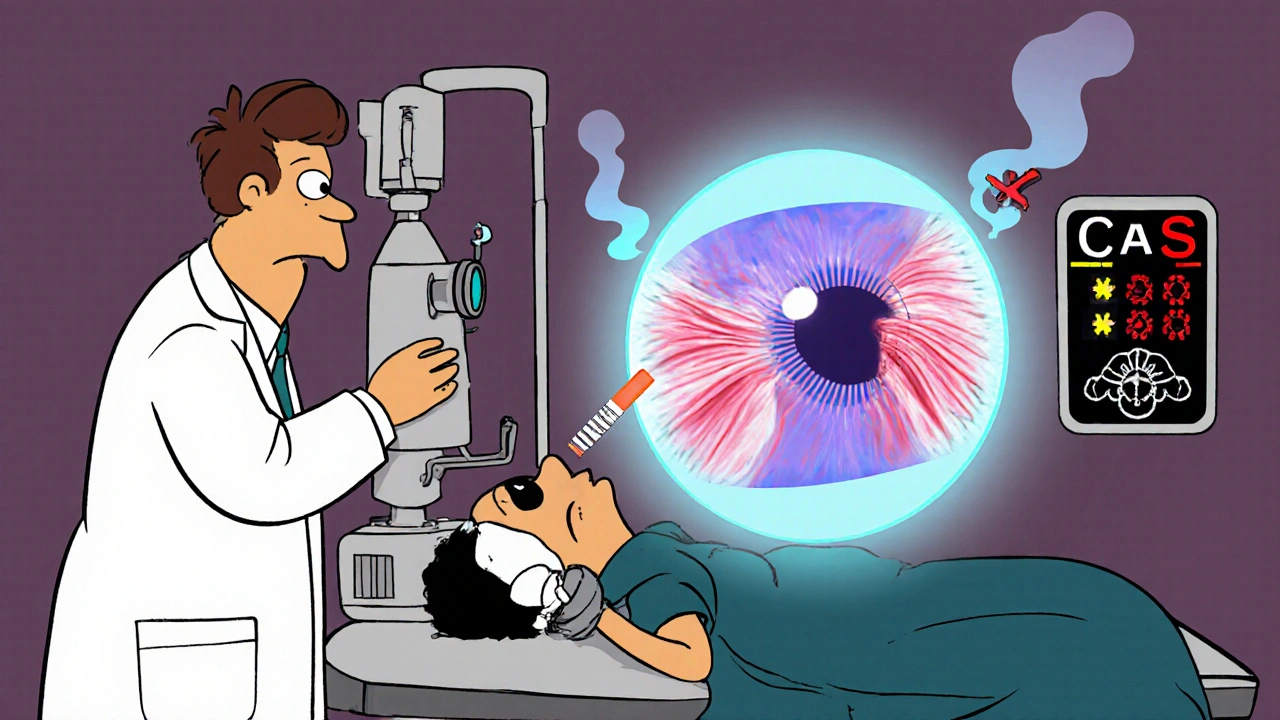
- Clinical Activity Score (CAS) - a 7-point checklist measuring redness, swelling, pain, and other signs of active inflammation. A score of 3 or higher means you’re in the active phase and need treatment now.
Here’s the catch: primary care doctors miss TED in nearly half of cases. They often think it’s allergies, sinus infections, or just aging. That’s why seeing an ophthalmologist who specializes in TED - especially within 30 days of symptoms starting - can make all the difference.
Treatment Has Changed - Big Time
Before 2020, treatment options were limited. Steroids were the go-to, but they came with serious side effects: liver damage, high blood sugar, weight gain, and mood swings. And they didn’t always work.
Then came teprotumumab (Tepezza). Approved by the FDA in January 2020, it was the first drug ever designed specifically for TED. It blocks the IGF-1 receptor, a key player in the inflammation process. In clinical trials, it reduced eye bulging by 71% compared to just 20% in placebo. Double vision improved in 68% of patients. Most people get eight infusions, one every three weeks. Each dose costs about $5,500 - so a full course runs around $44,000. Insurance often fights it, with 35% of initial requests denied.
But for many, it’s life-changing. A 42-year-old woman from Ohio regained her ability to drive after 18 months of double vision. A 35-year-old man in Texas wasn’t so lucky - he waited too long. By the time he got help, his optic nerve was permanently damaged. That’s why timing matters. Experts now say: treat during the active phase, ideally within the first 12 months.
Other Treatments Still in Use
Tepezza isn’t the only option. For mild cases, selenium supplements (100 mcg twice daily) can cut the risk of worsening by 35%. That’s backed by a major European trial.
For moderate to severe active TED, high-dose IV steroids - methylprednisolone - are still used. A typical course is 500 mg weekly for six weeks, then 250 mg weekly for another six. About 60-70% of patients improve. But 15% get liver toxicity. One in four develop high blood sugar. That’s why treatment is limited to 12 weeks.
When the disease goes inactive, surgery becomes the focus:
- Orbital decompression - removes bone behind the eye to create space. Used in 5-10% of cases, especially when vision is threatened. Endoscopic (minimally invasive) approaches now make up 65% of these surgeries.
- Strabismus surgery - realigns eye muscles to fix double vision. Works in 30-40% of patients.
- Eyelid surgery - lowers retracted eyelids. Success rates hit 75-85% when done after the disease has been quiet for at least six months.
Some patients need multiple surgeries over time. One study found 20% required two or more procedures to fix bulging, then double vision, then eyelid issues - all in sequence.
What You Can Do Right Now
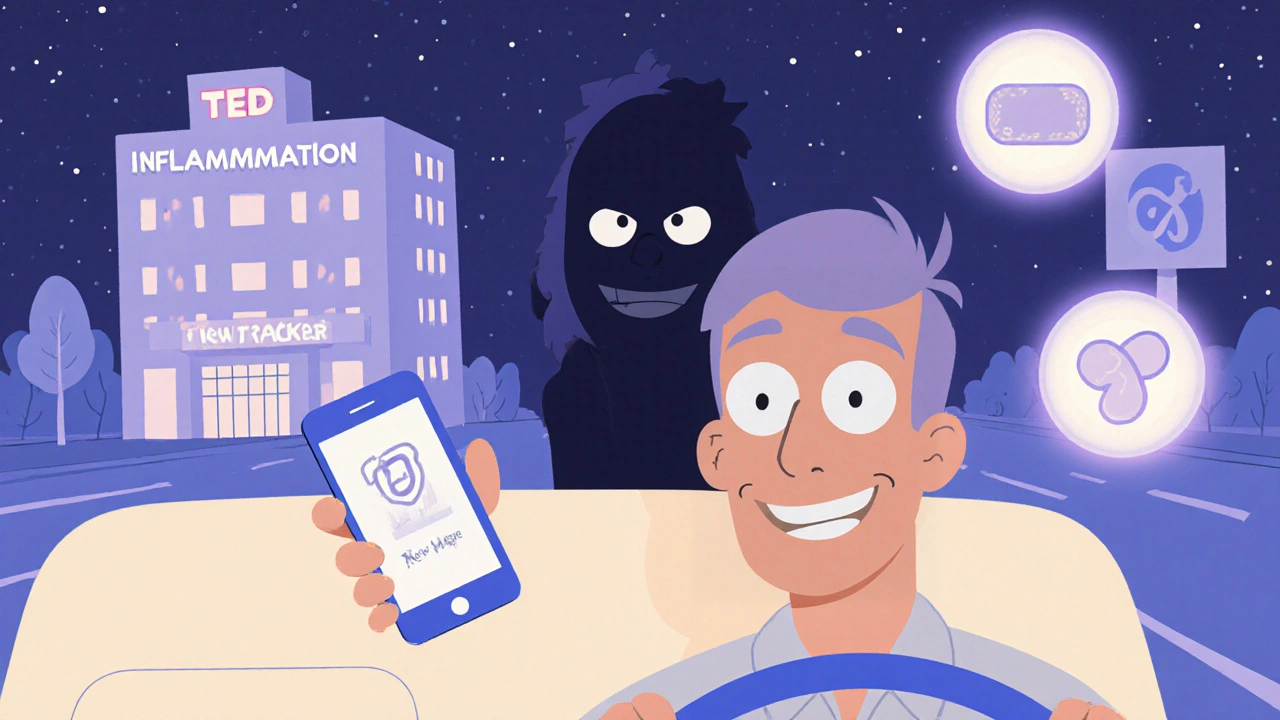
Smoking is the biggest risk factor. It doesn’t just increase your chance of getting TED - it makes it seven times worse. Quitting is the single most effective thing you can do. Even if you’ve had symptoms for months, quitting now can still slow progression.
Protect your eyes. Use lubricating drops often. Wear sunglasses. Sleep with your head elevated to reduce swelling. Tape your eyelids shut at night if they don’t close fully - this prevents corneal ulcers.
Track your symptoms. Use the TED Tracker app (downloaded over 8,500 times) to log eye pain, redness, and vision changes. This helps your doctor see patterns and decide when to intervene.
What’s Coming Next?
The future of TED treatment is moving fast. Tepezza’s biosimilar, teprotumumab-trbw, is expected in 2025 and could cut costs by 40%. Other drugs in trials include rituximab (shows promise in steroid-resistant cases) and satralizumab (an anti-IL-6 antibody with 52% response rate in early studies).
Scientists are also working on vaccines that could stop TED before it starts - targeting the TSHR antibodies that trigger the whole process. These are still in preclinical testing, but if they work, they could prevent TED in people with Graves’ disease entirely.
Right now, the goal is early action. If you have Graves’ disease and your eyes feel off - even mildly - don’t wait. See an endocrinologist and an ophthalmologist who knows TED. The window for the best outcomes is narrow. Once the inflammation settles, the damage is harder to reverse.
Why This Matters
Thyroid eye disease isn’t rare - it affects 90 to 300 people per 100,000. But it’s underdiagnosed and undertreated. The global market for TED drugs is projected to hit $1.8 billion by 2028. That’s not just business - it’s proof that we’re finally treating this condition with the urgency it deserves.
For patients, it means hope. Hope that bulging eyes can recede. Hope that double vision can vanish. Hope that you won’t have to live with a face that looks like it’s under attack - because it is. And now, we have the tools to fight back.
Chetan Chauhan
November 29, 2025 AT 11:14tepezza cost 44k? lol sure thing buddy. next theyll charge us for oxygen and sunlight
Barbara McClelland
November 29, 2025 AT 16:42I had a friend go through this last year. She started tepezza after 8 months of double vision and now she’s driving again. It’s not magic but it’s the closest thing we’ve got. Don’t wait like he did in the article - time is everything.
Alexander Levin
November 29, 2025 AT 23:47tepezza was funded by big pharma to replace steroids because they wanted a more expensive product. same old game. they don’t care if you go blind - just as long as your insurance pays.
Jermaine Jordan
December 1, 2025 AT 23:13This isn’t just a medical condition - it’s a psychological warzone. Imagine looking in the mirror and seeing a stranger staring back with eyes that look like they’re trying to escape their sockets. And then being told, ‘It’s just inflammation.’ No. It’s your immune system staging a coup inside your skull. Tepezza doesn’t just reduce proptosis - it restores dignity. That’s not a drug. That’s a revolution.
And yet, insurance companies still treat it like a luxury spa treatment. We’re talking about people who can’t blink. Who can’t drive. Who’ve lost jobs because their face looks ‘unstable.’ This isn’t cosmetic. It’s neurological. It’s existential. And we’re still haggling over co-pays?
The fact that we have a drug that reverses damage instead of just masking symptoms? That’s science winning. Not corporate greed. Not luck. Science. And if you’re sitting on the sidelines waiting for it to get cheaper, you’re betting against your own vision.
Quit smoking. Not because it’s ‘good for you.’ Because if you don’t, your eyes will turn into two overinflated balloons in a hurricane. And no amount of drops or tape will fix that.
And if you’re reading this and you’ve been told ‘it’s just dry eyes’ - run. Not walk. Run to an ophthalmologist who knows TED by name, not by acronym. Your future self will thank you.
Pranab Daulagupu
December 3, 2025 AT 11:45Tepezza’s mechanism targeting IGF-1R is brilliant - blocks the downstream inflammatory cascade without systemic immunosuppression. Selenium for mild cases is underutilized globally - especially in low-resource settings. We need better access models.
Ady Young
December 4, 2025 AT 23:28I’ve seen this firsthand. My cousin got diagnosed after her optometrist thought it was allergies for six months. By then, the inflammation was already doing permanent damage. She got tepezza but had to wait 90 days for approval. That delay cost her two weeks of vision clarity. Insurance needs to stop treating this like a dental claim.
Travis Freeman
December 6, 2025 AT 13:02As someone from India, I’ve noticed how rare TED awareness is here. Even doctors confuse it with conjunctivitis. I’m sharing this post with my medical school friends - this is the kind of info that saves sight. Thanks for writing it.
Chris Taylor
December 7, 2025 AT 14:06My mom had this. She didn’t even know it was linked to her thyroid until her eye doctor said, ‘This isn’t aging.’ We cried. Then we got her on selenium. It helped. Not perfect, but better.
Melissa Michaels
December 7, 2025 AT 14:27Orbital decompression success rates are higher with endoscopic techniques but require specialized surgeons. Patients should seek centers with multidisciplinary TED teams including endocrinology, ophthalmology, and radiology
Sean Slevin
December 9, 2025 AT 12:46Why do we treat the eye as if it’s separate from the thyroid? The immune system doesn’t read textbooks. It doesn’t care about organ boundaries. We’re fighting a system-wide malfunction - and yet we patch it like a leaky faucet. Tepezza is a bandage on a ruptured artery. We need to understand why the antibodies form in the first place. The real cure isn’t in the IV bag - it’s in the genome.
And what if TED isn’t an autoimmune disease at all… but a misfire in molecular recognition? What if the TSHR isn’t the villain… but the messenger? We’re treating the symptom, not the signal.
And why is smoking the #1 trigger? Is it the toxins? Or is it the chronic oxidative stress that rewires immune signaling? We need more basic science - not just more drugs.
Nathan Brown
December 9, 2025 AT 21:45People say ‘just quit smoking’ like it’s easy. What if you’re stressed? What if you’re depressed because your eyes look like they’re falling out of your face? Quitting isn’t willpower - it’s support. We need mental health resources built into TED clinics.
I lost my job because I couldn’t drive at night. No one understood. No one believed me. Tepezza saved my sight, but the loneliness? That’s still here.
Matthew Stanford
December 11, 2025 AT 04:29For anyone reading this who’s scared - you’re not alone. I’ve been where you are. The mirror, the double vision, the fear that no one sees you. But TED is treatable. And the community around it? It’s growing. Find your people. Join a support group. Talk to someone who’s been there. Healing isn’t just medical - it’s human.
Phil Thornton
December 11, 2025 AT 16:37My eyes feel weird sometimes. Maybe I have it? Should I panic?