
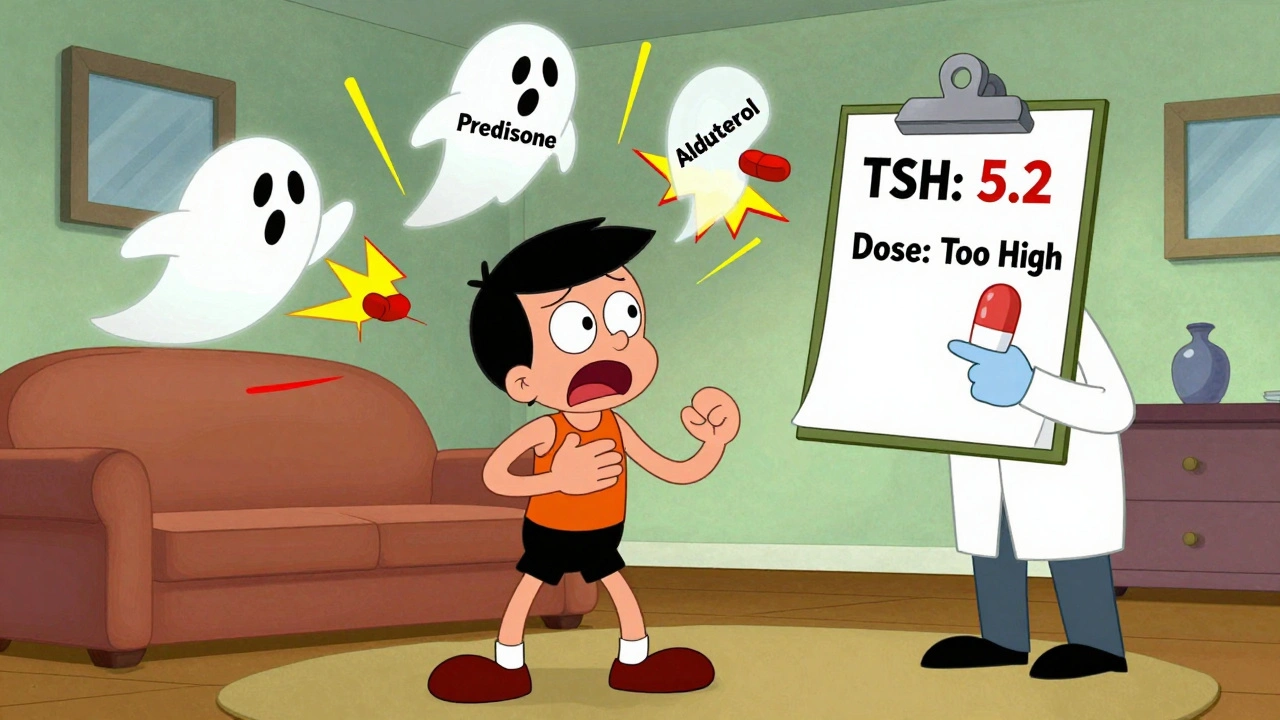
Many common medications can trigger anxiety symptoms like panic attacks, racing heart, and jitteriness. Learn which drugs cause it, how to tell if it's the medicine, and what to do next.
Anxiety from Steroids: Causes, Risks, and What to Do
When you take steroids, synthetic versions of hormones your body naturally makes, often used to reduce inflammation or treat autoimmune conditions. Also known as corticosteroids, they can help with asthma, arthritis, or skin conditions—but they don’t just target inflammation. These drugs also affect your brain chemistry, and for some people, that leads to anxiety from steroids. It’s not just feeling nervous. People report panic attacks, irritability, insomnia, racing thoughts, and in severe cases, hallucinations or paranoia. This isn’t rare—it’s a well-documented side effect, especially with high doses or long-term use.
The brain doesn’t distinguish between natural cortisol and the synthetic kind in pills like prednisone or methylprednisolone. When you flood your system with extra steroids, your hypothalamus-pituitary-adrenal axis gets thrown off. Your body starts producing less of its own cortisol, and when you stop the meds, it can’t catch up fast enough. That crash? It can feel like a panic attack. Even while you’re still taking them, the excess hormones overstimulate areas of the brain tied to fear and stress. Studies show up to 6% of people on long-term oral steroids develop significant psychiatric symptoms, and anxiety is the most common. It hits harder in people with a history of depression, bipolar disorder, or past trauma. Age matters too—older adults and teens are more vulnerable.
It’s not just about the dose. How fast you start or stop matters. Tapering too quickly can trigger withdrawal anxiety, a rebound effect where your nervous system goes into overdrive after steroid suppression. Also known as steroid withdrawal syndrome, this isn’t just psychological—it’s a physical response your body is struggling to reset. Some people feel fine on the meds, then crash days or weeks after stopping. And if you’re taking steroids along with other drugs—like antidepressants, stimulants, or even caffeine—the risk multiplies. Your body’s already under stress; adding another layer can push you over the edge.
If you’re on steroids and suddenly feel like you’re losing control, don’t ignore it. Talk to your doctor. Don’t quit cold turkey. Your provider might adjust your dose, switch you to a different steroid, or add a short-term anti-anxiety plan. Sometimes, switching from oral to inhaled or topical steroids cuts the risk. For others, therapy or mild sleep aids help bridge the gap. The key is catching it early. Left unchecked, steroid-induced anxiety can spiral into depression, suicidal thoughts, or full-blown psychosis. You’re not weak for feeling this. You’re just reacting to a powerful drug. And you’re not alone—thousands deal with this every year. Below, you’ll find real stories and science-backed advice on how to manage it, reduce the risk, and get back to feeling like yourself.