
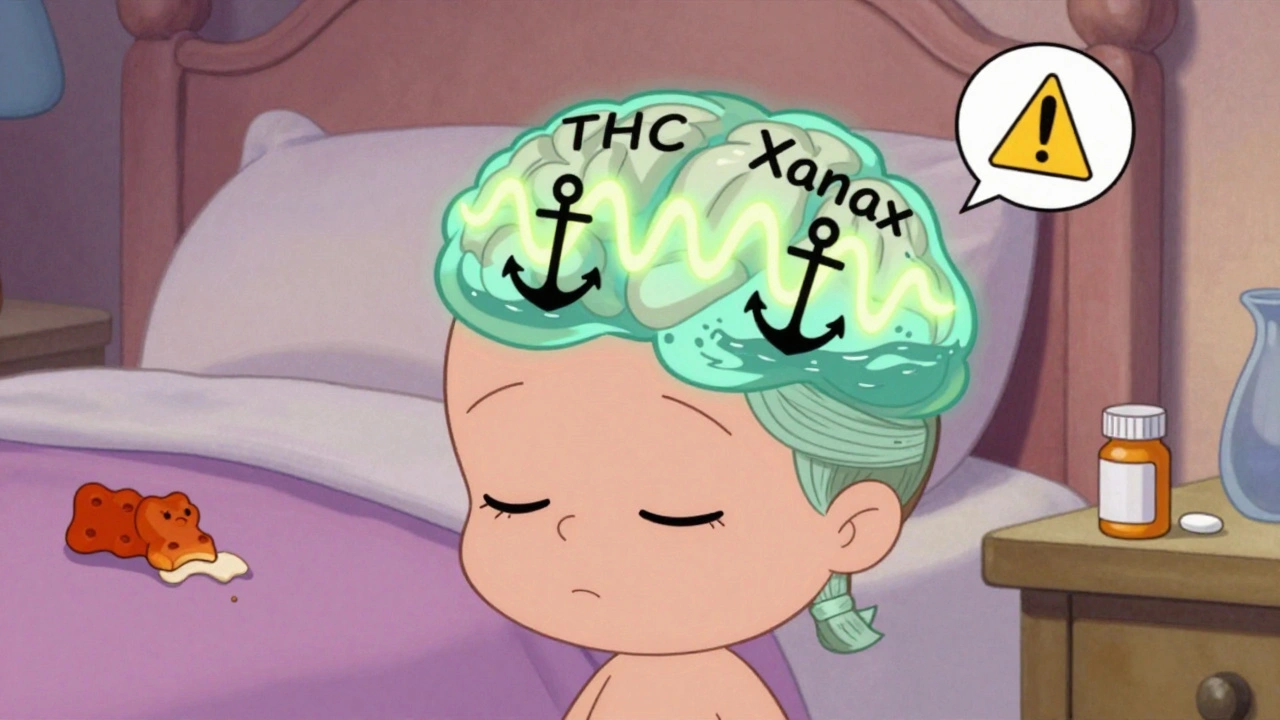
Combining cannabis with CNS depressants like benzodiazepines or opioids can cause dangerous sedation, slowed breathing, and overdose. Learn the real risks, who's most at risk, and how to stay safe.
CNS Depressant Interactions: Risks, Common Drugs, and What to Avoid
When you take a CNS depressant, a drug that slows down brain activity to reduce anxiety, induce sleep, or control seizures. Also known as central nervous system inhibitors, these medications include benzodiazepines, barbiturates, sleep aids, and opioids. They work by boosting GABA, a calming neurotransmitter—but when mixed with other depressants, they can shut down breathing. This isn’t just a warning on a label. It’s a real, documented risk that sends thousands to emergency rooms every year.
Think about this: benzodiazepines, like alprazolam or lorazepam, prescribed for anxiety or insomnia are fine on their own. But combine them with alcohol, even a single drink, and you’re doubling the depressant effect. The same goes for opioids, such as oxycodone or hydrocodone. Mixing them with sleeping pills or muscle relaxants? That’s how overdoses happen. You don’t need to take a lot. Sometimes, just one extra pill or a glass of wine is enough to stop breathing. Studies show that over half of opioid-related deaths involve another CNS depressant.
It’s not just prescription drugs. Over-the-counter sleep aids like diphenhydramine (Benadryl) can act as mild CNS depressants. Even some herbal supplements, like valerian root or kava, have similar effects. And if you’re on any of these, your doctor might not ask about your nightly glass of wine or weekend whiskey. That’s why you need to speak up. List every pill, every drink, every supplement you take—no matter how small it seems.
What are the signs something’s wrong? Slurred speech, extreme drowsiness, confusion, slow or shallow breathing, or not waking up easily. If you or someone else shows these after mixing meds and alcohol, call 911. Don’t wait. Don’t assume they’ll sleep it off. CNS depressant interactions don’t care if you meant to be careful. They react fast—and they’re unforgiving.
The posts below cover real cases and practical advice. You’ll find how anxiety meds like benzodiazepines can clash with alcohol, why certain migraine treatments shouldn’t be mixed with sleep aids, and how even common painkillers can become risky when combined with other depressants. You’ll see why consistency in medication use matters, how tolerance can hide danger, and what to do if you’re worried about a reaction. These aren’t theoretical warnings. They’re lessons from people who lived through it—and the experts who help them recover.