
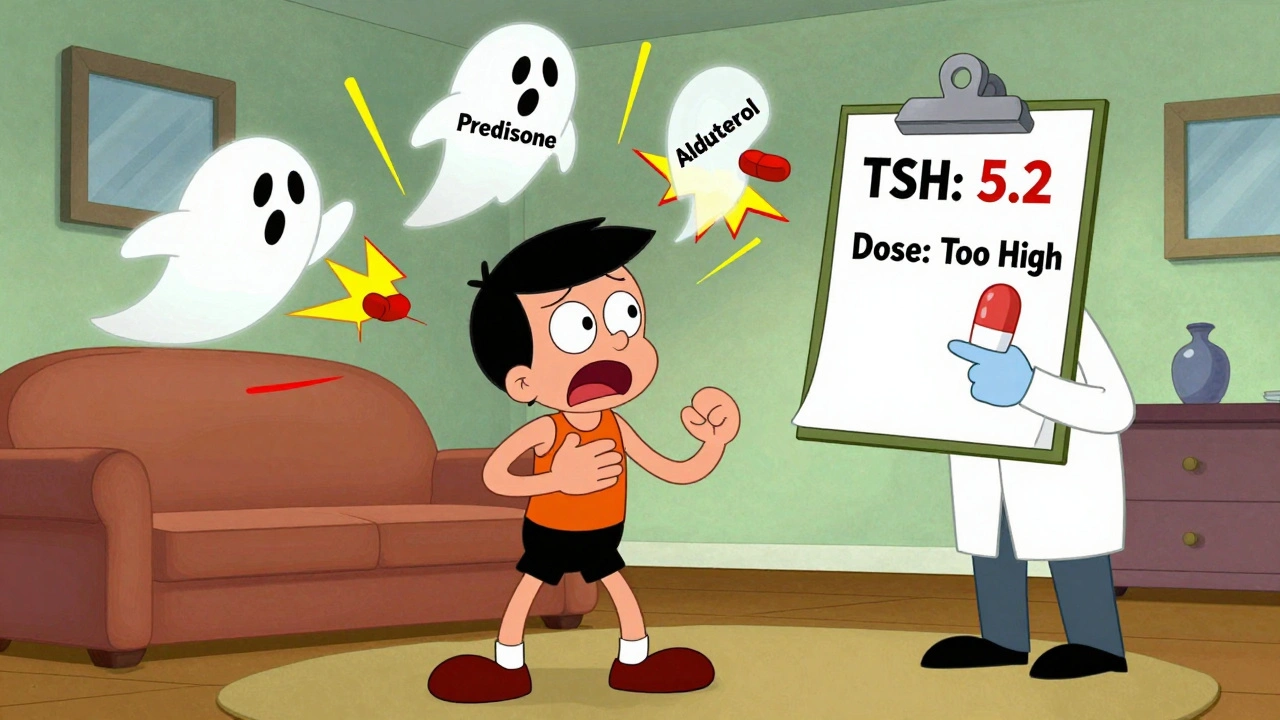
Many common medications can trigger anxiety symptoms like panic attacks, racing heart, and jitteriness. Learn which drugs cause it, how to tell if it's the medicine, and what to do next.
Medication-Induced Anxiety: Causes, Common Drugs, and What to Do
When your medicine starts making you feel more anxious instead of better, it’s not just in your head—it’s a real, documented reaction called medication-induced anxiety, a side effect caused by certain drugs that disrupt brain chemistry, leading to nervousness, panic, or restlessness. Also known as drug-induced anxiety, it can happen even with medications you’ve taken for years without issue. This isn’t rare. People on steroids, stimulants, or even some antidepressants report sudden spikes in anxiety, heart palpitations, or panic attacks they didn’t have before.
It’s not always obvious which drug is the culprit. benzodiazepines, often prescribed for anxiety itself, can paradoxically trigger rebound anxiety when they wear off or during withdrawal. Even antidepressants, especially SSRIs in the first few weeks of use, can ramp up anxiety before improving mood. And it’s not just psychiatric meds—decongestants, asthma inhalers, thyroid pills, and even some antibiotics have been linked to nervousness or panic-like symptoms. The body doesn’t react the same way to every person, which is why two people on the same drug can have totally different experiences.
What makes medication-induced anxiety tricky is that it often looks just like regular anxiety. You might blame stress, sleep loss, or life changes—not your pill bottle. But if your anxiety started or got worse after starting a new drug, or changed after a dose adjustment, that’s a red flag. Tolerance doesn’t always kick in here. Unlike nausea or drowsiness, which often fade, anxiety from meds can stick around or get worse over time. And if you’re already prone to anxiety, some drugs can turn a mild issue into something debilitating.
Don’t stop your meds cold. That’s when things get dangerous—especially with antidepressants or benzodiazepines. Instead, track your symptoms: when they started, how bad they are, and what time of day they hit hardest. Bring this to your doctor with your full medication list. Sometimes switching to a different drug in the same class helps. Other times, adding a short-term, low-dose anti-anxiety med or adjusting the timing of your dose makes all the difference. The goal isn’t to avoid all meds—it’s to find the right balance where your health improves without your mind falling apart.
Below, you’ll find real stories and data from people who’ve been there—from those who battled anxiety from SSRIs to those who discovered their migraines were worsened by beta-blockers. You’ll see what worked, what didn’t, and how others navigated the fine line between treatment and side effect. This isn’t about fear. It’s about knowing what to watch for, when to speak up, and how to take control when your medicine stops helping—and starts hurting.