
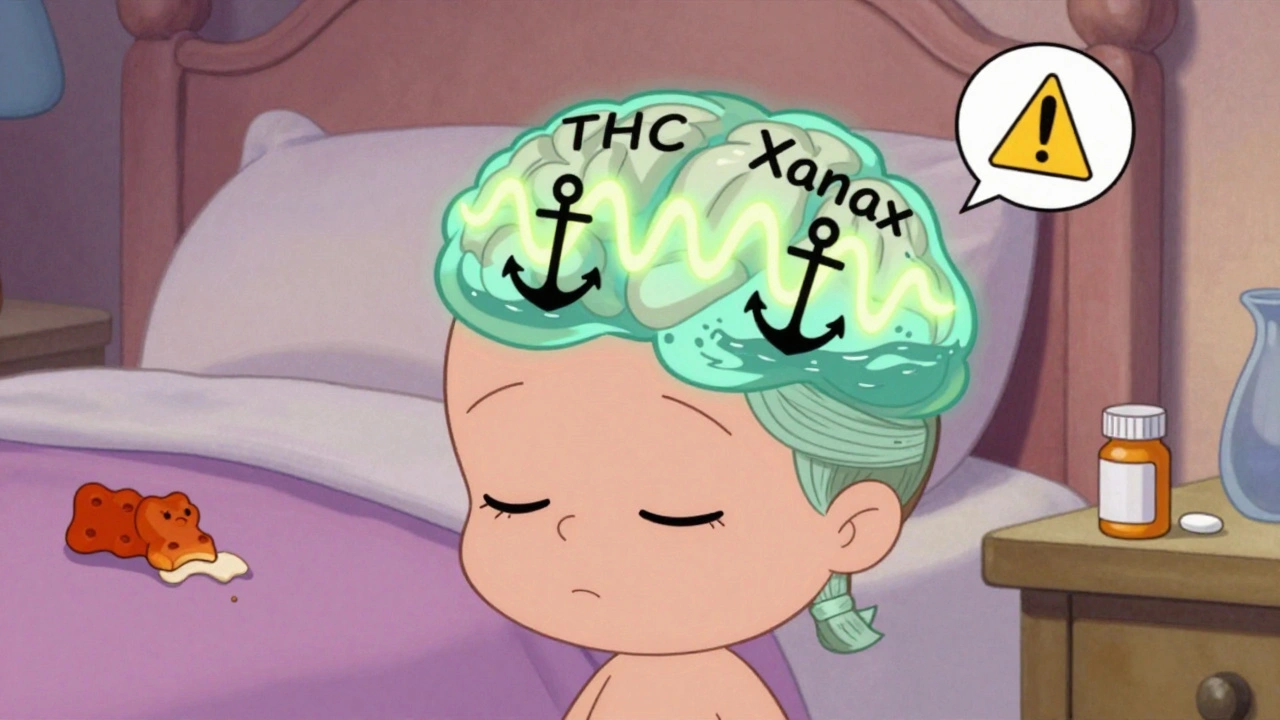
Combining cannabis with CNS depressants like benzodiazepines or opioids can cause dangerous sedation, slowed breathing, and overdose. Learn the real risks, who's most at risk, and how to stay safe.
THC and benzodiazepines: Risks, interactions, and what you need to know
When you combine THC, the main psychoactive compound in cannabis with benzodiazepines, a class of prescription sedatives like alprazolam, lorazepam, and diazepam, you’re not just doubling down on relaxation—you’re risking serious harm. Both substances depress the central nervous system. Together, they can slow your breathing to dangerous levels, cause extreme dizziness, or even lead to unconsciousness. This isn’t theoretical—it’s backed by emergency room data from hospitals across the U.S. and Europe. People who use cannabis for sleep or anxiety often don’t realize their prescribed anti-anxiety pills are making the combo far more risky than either drug alone.
Why does this happen? THC affects cannabinoid receptors in the brain that regulate mood, memory, and motor control. Benzodiazepines boost GABA, a calming neurotransmitter that slows brain activity. When both are active at the same time, the brain’s ability to stay alert, coordinate movement, and maintain normal breathing gets overwhelmed. Studies show this mix increases the chance of falls, car accidents, and hospital visits—especially in older adults or those with lung conditions. Even if you take your benzodiazepine as prescribed and only use THC occasionally, your body doesn’t distinguish between sources. The effect adds up. And unlike alcohol, which most people know to avoid with these meds, many assume cannabis is "natural" so it’s safe. It’s not. The FDA has issued warnings about combining cannabis products with sedatives, and poison control centers report rising cases tied to this combo.
Some people try this mix to treat anxiety or insomnia, thinking THC will reduce the need for pills. But research shows the opposite often happens: THC can worsen anxiety over time, especially in high doses, and may make benzodiazepine dependence harder to break. If you’re on a benzodiazepine and considering THC—whether for medical or recreational use—talk to your doctor first. There are safer ways to manage sleep or stress, like cognitive behavioral therapy, magnesium supplements, or low-dose CBD (which doesn’t have the same psychoactive risks). The posts below cover real cases, clinical findings, and practical advice on how these substances behave in the body, what symptoms to watch for, and how to reduce harm if you’re already using both. You’ll find insights on medication safety, withdrawal risks, and alternatives that actually work without putting your life at risk.